Roseola in Babies and Toddlers: Fever, Rash, and What to Expect

Sarah Mitchell
Sarah Mitchell is a Registered Pediatric Nurse and a mother of three who has spent over a decade helping families navigate the beautiful, chaotic early years of childhood. She combines evidence-based medical knowledge with real-world parenting experience to offer practical, compassionate advice. At Awesome Parent, Sarah's mission is to help exhausted parents find solutions, trust their instincts, and finally get some sleep.
If your baby or toddler was suddenly burning up with a high fever, seemed mostly “fine-ish” in between, and now that the fever is gone you’re staring at a new pink rash, you are not alone. This is the classic roseola storyline, and it tends to show up right when parents are already running on fumes.
Roseola is very common, usually mild, and in most kids it resolves on its own with supportive care. Still, it can be scary, especially the high fever part. Let’s walk through what to expect, how to tell it apart from other rashes, and when it is time to call the doctor.

What is roseola?
Roseola is a common viral illness, most often caused by human herpesvirus 6 (HHV-6) and sometimes HHV-7. It is also called roseola infantum or sixth disease.
Most affected age range: Roseola is most common in kids 6 to 24 months. It can happen outside that range, but it is much less typical in older children.
One reason roseola makes parents do a double take is that the fever tends to be high, then the child may look surprisingly okay for how hot they are. Then, just when you think you’re in the clear, the rash appears. That sequence is a big clue.
The classic pattern
Days 1 to 3 (sometimes up to 5): sudden high fever
Roseola usually starts with a sudden high fever, often 102°F to 104°F (38.9°C to 40°C), and it can climb higher in some kids (occasionally up to 105°F). Some children have mild cold-like symptoms (runny nose, mild cough), fussiness, or decreased appetite. Others only have fever.
- Energy: Many children still play a bit and have moments of acting fairly normal.
- Other possible signs: Mild diarrhea, puffy eyelids, or small swollen lymph nodes in the neck.
As the fever breaks: rash appears
After a few days, the fever drops quickly, and then a rash shows up soon after, often within about a day. This timing is why roseola is sometimes mistaken for an “allergic reaction” to a fever medicine or an antibiotic given during the fever.
What the rash looks like:
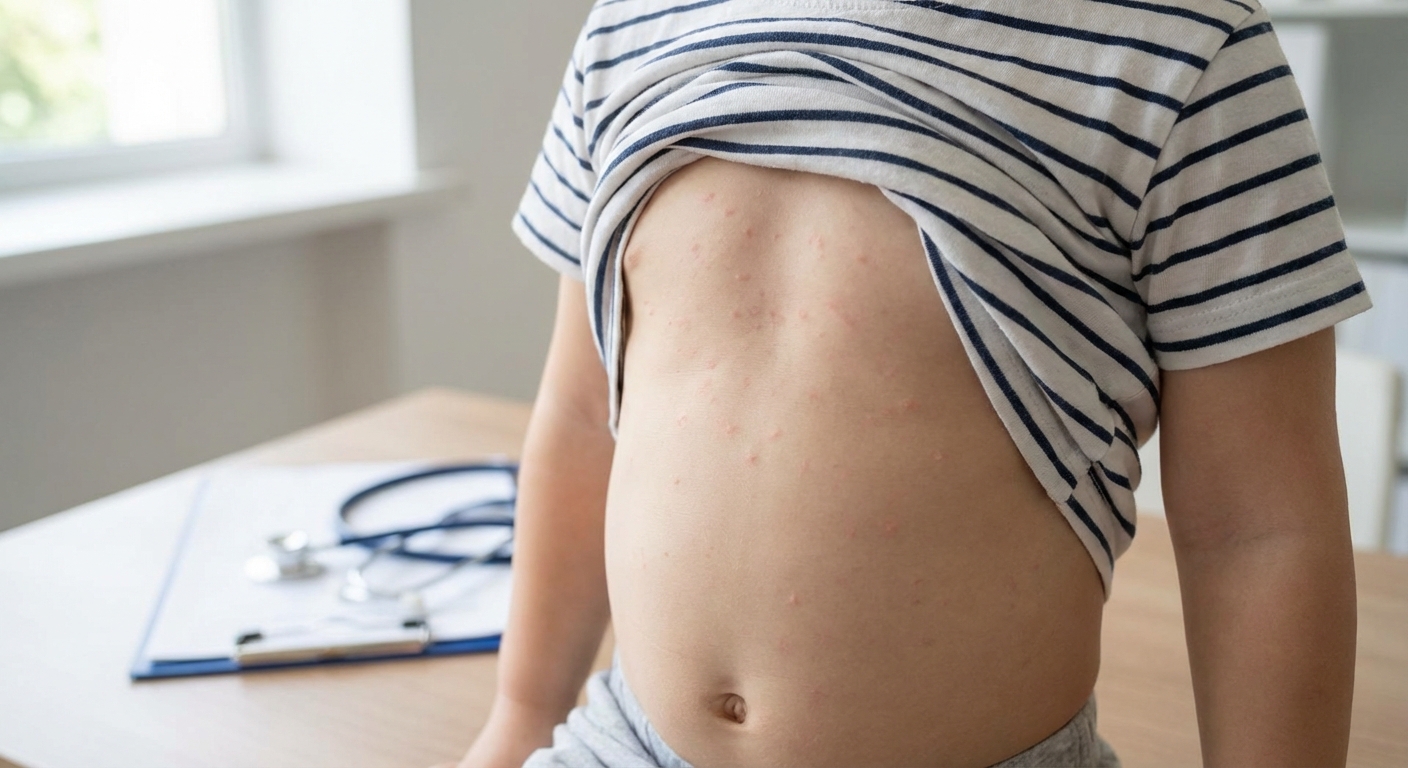
- Small pink or rose-colored flat spots or slightly raised bumps
- Usually starts on the trunk (chest, back, belly) and can spread to the neck, face, arms, and legs
- Not usually itchy or painful
- Often fades in 1 to 3 days
How it’s diagnosed
Roseola is usually diagnosed clinically, meaning your pediatrician puts the story together (high fever, then the fever breaks, then the rash) and checks for other causes. Testing is rarely needed in healthy children unless something about the illness pattern does not fit or your child has risk factors that warrant a closer look.
Roseola vs other rashes
Rashes can feel like a mystery game you did not sign up for. Here are a few quick comparisons that help:
Roseola vs HFMD
- Hand, foot, and mouth disease (HFMD): Usually has sores in the mouth and a rash on hands and feet (often blister-like). Can be painful.
- Roseola: Rash is usually trunk-first, more spotty, and mouth sores are not a typical feature.
Roseola vs fifth disease
- Fifth disease: Often starts with “slapped cheek” redness and then a lacy rash on the body.
- Roseola: High fever first, then a trunk rash after the fever breaks.
Roseola vs measles
- Measles: Typically includes cough, runny nose, red eyes, and a rash that often starts on the face and spreads downward. Kids usually look very ill.
- Roseola: Often fewer respiratory symptoms and the child may look relatively okay once fever resolves. If you suspect measles, call your doctor right away before going in so they can guide you safely.
Roseola vs allergic rash
- Allergic hives: Usually very itchy, raised welts that move around and change shape.
- Roseola: Usually not itchy and tends to be more fixed, small pink spots on the trunk.
Important: If your child started an antibiotic for an ear infection or another concern and then developed a rash, do not assume it is “just roseola.” Call your pediatrician to sort out whether it is a medication reaction or a viral rash that happened to show up at the same time.
Is roseola contagious?
Yes. Roseola spreads through respiratory droplets and saliva, often from people who do not even realize they are sick.
When is it contagious?
- Roseola often spreads during the fever phase.
- Once the rash appears, many children are less contagious, but it is not a perfect on-off switch. Kids can still shed virus, and it is hard to know exactly when someone is contagious.
When can they go back?
Most childcare and school policies focus on fever and behavior. A practical rule:
- Keep your child home until they are fever-free for 24 hours without fever-reducing medicine and they feel well enough to participate.
- If they only have the rash and otherwise seem fine, they can often return, but check your daycare’s policy.
Handwashing, avoiding sharing cups and utensils, and wiping down high-touch surfaces help, but roseola can still spread easily. You did not “do anything wrong” if it makes its way through your house.
When to call the doctor
Most cases can be managed at home, but there are times you should check in.
Call your pediatrician if:
- Your baby is under 6 months and has a fever.
- Fever lasts more than 3 days, or your child seems to be getting worse instead of better.
- Your child has a weak immune system (for example, certain medications or medical conditions).
- Your child is not drinking well, has poor feeding (especially infants), or you see dehydration signs (below).
- The rash is very itchy, painful, blistering, or purple-looking, or it comes with significant swelling.
Get urgent help now if:
- Your child has trouble breathing, blue lips, or is hard to wake.
- Your child has a seizure. Febrile seizures can happen with roseola because the fever rises quickly.
- Your child is under 3 months with a rectal temperature of 100.4°F (38°C) or higher.
- Stiff neck, severe headache, persistent vomiting, or a rash that looks like bruising or bleeding under the skin.
A nurse-mom note: The fever part of roseola is often the most intense. If your gut says “this is not my kid,” I want you to listen to that and call. You never need to apologize for checking in.
Home care
There is no specific medication that “cures” roseola in healthy children, and antibiotics do not treat roseola. The goal is comfort and hydration while the virus runs its course.
1) Fever comfort
- Use acetaminophen or ibuprofen if your child is uncomfortable. Follow dosing by weight and your pediatrician’s guidance.
- Ibuprofen is generally not recommended under 6 months unless your clinician specifically tells you to use it.
- No aspirin for children due to the risk of Reye syndrome.
- A quick thermometer note: fever cutoffs can vary by age and how you take it (rectal tends to be most accurate for infants). If you are unsure your reading is reliable or your child is very young, call for guidance.
- Avoid “chasing the number.” Focus on how your child looks and acts, not just the thermometer reading.
2) Hydration
Fever dries kids out quickly. Offer frequent small sips.
- Breast milk or formula for infants
- Water for older babies and toddlers (as age-appropriate)
- Oral rehydration solution if intake is poor
- Popsicles can be a toddler miracle, especially if they refuse cups
Dehydration signs to watch for: fewer wet diapers, dark urine, dry mouth, no tears when crying, sunken eyes, unusual sleepiness.
3) Keep it simple
- Light clothing and a comfortable room temperature
- Rest, quiet play, extra cuddles
- Lukewarm baths can feel soothing, but avoid cold baths or alcohol rubs
4) The rash
The rash itself typically does not need treatment. If your child seems itchy (not classic for roseola, but it can happen), ask your pediatrician about appropriate options.
Febrile seizures
Because roseola can cause a rapid spike in temperature, it is associated with febrile seizures in some children. Febrile seizures are terrifying to watch, but most are brief and do not cause long-term harm.
If a seizure happens:
- Lay your child on their side on a safe surface.
- Do not put anything in their mouth.
- Time the seizure if you can.
- Call emergency services if it lasts more than 5 minutes, your child has trouble breathing, or they do not return to their usual self soon after.
If your child has had a febrile seizure, follow up with your pediatrician even if they seem fine afterward.
How long it lasts
- Fever: commonly 3 to 5 days
- Rash: usually 1 to 3 days
- Total: often under a week, though mild fussiness can linger a bit
Once the fever is gone and your child is drinking and acting more like themselves, you are typically on the downswing.
FAQs
Can roseola come back?
It is uncommon. Most children develop immunity after infection, though HHV-6 can remain dormant in the body (like other herpesviruses).
Does the rash mean they are getting worse?
With roseola, the rash often means the opposite. It typically shows up as the fever breaks, which is usually a sign your child is moving toward recovery.
Do I need to isolate siblings?
Realistically, roseola often spreads before anyone knows what it is. Do your best with handwashing and not sharing cups, but do not beat yourself up if it makes the rounds.
What if there’s fever but no rash?
Not every child gets a noticeable rash. If the fever resolves and your child is improving, that can still fit. If fever persists or symptoms worsen, call your pediatrician.
The bottom line
Roseola is a very common childhood virus, especially in ages 6 to 24 months. The signature pattern is high fever for a few days followed by a pink trunk rash as the fever breaks. Most kids recover with rest, fluids, and fever comfort measures.
If your child is very young, looks unusually ill, shows dehydration signs, or has a seizure, trust your instincts and seek medical care. Otherwise, this is often one of those illnesses that looks dramatic on the thermometer but ends with a quick, uncomplicated recovery.