A pediatric nurse mom walks you through safe splinter removal, what tools to use, why soaking can help, infection signs, tetanus timing basics, and when urge...
Rusty Nail Puncture: When Kids Need a Tetanus Booster

Sarah Mitchell
Sarah Mitchell is a Registered Pediatric Nurse and a mother of three who has spent over a decade helping families navigate the beautiful, chaotic early years of childhood. She combines evidence-based medical knowledge with real-world parenting experience to offer practical, compassionate advice. At Awesome Parent, Sarah's mission is to help exhausted parents find solutions, trust their instincts, and finally get some sleep.
It is always the same scene: shoes off at the playground, one wrong step near a board or fence, and suddenly your child is hopping on one foot trying not to cry. If the culprit is a nail (rusty or not), your brain goes straight to one word: tetanus .
Take a breath. Most kids do very well with prompt cleaning, smart watchful waiting, and the right vaccine timing. Below is how we handle this in triage, minus the scary parts.
First steps at home (the first 10 minutes matter)
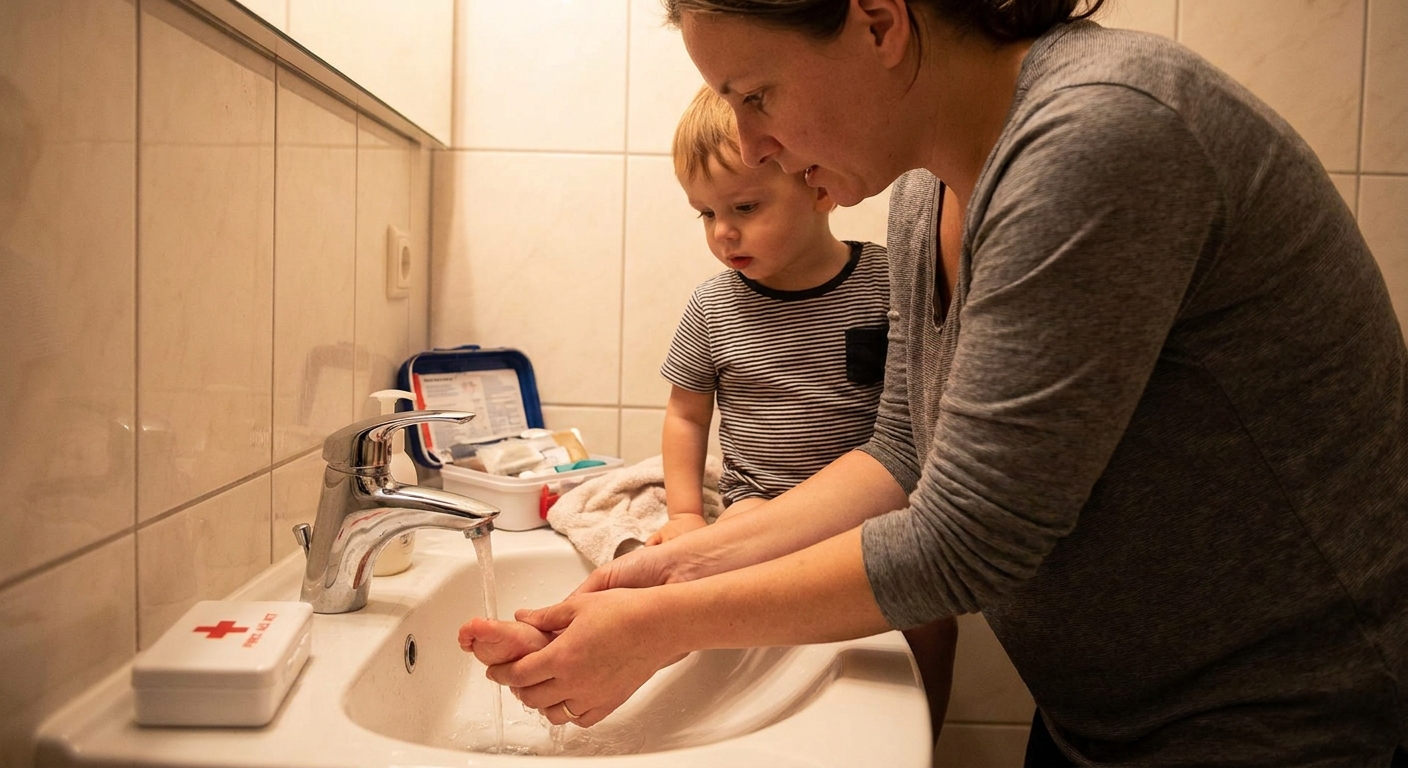
Puncture wounds are tricky because the hole is small, but bacteria can get pushed deep under the skin. Your goal is to flush, clean, and protect.
Do this right away
- Wash your hands (or use sanitizer if you are still at the park).
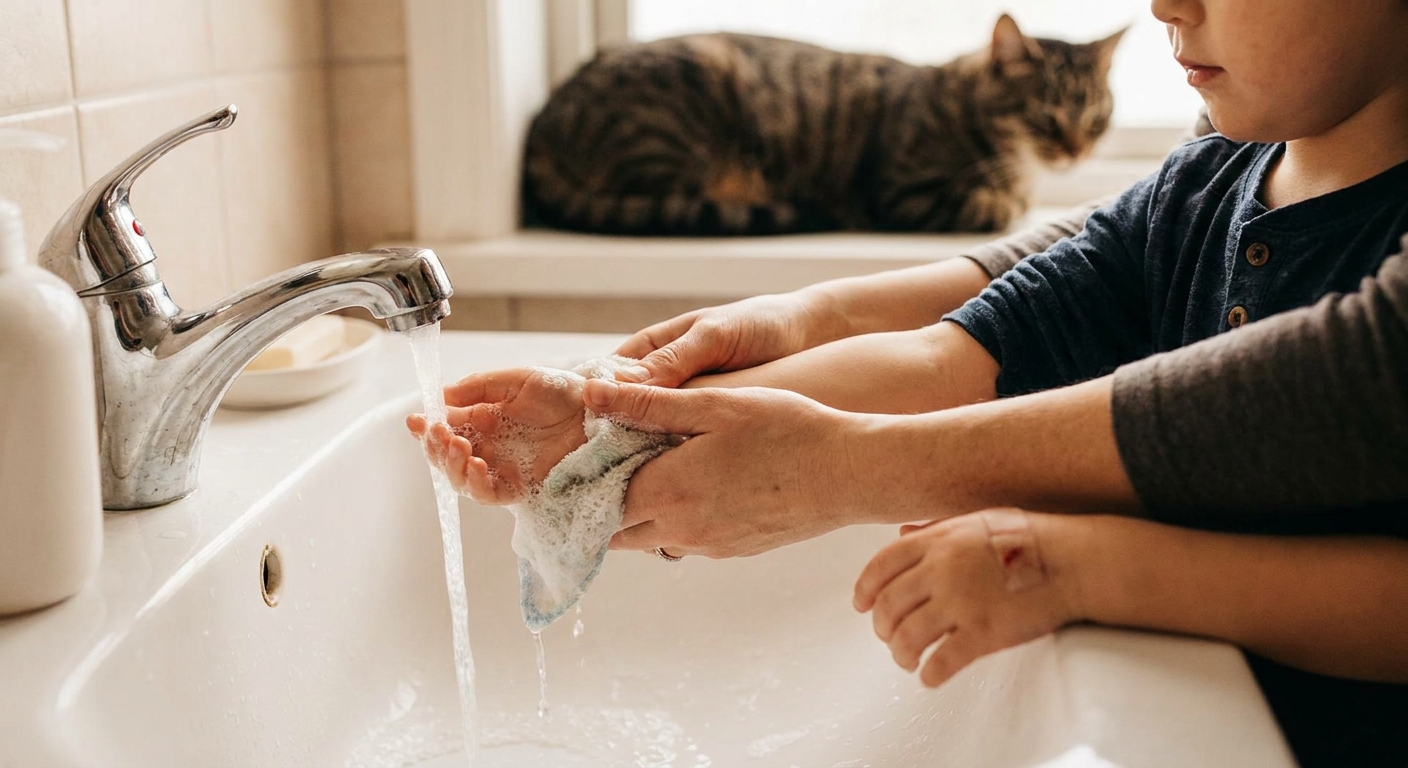
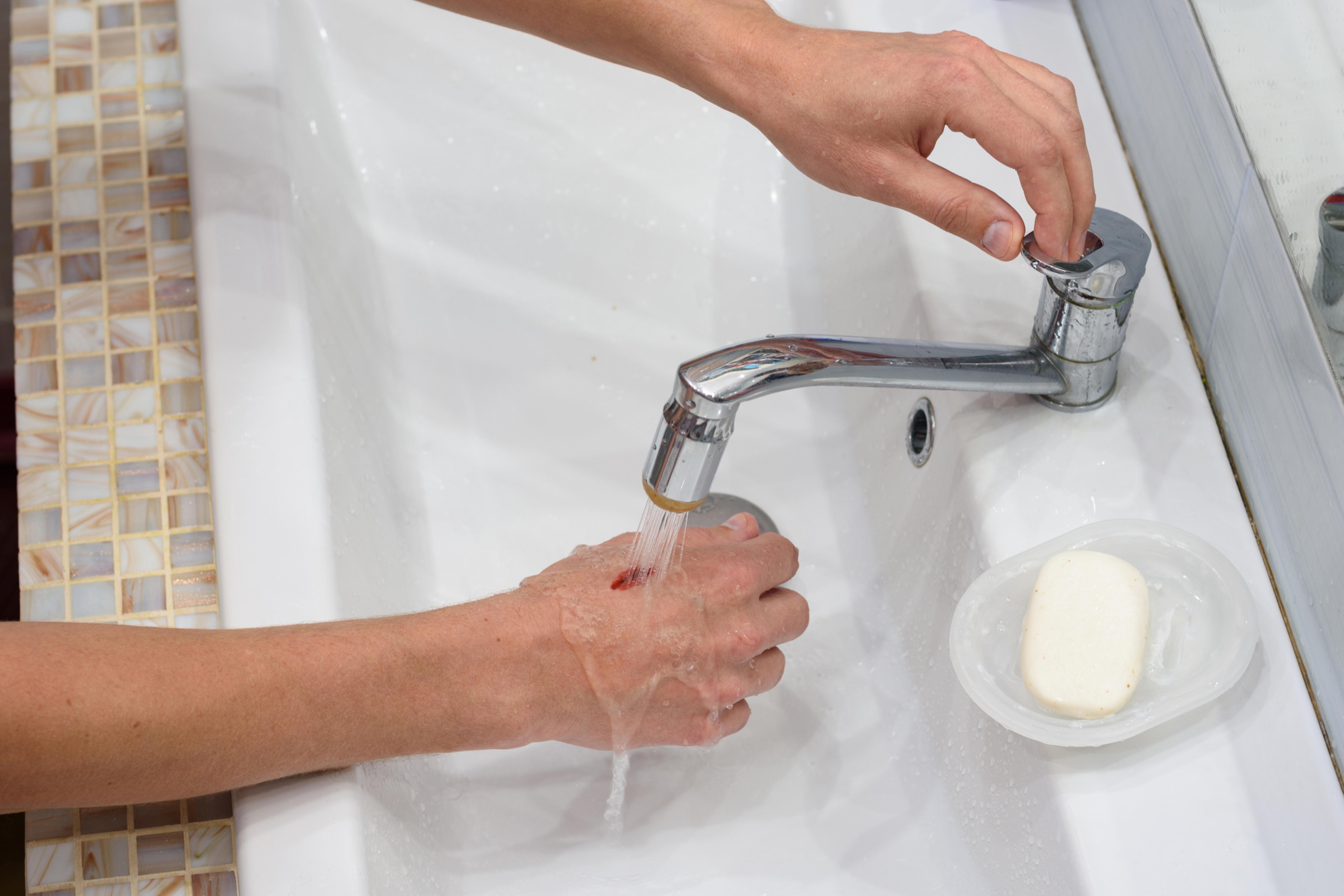
- Rinse the wound with running water for a few minutes. If you have mild soap, use it around the area.
- If it is lightly bleeding, let it ooze while you rinse, then apply gentle pressure to stop bleeding. Do not try to make it bleed, and do not squeeze aggressively.
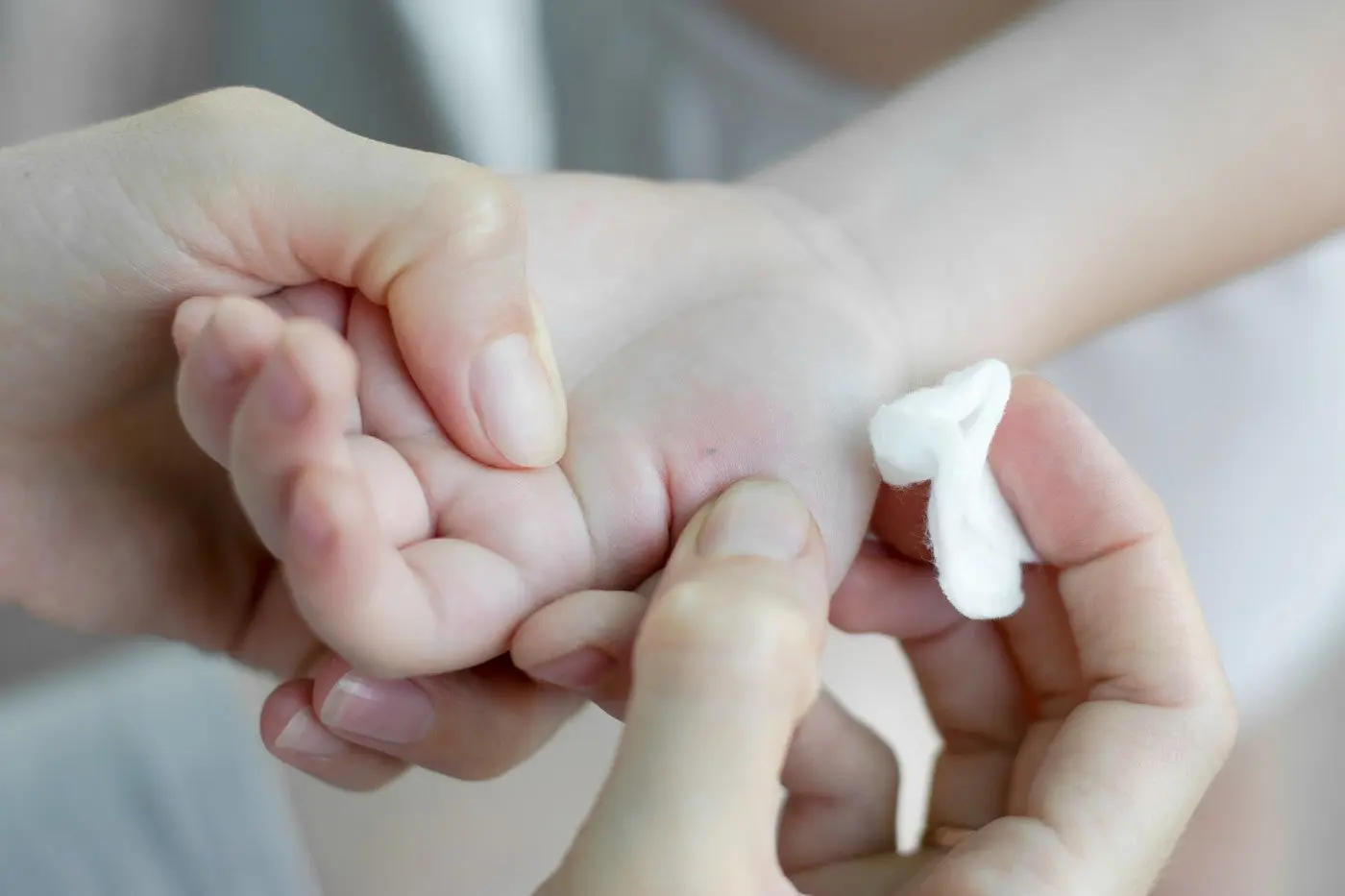
- Remove visible dirt with clean tweezers if it is easy to grab. If it is embedded or painful to pull, stop.
- Apply a thin layer of ointment (plain petroleum jelly is fine) and cover with a clean bandage.
- Use pain relief if needed and safe for your child (acetaminophen, or ibuprofen if age-appropriate, often 6 months and up). Follow the dosing instructions from your clinician or the label.
Do not do this
- Do not dig around in the wound to search for debris. That causes more damage and can push bacteria deeper.
- Do not pour hydrogen peroxide or alcohol into the puncture. They can irritate tissue and are generally not recommended inside puncture wounds. Mild soap and running water are usually enough.
- Do not tightly close or glue a puncture wound at home. Cover with a clean dressing and change it daily (or when wet or dirty). If a clinician wants it managed differently, they will tell you.
If the puncture is on the bottom of the foot, especially through an athletic shoe or rubber sole, it deserves extra caution. Those injuries can involve Pseudomonas and sometimes need different antibiotics if infection develops.
Does rusty matter for tetanus?
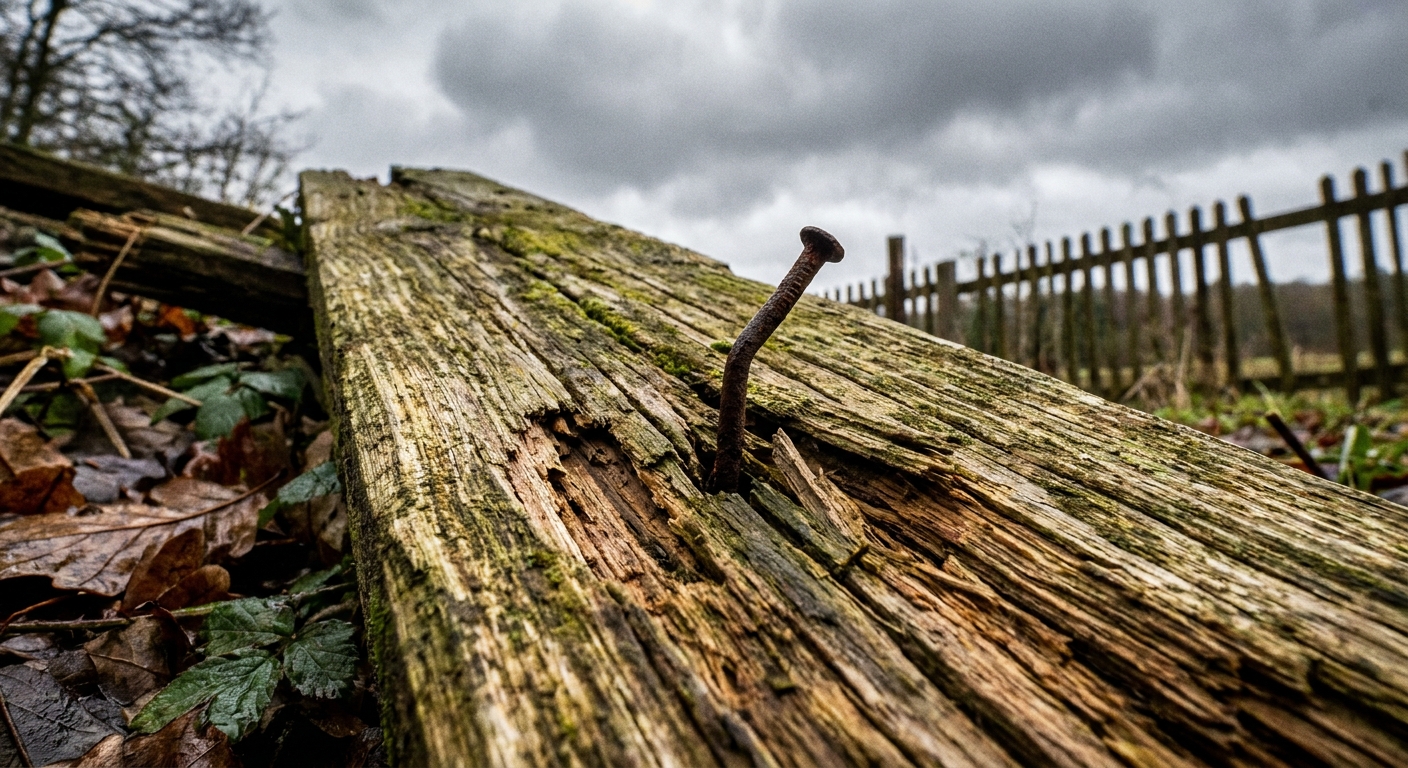
Rust itself does not cause tetanus. Tetanus is caused by bacteria (Clostridium tetani) that live in soil, dust, and animal waste. Rusty nails get blamed because they are often found outdoors, dirty, and good at making puncture wounds.
So yes, a clean nail in a garage can still be a risk. And a rusty-looking nail is not automatically a tetanus catastrophe. What matters most is:
- Whether the wound is a puncture (higher risk than a shallow scrape)
- How contaminated the object likely was (soil, outdoors, manure)
- Your child’s tetanus vaccine status
Tetanus booster timing (kids)
Here is the part parents really need in the moment: puncture wounds count as “dirty” or “high-risk” wounds in vaccine guidance. For those wounds, the booster window is shorter.
Tetanus shot and TIG snapshot
- 3 or more prior tetanus doses (fully vaccinated series for age):
- Last tetanus shot within 5 years: usually no booster needed for a puncture wound.
- Last tetanus shot 5 or more years ago: a booster is recommended after a puncture wound.
- Fewer than 3 prior tetanus doses or unknown history:
- Get a tetanus-containing vaccine dose now (DTaP, Tdap, or Td depending on age and prior doses).
- For a dirty or puncture wound, clinicians often also give tetanus immune globulin (TIG) when the series is incomplete or unknown.
Kids typically receive tetanus-containing vaccines as part of DTaP in early childhood, then a booster (Tdap) around age 11 to 12. If you are not sure when the last one was, do not guess. Use the “missing records” steps below.
How fast do we need to act?
Ideally, you want the tetanus plan addressed the same day for a puncture wound, especially if records are unclear. If it is the middle of the night and your child is stable, it is reasonable to clean and cover the wound and call your pediatrician when the office opens. But if the wound is deep, contaminated, or painful to walk on, do not wait.
Missing shot records
This is extremely common. Kids move, clinics merge, portals change passwords, and suddenly you are staring at a nail situation with no dates.
Quick ways to find dates
- Check your child’s patient portal and after-visit summaries.
- Call your pediatrician’s office and ask for the immunization record with dates.
- Ask your school or daycare for the shot record you provided at enrollment.
- Look up your state’s immunization registry (many clinics can access it for you).
If you truly cannot confirm the last tetanus dose, clinicians often treat it as unknown and vaccinate rather than risk missing protection. Extra tetanus boosters are generally safe, but they can cause a sore arm and temporary swelling. Your child’s clinician will help pick the correct vaccine (DTaP, Tdap, or Td) for their age.
When to get care today
Go to urgent care or the ER today if any of these are true:
- The puncture is deep, gaping, or you can see fatty tissue.
- The object was very dirty (soil, compost, barnyard, stagnant water) or your child stepped on it through a shoe (especially an athletic shoe or rubber sole).
- There may be a retained foreign body (splinter, nail fragment, gravel), or the pain feels out of proportion.
- Bleeding will not stop after 10 minutes of steady pressure.
- Your child cannot bear weight or has worsening limping.
- Your child has diabetes, immune compromise, or poor circulation (higher infection risk).
- You cannot confirm tetanus vaccines and the wound is a puncture.
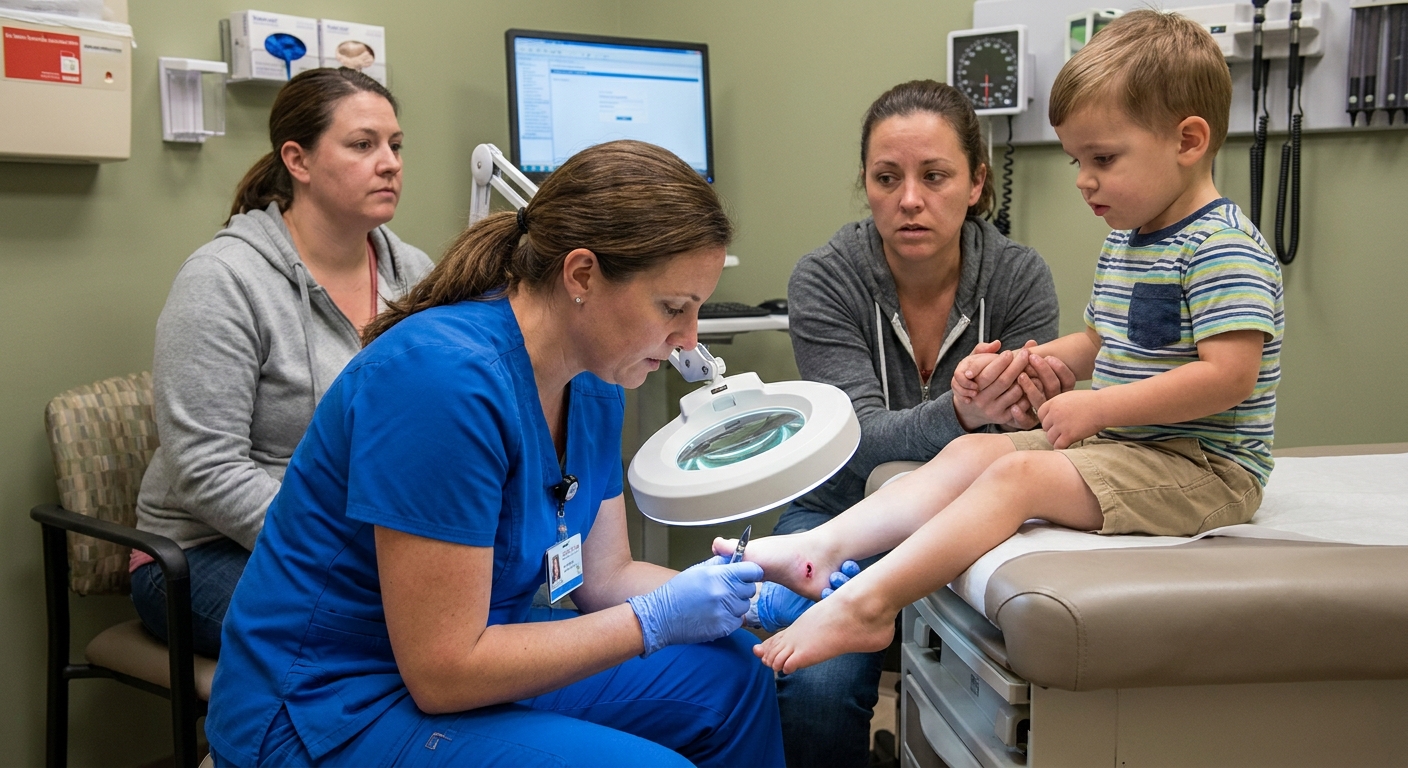
Clinics may numb and irrigate the wound, check for debris, and sometimes order imaging if a piece could be stuck inside. One nuance: wood and some small fragments may not show up on X-ray, so clinicians sometimes use ultrasound or other evaluation when suspicion stays high.
Infection signs (next 48 to 72 hours)
Many puncture wounds look fine at first and then flare up later. I tell parents to do a quick “foot check” a few times a day for the first two to three days.
Normal healing
- Mild soreness
- Small amount of redness right around the puncture
- Improving comfort day by day
Red flags
- Spreading redness (especially if it grows beyond the immediate area)
- Warmth and swelling that is increasing
- Throbbing pain, worsening limp, or pain with gentle touch
- Pus or cloudy drainage
- Fever or your child seems more ill
- Red streaking moving up the foot or leg
- Swollen lymph nodes in the groin (for foot wounds)
Cellulitis is a skin infection that can spread quickly . If you see spreading redness, warmth, or significant swelling, it is time to be seen the same day.
Parent tip from the clinic: If you are unsure whether redness is spreading, take a quick photo and draw a small pen mark at the edge of the redness (on intact skin). Check it a few hours later. If it is moving outward, get checked.
If pain and swelling are getting worse after a few days, or your child is still refusing to bear weight, you should also be seen. While uncommon, deeper infections (including bone infection) are one reason we take persistent, worsening foot pain seriously after a puncture.
Do kids need antibiotics?
Sometimes, but not always. Many clean punctures that are promptly washed do not need antibiotics.
Antibiotics are more likely when:
- The puncture is deep or contaminated
- It went through an athletic shoe or rubber sole (which can raise concern for Pseudomonas if infection develops)
- There are early signs of infection
- A foreign body may still be inside
- Your child has medical conditions that increase infection risk
This is a decision best made after an exam. The right antibiotic depends on the situation and local resistance patterns. Do not use leftover antibiotics from a previous illness.
FAQ
Can tetanus happen if the wound looks tiny?
Yes. Tetanus bacteria can enter through small punctures. That is why vaccine timing matters even when the wound seems minor.
What are tetanus symptoms?
Tetanus is rare in vaccinated children, but classic symptoms include jaw stiffness (lockjaw), trouble swallowing, muscle spasms, and stiffness that can spread. If you ever suspect symptoms, that is emergency care.
Should I keep it covered?
For the first day or two, yes. Change the bandage daily or when wet or dirty. Once the puncture has sealed and stays clean, you can leave it open to air at home.
My kid pulled out a tiny wood splinter with the nail. Does that change anything?
It can. Wood fragments are notorious for breaking and leaving a small piece behind . If pain persists, there is a dark spot that will not rinse away, or redness worsens, have the wound checked.
Bottom line
If your child stepped on a nail, focus on three things:
- Clean it well right away.
- Check tetanus timing. For puncture wounds, a booster is usually recommended if the last tetanus shot was 5 or more years ago. If your child has had fewer than 3 tetanus shots or the record is unknown, they may need a vaccine dose now and possibly TIG for a dirty wound.
- Watch for infection, especially spreading redness, warmth, swelling, pus, fever, or worsening pain.
If you want the calmest next step, call your pediatrician with the date of the last tetanus shot (or ask them to help you find it). If you cannot get that date quickly and the wound is deep or dirty, urgent care is a very reasonable choice.
Medical note
This article is for general education and does not replace medical care. If your child has a deep puncture, uncontrolled bleeding, signs of infection, significant pain, or uncertain vaccine history, seek in-person evaluation.
Sarah Mitchell
Sarah Mitchell is a Registered Pediatric Nurse and a mother of three who has spent over a decade helping families navigate the beautiful, chaotic early years of childhood. She combines evidence-based medical knowledge with real-world parenting experience to offer practical, compassionate advice. At Awesome Parent, Sarah's mission is to help exhausted parents find solutions, trust their instincts, and finally get some sleep.