Compassionate, evidence-based tips to make daycare drop-offs smoother, reduce tears, and build your toddler’s confidence with simple routines and calm good...
School Refusal in Young Kids

Sarah Mitchell
Sarah Mitchell is a Registered Pediatric Nurse and a mother of three who has spent over a decade helping families navigate the beautiful, chaotic early years of childhood. She combines evidence-based medical knowledge with real-world parenting experience to offer practical, compassionate advice. At Awesome Parent, Sarah's mission is to help exhausted parents find solutions, trust their instincts, and finally get some sleep.
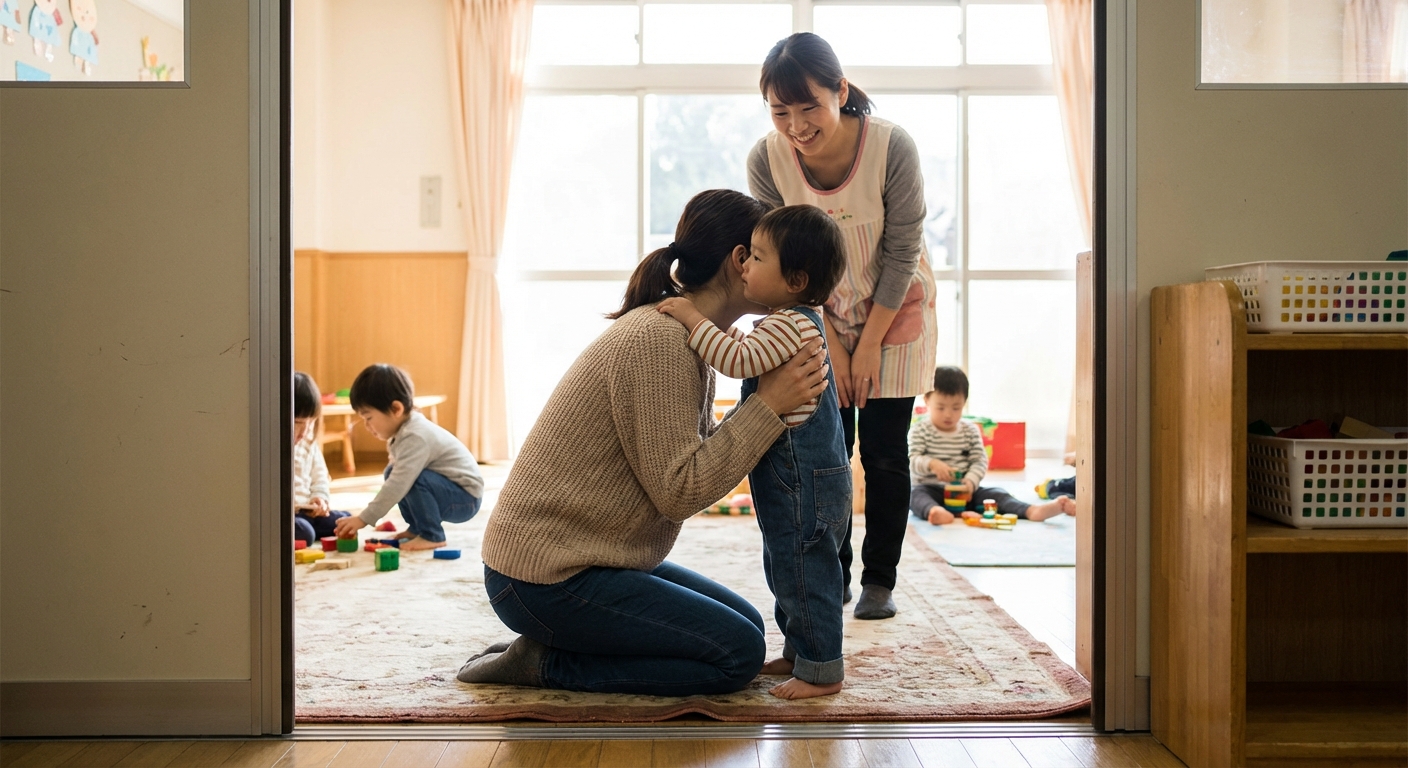
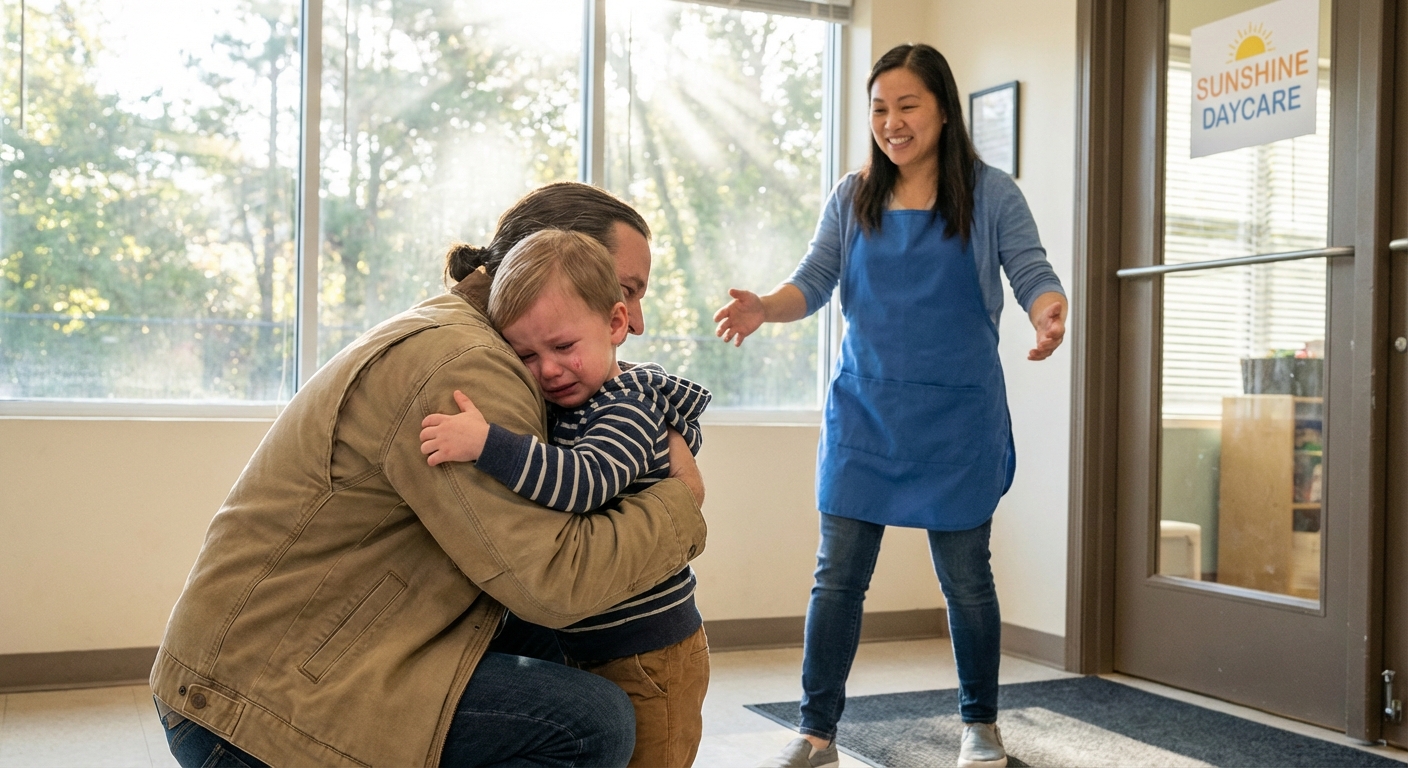
If your child is glued to your leg at drop-off, sobbing like you are leaving them on a desert island, you are not alone. School refusal can look dramatic, especially in young kids, and it can make even the calmest parent feel panicky and stuck.
As a pediatric nurse and a mom, here’s the reassuring truth: some protest is developmentally normal, especially during transitions. But there are also patterns that signal your child needs more support, either at school, at home, or with a pediatrician or therapist.
This article will help you sort “big feelings at the door” from school refusal that is driven by anxiety, social stress, learning struggles, neurodivergence, or bullying, and give you a practical plan to move forward.
Quick note: This is general education, not medical advice. If you’re worried about your child’s health or safety, contact your clinician or local emergency services.
What school refusal means
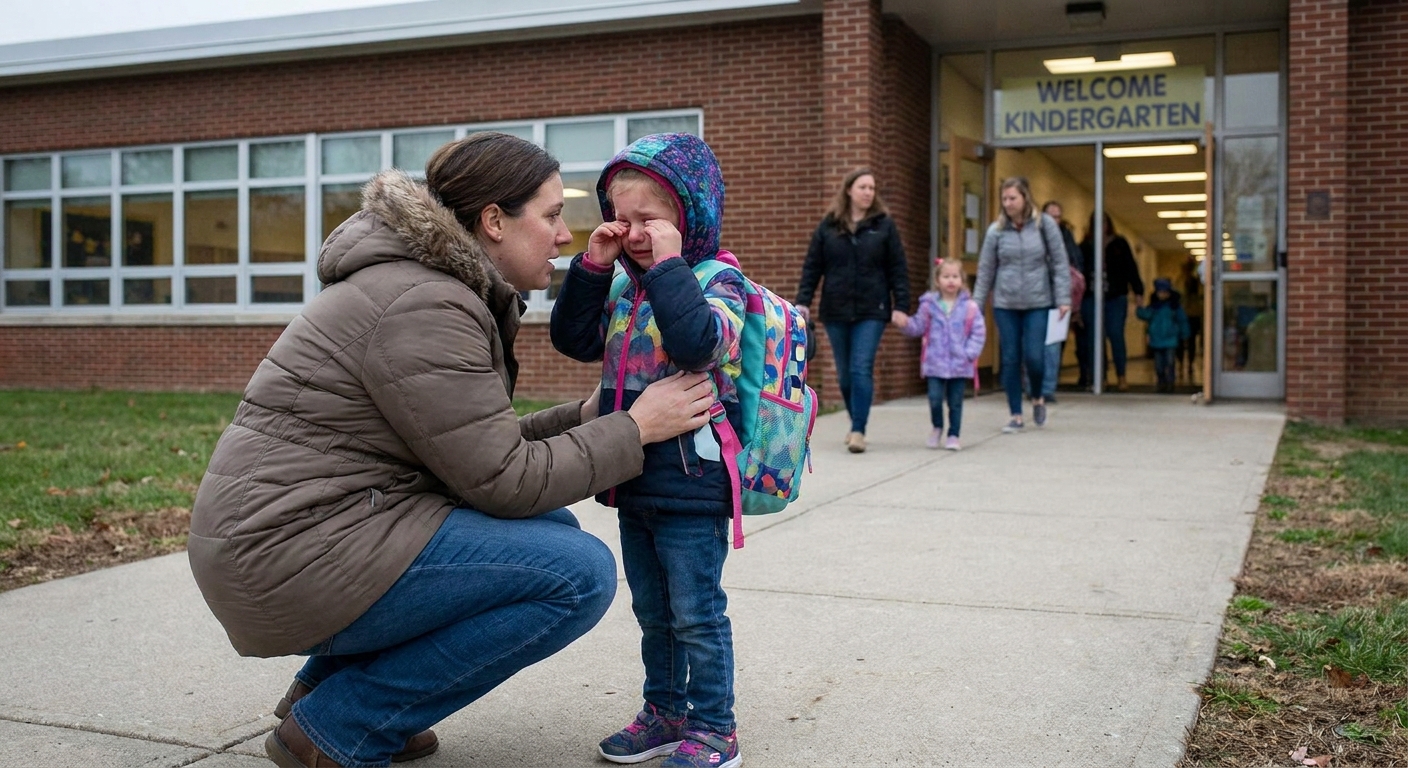
School refusal is a pattern of distress and avoidance around going to school. It is not the same as a child “being difficult.” It is also different from truancy, which is skipping school without caregiver knowledge and is more often linked to rule-breaking than anxiety.
In young kids, school refusal can be loud and obvious, or surprisingly quiet.
Common signs
- Morning meltdowns that ramp up as soon as school is mentioned
- Stalling like repeated bathroom trips, endless questions, refusing to get dressed
- Physical complaints like tummy aches, headaches, nausea that improve when staying home
- Clinginess at drop-off, pleading, hiding, running away, or refusing to get out of the car
- Frequent nurse visits or asking to be picked up early
- Nighttime worry about school, trouble falling asleep Sunday night, nightmares
- Emotional shutdown such as becoming quiet, tearful, or irritable when school is discussed
One rough morning does not automatically equal “school refusal.” What matters most is the pattern and the impact on daily life.
Normal protest vs needs support
Young kids have limited coping skills and very big emotions. Some separation protest is expected, especially in the first weeks of school, after long breaks, or after a life change like a move, a new sibling, or a caregiver shift.
Often normal
- Upset at drop-off but settles within 5 to 15 minutes most days
- Generally okay once engaged in class or play
- Teacher reports the child participates and has moments of joy
- Worries improve with predictable routines over 2 to 4 weeks
Worth extra attention
- Distress is intense and not improving after a few weeks
- Child cannot settle at school, or keeps calling home
- Frequent physical symptoms (tummy aches, vomiting, headaches) tied to school days
- Avoidance escalates over time instead of easing
- Sleep, appetite, mood, or behavior are noticeably affected
- Your child seems fearful of a specific person, place, bus, or part of the day
If you are thinking, “This feels bigger than the typical first-week jitters,” trust that instinct. You do not have to wait until it becomes a crisis to ask for help.
What may be underneath
School refusal is usually a signal. The job is to gently decode what your child is trying to avoid or what they are trying to protect themselves from.
1) Separation anxiety
This is especially common in preschool, kindergarten, and early elementary years. Kids may fear something bad will happen to you, or that they will be “stuck” at school without you.
Clues: clinginess outside school, difficulty with babysitters, worries about your safety, repeated reassurance-seeking.
2) Social stress
Some kids fear the social side of school more than the academics. They may worry about making mistakes, being laughed at, or not knowing what to say.
Clues: avoiding recess, birthday parties, or group activities; saying “Nobody likes me”; strong sensitivity to correction.
3) Learning struggle
A child who is overwhelmed academically may avoid school because it feels like walking into failure. This can show up early, even before a learning issue is formally identified.
Clues: frustration with letters, numbers, writing, or reading; frequent tears during homework; “I’m dumb” talk; behavior issues during academic tasks.
4) Sensory overload
Bright lights, loud cafeterias, crowded hallways, itchy uniforms, scratchy tags, and unpredictable noise can be genuinely distressing for some kids.
Clues: complaints about noise, clothing, smells, bathroom sounds; meltdowns after school; needing long decompression time.
5) Neurodivergence
Kids with ADHD or autism (diagnosed or not yet diagnosed) may struggle with transitions, unpredictable routines, social nuance, executive functioning, or sensory load. Sometimes the refusal is not about “school” as a whole, but about one repeated moment that overwhelms their system.
Clues: ongoing trouble with transitions, frequent “out of nowhere” meltdowns, rigidity, intense fatigue after school, or repeated conflict around expectations despite effort.
What can help: ask the school about supports such as a 504 plan or IEP evaluation if concerns are affecting learning or access. You can also request an academic or behavioral screening through the school.
6) Bullying or unsafe dynamics
Bullying is not always obvious, and young kids often cannot name it clearly. Some will say nothing. Others will describe it in fragments.
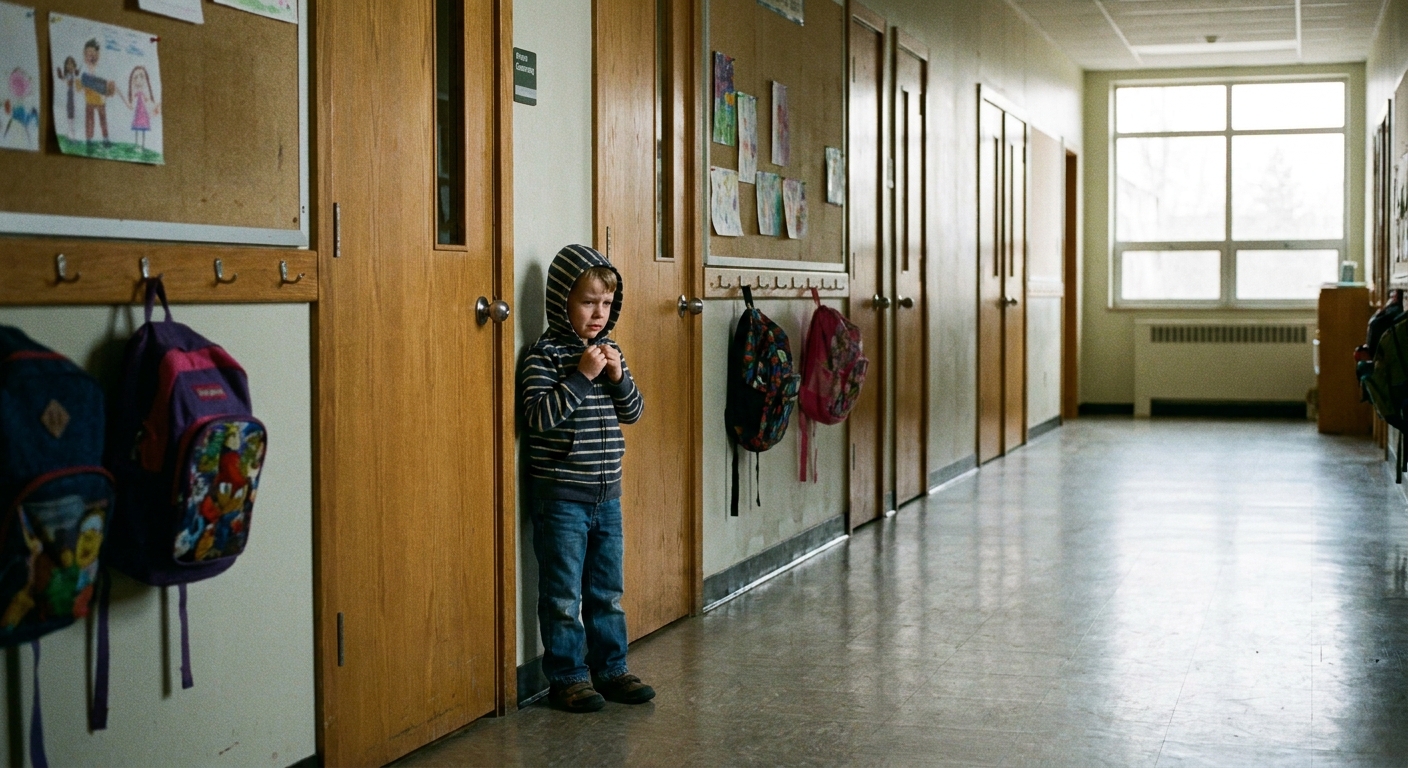
Clues: sudden school refusal after previously being okay, fear of a specific student or area, missing belongings, unexplained tears, new aggression, or “I don’t want to tell you.”
Bullying clues at home
Many kids do not use the word “bullying.” They describe the experience in kid-language. Pay attention to repeated comments and changes in behavior.
Phrases that can be clues
- “He won’t let me play.”
- “They said I can’t sit there.”
- “She keeps touching my stuff.”
- “People are mean at recess.”
- “I always get in trouble, not them.”
- “I don’t want to ride the bus.”
Behavior changes that matter
- New bedwetting or accidents
- More nightmares or sleep disruption
- Sudden anger after school
- Clothes or supplies “lost” frequently
- New fear of gym, recess, lunch, or the bus
What to do if you suspect bullying
- Document what your child says (dates, locations, names if known).
- Ask about supervision in the places your child fears (recess areas, lunch line, hallway, bus).
- Request a written safety plan with clear steps: who your child goes to, where they can go, and what staff will do.
- Follow up in writing after conversations so everyone is aligned.
If you suspect bullying, you are not overreacting by asking direct questions and looping in the school early. Kids do best when adults take the lead on safety.
Start with a calm talk
When your child is spiraling, it is tempting to interrogate. But most kids open up more when the pressure is low and the questions are specific.
Try this script
Step 1: Name what you see. “School mornings have been feeling really hard.”
Step 2: Offer choices. “Do you want to tell me with words, draw it, or tell me with toys?”
Step 3: Ask concrete questions.
- “What is the hardest part of the school day?”
- “When do you start feeling the worry in your body?”
- “Who do you sit with at lunch?”
- “Is there anyone who makes school feel unsafe?”
- “If we could change one thing about school, what would it be?”
If they say, “I don’t know,” that is okay. You can respond: “Thanks for telling me. I’m going to keep helping you figure it out.”
What not to do at drop-off
Drop-off is where anxiety can get loud. The goal is to be warm, confident, and consistent.
Avoid these common traps
- Long goodbyes that keep resetting the nervous system
- Threats or lectures when your child is already flooded
- Sneaking away, which can increase mistrust
- Bribing as the main strategy (it can teach the brain that school is “scary enough to need payment”)
- Endless reassurance like “Nothing bad will happen,” which may inadvertently keep the worry loop going for some kids
Instead, aim for: “I love you, you are safe, your job is school, my job is to come back. See you after pickup.” Same words, every day.
Return-to-school steps
If your child has been missing school or refusing daily, it can feel impossible to get back on track. Many kids do best with supportive, steady exposure and consistent attendance expectations. The right pace depends on your child and the situation, so coordinate with the school (and your pediatrician or therapist when needed).
1) Loop in the school early
Email or call the teacher and school counselor. Keep it simple and specific. Ask for a short meeting and share what you are seeing.
Helpful asks:
- A designated “safe adult” your child can check in with
- A predictable morning routine and a quick handoff plan
- A visual schedule for the day
- A buddy for transitions like recess or lunch
- A plan for nurse visits so physical complaints are taken seriously but do not accidentally reinforce leaving early
2) Make mornings boring and predictable
- Pack backpacks, lay out clothes, and pick breakfast options the night before
- Wake up early enough to avoid rushing
- Use a simple checklist: bathroom, get dressed, breakfast, shoes, out the door
- Limit heavy problem-solving in the morning. Save it for after school.
3) Keep drop-off short
Practice at home. Literally rehearse: walk in, hug, phrase, handoff, exit.
- One hug
- One phrase
- Hand to teacher or agreed staff member
- Leave
4) Consider a gradual re-entry plan
Some kids benefit from a short-term, structured ramp-up, especially after missed days. This should be planned with the school so it supports attendance rather than avoidance.
Examples:
- Arrive a few minutes before the bell to avoid the crowded rush
- Start the day with a 5-minute check-in with the counselor or safe adult
- Begin with a partial day for a brief window (for example, 2 to 3 days), then increase quickly to full days
- Take lunch in a quieter supervised spot temporarily if the cafeteria is a trigger
5) Teach a simple body reset
Young kids do not need fancy mindfulness to benefit from calming tools.
- Balloon breaths: inhale slowly, exhale slowly like letting air out
- 5-4-3-2-1: name things they can see, feel, hear, smell, taste
- Cold water: some kids find a sip of cold water or a cool cloth briefly calming, but think of this as an optional sensory tool, not a cure
6) Reinforce brave behavior
Notice effort: “You felt worried and you still walked into the building. That was brave.” If you use rewards, keep them small, immediate, and tied to the process, not to being “happy.”
7) Reduce the payoff of staying home
If your child stays home for non-illness reasons, keep the day low-key.
- No screens as entertainment
- No special outings
- Quiet activities, rest, and a normal routine
This is not punishment. It is teaching the brain that home is not a “vacation” alternative to school.
When symptoms are real
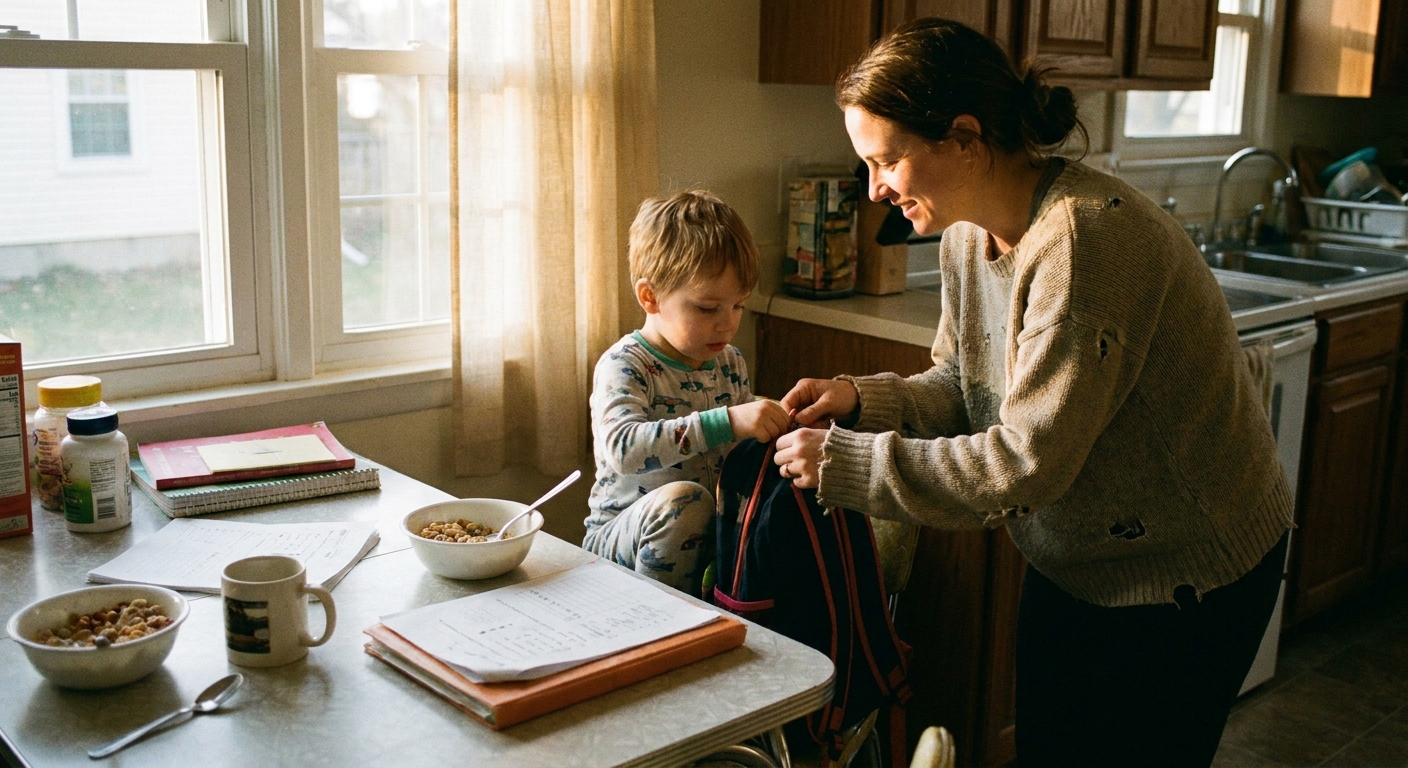
Tummy aches and headaches can be very real stress responses. The nervous system affects the gut, appetite, and pain perception. A child can be genuinely uncomfortable and also have anxiety as the main driver.
That said, do not ignore persistent symptoms. Contact your pediatrician, especially if your child has:
- Fever, vomiting, significant diarrhea
- Persistent or severe abdominal pain
- Weight loss or poor growth
- Blood in stool
- Frequent fainting, chest pain, trouble breathing
- Pain that wakes them from sleep
- New neurologic symptoms (for example, weakness, severe dizziness, severe headaches, vision changes)
- Symptoms that occur on weekends too
When in doubt, call. You can rule out medical causes while you also address the school piece.
When to get extra help
You do not need to wait until your child is fully out of school to seek support. Early help often shortens the whole ordeal.
Consider calling your pediatrician if
- Physical complaints are frequent or intense
- Anxiety is affecting sleep, eating, or daily functioning
- Your child has panic-like symptoms at drop-off
- There is a history of anxiety, OCD, depression, or trauma in the child or family
- You want help coordinating school supports or discussing evaluation options
Consider a child therapist if
- Refusal persists longer than 2 to 4 weeks despite consistent routines
- Your child is missing significant school time
- You suspect bullying, social anxiety, panic, or trauma
- Your child is avoiding other activities too, not just school
- You feel stuck in daily power struggles
Evidence-based approaches like CBT (cognitive behavioral therapy) for kids and parent coaching can be very effective. Many therapists also work directly with schools on return plans.
Email the school
Sometimes the hardest part is starting the conversation. Here is a simple message you can adapt:
Hi [Teacher/Counselor Name],
We are seeing a lot of distress around coming to school. Mornings include [brief description: crying, stomachaches, refusing to enter]. Once at home, symptoms often improve.
We would like to partner with you on a support plan. Could we schedule a brief meeting to discuss what you are noticing at school and set up a consistent drop-off and check-in routine? If possible, we would also like to identify a safe adult our child can go to if they feel overwhelmed.
Thank you,
[Your Name]
Clear, calm, and collaborative goes a long way.
FAQ
Should I force my child to go to school?
Most kids with school refusal do best with a plan that prioritizes consistent attendance while also adding supports. Repeatedly staying home can strengthen avoidance. That said, the exact approach should be individualized. If there is a safety concern, like bullying or a serious mental health concern, address safety first with the school and your pediatrician.
What if the teacher says they are fine after I leave?
That can still be separation anxiety. It is actually a hopeful sign that they can settle. The goal becomes making the transition predictable and reducing morning escalation.
Could this be a learning issue?
Yes. If school refusal centers around reading, writing, math, or tests, ask about academic screening and supports. Kids rarely say, “I can’t decode words.” They say, “I hate school.”
Do attendance laws matter here?
Yes. Requirements vary by location and age. If absences are piling up, involve the school early so you can build a plan that supports your child and keeps you in good standing.
Urgent red flags
Get immediate help if your child talks about wanting to hurt themselves, expresses hopelessness, or you see concerning behavior changes like self-harm, severe withdrawal, or threats toward others.
- If there is imminent danger, call your local emergency number.
- If you are in the U.S., you can call or text 988 for the Suicide and Crisis Lifeline.
You are not “making it worse” by asking directly about safety. You are being the sturdy adult your child needs.
A final note
School refusal is exhausting because it hits at two tender spots: your child’s distress and your fear of doing the wrong thing. You do not have to choose between compassion and boundaries. The sweet spot is calm leadership plus support.
If today was a meltdown-at-the-door day, take a breath. Start with one step: message the teacher, tighten the morning routine, and begin gently investigating the “why.” This is fixable, and you do not have to do it alone.
Sarah Mitchell
Sarah Mitchell is a Registered Pediatric Nurse and a mother of three who has spent over a decade helping families navigate the beautiful, chaotic early years of childhood. She combines evidence-based medical knowledge with real-world parenting experience to offer practical, compassionate advice. At Awesome Parent, Sarah's mission is to help exhausted parents find solutions, trust their instincts, and finally get some sleep.