Seizures in Toddlers Without Fever: What It Can Mean and When to Call 911

Sarah Mitchell
Sarah Mitchell is a Registered Pediatric Nurse and a mother of three who has spent over a decade helping families navigate the beautiful, chaotic early years of childhood. She combines evidence-based medical knowledge with real-world parenting experience to offer practical, compassionate advice. At Awesome Parent, Sarah's mission is to help exhausted parents find solutions, trust their instincts, and finally get some sleep.
Emergency quick guide
Child seizing right now?
- Start a timer.
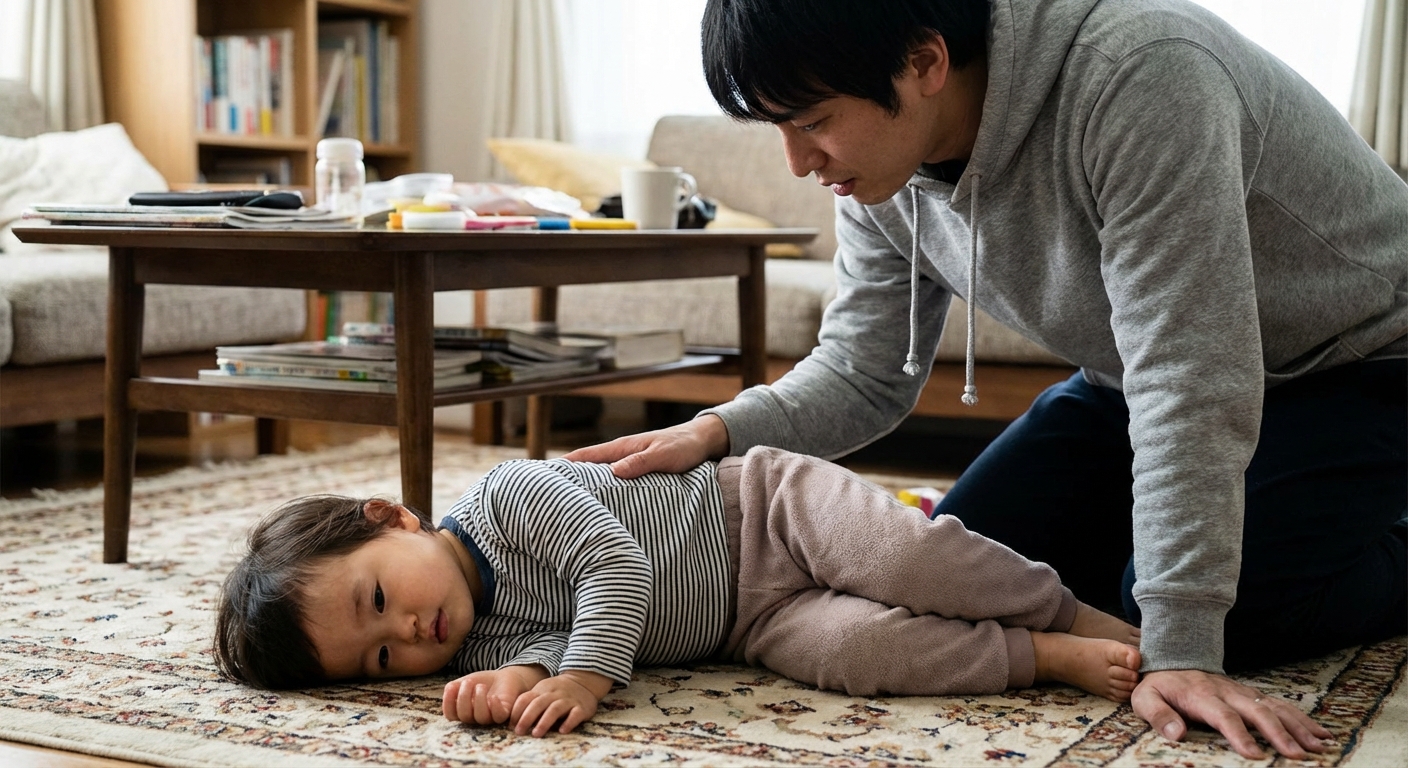
- Roll them onto their side (recovery position) if you can do so safely.
- Clear the area and cushion the head.
- Do not put anything in their mouth.
Call 911 now if breathing is not normal, they stay blue or gray, the seizure lasts more than 5 minutes (or you are not sure), there are repeated seizures, there was a serious injury, or it happened in water.
If your toddler has a seizure without a fever, it can feel like the ground drops out from under you. In triage, I have seen parents arrive shaking, apologizing, convinced they missed something obvious. You did not. Afebrile seizures, meaning seizures not clearly linked to a fever, are one of those parenting emergencies where calm, simple steps matter more than perfect answers in the moment.
This article will help you do three things: keep your child safe during the event, know when to call 911, and understand the broad categories clinicians consider afterward without trying to diagnose your child from a screen.
First, a quick definition
An afebrile seizure is a seizure that happens when your child does not have a fever at the time (typically no measured temperature of 100.4°F or 38°C), or when fever is not the obvious trigger.
A few nuances that matter in real life:
- Some kids truly have no fever at all.
- Some are getting sick but have not developed a fever yet, or the fever shows up later.
- Seizures can still occur with temperatures below 38°C, so clinicians will ask about any recent illness, chills, or “off” behavior, not just one number.
Either way, the initial first aid is the same: protect breathing and prevent injury, then get the right level of help.
When to call 911
Call 911 if any of the following are true. These are the red flags we take most seriously in pediatric triage.
- Breathing problems: your child is not breathing normally, you cannot see chest rise, or they do not resume normal breathing after the shaking stops.
- Blue or gray color: brief blue lips can happen during a seizure, but call 911 if they stay blue or gray, breathing is not normal, or you are unsure.
- Seizure lasts more than 5 minutes, or you are not sure how long it has been going on.
- Repeated seizures: a second seizure happens soon after the first, or your child does not wake up and move back toward their usual self between events.
- Serious injury: they hit their head hard, have a deep cut, or you suspect a broken bone.
- Seizure in water: bathtub, pool, lake, even if it seemed brief.
- Age under 6 months: this always needs urgent emergency evaluation. If the seizure has stopped and breathing is normal, your clinician may guide you to the ER, but if you are worried or anything looks off, call 911.
- Concerning symptoms afterward: very hard to wake, not improving over 30 to 60 minutes, persistent vomiting, severe headache, stiff neck, a new rash, or a “very ill” appearance.
- Known diabetes or you suspect low blood sugar (pale, sweaty, limp, not acting right) along with the event.
- Possible poisoning: medication ingestion, gummies, household products, carbon monoxide exposure.
If your gut is screaming that something is wrong, treat that as a symptom too. You are allowed to call for help.
Important: A first-time seizure still deserves urgent medical assessment even if it stops quickly. 911 is for the red flags above. If those red flags are not present and your child is stable, your pediatrician, urgent care, or a nurse line can help direct you to the right setting, but most kids will be told to go to the ER the same day for a first afebrile seizure.
What to do during
Your job is not to stop the seizure with your hands. Your job is to keep your toddler safe until it ends.
1) Start a timer
Look at a clock or start a timer on your phone. Time feels warped during a seizure, and the length of the event is one of the most important details for clinicians.
2) Put them on their side
Gently roll your child onto their side if you can do so safely. This helps saliva or vomit drain out and keeps the airway more open.
If you are worried about a significant head or neck injury (for example, a hard fall right before the seizure), do not force positioning. If they are on their back and vomiting or drooling heavily, do your best to turn the head to the side while you wait for emergency help.
3) Clear the area
Move hard or sharp objects away. If they are on a bed or couch, guide them toward the middle or to the floor if you can do so safely so they do not fall.
4) Protect the head
Place something soft under their head, like a folded sweatshirt.
5) Loosen tight clothing
Loosen anything around the neck. Glasses off if needed.
6) Do not put anything in their mouth
No fingers. No spoon. No medicine. Toddlers do not swallow their tongue, but they can bite you or choke.
7) Do not restrain them
Holding them down can cause injury. Stay close and guide them away from danger.
8) If they vomit
Keep them on their side and wipe the mouth gently. Focus on breathing.

What to do after
Many toddlers have a postictal period, meaning a recovery window after a seizure where they may be sleepy, confused, clingy, or briefly not themselves. This can be scary, but it is common.
For many children, this lasts about 5 to 30 minutes. Sometimes it can last a few hours, especially after a longer seizure or missed sleep. What I want you watching for is the direction things are going: most kids gradually look more like themselves.
- Keep them on their side until they are clearly alert and swallowing normally.
- Check breathing and color. Normal breathing and pink color are reassuring.
- Do not offer food or drink until they are fully awake and coordinated.
- Stay with them. A second seizure can happen.
If your child is not improving, is very hard to wake, or you cannot get them to respond in a way that feels right after 30 to 60 minutes, treat that as urgent and seek emergency care.
If this was their first seizure, even if they seem better, most clinicians will recommend same-day evaluation. If you are being told something different by your child’s specific care team, follow their plan.
What to record
If you can safely do it, record a short video. I know that sounds strange, but seizure descriptions are notoriously hard to translate into words, especially when you are terrified. Video can help a clinician distinguish seizure types and look-alikes.
Write down these specifics
- Start and end time (or best estimate).
- What your toddler was doing right before: sleeping, eating, crying, running, bathing.
- Body movements: whole-body stiffening, rhythmic jerking, one side only, facial twitching, eye blinking.
- Eye position: rolled back, staring, eyes deviated to one side.
- Responsiveness: did they respond to their name or touch?
- Breathing and color: normal, noisy, pauses, blue lips.
- Drooling, foaming, vomiting.
- Loss of bladder or bowel control (not required to be a seizure, just a clue).
- Recovery: how long until they were alert, walking, talking, acting like themselves.
- Temperature details: what it was, how you measured it, and when (and if a fever developed later).
- Recent illness, missed sleep, missed meals, new medications, or possible ingestion.
- Prior events: staring spells, unusual brief episodes, developmental concerns.

What it can mean
When a toddler has a seizure without fever, clinicians cast a wide net. That does not mean something terrible is likely. It means we want to be thorough, because the next steps depend on the context.
1) A first unprovoked seizure
Sometimes a child has a single seizure with no clear trigger and never has another. After evaluation, the care team may recommend monitoring, safety planning, and sometimes referral to a pediatric neurologist.
2) Epilepsy
Epilepsy is typically diagnosed when a child has recurrent unprovoked seizures or a high risk of recurrence based on testing and history. Many forms are very treatable, and most kids with epilepsy still do regular kid things with the right plan in place.
3) Sleep-related events and mimics
Some seizures happen around sleep or waking. There are also common sleep and behavior events that can look seizure-like, such as night terrors (which often involve screaming, confusion, and being hard to console, but not the same rhythmic whole-body jerking seen in many seizures). There are also other nonepileptic events in toddlers, and your care team may talk through these based on a video and the details you recorded.
4) Blood sugar and electrolytes
Low blood sugar can cause seizures. Electrolyte abnormalities can also trigger seizures, sometimes in the setting of vomiting, diarrhea, or poor intake. This is one reason ER teams often check blood sugar quickly.
5) Ingestion or toxin exposure
Medications (prescription or over-the-counter), cannabis edibles, and household products can all trigger seizures. If you suspect ingestion, call Poison Control at 1-800-222-1222 in the US, and call 911 for any active seizure or breathing concerns.
6) Head injury
Seizures can happen after a significant head injury. If your toddler had a hard fall and then a seizure, treat that as an emergency.
7) Infection of the brain or its lining
More rare, but important not to miss. Red flags can include persistent altered mental status, extreme sleepiness, repeated vomiting, a new rash, inconsolable irritability, or a child who looks very ill. Fever may or may not be present early.
8) Breath-holding and fainting
Some toddlers hold their breath after pain or frustration, briefly pass out, and may have a few jerks. Syncope (fainting) can also look seizure-like. These are real events and still deserve evaluation, but they are managed differently than epilepsy.
What the ER may do
Parents often worry that a huge battery of tests is guaranteed. In reality, the workup is individualized based on age, exam, history, and what the event looked like.
- Vitals and exam focusing on neurologic status and hydration.
- Point-of-care blood sugar is common.
- Blood or urine tests sometimes, especially if illness, dehydration, electrolyte issues, or ingestion is suspected.
- EEG (a test that measures brain electrical activity) may be arranged urgently or as an outpatient.
- Imaging (CT or MRI) if there are specific concerns like trauma, abnormal exam, or signs of increased pressure in the head. CT is used sparingly because of radiation. MRI is often preferred when it is safe to do it without delaying urgent care.
- Medication may be given if the seizure is prolonged, recurring, or if a seizure disorder is diagnosed.
If your child is discharged home, ask for clear guidance about what to watch for overnight and when to return.
Seizure first aid
Do
- Time it.
- Place your toddler on their side if you can do so safely.
- Move hazards away and cushion the head.
- Stay with them until fully alert.
- Record video if it is safe.
Do not
- Do not put anything in their mouth.
- Do not hold them down.
- Do not give food, drink, or oral medication during the event or right after if they are not fully awake.
- Do not put them in a bath or shower to “wake them up.”
- Do not drive them to the hospital if they are actively seizing or having breathing problems. Call 911.
Choosing where to go
Once the seizure stops and your child is breathing normally, the next question is often: do I call the pediatrician, go to urgent care, or go to the ER?
- Call 911 for any red flag listed above.
- Go to the ER today for most first-time afebrile seizures, even if your child seems okay afterward.
- Call your child’s neurology team (or pediatrician) for guidance if your child has known epilepsy and this seizure looks typical, is brief, and they return to baseline, especially if you already have a seizure action plan. If the plan says use rescue medication or call 911, follow that plan.
- When in doubt, err on the side of urgent evaluation. It is much easier to reassure a parent in person than to fix a missed emergency.
Planning for next time
I hope you never need this section again. But if you do, having a plan can lower the panic level by about fifty percent.
- Ask your clinician about rescue medication if your child is at risk for prolonged seizures. Examples you may hear about include rectal diazepam or intranasal midazolam, but these are only used if prescribed with clear instructions.
- Review supervision. Avoid unsupervised baths. Be extra cautious around pools and open water.
- Share the plan with caregivers, daycare, and family. A one-page note with steps and emergency numbers is often enough.
If your toddler has another seizure, use the same safety steps and call for urgent help based on the 911 list above.
A note on reassurance
Watching a seizure is one of the scariest things a parent can see. It is also something many children recover from remarkably well, especially when caregivers respond with calm, basic first aid and prompt medical evaluation.
If you are reading this at 3 AM, phone in hand, replaying what you saw, here is your next best step: write down what happened while it is fresh, and contact your pediatrician or seek urgent evaluation today. And if any red flags show up, call 911. You are not overreacting. You are parenting.