Sensory Processing Issues in Toddlers: Signs and What to Do

Sarah Mitchell
Sarah Mitchell is a Registered Pediatric Nurse and a mother of three who has spent over a decade helping families navigate the beautiful, chaotic early years of childhood. She combines evidence-based medical knowledge with real-world parenting experience to offer practical, compassionate advice. At Awesome Parent, Sarah's mission is to help exhausted parents find solutions, trust their instincts, and finally get some sleep.
If your toddler seems bothered by things other kids barely notice, like seams in socks, the blender, or a light touch, you are not alone. And if your toddler is the opposite, always jumping, crashing, licking, spinning, and seeking big sensations, you are not alone too.
In pediatric triage, I talked to so many exhausted parents who felt like their child was “too sensitive” or “too wild” and they worried they were doing something wrong. You are not. Sensory processing differences can show up in the toddler years, and there are concrete steps you can take to make daily life smoother.
Quick note: This article is for education and support, not diagnosis. If you are worried about your child’s development, feeding, sleep, or safety, talk with your pediatrician or an occupational therapist (OT). If you suspect an urgent medical issue, contact your clinician promptly.
This article will help you recognize sensory patterns (seeking, avoiding, and more), understand how sensory challenges can overlap with autism and ADHD (but are not the same thing), know when an OT evaluation is worth requesting, and try practical strategies at home.

What sensory processing means
Your toddler’s brain is constantly taking in information from the senses and deciding what to do with it. Most of us think of five senses, but sensory processing also includes:
- Touch (textures, water on skin, tags, sand, sticky hands)
- Sound (vacuum, hand dryers, busy rooms)
- Light and visual input (bright stores, busy patterns)
- Smell and taste (food smells, toothpaste, new flavors)
- Vestibular (movement, spinning, swinging, being tipped back)
- Proprioception (body awareness, “heavy work,” pressure, how hard they hug or push)
- Interoception (internal signals like hunger, needing to pee, discomfort, overheating)
When kids have sensory processing difficulties, it usually means their nervous system is registering certain input as “too much,” “not enough,” or “confusing.” The result is a child who may melt down, avoid, or seek sensations in ways that make everyday tasks harder.
Important note from one tired parent to another: toddlers are also just toddlers. A single meltdown in Target does not automatically equal a sensory disorder. The pattern and the impact on daily life are what matter.
Sensory patterns: what they can look like
Many toddlers show a mix. Patterns often include over-responsivity (sensory sensitive), under-responsivity (sensory seeking or low noticing), and/or sensory discrimination challenges (trouble interpreting sensations accurately). Some kids also struggle with motor planning (organizing movements).
Sensory avoiding (over-responsive)
These toddlers experience certain sensations as intense, irritating, or even painful. They often look “fussy,” “rigid,” or “easily overwhelmed,” especially in busy environments.
- Touch: hates tags, seams, certain fabrics, sticky hands; panics during nail trims; dislikes hugs unless on their terms; upset by messy play (paint, sand, shaving cream)
- Sound: covers ears with vacuum, blender, hand dryer, loud siblings; distressed in restaurants or birthday parties
- Movement: fearful of swings, slides, being tipped back for hair washing; carsickness more easily
- Oral: very picky textures; gags on certain foods; fights toothbrushing; bothered by toothpaste flavor
- Daily routines: big meltdowns around bath time, hair washing, dressing, socks, shoes, or transitions
- Big picture: shuts down or has explosive tantrums when overstimulated, then needs a long recovery
Sensory seeking (craving input)
These toddlers need bigger, stronger input to “feel right” or to stay organized. They can look energetic, fearless, and sometimes unintentionally rough. Sensory seeking can show up even if a child is sensitive in other areas.
- Movement: constantly running, jumping, spinning; climbs everything; seeks swinging or being tossed
- Touch and pressure: crashes into furniture, bumps people, prefers tight hugs or being squeezed; chews on shirts, toys, or fingers
- Oral: licks objects, stuffs mouth, craves crunchy or very strong flavors
- Body awareness: does not notice messy face, wet clothes, minor bumps; seems to have no “just right” setting for force
- Big picture: gets dysregulated when they cannot move, and behavior can escalate fast in situations requiring stillness
Sensory discrimination and motor planning signs
- Seems clumsy or frequently trips, bumps, or falls beyond what you would expect
- Has trouble learning new movements like pedaling, climbing down safely, using utensils
- Uses too much or too little force (breaks crayons, barely pushes a door)
- Struggles to find objects by touch without looking, or gets “stuck” in how to start a task
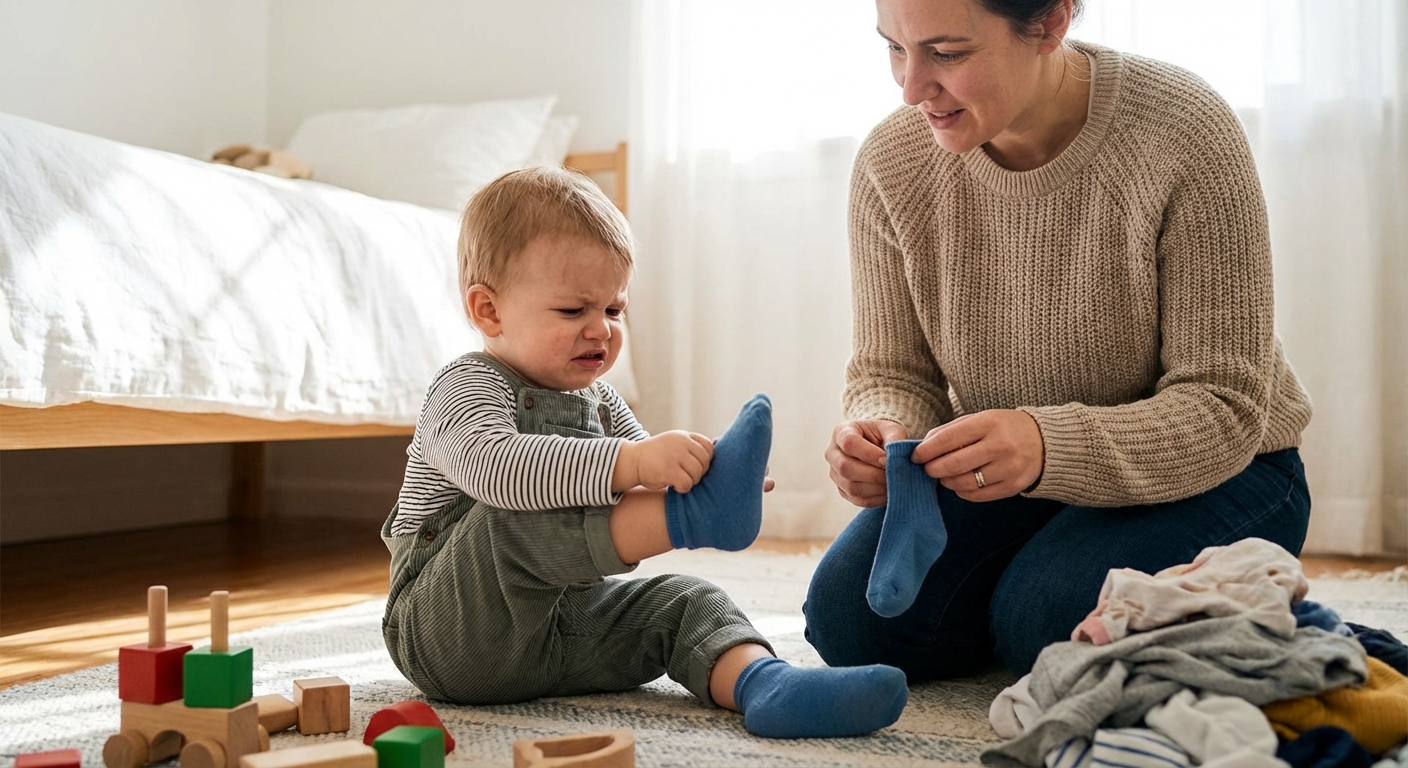
Tantrum vs meltdown (a helpful lens)
Parents often ask whether a hard moment is “behavior” or “sensory.” In real life, it can be both, but this quick lens helps:
- Tantrum: usually tied to a want or a “no,” and the child may still track you, negotiate, or switch gears if they get what they want.
- Meltdown: a nervous system overload. The child looks flooded, not strategic. They often cannot use skills they normally have, and they need time and support to come back down.
During a meltdown, aim for co-regulation: fewer words, more calm presence, and simple structure.
How is this different from autism or ADHD?
This is where the internet gets loud and scary. Let’s slow it down.
Sensory differences can occur on their own, and they are also common in kids with autism and ADHD. Think of sensory processing challenges as a possible piece of the puzzle, not the whole picture.
Sensory issues vs autism
Autism is defined by differences in social communication and the presence of restricted or repetitive behaviors or interests. Sensory differences are included in autism criteria, but they are not enough on their own for an autism diagnosis.
You might consider an autism screening if sensory challenges come with things like:
- Limited eye contact or shared attention (rarely points to show you things, rarely looks back and forth between you and an object)
- Delayed or unusual social communication (not responding to name consistently, limited gestures, language delays with limited back-and-forth)
- Repetitive behaviors (hand flapping, lining up toys, strong sameness needs)
- Intense, narrow interests that interfere with daily life
Many autistic toddlers are affectionate and playful. Many non-autistic toddlers have sensory issues. The key is the whole developmental picture.
Sensory issues vs ADHD
ADHD is primarily about attention regulation, hyperactivity, and impulsivity across settings. Sensory seeking can look a lot like hyperactivity, and sensory overload can look like “not listening.”
ADHD is often diagnosed later (preschool or school age), but if impairment is significant, your pediatrician can screen earlier and refer as appropriate. Only a qualified clinician can diagnose ADHD.
You might ask about ADHD evaluation if you see:
- Consistent impulsivity that causes safety issues (darting, climbing dangerously) beyond typical toddler testing
- Difficulty sustaining attention for age-appropriate activities, across environments
- High activity level that is persistent and not mainly tied to sensory environments
In toddlers, it can be hard to separate normal development from early ADHD traits. That is one reason OT and early intervention can be so helpful, because the supports are skill-based either way.
Can a child have more than one thing going on?
Yes. Sensory processing challenges can coexist with language delays, anxiety, autism, ADHD, or coordination differences. Getting support is not “labeling.” It is giving your child tools and giving you a plan.
Next: how to tell when it is time to bring in extra help.
When it is more than a phase
Lots of toddlers dislike hair washing or hate loud toilets. What raises the flag is when the reactions are intense, frequent, and disruptive, or when your child cannot participate in normal routines without major distress.
Consider asking for help if you notice:
- Daily life is a battle around dressing, bathing, toothbrushing, meals, car rides, daycare drop-off, or sleep
- Meltdowns are intense and happen predictably with certain sensations (noise, crowds, textures, grooming)
- Your toddler avoids typical play like sand, playgrounds, finger paint, or climbing because it feels overwhelming
- Safety concerns due to constant crashing, climbing, or low body awareness
- Food selectivity is extreme (very few foods, gagging, distress, weight concerns)
- Sleep is persistently disrupted by sensory discomfort (pajamas, bedding textures, temperature sensitivity)
- Childcare providers notice the same pattern in a different setting
If you are thinking, “This describes us, and I am exhausted,” that is your sign to ask for support. You do not need to wait until it gets worse.
When to request an OT evaluation
Occupational therapists (OTs) are the go-to professionals for helping kids with sensory processing, regulation, daily skills, and play participation.
Ask your pediatrician about OT if:
- Your toddler’s sensory reactions interfere with eating, sleeping, dressing, bathing, play, daycare, or safety
- You have tried basic tweaks and nothing is improving
- There are signs of motor planning or coordination issues (frequent falls, difficulty with age-typical skills)
- You suspect feeding therapy may be needed for texture refusal or gagging
- You want help building a sensory routine that actually fits your family
What an OT evaluation is like
Most OT evaluations include a detailed parent interview (what is hard, what helps, what a day looks like), observation of play and movement, and sometimes standardized questionnaires or tests. You will typically leave with a plan: home strategies, goals, and recommendations for therapy frequency if needed. A good OT plan should feel practical, not like a full-time job.
Where to start
- In the US: If your child is under 3, you can often self-refer to your state’s Early Intervention program for evaluation.
- If your child is 3 or older, contact your local school district for an evaluation, even if your child is not in public school.
- You can also pursue private OT through insurance or self-pay.
Bring notes. In clinic, the parents who got the fastest, clearest help were the ones who could say, “Here are the top three hard moments of our day, here is what triggers them, and here is what we have already tried.”

What you can do at home
These strategies are about reducing sensory stress and building regulation skills. Pick one or two to start. Tiny changes add up.
1) Work with the nervous system
If your child is already overwhelmed, teaching and reasoning will not land. Focus first on calming the body.
- Lower noise and visual clutter when possible
- Dim lights, or use warm lamps instead of bright overhead lights
- Offer a calm corner with a blanket, a few books, and a comfort item
- Give fewer words during meltdowns, and more comfort and structure
2) Pair tough routines with regulation
Pair a hard sensory task with something regulating or motivating.
- Hair washing: let them hold a favorite waterproof toy, use a visor, use a washcloth “shield” over the eyes, then follow with a tight towel wrap or firm lotion rub
- Toothbrushing: let them choose the brush, start with a “count to 10” brush, follow with a crunchy snack if appropriate (ask your dentist for ideas)
- Dressing: warm clothes in the dryer for 2 minutes, offer deep pressure squeezes before socks, switch to seamless socks or tagless shirts
3) Deep pressure and heavy work
Many kids regulate well with proprioceptive input, meaning pressure and resistance. Many families find these activities more settling than fast spinning or wild movement, especially for kids who get revved up easily.
- Push a laundry basket filled with towels
- Carry small grocery items
- Wall pushes or “push the couch” game
- Animal walks (bear crawl, crab walk) down the hallway
- “Pillow sandwich” squish time (gentle, supervised, stop if your child resists, and never restrict breathing)
4) Build a simple daily rhythm
A sensory diet is just a planned rhythm of regulating activities built into the day. It is not a strict schedule and it is not only for therapy families.
Example for a sensory seeking toddler:
- Morning: jumping on a cushion 2 minutes, then breakfast
- Before leaving the house: carry a small backpack or push the stroller with help
- After daycare: playground time or a scooter ride, then bath
- Before bed: warm bath, lotion with firm pressure, snug pajamas, story
Example for a sensory avoiding toddler:
- Morning: slow wake up, dim lights, predictable steps with pictures if helpful
- Outings: headphones in loud places, short trips, a “quiet break” plan
- Meals: one safe food always available, tiny exposures to new textures without pressure
- Before bed: consistent routine, soft fabrics, white noise if tolerated
5) Make the environment easier
- Clothing: tagless, seamless, soft fabrics; consider sizing up for less pressure
- Sound: child-safe ear protection for hand dryers, fireworks, busy events
- Smell: unscented detergent and soaps if scents trigger headaches or nausea
- Meals: avoid strong food smells when possible, offer “same but different” foods (two brands of crackers, different shapes of the same pasta)
- Car: sunglasses, window shade, consistent music, chewy snack if age-appropriate and safe
6) Reduce power struggles with previewing
For sensory sensitive toddlers, surprises can feel like an attack on the nervous system.
- Use simple previews: “First socks, then shoes, then outside.”
- Offer two acceptable choices: “Blue socks or gray socks?”
- Use timers gently: “When the timer beeps, bath is done.”
7) For seekers: offer safe input early
If your toddler only gets movement once they are already climbing the bookshelf, it can start to feel like you are constantly trying to prevent the next unsafe choice.
- Build in movement breaks before meals and before any sitting task
- Offer “crash safe” options: couch cushions on the floor, a foam mat
- If you use a mini trampoline, supervise closely and use basic safety rules (one child at a time, stable surface, stop if it gets too intense)
- Provide chew options designed for kids (ask your OT or pediatrician for safe choices). Supervise use, choose age-appropriate products, and avoid anything that could become a choking hazard.

Feeding: when picky eating is a red flag
Picky eating is common in toddlers. Sensory-related feeding challenges often look different because the reaction is intense and specific to texture, temperature, smell, or how foods are mixed.
Consider extra support if your toddler:
- Gags, vomits, or panics with new textures
- Accepts very few foods and the list keeps shrinking (some clinicians use “around 20 foods” as a rule of thumb, but the bigger issue is nutrition variety, distress, and day-to-day impact)
- Refuses entire texture groups (all soft foods, all mixed textures, all wet foods)
- Struggles with chewing or seems to pocket food in cheeks
- Is not gaining weight well, or mealtimes are consistently distressing
An OT or speech-language pathologist who specializes in feeding can help. If there are concerns about growth, choking, or swallowing, loop in your pediatrician promptly.
Sleep and sensory sensitivity
If bedtime feels like a nightly negotiation, sensory factors may be part of it. Common culprits include scratchy pajamas, seams, temperature sensitivity, bath discomfort, or a child who is under-stimulated and seeking movement right when you want them still.
Sleep-friendly sensory tweaks
- Try one change at a time so you know what helps
- Use consistent white noise if your child tolerates it
- Choose soft, tagless pajamas and consider turning them inside out if seams bother your child
- Offer deep pressure input before bed (firm lotion rub, snug tuck-in, gentle squeezes)
- For seekers: add movement earlier in the evening, then shift to calming pressure, books, and dim light
What not to do
- Do not force exposure during a meltdown. When a child is dysregulated, pushing through can increase distress and make future tolerance harder.
- Do not assume your child is being defiant. Many sensory behaviors are protective or regulatory.
- Do not add five new strategies at once. Overhauls overwhelm everyone.
- Do not let shame drive the plan. Your child is not “bad,” and you are not “failing.”
If you remember one thing, let it be this: sensory needs are real needs, even when they look like behavior.
Common misconceptions
- This is not bad parenting. A supported nervous system looks like better “behavior,” but the need is still real.
- Sensory needs can change. What is hard at 2 may be easier at 3, and new challenges can appear with new demands.
- Progress is not linear. Travel, illness, skipped naps, and big life transitions can temporarily reduce tolerance.
When to call the pediatrician urgently
Sensory processing challenges are typically not an emergency, but certain symptoms should be discussed promptly.
- Sudden, dramatic change in behavior or tolerance that is out of character
- Regression in skills (loss of words, loss of social engagement)
- Frequent gagging, choking, or concern for swallowing safety
- Failure to gain weight, dehydration, or severe feeding restriction
- Self-injury or aggression that is escalating or unsafe
If you are ever unsure, call your pediatrician. That is what they are there for.
A quick “is this sensory?” checklist
When a hard moment happens, ask yourself:
- What came right before this? Noise, crowd, scratchy clothes, hunger, bright lights, transition?
- Is my child avoiding a sensation, seeking one, or both?
- Does the same trigger cause the same reaction repeatedly?
- What helps them recover? Pressure, quiet, movement, snack, water, predictable steps?
- Is it happening across settings? Home, daycare, grandparents, stores?
Write it down for a week. Patterns show up fast, and that information is gold for your pediatrician and OT.
Bottom line
Sensory processing challenges can make toddler life louder, messier, and more exhausting. They can also be managed, especially when you stop fighting your child’s nervous system and start supporting it.
If your gut says, “We need help,” trust that. An occupational therapy evaluation can turn daily battles into workable routines, and it often brings a huge sense of relief for parents who have been carrying this alone.
You deserve support too, not just your toddler. Sleep helps. A plan helps. And you are already doing the most important thing by paying attention and looking for safe, realistic next steps.