A sudden limp can be scary. Here’s how to check for simple causes, what symptoms suggest something serious, and exactly when to call your doctor or go to u...
Sever’s Disease in Kids: Heel Pain That Worsens With Sports

Sarah Mitchell
Sarah Mitchell is a Registered Pediatric Nurse and a mother of three who has spent over a decade helping families navigate the beautiful, chaotic early years of childhood. She combines evidence-based medical knowledge with real-world parenting experience to offer practical, compassionate advice. At Awesome Parent, Sarah's mission is to help exhausted parents find solutions, trust their instincts, and finally get some sleep.
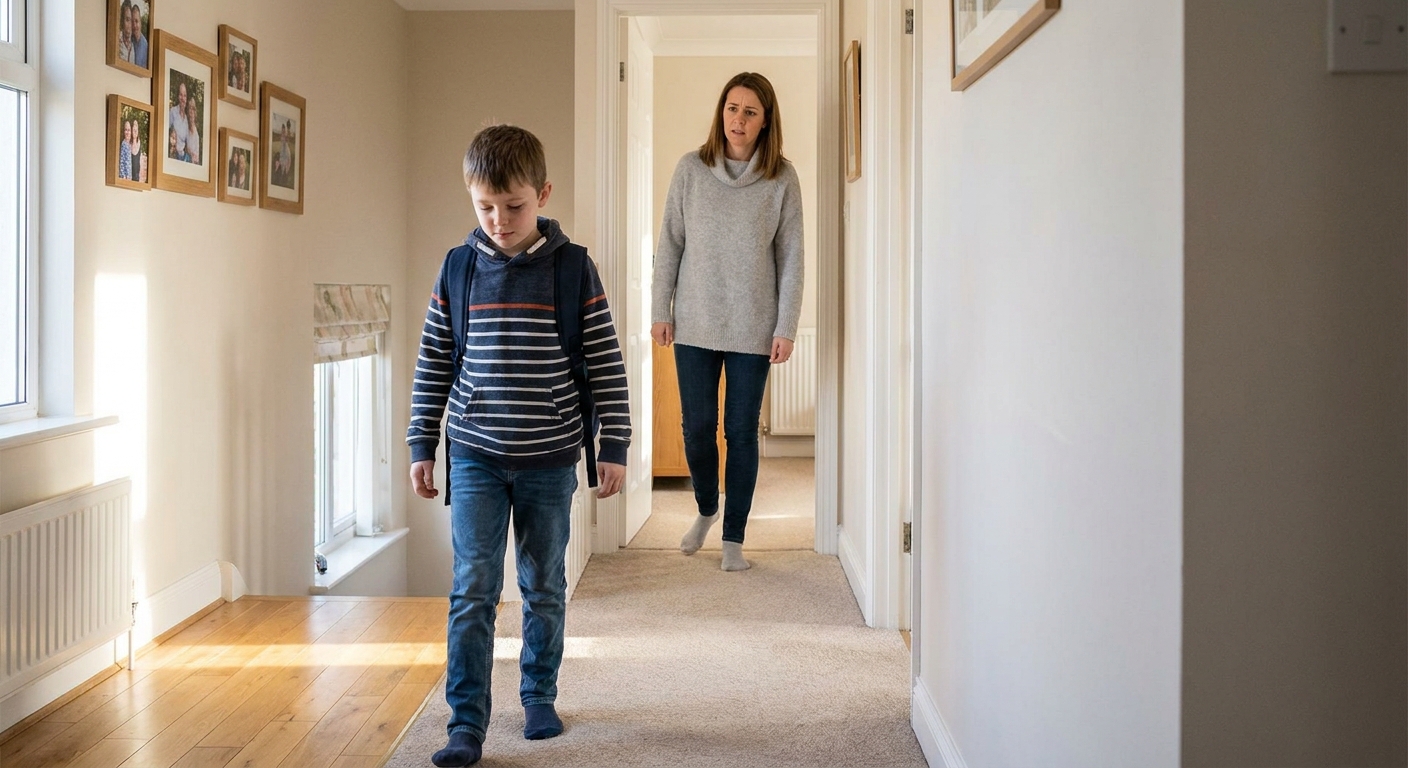
If your child is suddenly limping after soccer practice or complaining that their heel hurts most when they run, jump, or climb stairs, you are not alone. One of the most common reasons active kids get heel pain is Sever’s disease, also called calcaneal apophysitis.
The name sounds dramatic, but the good news is this: it is common, not dangerous, and it almost always improves with the right mix of rest, supportive shoes, and time.
What it is
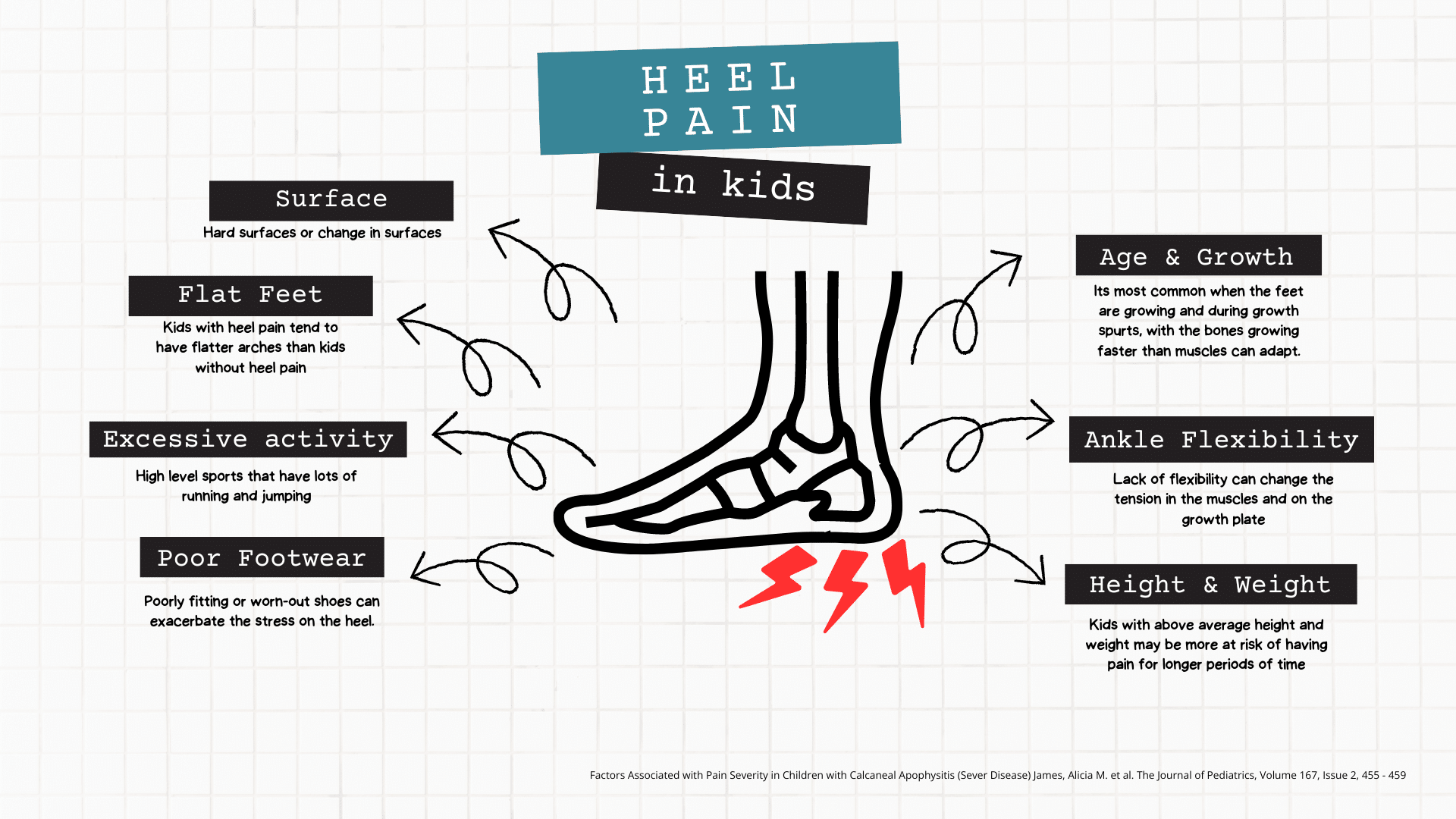
Sever’s disease is an overuse irritation at the growth plate of the heel. Kids have a soft, developing area at the back of the heel bone where growth happens. That area can get sore when it is repeatedly tugged on.
Here is the simple version of what is going on:
- The Achilles tendon attaches near the back of the heel.
- Running and jumping put repeated pull on that attachment point.
- During growth spurts, the heel bone and surrounding tissues can be out of sync. The tendon may feel tighter, and the growth plate can be more sensitive.
- Result: heel pain that flares with activity, especially high-impact sports.
Despite the word “disease,” this is not an infection and not something your child “catches.” It is more like an irritated spot that needs a break and a little support.
Who gets it
Sever’s disease most often shows up in:
- Ages 8 to 14 (sometimes a little younger or older)
- Kids in sports with lots of running and jumping, like soccer, basketball, track, gymnastics, dance, and football
- Kids in sports that still involve bursts of running and cleats, like baseball
- Kids going through a growth spurt
- Kids who recently increased training intensity, started a new season, or switched surfaces (like grass to turf)
It can happen in one heel or both. Many families notice it ramps up when a sports season starts and calms down during breaks.
Symptoms vs growing pains
A lot of parents are told, “It’s just growing pains,” which is frustrating when your child is limping. True growing pains tend to be more vague and generalized. Sever’s disease is usually specific, predictable, and activity-related.
More typical of Sever’s disease
- Pain at the back or bottom of the heel, often one specific spot
- Worse with running, jumping, or sports
- Better with rest
- Limping, toe-walking, or trying not to put weight on the heel
- Morning stiffness or pain at the start of activity, then it may ease a bit, then flare later
- Tenderness if you press on the sides or back of the heel
More typical of generic growing pains
- Aching in both legs, often the thighs, calves, or behind the knees
- Happens in the evening or at night
- Not tied to one specific joint or bone
- No limping during the day
- Often improves with massage, warmth, and reassurance
If your child is limping or avoiding sports because of heel pain, it is reasonable to consider Sever’s disease rather than brushing it off as typical growing pains.
A quick at-home check
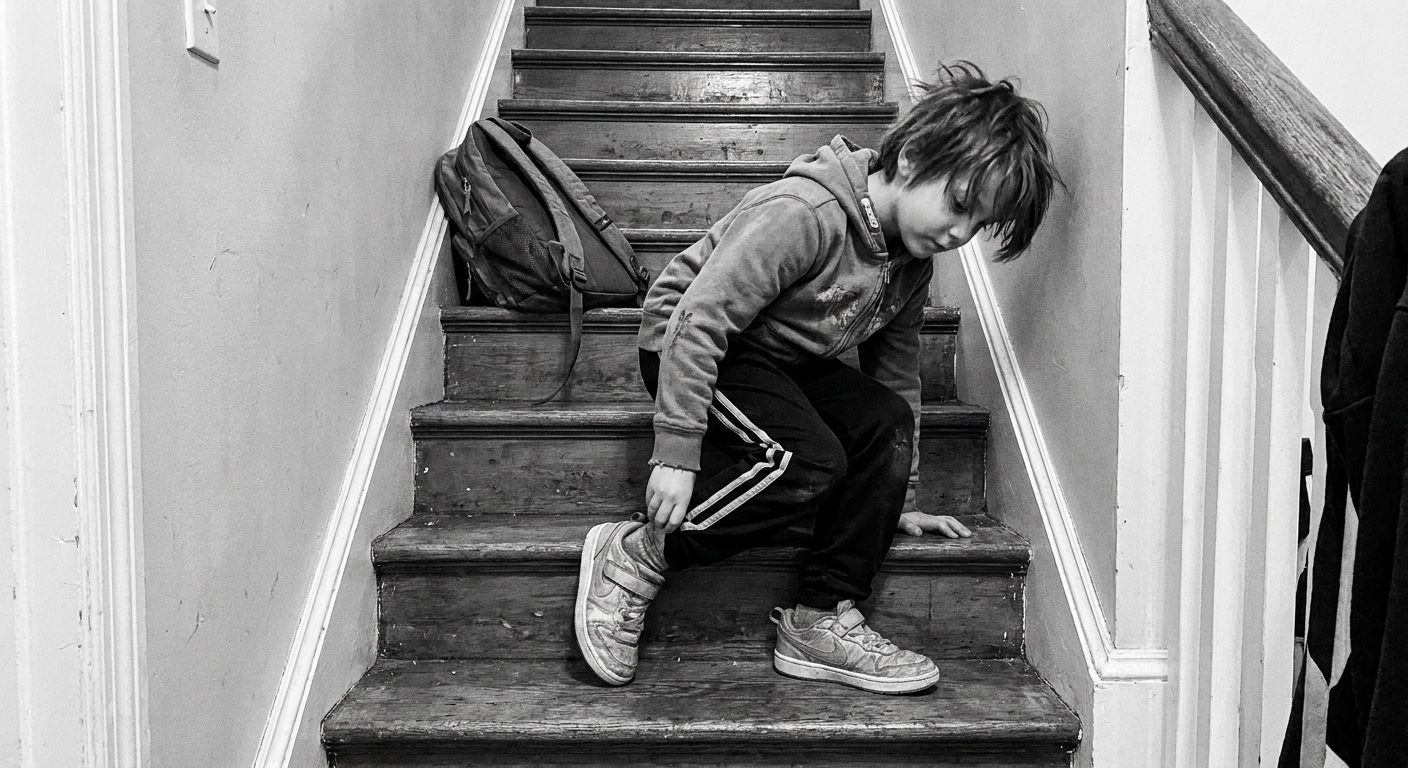
Clinicians often use a simple exam clue called the heel squeeze test. Gently squeeze the heel from both sides (the “walls” of the heel). If it is quite tender compared with the other side, that supports Sever’s disease.
Important: This is not a diagnosis by itself. Skip this if your child has severe pain, swelling, or cannot bear weight, and get them evaluated.
What makes it flare
There is a common pattern: kids do great for a while, then the perfect storm hits. Common triggers include:
- Sudden increase in activity (new team, longer practices, tournaments)
- Hard surfaces (gym floors, turf, pavement)
- Worn-out shoes with poor cushioning
- Flat feet or high arches, which can change how forces hit the heel
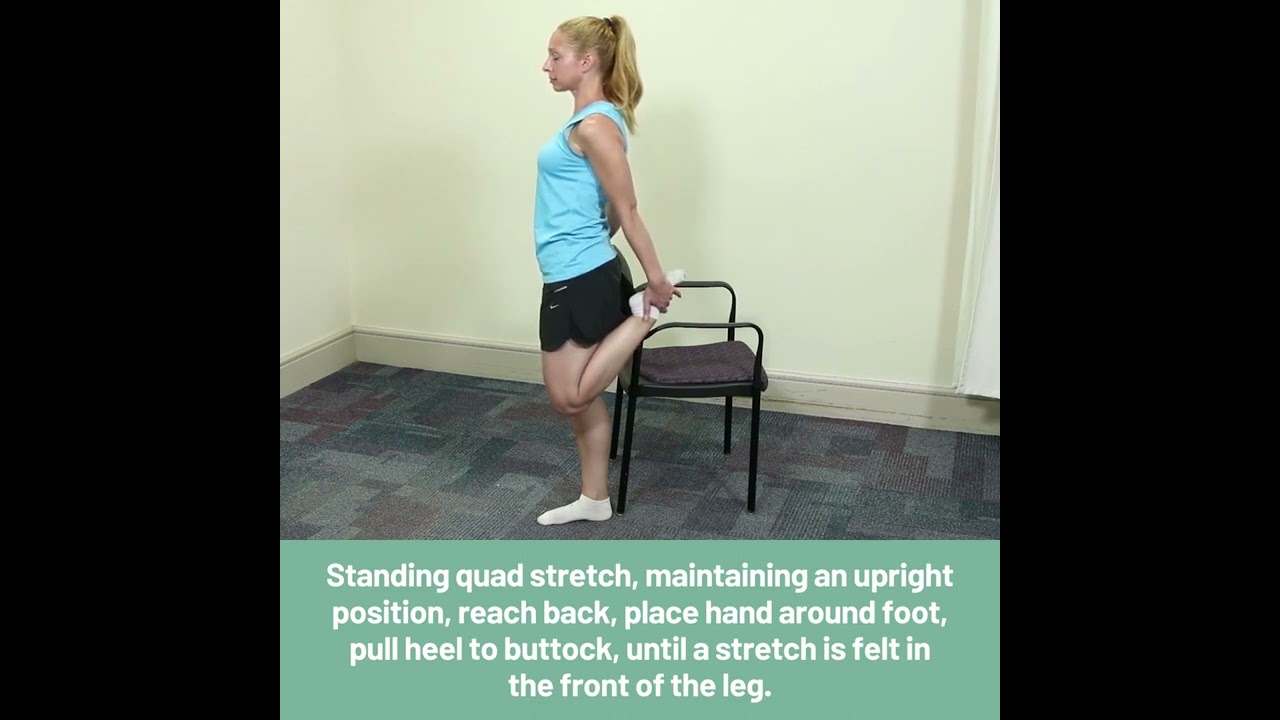
- Tight calves and Achilles
None of these mean your child did something wrong. It just means their heel is asking for a little backup.
At-home care that helps
The goal is to reduce irritation and unload the growth plate while keeping your child as active as is safely possible. You do not necessarily have to put them on the couch for weeks, but you do need to get ahead of the pain cycle.
1) Activity changes
Think “reduce impact” more than “do nothing.”
- Take a break from running and jumping during flares.
- Swap in lower-impact options if your child is up for it, like swimming or biking.
- Consider a short pause from games or tournaments while pain is sharp. Many kids can do light practice drills that do not trigger pain.
A helpful rule of thumb: if your child is limping, the activity level is too high for that day.
2) Ice after activity
- Try 10 to 15 minutes of ice wrapped in a towel after sports or at the end of the day.
- Do not ice directly on bare skin.
3) Stretching (gentle, consistent)
Tight calves increase the pull on the heel. Gentle stretching can help over time.
- Calf stretch with the knee straight
- Soleus stretch with the knee slightly bent
- Hold each stretch about 20 to 30 seconds, repeat a few times, once or twice daily if tolerated
If stretching causes sharp heel pain, ease off and ask your pediatrician or a physical therapist for guidance.
4) Pain relief (if needed)
Many kids do fine without medication. If pain is interfering with sleep or walking, ask your child’s clinician about appropriate options like acetaminophen or ibuprofen, including the correct dosing for age and weight. Avoid giving pain medicine just to “push through” sports. That often backfires.
Parent-to-parent: pain is useful information. We want to listen to it, not mute it so a kid can keep pounding on an irritated growth plate.
Shoes and inserts
Supportive footwear is one of the fastest ways to reduce symptoms.
What to look for
- Good heel cushioning
- Firm heel counter (the back of the shoe should not collapse easily when you squeeze it)
- Arch support that matches your child’s foot shape
- Avoid flimsy, flat shoes for long days, like worn-out sneakers or thin-soled slip-ons
Helpful add-ons
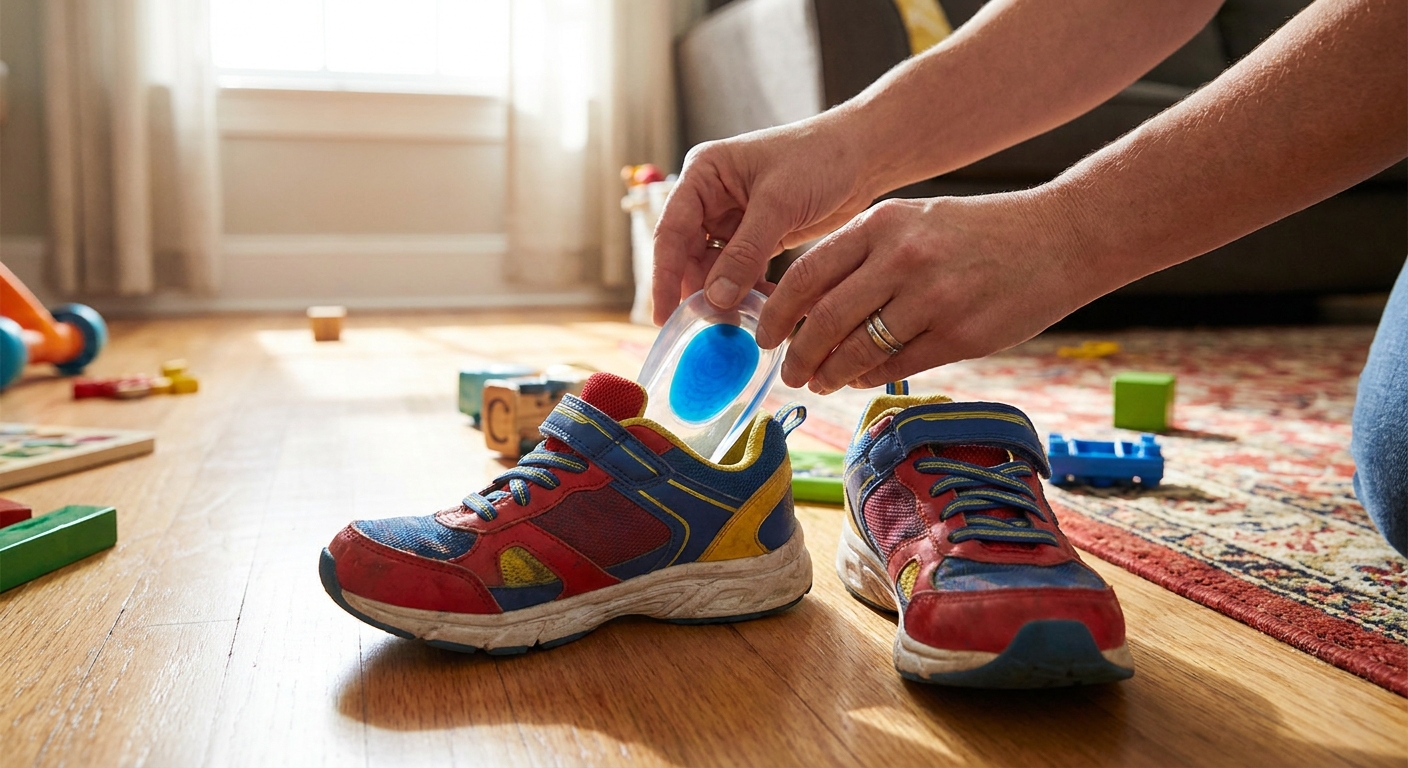
- Heel cups or heel lifts can reduce strain on the Achilles and cushion the heel.
- Over-the-counter arch supports may help some kids, especially if they have flat feet and shoes lack support.
Tip: put inserts in the shoes your child wears most, not just their sports shoes. The heel does not care if it is PE class or recess.
X-rays and scans
Sever’s disease is usually diagnosed based on the story and exam. Many kids do not need imaging.
Your clinician may suggest an X-ray if they want to rule out other issues, especially if the pain is severe, there was a clear injury, or symptoms are unusual.
Two helpful nuances:
- X-rays can look normal in Sever’s disease, and that can still fit the diagnosis.
- X-rays may also show heel growth plate changes (like fragmentation or sclerosis) that can be seen in kids without heel pain. That is why imaging is mainly used to rule out other problems, not to “confirm” Sever’s.
How long it lasts
This is the part every parent wants to know: how long until my kid can play without pain?
- With good activity changes and supportive shoes, many kids feel noticeably better within 2 to 6 weeks.
- Full return to pain-free sports often takes 6 to 12 weeks.
- It varies widely. Symptoms can come and go for months, especially during growth spurts, and can occasionally flare off and on until the growth plate matures.
In real life, it often looks like this: a flare, a break, improvement, a little too much too soon, another flare. That does not mean you are failing. It just means the heel needs a slower ramp-up.
Return to sports
When your child is ready to ramp back up, use a gradual approach.
Signs they can increase activity
- They can walk normally without limping
- They can do daily activities and PE without a pain spike later that day
- Heel pain is mild and improving, not escalating
A simple ramp-up plan
- Start with shorter practices and fewer high-impact drills
- Increase duration or intensity every few days if pain stays stable
- Keep supportive shoes and inserts in place
- Continue calf stretching
If pain jumps from “noticeable” to “sharp” or the limp returns, scale back for a few days.
Prevention and fewer repeat flares
Once symptoms calm down, these habits can reduce recurrences:
- Increase training gradually, especially at the start of a season or before tournaments.
- Replace worn-out shoes before they are totally flattened, especially if your child trains on hard surfaces.
- Keep up with calf flexibility, and consider light strengthening for the foot and ankle if a PT recommends it.
- If possible, avoid year-round, single-sport overload when your child is in a growth spurt.
When to call the pediatrician
Most heel pain with Sever’s disease can be handled with a regular clinic visit. But there are times you should get checked sooner.
Make an appointment soon if:
- Heel pain lasts more than 1 to 2 weeks despite rest and shoe changes
- Your child is regularly limping
- Pain is affecting sleep or daily activities
- Heel pain is in both feet and worsening
- You want guidance for physical therapy, inserts, or a return-to-sport plan
Seek urgent care today if:
- Your child cannot bear weight
- There is significant swelling, redness, warmth, or fever
- There was a specific injury (fall, twist, direct hit) and pain is intense
- There is numbness, severe bruising, or visible deformity
- There is night pain, unexplained weight loss, or pain that is not linked to activity
Those symptoms can point to problems other than Sever’s disease, like fractures or infection, and deserve prompt evaluation.
Other causes to consider
Most active-kid heel pain truly is Sever’s disease, but clinicians may also consider things like Achilles tendon irritation, plantar fasciitis, stress fracture, bursitis, tarsal coalition, inflammatory arthritis, or (rarely) infection. That is one reason it is worth getting checked if symptoms are severe, unusual, or not improving.
Common questions
Is Sever’s disease permanent?
No. It is a temporary irritation of the heel’s growth plate. It typically resolves as your child grows and that area matures.
Can my child keep playing through it?
Some kids can continue modified activity if pain is mild and they are not limping. If your child is limping, avoiding the heel, or pain is getting worse, it is time to pull back. Playing through sharp pain often prolongs recovery.
Is it the same as plantar fasciitis?
Not usually. Plantar fasciitis is less common in younger kids and tends to cause pain more in the bottom of the foot closer to the arch, often worst with first steps in the morning. Sever’s disease is more about the heel growth plate and activity-related pain in active, growing kids.
Do we need physical therapy?
Not always, but it can be very helpful for kids with repeated flares, significant tightness, or trouble returning to sports. A pediatric-focused physical therapist can work on flexibility, strength, and mechanics.
The bottom line
Sever’s disease is a common cause of heel pain in active, growing kids. If your child’s heel pain predictably worsens with sports and improves with rest, think “overuse at the growth plate,” not “something scary.”
Supportive shoes, smart activity changes, stretching, and patience usually get kids back to doing what they love, without turning your whole family into a full-time rehab team.
Sarah Mitchell
Sarah Mitchell is a Registered Pediatric Nurse and a mother of three who has spent over a decade helping families navigate the beautiful, chaotic early years of childhood. She combines evidence-based medical knowledge with real-world parenting experience to offer practical, compassionate advice. At Awesome Parent, Sarah's mission is to help exhausted parents find solutions, trust their instincts, and finally get some sleep.