Fluid behind the eardrum can linger after colds and ear infections. Here is how to spot glue ear, how it’s diagnosed, what to monitor at home and school, w...
Signs of Hearing Loss in Toddlers and Preschoolers

Sarah Mitchell
Sarah Mitchell is a Registered Pediatric Nurse and a mother of three who has spent over a decade helping families navigate the beautiful, chaotic early years of childhood. She combines evidence-based medical knowledge with real-world parenting experience to offer practical, compassionate advice. At Awesome Parent, Sarah's mission is to help exhausted parents find solutions, trust their instincts, and finally get some sleep.
If your toddler seems to ignore you, asks “what?” a hundred times a day, or turns the TV up loud enough to rattle the windows, it is easy to wonder: Are they being a toddler, or are they not hearing well?
As a pediatric nurse and a mom who has personally misread more than one “selective hearing” moment, I want you to know two things can be true at once: toddlers can be wildly distractible and hearing issues are more common than many parents realize.
A quick note before we dive in: this is not a diagnosis. It is a parent-friendly guide to help you spot patterns and know when to ask for a proper hearing check.
The good news is that there are clear clues to watch for, reliable tests at this age, and effective next steps. Let’s walk through it together.
Everyday signs to notice
Hearing loss in toddlers and preschoolers is not always obvious. Many kids compensate beautifully by watching faces, guessing from context, or copying peers. What you often see first is a pattern in speech, behavior, or both.
Speech and language clues
- Delayed speech (fewer words than expected, slower vocabulary growth, or speech that seems “stuck” for months).
- Unclear speech that is not steadily improving over time. Many toddlers are hard to understand, but you should see gradual progress.
- Missing certain sounds, especially softer high-frequency sounds like “s,” “f,” “th,” and “sh.”
- Not responding to their name consistently, especially from another room.
- Seems to hear some things but not others, like reacting to loud noises but missing normal conversation.
Behavior and day-to-day clues
- Frequently says “huh?” “what?” “say it again?” or watches your face intensely when you speak.
- Does not follow directions well, especially multi-step directions, unless you use gestures.
- Turns the TV or tablet volume up higher than others prefer.
- Gets frustrated or melts down more during noisy situations (restaurants, parties, daycare pickup) because listening takes extra effort.
- Seems “in their own world” at times, especially in group settings.
- May startle less at loud, sudden sounds than you would expect (this one is nonspecific, so it matters most when it shows up with other signs).
Social and school clues
- Difficulty joining group play or following along at circle time.
- Looks to other kids before acting, as if waiting to see what everyone else heard.
- Teacher notes about inconsistent attention, not responding, or frequently needing repetition.
Trust the pattern. One quirky day is just toddler life. Repeated signs across different settings are what push this into “worth checking” territory.
Passed the newborn hearing screen? That is great, but it does not always rule out hearing changes later. Hearing can be affected by recurrent fluid, infections, injury, certain illnesses, or other causes that show up after infancy.

Fluid vs permanent loss
When parents bring up hearing concerns, one of the biggest questions is: “Is this something temporary like fluid, or is it a more permanent hearing loss?” Both can affect speech and behavior, but the next steps can look different.
Temporary conductive loss
This is one of the most common causes of hearing difficulties in toddlers. It happens when sound cannot move efficiently through the outer or middle ear, often due to:
- Middle ear fluid after a cold
- Ear infections (acute otitis media)
- Persistent fluid without infection (otitis media with effusion)
- Earwax blockage (less common as a main cause, but it happens)
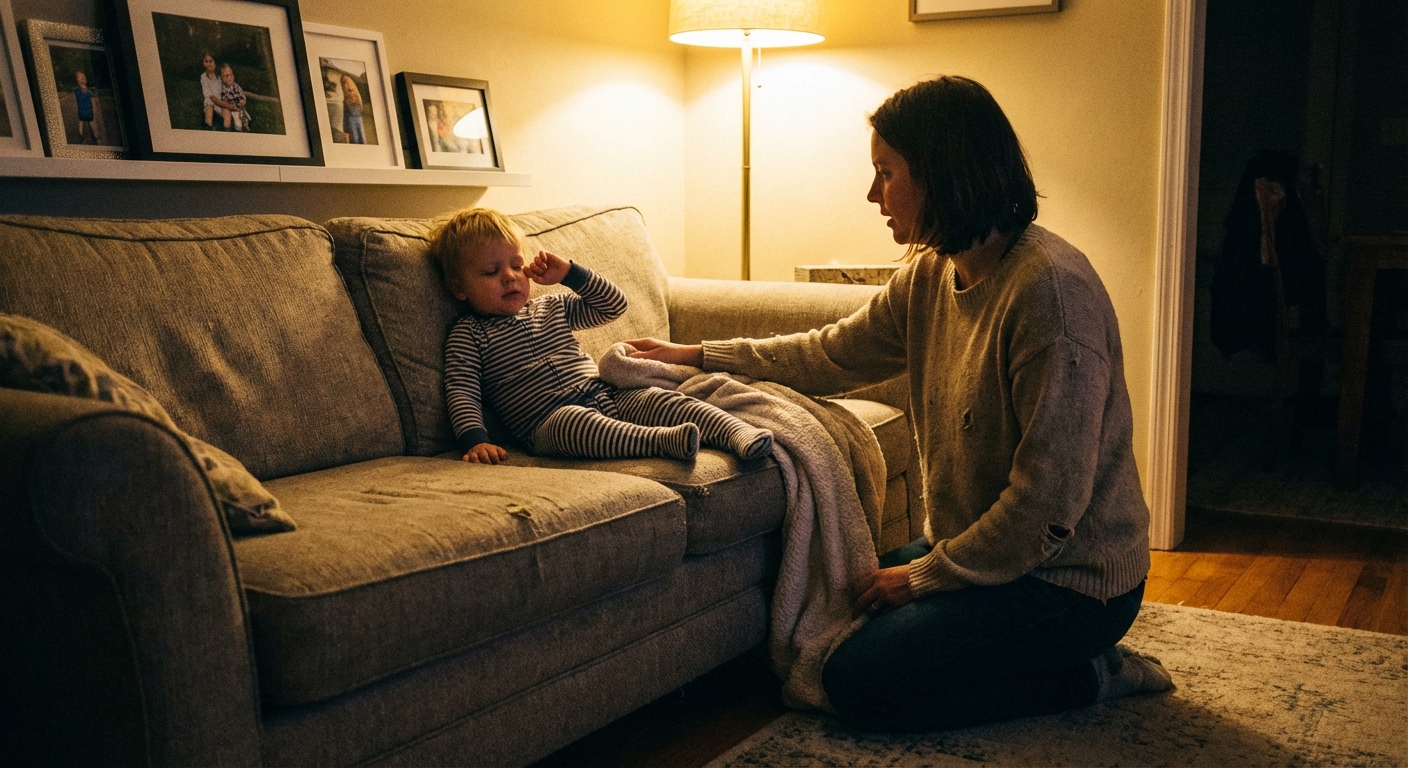
What it can look like at home: hearing seems worse during or after colds, your child says “what?” more for a few weeks, speech sounds muffled, balance may be a bit off, nighttime sleep may be restless if ears are uncomfortable.
Important note: fluid can linger for weeks after a cold, and repeated or long-lasting fluid can affect hearing during a critical window for language learning.
Sensorineural loss
This type involves the inner ear (cochlea) or auditory nerve pathways. It can be present at birth or develop later. Causes vary and can include genetics, certain infections, noise exposure, or sometimes no clear cause even after a full workup.
What it can look like at home: consistent difficulty hearing across situations, trouble understanding speech even when you are close, your child relies heavily on visual cues, speech sound development may be affected (especially high-frequency consonants), and it does not “clear up” after colds pass.
Mixed hearing loss
Some children have a combination, such as baseline sensorineural hearing loss plus temporary fluid that makes things worse.
If you are not sure which type this might be, you are in good company. That is exactly what pediatric hearing tests are designed to sort out.
When to call the pediatrician
Bring it up if you have a gut feeling, even if friends or family say “they’re fine.” You do not need to wait for a well visit.
Also worth remembering: if speech is delayed, it is reasonable to schedule audiology testing even if quick ear checks in the office look normal. Some hearing issues are not visible on exam.
Make an appointment soon if
- Speech delay or speech that is not progressing
- Frequent “what?” or inconsistent responses
- High TV volume or difficulty in noise
- Repeated ear infections or fluid concerns
- Daycare or preschool concerns about listening
Ask urgently (same day or within 24 to 48 hours) if
- Sudden hearing change after an illness, head trauma, or other injury
- Severe ear pain, fever, or ear drainage (especially if your child seems very uncomfortable)
- New severe dizziness, severe headache, or facial weakness
Your pediatrician will usually check ears, discuss infection history, and refer to audiology for formal testing. If speech is a concern, you can also request a speech-language evaluation in parallel. You do not have to do this one step at a time.
How toddler hearing tests work
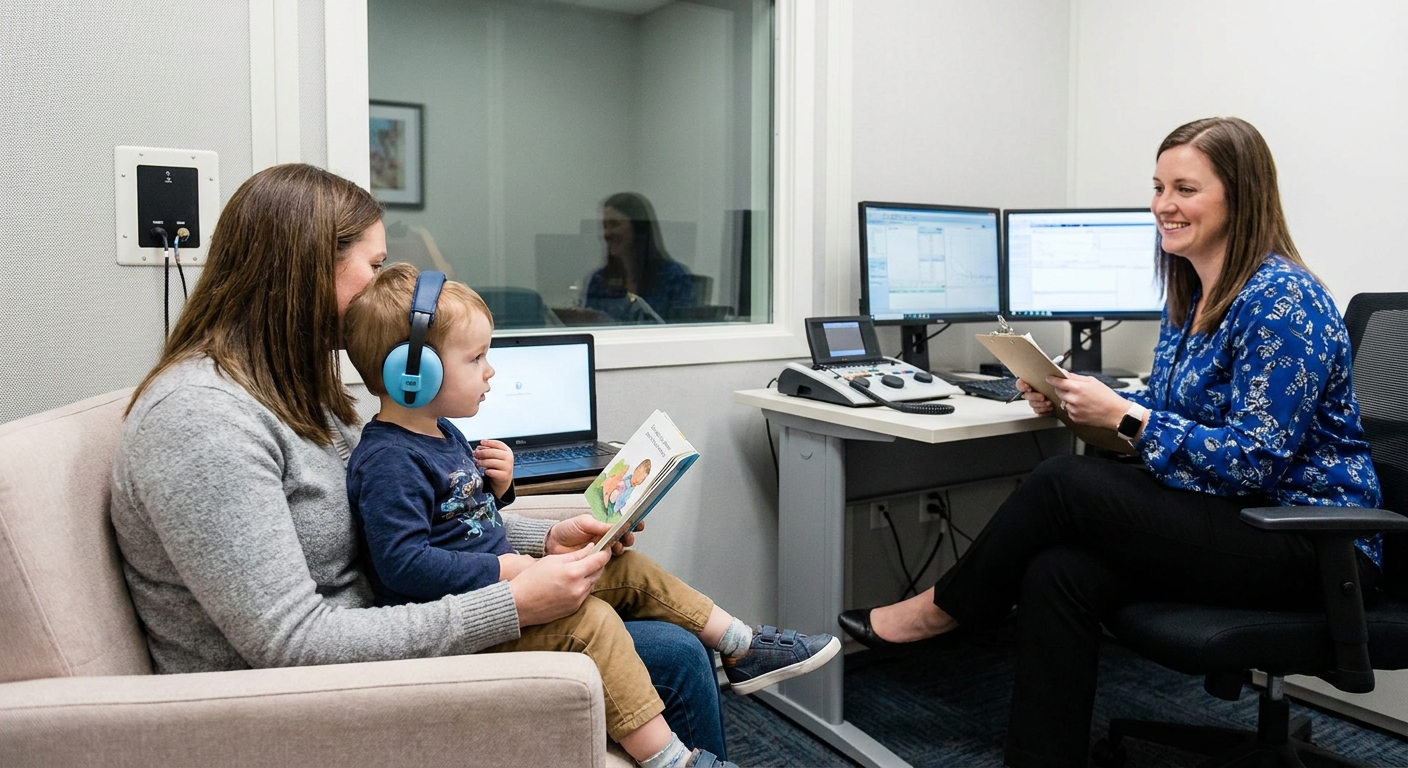
Parents often picture a child sitting still and pushing a button like an adult hearing test. That can happen for older kids, but pediatric audiologists have multiple ways to test hearing accurately even when your child is, well, being their true toddler self.
Otoscopy
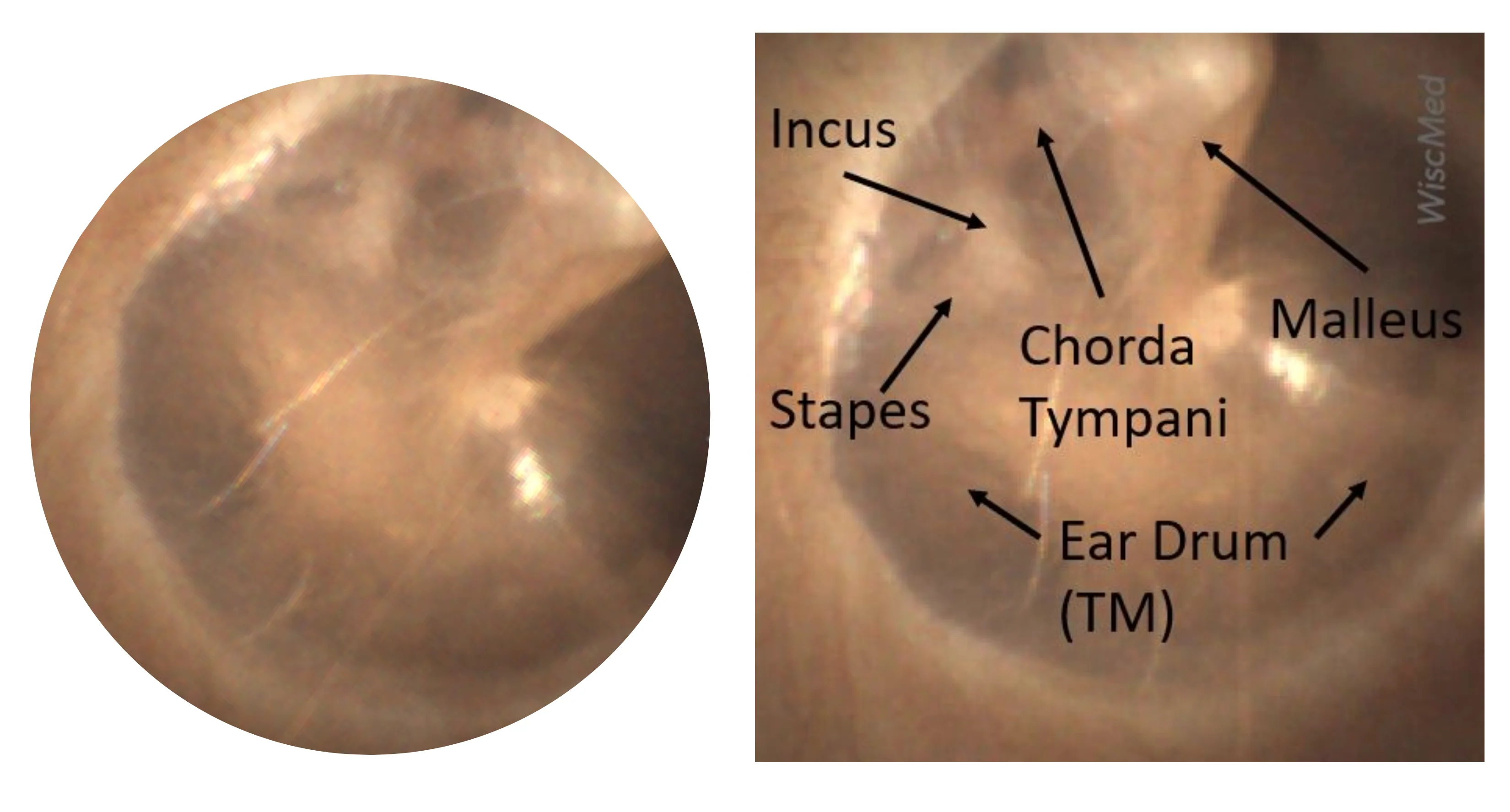
The audiologist or clinician looks in the ear canal to check for wax blockage, irritation, or signs of fluid behind the eardrum.
Tympanometry
This test helps identify fluid or middle ear pressure problems by measuring how the eardrum moves. A soft tip goes in the ear for a few seconds. It is not painful, just briefly uncomfortable or odd.
OAE
Otoacoustic emissions (OAE) measure tiny “echo” responses from the cochlea (the inner ear). A small probe plays sounds and records responses. Middle ear fluid can interfere with OAE results, which is one reason tests are interpreted together.
Behavioral audiometry
This is where the audiologist turns listening into a game.
- Visual Reinforcement Audiometry (VRA) (often around 6 months to 2 or 3 years, sometimes beyond depending on development): your child hears sounds and is rewarded with something like a lighted toy when they turn toward the sound.
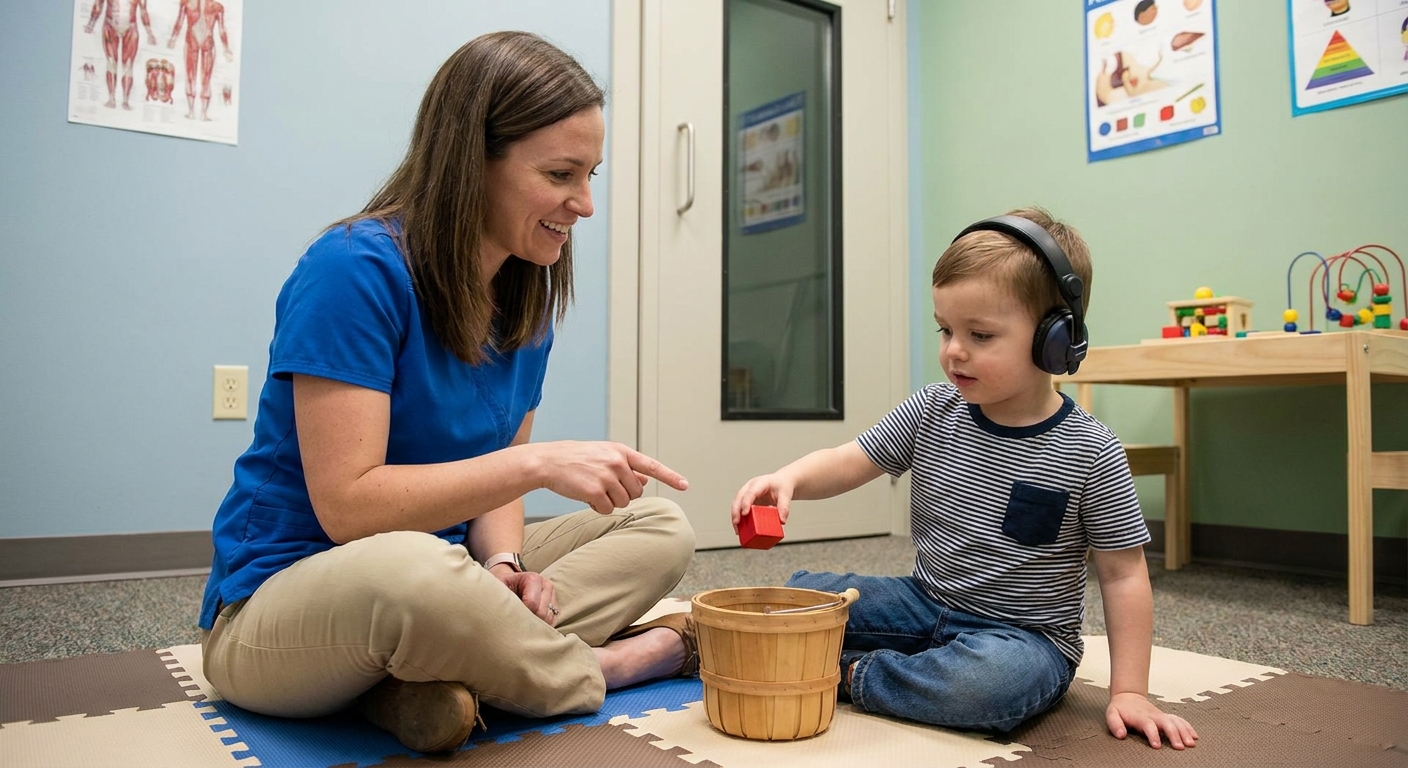
- Conditioned Play Audiometry (CPA) (often around 2.5 to 5 years, sometimes closer to age 2 depending on the child): your child practices a simple task when they hear a sound, like dropping a block in a bucket or placing a ring on a peg.
Speech testing
Audiologists may use age-appropriate speech sounds or words to see how well your child detects and understands speech. This matters because hearing is not just about volume, it is about clarity.
If my child won’t cooperate
Totally normal. Pediatric audiologists are pros at building rapport, switching strategies, and getting the best information possible. Sometimes a follow-up visit is needed. In certain situations, your team may recommend more specialized testing.
After the test
Most families leave the first audiology appointment with a clearer answer and a plan. Here are the most common scenarios.
1) Normal hearing
This is reassuring, but it can still be useful information if speech is delayed. Your pediatrician may look at other factors like articulation development, oral-motor skills, attention, autism screening, or bilingual language development. Normal hearing does not mean you imagined the concern. It means you ruled out one important piece.
2) Fluid or middle ear dysfunction
If tympanometry suggests fluid, the plan may include watchful waiting, treatment if infection is present, and a repeat hearing test.
A common timeline you may hear: persistent middle ear fluid for around 3 months with hearing impact or speech concerns is often when an ENT discussion is considered. The right timing depends on factors like degree of hearing loss and your child’s risk factors, so follow your clinician’s guidance.
3) Sensorineural or mixed loss
If testing suggests sensorineural loss, your child may be referred to pediatric ENT and fitted for hearing technology if appropriate. You may also discuss additional evaluations depending on the situation (for example, medical history review, family history, and sometimes imaging or genetics).
If you are feeling overwhelmed, remember: the goal is not to “label” your child. The goal is to get them the clearest access to language possible, as early as possible.
Early support
When hearing affects language access, early support makes a real difference. And no, this does not mean your child is “behind forever.” It means we help their brain get the input it needs while it is doing the heavy lifting of language development.
What early intervention can include
- Speech-language therapy focused on expressive and receptive language
- Parent coaching so you know exactly what to do at home (this is huge)
- Hearing technology such as hearing aids when appropriate
- Classroom supports for preschool, like preferential seating or assistive listening systems if recommended
- Communication options discussed in a family-centered way, which may include spoken-language focused therapy, sign language, or combined approaches, depending on your child and your goals
How soon to start
If there is confirmed hearing loss or a strong suspicion that hearing access is impacting language, starting services sooner is generally better than waiting to “see what happens.” If the issue is fluid, your team may still recommend speech support if language is lagging.
In the US: children under 3 can often access services through Early Intervention in their state. Ages 3 and up often go through the local school district’s preschool special education evaluation process. Your pediatrician or audiologist can point you in the right direction.

When ENT comes up
ENT referrals can feel intimidating, but most visits are straightforward and focused on the cause of hearing changes.
ENT may be recommended when
- Middle ear fluid persists and affects hearing
- There are recurrent ear infections
- There is suspected or confirmed sensorineural hearing loss
- Your child has risk factors for hearing issues (for example, certain syndromes or medical history)
- There are structural concerns (like chronic congestion with significant adenoid enlargement affecting ears)
Ear tubes
For some children with persistent fluid or frequent infections, tubes can help ventilate the middle ear and reduce fluid buildup. That often improves hearing quickly when fluid is the main problem. Tubes are not for every child, and the decision should consider hearing test results, infection history, speech and language development, and overall health.
If your child is being evaluated for tubes, it is reasonable to ask:
- How is fluid affecting hearing right now?
- How long has the fluid been present?
- How many infections have occurred and in what time period?
- How will we monitor hearing and speech after treatment?
While you wait
Waiting lists are real, and it can feel helpless. These small changes can reduce frustration and support language right away.
- Get face-to-face before you talk. Say your child’s name, touch their shoulder gently, then speak.
- Reduce background noise when possible (turn off TV or music during conversation).
- Use short, clear phrases and add simple gestures.
- Confirm understanding by having them show you, not just say “okay.”
- Read daily and pause to let your child point, mimic, or fill in predictable words.
- Track what you notice: situations where hearing seems harder, infection dates, and any new words gained. This helps your pediatrician and audiologist.
Please skip “tests” at home like whispering from behind or trying to “catch” your child not responding. It tends to create stress without giving reliable information. Formal testing is much more accurate.
Risk factors
Some kids develop hearing issues without any obvious risk factors. Still, these are worth mentioning to your pediatrician or audiologist if they apply:
- NICU stay
- Family history of childhood hearing loss
- Frequent ear infections or persistent fluid
- Known infections that can affect hearing (your pediatrician can guide you based on history)
- Craniofacial differences (such as cleft palate)
- Concerns about developmental delay
Quick checklist
If you are on the fence, this is a simple litmus test. A hearing evaluation is worth scheduling if you can check two or more of these consistently for a few weeks:
- Speech delay or hard-to-understand speech without steady improvement
- Often does not respond to name or to speech from another room
- Frequently asks for repetition
- TV volume is noticeably loud
- Trouble following directions, especially in noise
- History of frequent ear infections or persistent fluid
- Teacher or caregiver has raised concerns
And if you can check one box but your gut is loudly saying “something is off,” that counts too.
Bottom line
Toddlers are famous for ignoring us. But consistent patterns like delayed speech, frequent misunderstandings, loud volume, or trouble in noisy environments deserve a real look. The right hearing test at the right time can bring huge relief, either by ruling hearing out or by opening the door to support that helps your child thrive.
If you want to take one simple next step tonight: write down three examples of what you are noticing and when it happens. Bring that list to your pediatrician. You do not need to diagnose the type of hearing issue. You just need to advocate for a proper screen.