Signs of Lazy Eye in a Toddler

Sarah Mitchell
Sarah Mitchell is a Registered Pediatric Nurse and a mother of three who has spent over a decade helping families navigate the beautiful, chaotic early years of childhood. She combines evidence-based medical knowledge with real-world parenting experience to offer practical, compassionate advice. At Awesome Parent, Sarah's mission is to help exhausted parents find solutions, trust their instincts, and finally get some sleep.
If you are wondering whether your toddler might have a lazy eye, you are not alone. I heard this question constantly as a triage nurse, and I have asked it as a parent too. The good news is that when a lazy eye is caught early, treatment is often very effective. The tricky part is that toddlers rarely tell us, “Hey, my vision is blurry.” They just adapt.
Let’s walk through what “lazy eye” actually means, the signs you can spot at home, and when it is time to get an expert to examine your child’s eyes.
What is a lazy eye?
Lazy eye is the common name for amblyopia. It happens when one eye does not develop normal vision because the brain starts favoring the other eye. Over time, the brain pays less attention to the weaker eye, even if the eye itself looks normal.
Lazy eye is not the same thing as an eye that visibly wanders, although an eye turn can be a major cause. And important note: amblyopia can also happen without an obvious drift, especially when one eye simply has a much blurrier prescription than the other.
Common reasons toddlers develop lazy eye
- Eye misalignment (strabismus): One eye turns in, out, up, or down sometimes or all the time.
- Different prescriptions between eyes (anisometropia): One eye is more farsighted, nearsighted, or has more astigmatism than the other.
- Something blocking vision: A droopy eyelid, cataract, or other issue that prevents a clear image from reaching the brain.
Signs of lazy eye in a toddler
Toddlers are excellent at compensating, so the signs can be subtle. Here are the ones I want parents to take seriously.
1) One eye turns or drifts
You might notice an eye that turns inward (crossed), outward, or seems to drift when your child is tired, sick, or daydreaming. Even an intermittent eye turn is worth an evaluation.
2) Frequent squinting or closing one eye
Some toddlers squint, close one eye, or cover an eye when looking at something far away or in bright light. This can be a clue that the eyes are not working together comfortably.
3) Head tilt or face turn
A consistent head tilt, chin up or down posture, or turning the face to one side can be your toddler’s way of finding a position where vision is clearer or double vision is reduced.
4) Poor depth perception
Depth perception problems can look like:
- Bumping into doorframes more than expected
- Hesitating on stairs
- Trouble catching a ball or placing a toy accurately
- Seeming “clumsy” in ways that do not match their overall development
5) One eye seems to “do all the work”
You may notice your child prefers looking from one side, or they always bring objects to the same eye. Some toddlers consistently hold screens very close.
6) Eye strain signs
- Rubbing eyes often
- Blinking a lot
- Short attention span for books or close-up play (not just normal toddler wiggles)
- Getting cranky with puzzles, coloring, or looking at small objects
7) Unequal red reflex in photos
In some flash photos, one eye may show a different red glow than the other. This can happen for several reasons, including alignment issues. It is not a diagnosis, but it is a reason to mention it to your pediatrician or eye doctor.
Different does not always mean dangerous, but “white” is different. If you ever see a white or gray pupil (instead of red), treat that as urgent. More on that below.
Normal vs call the doctor
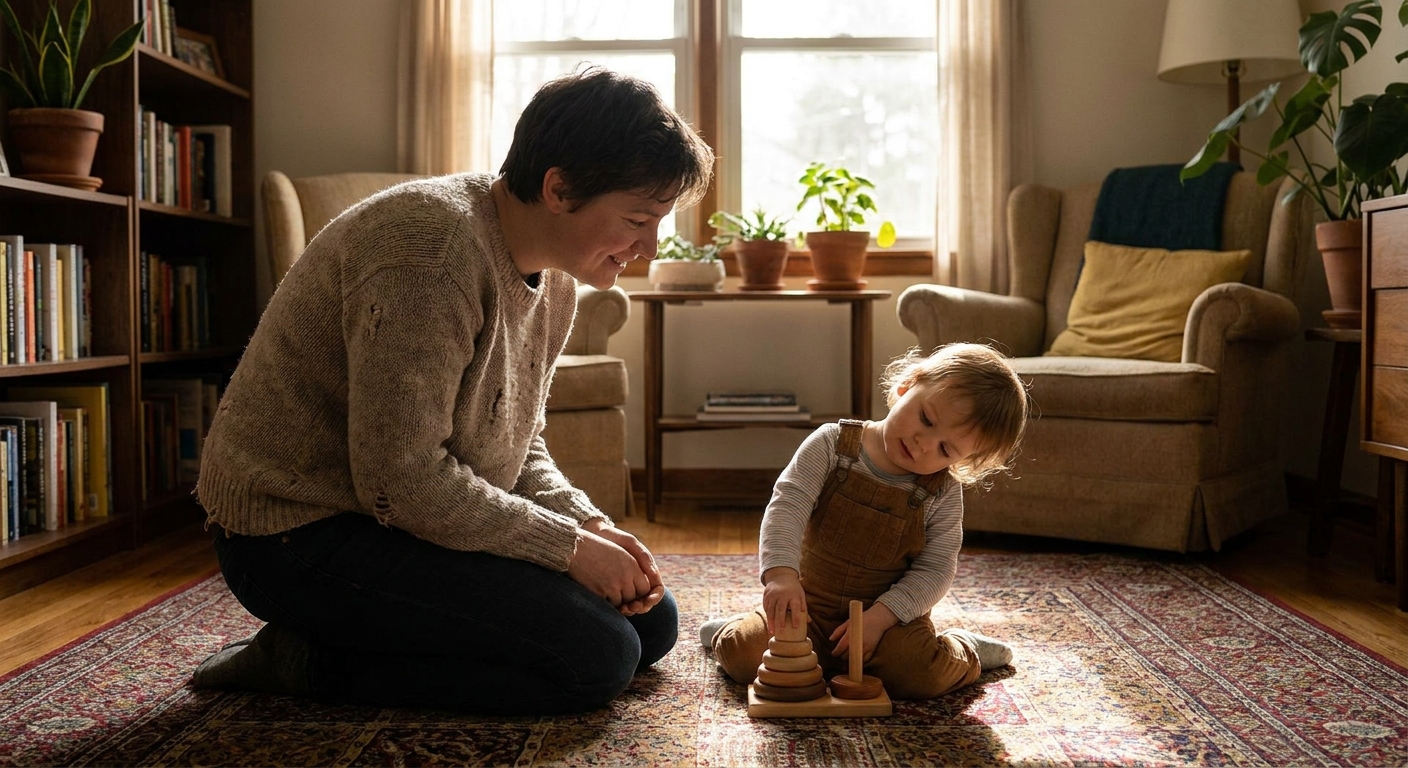
A little eye wandering can be normal in newborns, but by toddlerhood, persistent or recurring misalignment is not something to wait out. (Intermittent drifting is often considered normal only in early infancy, roughly up to about 3 to 4 months. If you are seeing it beyond that window, it is worth bringing up.)
Call your pediatrician soon (within days to weeks) if you notice:
- An eye that turns in or out repeatedly
- Consistent head tilt or face turn
- Squinting or closing one eye often
- Concerns about depth perception or frequent tripping beyond typical toddler chaos
- Any regression, like new clumsiness or new complaints of “my eyes hurt”
- A droopy eyelid that seems to sit low. If it sometimes covers part of the pupil, mention that specifically.
Seek urgent care the same day if:
- You see a white or gray pupil in photos or in certain lighting
- There is sudden onset of crossed eyes, especially with illness, headache, vomiting, or balance issues
- Your child has eye pain, significant redness, swelling, or a suspected eye injury
Those urgent signs are not “lazy eye symptoms” specifically, but they are red flags that need prompt evaluation.
Simple at-home checks
These are low-stress ways to gather useful info before you call. If your toddler refuses, do not force it. We want cooperation, not a wrestling match at 7 PM.
Safety note: do not shine bright lights directly into your child’s eyes, and stop if they get upset.
Watch alignment in real life
When your child looks at your face from a few feet away, do both eyes seem to point at you together? Do you notice drifting when they are tired?
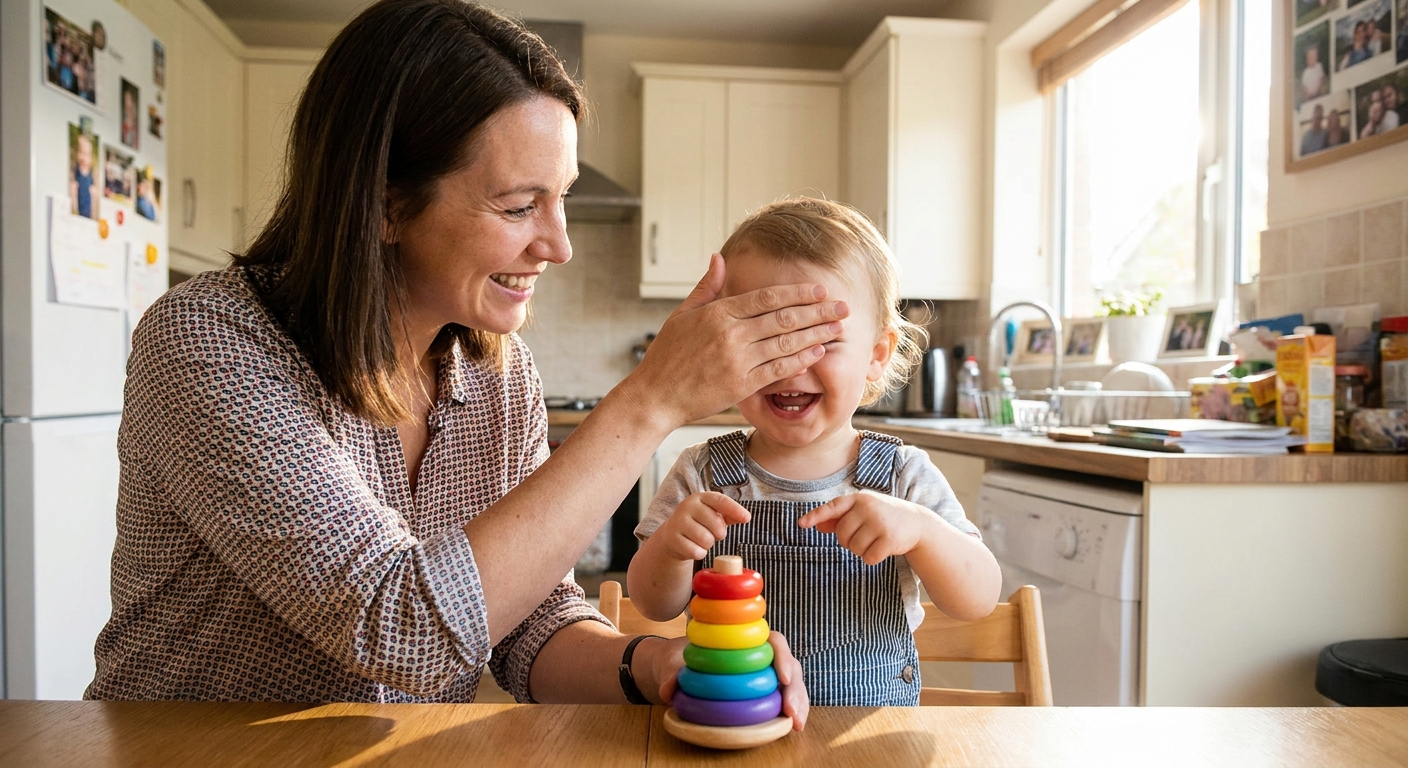
Try a gentle cover test game
Turn it into a “pirate” game.
- Hold a small sticker or toy at arm’s length.
- Cover one eye for 2 to 3 seconds, then switch.
- Watch the uncovered eye. If it makes a noticeable “jump” to refocus when the other eye is covered, that can suggest misalignment.
Again, this is not diagnostic, but it can help you describe what you are seeing.
Check the light reflection
In a well-lit room, have your toddler look toward a small light source that is near your eye level (like a flashlight pointed toward the ceiling so the light is indirect). The tiny reflection should appear in a similar spot on both pupils. If it looks very different, bring that up at the visit.
How doctors check toddlers
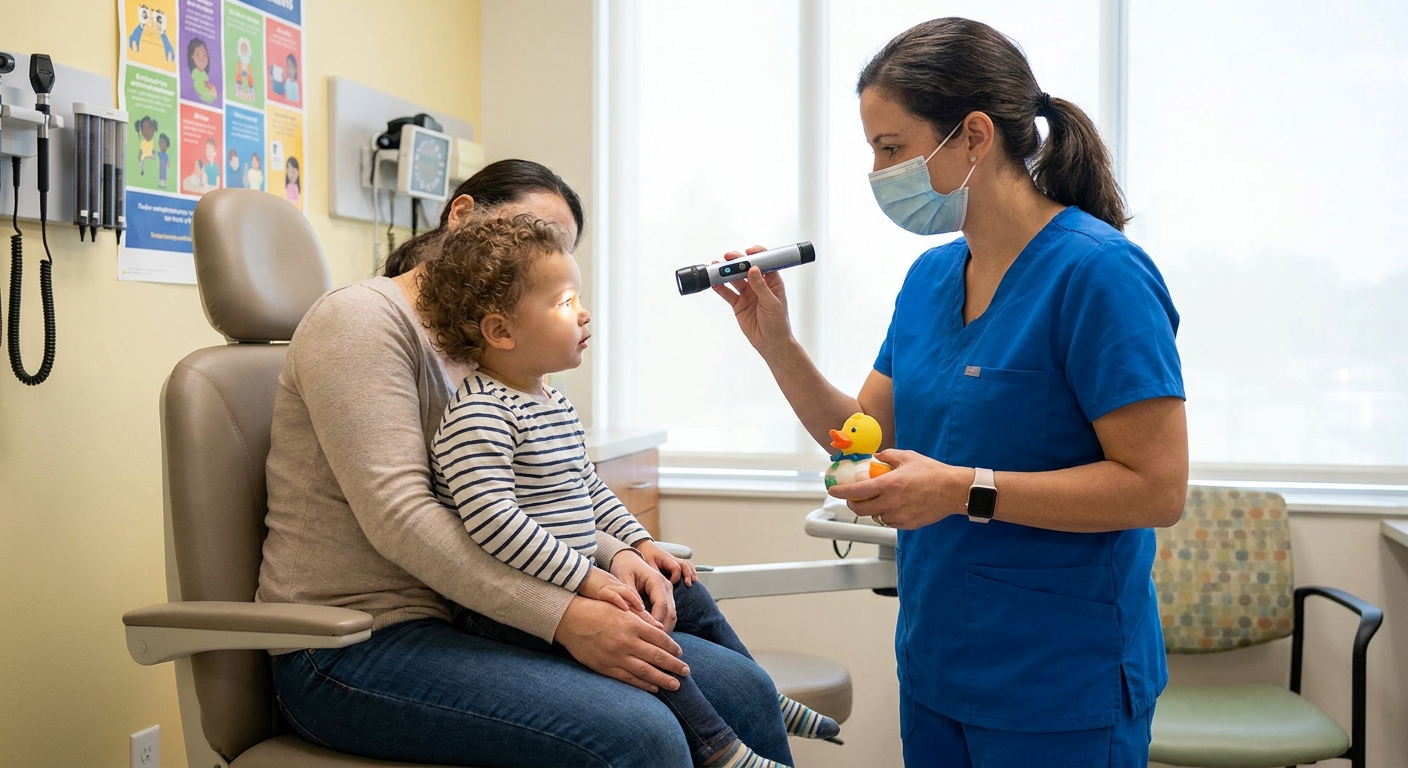
Pediatricians screen vision at well visits, but toddlers who have signs or risk factors often benefit from a full exam with a pediatric ophthalmologist or pediatric optometrist.
In clinic, we typically assess:
- Eye alignment and movement
- Visual behavior using toddler-friendly methods (pictures, matching games, preferential looking tests)
- Refraction to check for a need for glasses, often with dilating drops
- Eye health to rule out anything blocking vision
Parents often worry about dilation drops. They can sting briefly, and your child might be blurry for close-up tasks for a few hours, but they are very common and generally safe when used appropriately.
Quick note on routine screening
Even if everything seems fine, routine vision screening at well visits matters because some kids have amblyopia without obvious signs. If a screen is abnormal, or you are seeing any of the signs in this article, ask for a referral. Trust your instincts.
Treatment options
The goal is to get the brain using both eyes properly, especially the weaker one. Treatment depends on the cause and the child’s age.
Glasses
If the issue is a refractive error (or different prescriptions between eyes), glasses can significantly improve vision and sometimes fully resolve amblyopia. Many children still need patching or drops as well, but glasses are often the first, most important step.
Patching
Covering the stronger eye for a set number of hours a day encourages the brain to use the weaker eye. Yes, many toddlers hate it at first. You are not failing if day one goes poorly.
Helpful patching tips:
- Start during a preferred activity (snack, cartoons, books)
- Use praise and simple routines
- Ask your eye doctor about patch brands and sensitive-skin options
- Do not patch longer than prescribed
Atropine drops
Sometimes a doctor uses drops in the stronger eye to blur vision in that eye (often near, and sometimes distance depending on your child’s prescription). This encourages the weaker eye to work more. Some children use it on a specific schedule, like weekends or a few days per week, based on the treatment plan.
Treating misalignment
If strabismus is part of the picture, treatment can include glasses and sometimes surgery to align the eyes. Some specialists may recommend targeted exercises in select situations and under specialist guidance, but the mainstays of amblyopia care are still optical correction, patching, and/or medicated drops.
Surgery can align the eyes, but amblyopia treatment (like patching) may still be needed to build vision.
What progress looks like
Most treatment plans are not a one-and-done situation. Improvement often happens over weeks to months, and follow-up visits are common so your eye doctor can adjust the plan. Consistency matters, and so does troubleshooting. If patching is a daily battle or drops feel impossible, tell the clinic. There are often workable alternatives.
Why early treatment matters
Toddlerhood is a time of rapid brain development. The visual system is still learning. That is why treating amblyopia earlier is typically easier and more effective than waiting until a child is older.
Practical translation: if something feels off, it is worth checking. You are not being “dramatic.” You are being appropriately proactive.
Risk factors
Some toddlers have a higher risk and may need earlier or more frequent eye evaluations.
- Family history of amblyopia or strabismus
- Premature birth or low birth weight
- Developmental delays
- Known eye conditions (droopy eyelid, congenital cataract)
- Significant difference in eye appearance, even if subtle
What to say when you call
If you are calling your pediatrician or an eye clinic, specific details help them triage appropriately. Here is a quick script you can borrow:
“My toddler is [age]. I have noticed [eye turning/squinting/head tilt] for [how long]. It happens [when tired/in photos/most of the time]. There is [no pain/pain], and I have [or have not] noticed a white pupil or sudden changes.”
If you have a short video showing the eye drift or head tilt, bring it. These things have a magical ability to disappear the moment we walk into an exam room.
Common parent worries
“Will my toddler outgrow this?”
Some mild alignment issues can fluctuate, but true amblyopia does not typically “just go away.” If there is a concern, an evaluation is the safe move.
“Did I cause this?”
No. Lazy eye is about how vision is developing, prescriptions, and alignment. It is not caused by screen time, not caused by you missing a milestone, and not caused by imperfect parenting.
“What if my child refuses patching?”
That is extremely normal. Tell your eye doctor. There are often ways to adjust the plan, troubleshoot skin irritation, or consider other options like atropine, depending on your child’s diagnosis.
Bottom line
If you notice an eye that drifts, frequent squinting, a persistent head tilt, or clumsiness that feels vision-related, trust that little alarm bell. Lazy eye is common, treatable, and worth catching early.
Before you call, jot down three things: your child’s age, what you are seeing (eye turn, head tilt, squinting, photos), and when it happens (tired, bright light, far away). Bring those notes, plus any short video or photos, to your appointment.