Signs of Lazy Eye in a Toddler

Sarah Mitchell
Sarah Mitchell is a Registered Pediatric Nurse and a mother of three who has spent over a decade helping families navigate the beautiful, chaotic early years of childhood. She combines evidence-based medical knowledge with real-world parenting experience to offer practical, compassionate advice. At Awesome Parent, Sarah's mission is to help exhausted parents find solutions, trust their instincts, and finally get some sleep.
If you have ever looked at your toddler and thought, “Wait, are their eyes lined up?” you are not alone. In pediatric clinic triage and urgent care, I talked to parents every week who felt uneasy about an eye that wandered, a head tilt that would not quit, or a weird white shine in a photo.
The reassuring part is this: noticing something early is a big deal, and getting it checked is usually straightforward. Lazy eye is treatable, especially when we catch it in the toddler and preschool years.
What “lazy eye” means
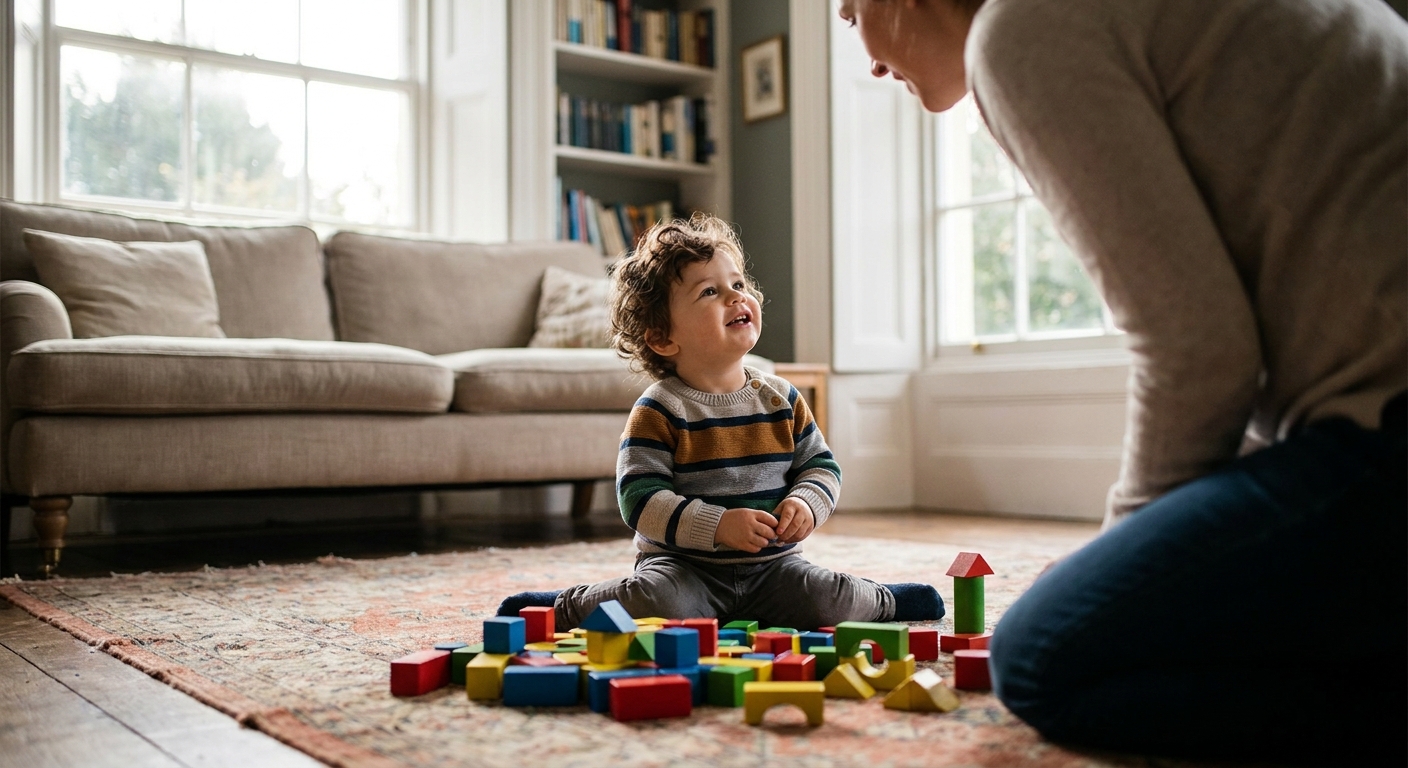
“Lazy eye” is the common name for amblyopia, which means one eye is not developing normal vision, even if the eye itself looks healthy. The brain starts to favor the stronger eye and pays less attention to the weaker one.
Important nuance: a lazy eye is not always obvious by looking at your child. Sometimes the eyes look straight, but one eye still sees poorly because of focusing problems.
Lazy eye often happens because of one of these issues:
- Eye misalignment (strabismus): one eye turns in, out, up, or down sometimes or all the time.
- Different prescriptions: one eye is much more nearsighted, farsighted, or has more astigmatism than the other.
- Something blocking vision: droopy eyelid, cataract, or significant corneal issues (less common, but more urgent).
Common signs in toddlers
Toddlers are not exactly known for sitting still while you conduct a thorough vision assessment. So we rely on everyday clues.
One quick note to keep expectations realistic: some signs below point to strabismus or another eye issue that can cause amblyopia. Others are clues that vision may already be reduced. Either way, they are worth bringing up.
1) One eye that wanders or looks crossed
You may notice one eye drifting inward or outward, especially when your toddler is tired, sick, or daydreaming. Intermittent turns still count and are worth evaluating.
2) Frequent squinting, closing one eye, or covering an eye
Some toddlers close one eye in bright light or while looking at a book or screen. Others cover one eye during play. This can be a way of reducing double vision or trying to sharpen what they see.
3) Head tilt or face turn that seems like a habit
A persistent head tilt can be a compensation strategy to help the eyes line up better. Toddlers do a lot of funny poses, yes. The key word is consistent.
4) Depth perception struggles beyond typical toddler chaos
All toddlers trip. But if your child routinely misjudges steps, bumps into doorframes, struggles to place objects accurately, or seems unusually unsure on playground equipment, vision can be part of the puzzle.
5) One eye looks “different” in photos
Parents often notice something in pictures first:
- One pupil looks white, gray, or very bright instead of the typical red-eye effect.
- One eye consistently looks off-center in photos when your child is facing the camera.
A one-off weird flash reflection can be normal. A repeated pattern, especially a white pupil, needs prompt medical attention. The medical term is leukocoria. It can be caused by serious conditions like a cataract or, rarely, retinoblastoma, so it is one to treat as urgent without panicking.
6) Eye rubbing or avoiding close-up play
Toddlers may not say “My vision is blurry,” but they may rub an eye, get cranky with close-up tasks, or avoid puzzles, coloring, and books. These are soft signs and can also happen with allergies or irritation, but they add context.
7) A droopy eyelid that blocks the eye
If an eyelid droops enough to cover part of the pupil, the brain may not get a clear image to develop normal vision. This is not a “wait and see forever” situation.
8) “Crossed eyes” that might not be true crossing
Some toddlers look cross-eyed because of a wide nasal bridge or epicanthal folds. This is called pseudostrabismus, and the eyes are actually aligned. Still, if you are seeing a consistent turn (or you are just not sure), it is worth having it checked. You do not have to diagnose this at home.
At-home checks (not a diagnosis)
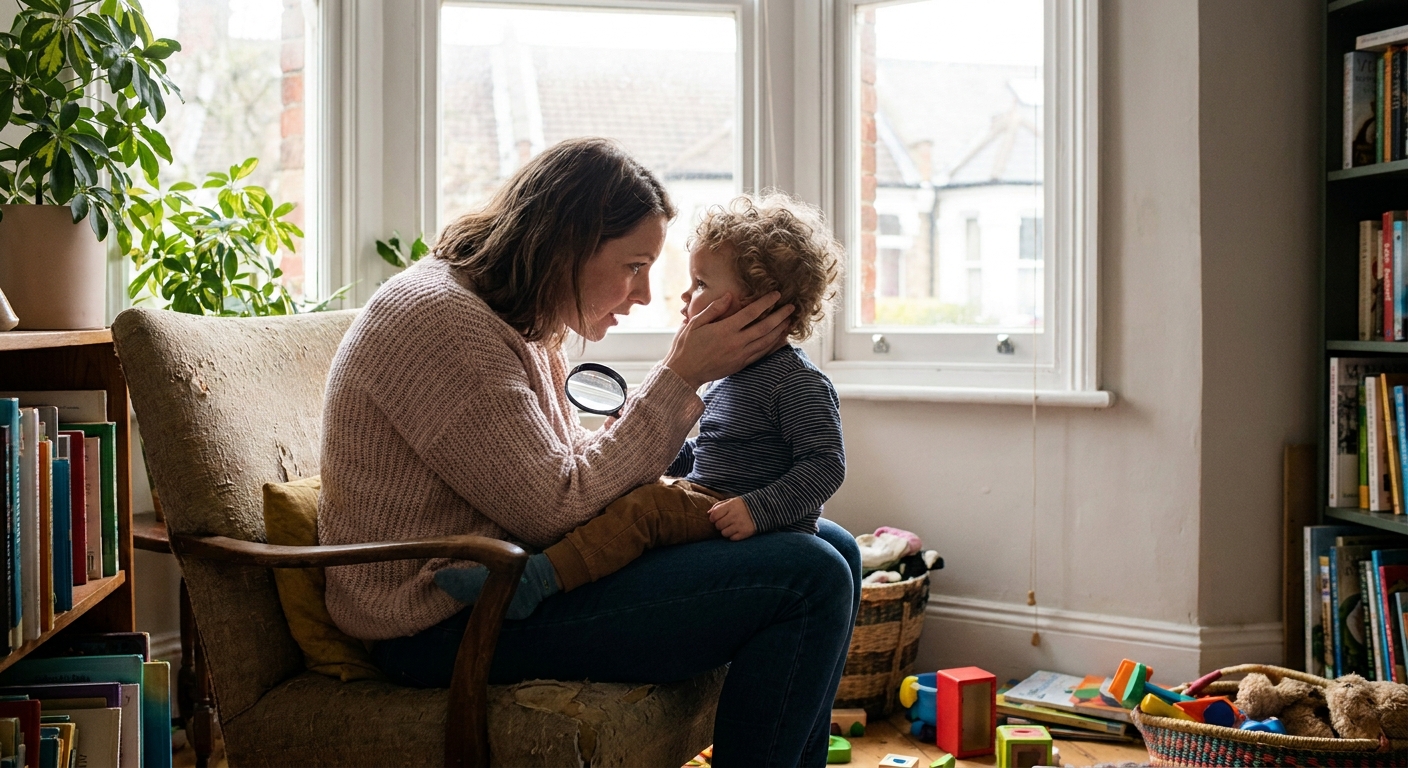
These are simple observations you can do at home. They are not a substitute for a professional eye exam, but they can help you decide whether to book one sooner. At-home checks are imperfect, and toddler reactions can be pure toddler behavior.
Watch how your toddler uses their eyes
- Do they bring objects very close to their face?
- Do they lose interest quickly in books or puzzles?
- Do they avoid looking at small objects?
Try a gentle “cover test” game
When your toddler is looking at something interesting (a sticker on the wall, a toy you are holding), gently cover one eye with your hand for 2 to 3 seconds, then switch.
- What you hope to see: mild annoyance either way, but they keep looking.
- Possible red flag: a big protest when you cover the stronger eye (because that forces the weaker eye to do the work). This is not proof of amblyopia, but it is a good reason to book an exam.
Practical tip: try it when they are calm, not when everyone is hungry and the vibes are already questionable.
Look at old photos
Scroll back through pictures from different days and lighting. If you repeatedly see one eye turn, or you repeatedly see a white or unusually bright pupil, that is useful information to bring to the appointment.
When to call or book an exam
If you notice any of the signs below, it is reasonable to call your pediatrician and ask whether your toddler should be referred to a pediatric ophthalmologist (a medical doctor specializing in children’s eyes) or a pediatric-friendly optometrist, depending on your area and your child’s needs.
Also worth remembering: many kids with amblyopia have no obvious symptoms, which is why routine vision screening at well visits matters. If something feels off between visits, you do not have to wait for the next checkup.
Book an eye exam soon if:
- One eye turns in or out, even intermittently
- Your toddler consistently tilts their head or turns their face to look at things
- They frequently close one eye, squint, or cover an eye
- You have concerns about vision, depth perception, or frequent falls beyond typical toddler bumps
- There is a strong family history of strabismus, amblyopia, or early glasses
Seek urgent evaluation if:
- You see a white, gray, or absent red reflex in photos or in certain lighting (possible leukocoria)
- Your toddler has a sudden new eye turn
- There is eye pain, significant light sensitivity, swelling, or a cloudy-looking eye
- Your child has an eye injury
If you are unsure, call. This is one of those areas where asking is simply good parenting.
Why early treatment matters
Lazy eye is about the brain’s wiring during early childhood. The earlier we support the weaker eye, the better the chance of building strong, lasting vision.
And please hear me clearly: lazy eye is common, and missing it at first is common too. Toddlers compensate incredibly well, which is why screening and follow-up matter.
What treatment can look like
Treatment depends on the cause and your child’s age, but common options include:
- Glasses: Sometimes correcting the prescription is enough to improve vision and alignment.
- Patching: Covering the stronger eye for a set amount of time helps the weaker eye do the work and develop.
- Atropine drops: A drop in the stronger eye can temporarily blur near vision to encourage the weaker eye.
- Treating an underlying problem: For example, addressing a droopy lid or cataract when present.
- Surgery: Sometimes recommended for strabismus to help alignment. Surgery can be part of the plan, but it does not automatically fix amblyopia without also treating the weaker eye’s vision, often with glasses, patching, and or atropine.
One practical note: patching can be emotionally intense for toddlers. If you end up there, you are not failing if it is hard. It is hard. Your eye doctor can help you adjust the plan, and there are lots of ways to make it more doable.
What happens at the appointment
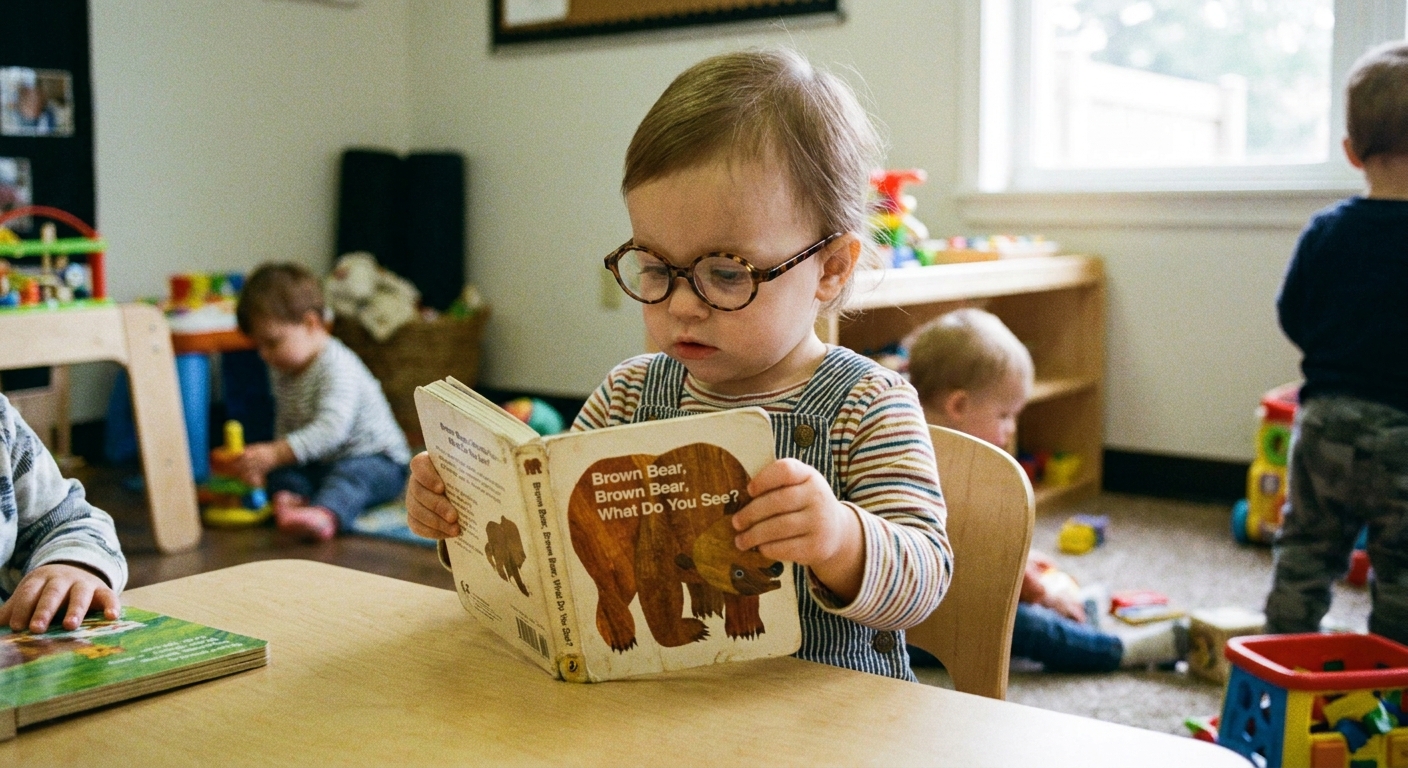
Most pediatric eye exams are designed for kids who cannot read letters yet. Expect games, lights, and pictures rather than “E, F, P” on a chart.
Common parts of the visit include:
- Checking how each eye sees using age-appropriate targets
- Evaluating eye alignment and tracking
- Examining the health of the eyes
- Sometimes using dilating drops to get an accurate prescription
Bring snacks, a comfort item, and any photos where you noticed the issue.
Safety notes
- Do not start patching on your own without clinician guidance. The schedule matters, and patching the wrong eye can make things worse.
- Do not delay urgent signs like leukocoria, a sudden new eye turn, or eye pain.
FAQs
Can lazy eye correct itself?
Sometimes an intermittent eye turn improves, but amblyopia generally does not reliably outgrow itself. If you suspect it, an exam is the safest move.
Is a wandering eye always lazy eye?
Not always, but it is a common reason kids develop amblyopia. Even if vision is still okay, misalignment should be assessed because it can affect depth perception and long-term vision development.
What about an infant with crossed eyes?
Brief crossing can be normal in very young infants. By about 3 to 4 months, many babies have steadier alignment. If your baby is older than that and you still see consistent crossing or drifting, check in with your pediatrician.
Will my toddler need glasses forever?
Some kids do, some do not. The goal is healthy vision development. Your child’s prescription and needs can change as they grow.
How long does treatment take?
It varies, but improvement often takes months and requires follow-up. The good news is many children improve significantly when the plan is followed consistently.
A calm next step
If something about your toddler’s eyes is pinging your parent radar, trust that instinct. Take a few notes, save a couple of photos, and schedule a vision check. Most of the time, you will walk out with either reassurance or a clear plan. Both are wins.
If you only remember one thing: a lazy eye is often very treatable, and earlier is better.