Signs of Lazy Eye in a Toddler

Sarah Mitchell
Sarah Mitchell is a Registered Pediatric Nurse and a mother of three who has spent over a decade helping families navigate the beautiful, chaotic early years of childhood. She combines evidence-based medical knowledge with real-world parenting experience to offer practical, compassionate advice. At Awesome Parent, Sarah's mission is to help exhausted parents find solutions, trust their instincts, and finally get some sleep.
If you have ever looked at a photo of your toddler and thought, “Why does one eye look a little… off?” you are not alone. In pediatric triage, eye concerns were among the most common “middle-of-the-night Google” worries I heard. The good news is that lazy eye is treatable, and in most cases, earlier treatment is easier and more effective.
Let’s walk through what lazy eye actually is, the signs parents tend to notice first, and what an eye doctor can do to help.
What “lazy eye” means
Lazy eye is the everyday term for amblyopia. It happens when the brain starts favoring one eye, so the “weaker” eye does not develop normal vision even if the eye looks healthy.
Lazy eye is not the same thing as a crossed eye, although they can show up together. A toddler can have amblyopia with eyes that look straight, especially if the issue is blurred vision in one eye.
Common reasons it happens
- Eye misalignment (strabismus): one eye turns in, out, up, or down, so the brain ignores the image from that eye.
- Different prescriptions: one eye is much more nearsighted, farsighted, or has more astigmatism than the other, so one image is blurrier.
- Something blocking vision: droopy eyelid, cataract, or other blockage. This is less common but more urgent.
Signs of lazy eye in toddlers
Toddlers rarely say “I can’t see out of my left eye.” They adapt. That is why we rely on behavioral clues and what you notice in photos and daily life.
1) One eye turns sometimes or often
- An eye that drifts inward or outward, especially when your child is tired or focusing up close
- One eye that seems to “wander” in photos or during play
Even if it is occasional, it is worth discussing with your pediatrician or an eye specialist.
2) Squinting, closing one eye, or tilting the head
These are classic “I’m trying to make this clearer” behaviors.
- Closing one eye in bright sunlight
- Squinting at books, screens, or distant objects
- Frequent head tilt or turning the head to one side to look at things
3) Depth perception or coordination that seems “off”
This one is possible, but it is also nonspecific. All toddlers are a bit wobbly. Still, mention it if your child consistently:
- Misjudges steps or curbs more than peers
- Bumps into doorframes on one side
- Has trouble catching a ball or placing toys accurately
4) Eye rubbing, eye strain, or frequent blinking
These can happen with many issues (dryness, allergies, tiredness), but persistent eye rubbing or blinking, especially during near tasks, can signal vision strain.
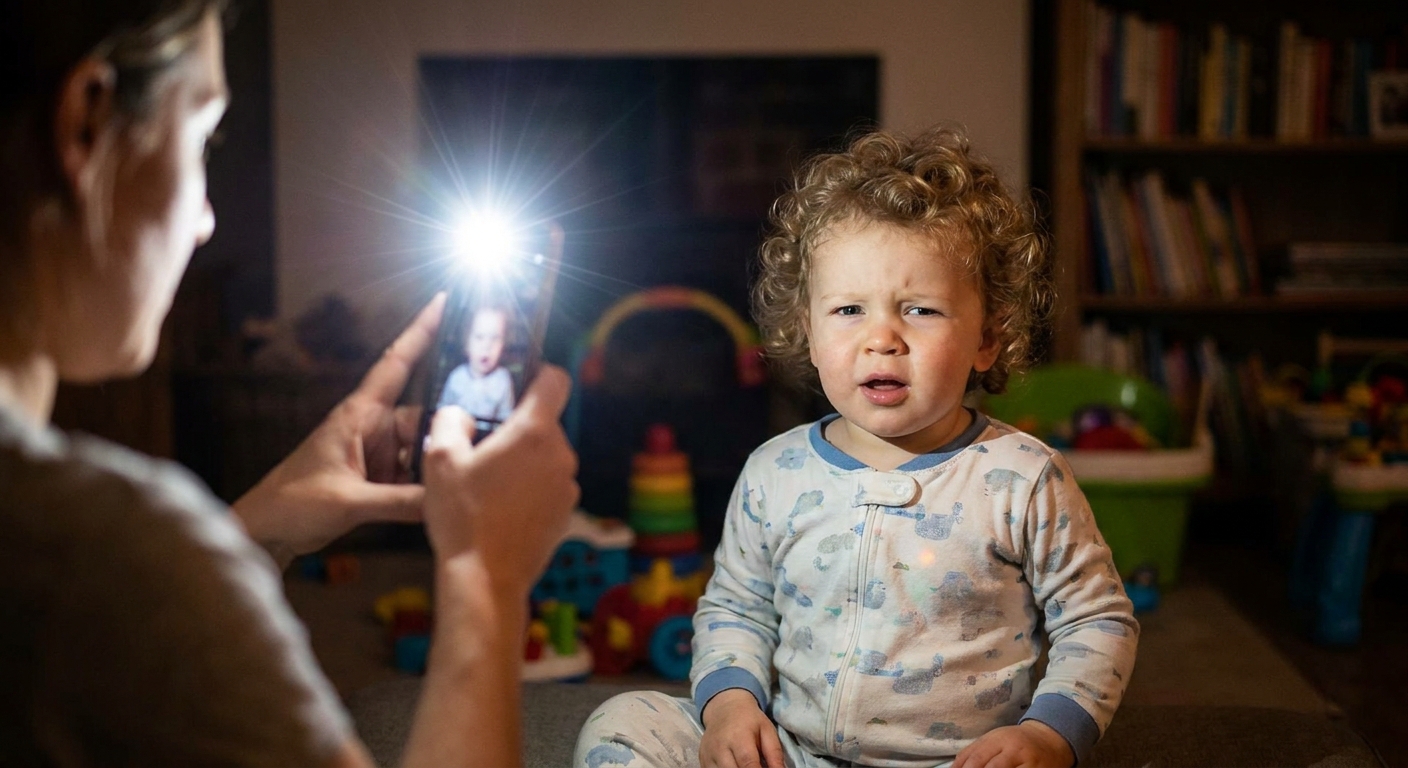
5) Uneven red reflex or a white reflection in photos
The red reflex is the normal reddish glow you may see in the pupil when a flash photo is taken. If you consistently notice:
- A white or gray reflection in one pupil
- Red-eye in one pupil but not the other
Call your pediatrician promptly. Sometimes this is a photo artifact, but a persistent white reflex (called leukocoria) needs a timely eye evaluation because it can signal serious problems.
6) Your toddler strongly prefers one eye
If you cover the stronger eye (even gently during play), a child with amblyopia may protest quickly because the weaker eye is doing the seeing. That said, many toddlers protest having any eye covered because toddlers. The pattern matters: strong, consistent upset when the same eye is covered can be a clue.
7) Behaviors that suggest vision is hard work
- Not recognizing familiar people from across the room
- Very short attention for picture books because looking takes effort
- Difficulty with puzzles or matching games beyond what you would expect
Quick at-home checks
These are gentle observations, not formal tests. They cannot diagnose or rule out amblyopia. If anything worries you, skip the self-testing spiral and book the appointment.
Try a simple “cover” game
- When your child is calm, have them look at a sticker or toy.
- Cover one eye for 2 to 3 seconds, then switch.
- Notice: Does your toddler get noticeably more upset with one side covered? Do they struggle to keep looking at the target with one eye?
This is more likely to flag an eye turn or a strong fixation preference than it is to “find” amblyopia, but it can give your doctor helpful information.
Watch how they track
Move a toy slowly left to right and see if both eyes seem to track smoothly together. If one eye lags, drifts, or “jumps” to catch up, mention it at the visit.
Look for pattern, not perfection
One weird photo angle or one clumsy day is not proof of anything. Consistent signs over time are what matter.
When to call the doctor
Start with your pediatrician if you are unsure, but many families go straight to a pediatric ophthalmologist or an optometrist experienced with young children, depending on local availability.
If you are seeing a white pupil reflection (leukocoria), a cataract is suspected, or the eye turn is significant or sudden, a pediatric ophthalmologist is usually the best first stop when possible.
Make an appointment soon if you notice
- An eye turn that happens repeatedly
- Head tilt, squinting, or closing one eye frequently
- Ongoing concerns about vision or depth perception
- A strong difference in how your child reacts when either eye is covered
Call promptly (same day is best) if
- A white or gray pupil reflection in photos that repeats
- A sudden new eye misalignment, even without other symptoms
- A droopy eyelid that covers part of the pupil
Seek urgent or emergency care now if
- Eye injury, chemical exposure, or something stuck in the eye
- Severe eye pain, significant swelling, or a sudden vision change
- An eye turn plus severe headache, vomiting, or unusual sleepiness
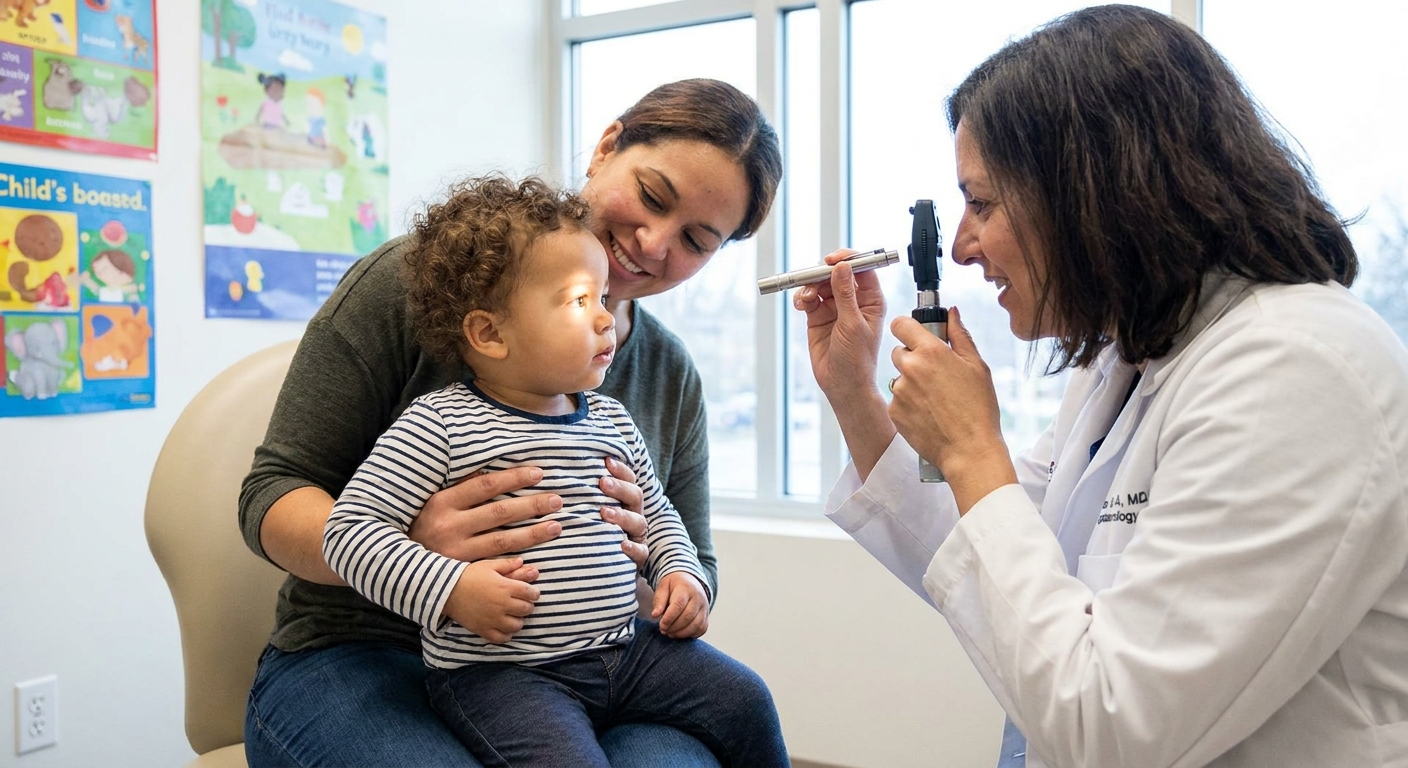
What happens at a toddler eye exam
This is usually much less dramatic than parents fear. Many pediatric eye clinics are basically built around the fact that toddlers are suspicious of strangers and allergic to sitting still.
- Vision check: using shapes, pictures, or matching games.
- Eye alignment and movement: watching how the eyes track.
- Refraction: estimating prescription, often after eye drops that relax focusing.
- Eye health exam: checking inside the eye and the red reflex.
Treatment
Treatment depends on the cause, but the goal is the same: help the brain use the weaker eye so vision can develop.
Glasses
If one eye is blurrier due to prescription differences, glasses can make a huge difference and sometimes correct the problem by themselves. In many cases, doctors will start with glasses and recheck progress after a few weeks or months before adding other treatments.
Patching
This is the classic approach: covering the stronger eye for a set amount of time each day to encourage the brain to use the weaker eye. Your eye doctor will prescribe a schedule that fits your child’s age and severity.
Atropine drops
Some children do better with drops that temporarily blur the stronger eye, encouraging use of the weaker eye without an actual patch.
Treating an underlying blockage
If a cataract, droopy lid, or other obstruction is involved, treatment may be more urgent and can include procedures to clear the visual pathway.
Important: lazy eye is most responsive to treatment in early childhood because the visual system is still developing. That does not mean older kids cannot improve, but toddlers have a precious window where progress often comes faster.
Common questions
Is a lazy eye the same as a crossed eye?
No. A crossed or wandering eye (strabismus) is an alignment issue. Lazy eye (amblyopia) is reduced vision development. Strabismus can cause amblyopia, but you can have one without the other.
Will my toddler outgrow this?
Sometimes mild alignment issues improve, but amblyopia typically does not “just go away” without addressing the cause. If you suspect it, it is better to check sooner.
Did I miss something at the pediatrician’s office?
Not at all. Vision screening in very young children is challenging, and some issues are subtle early on. Catching it now still counts as early.
Routine screening
Most kids get basic vision screening at well-child visits, and many pediatricians also check the red reflex in infancy. If your child was born premature, has a family history of amblyopia or strabismus, or you are noticing signs at home, ask whether they should have a comprehensive eye exam sooner.
How to prep for the visit
- Bring a snack and a comfort item.
- Schedule for your child’s best time of day, if you can.
- Take 2 to 3 photos that show what concerns you, especially if the eye turn is intermittent.
- Write down what you are noticing (when it happens, which eye, how often) and any family history of amblyopia, strabismus, or strong prescriptions.
From one tired parent to another: if your toddler ends up crying through the exam, that is still a successful visit. Pediatric eye teams are used to it, and they can still get the information they need.
The takeaway
If you are seeing frequent eye drifting, head tilting, squinting, or odd pupil reflections in photos, trust your gut and get it checked. Lazy eye is common, treatable, and not something you caused. The hardest part is often just making the appointment.
If you are heading in for a visit, jot down your top 3 observations and bring a couple of photos or short videos. That small prep can make the appointment faster, calmer, and more productive.