Signs of Lazy Eye in Toddlers

Sarah Mitchell
Sarah Mitchell is a Registered Pediatric Nurse and a mother of three who has spent over a decade helping families navigate the beautiful, chaotic early years of childhood. She combines evidence-based medical knowledge with real-world parenting experience to offer practical, compassionate advice. At Awesome Parent, Sarah's mission is to help exhausted parents find solutions, trust their instincts, and finally get some sleep.
If you have ever looked at a photo of your toddler and thought, “Wait, why does one eye look different?” you are in very good company. In clinic, this was one of the most common worries I heard from parents, usually after a late-night scroll through their camera roll.
Lazy eye (the medical term is amblyopia) is treatable, especially when it is caught early. The tricky part is that toddlers rarely complain because their brain can quietly start relying on the stronger eye. That is why knowing the signs matters.
What “lazy eye” means
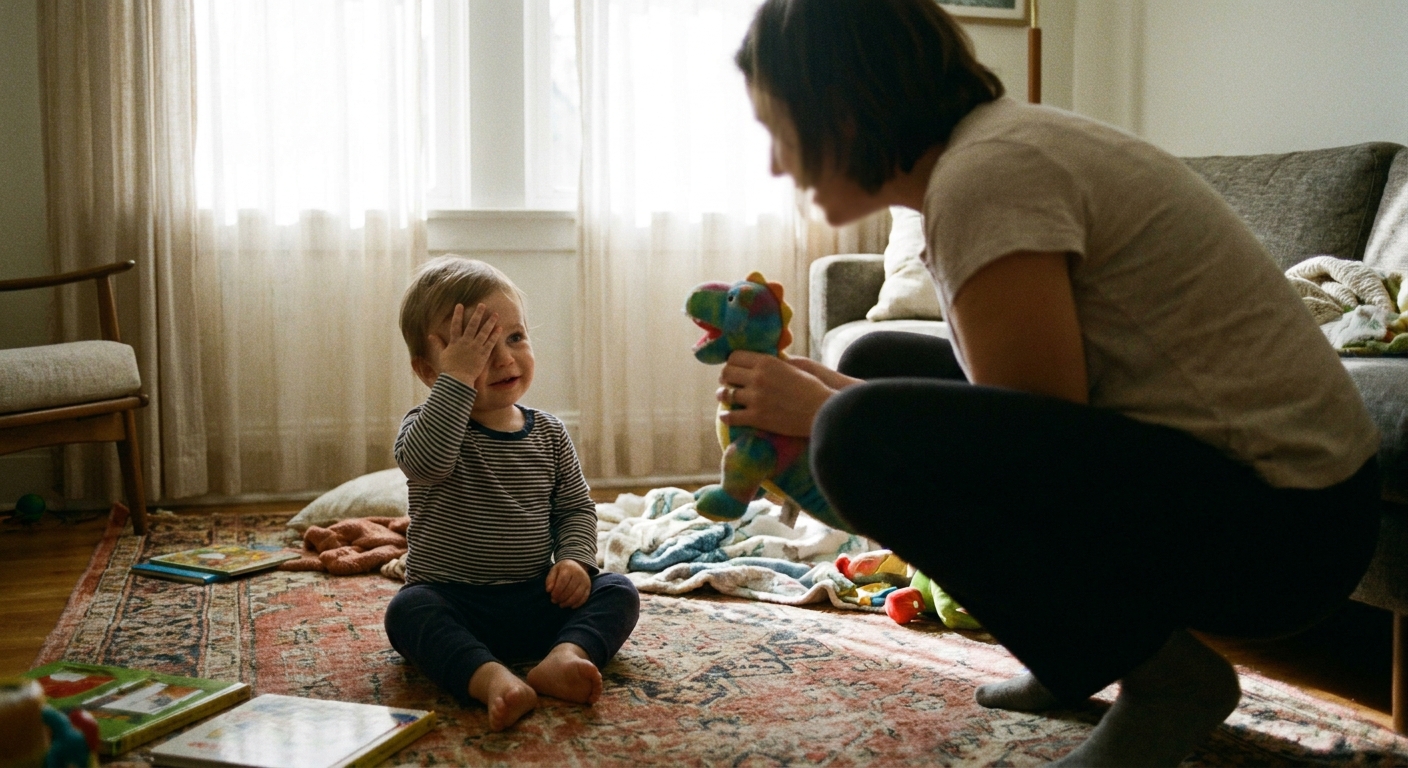
Lazy eye is reduced vision in one eye (sometimes both) because the brain is not using the eye normally. The eye can look perfectly healthy, but the connection between the eye and the brain is not developing the way it should.
In toddlers, amblyopia usually happens because something makes the brain prefer one eye over the other, such as:
- Eye misalignment (strabismus): one eye turns in, out, up, or down.
- Unequal glasses prescription (anisometropia): one eye is much more farsighted, nearsighted, or has more astigmatism than the other.
- High prescription in both eyes (isoametropia): both eyes may be very farsighted, very nearsighted, or have significant astigmatism, so the brain never gets a clear image from either eye.
- Something blocking vision: droopy eyelid, cataract, corneal problem, or significant eye injury.
Important note: lazy eye is not the same thing as an eye turn, but the two are closely connected. A turned eye can lead to amblyopia, and amblyopia can be present even when the eyes look straight.
Signs of lazy eye in toddlers
Toddlers are masters at adapting. Many signs are subtle, show up only sometimes, or look like “quirky toddler behavior.” Here are the ones I want parents to take seriously.
1) One eye drifts or crosses
Intermittent eye drifting can be normal in the first 3 to 4 months of life. After that, frequent or persistent turning (even if it is only some of the time) is worth evaluating. In toddlers, the turn may be more noticeable when they are tired, sick, or daydreaming.
2) Squinting or closing one eye
Some toddlers close one eye in bright light, while watching TV, or when focusing on something far away. Occasional squinting can happen for many reasons, but repeated one-eye closing is a classic red flag.
3) Head tilt or face turn
Kids may tilt their head or turn their face to use their stronger eye or to line up their eyes better. If you notice the same tilt in lots of situations, put it on your “ask the doctor” list.
4) Depth issues or frequent clumsiness
All toddlers tumble. But if your child consistently misjudges steps, bumps into door frames on one side, or struggles with tasks that rely on depth perception (like fitting shapes, stacking, or catching a large ball), vision imbalance can be part of the puzzle.
5) A white pupil in photos
Most parents notice this when the flash is on. A persistent white, gray, or yellow reflection in one pupil needs prompt evaluation. Sometimes it is a camera angle issue, but it can also signal uncommon yet serious problems like cataract or retinoblastoma, so it is not something to watch and wait on.
6) Uneven light reflection in the eyes
In pictures (or when you shine a light briefly), you might notice the little “catchlight” is not in the same spot in both eyes. That can be a clue that the eyes are not aligned. Photos are not a diagnosis, but they are useful evidence to bring to your child’s clinician.
7) Rubbing eyes, fussiness with close work, or avoiding books and puzzles
Eye rubbing and crankiness can be normal toddler behavior, but if your child consistently avoids looking at books, coloring, or puzzles, it is worth checking vision. Kids do not always know they are working harder to see.
8) A strong preference for one side
If your toddler always turns the same side toward you to look at something, or seems to “use” one eye more, that can reflect a difference between eyes.
Quick at-home checks
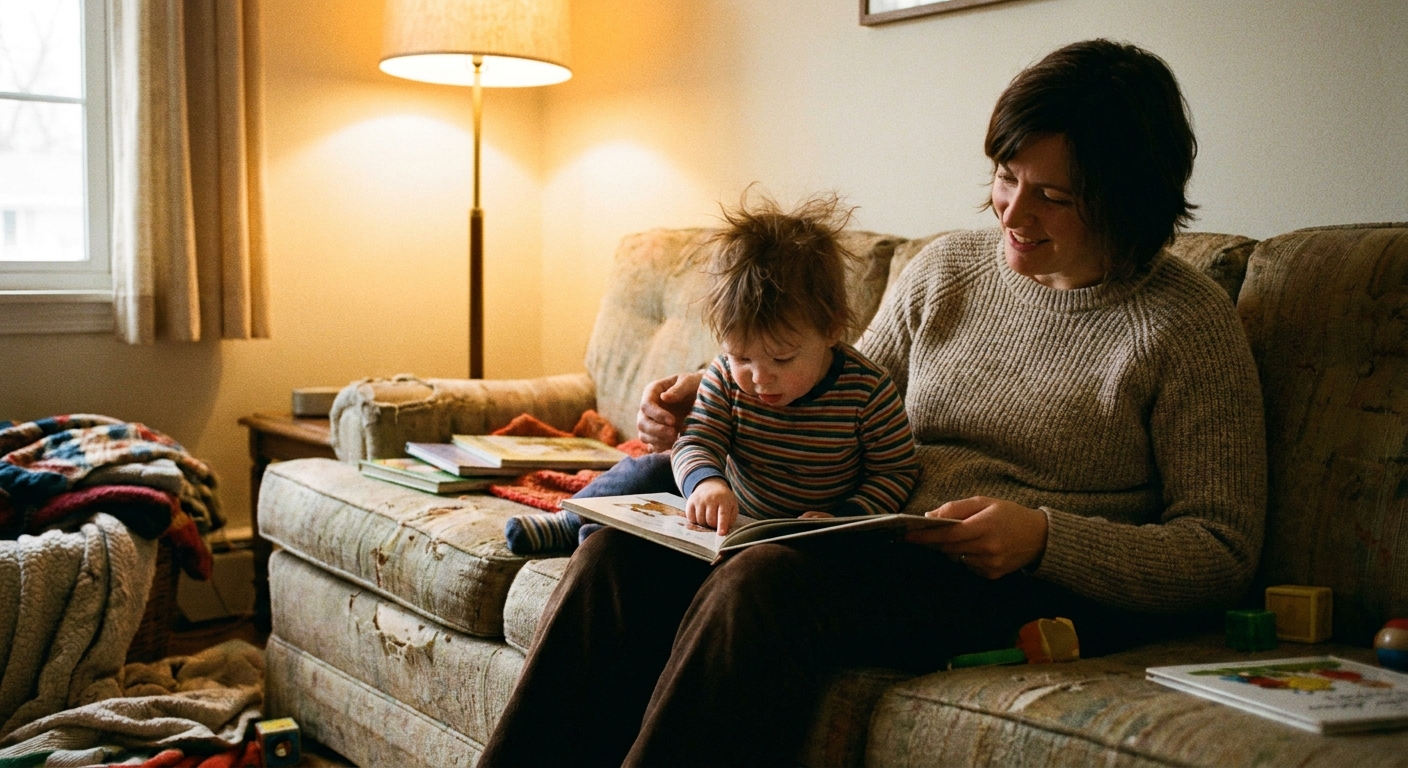
These are simple observations you can do when your child is calm. They are not a diagnosis, and toddler cooperation is famously unpredictable. If anything feels off, trust that instinct and schedule a professional exam.
Look at the light reflection
In a well-lit room, stand about 2 to 3 feet away and hold a small light (your phone flashlight works) near your own eyes. Ask your child to look at it.
- If the eyes are aligned, the small light reflection usually appears in a similar spot on each pupil.
- If the reflection is noticeably off-center in one eye compared with the other, it can suggest misalignment.
If your toddler will not cooperate, do not stress. Many will not. A pediatric eye specialist has tools to check alignment without perfect cooperation.
Cover one eye briefly
Gently cover one eye for just a second or two while they look at a toy or book, then switch. Keep it calm and brief, and do not force it. Concerning patterns include:
- Big protest when one specific eye is covered (because the uncovered eye may be weaker).
- Difficulty refocusing when switching eyes.
Lots of toddlers protest being covered at all, so focus on whether the reaction is consistently different between eyes. Also, this is a very imperfect check at home, so do not use it to talk yourself out of an exam if you are worried.
Check for a consistent head tilt
Snap a few everyday photos or short videos during different activities. A persistent tilt across settings is more meaningful than a one-off “my neck is tired” pose.
Normal vs not
Often normal
- Occasional eye drifting when extremely tired, just waking up, or zoning out, especially if it lasts only a moment.
- Brief squinting in bright sunlight once in a while.
- General toddler clumsiness that improves month to month.
More concerning
- Any eye turn that is frequent, persistent, or getting more noticeable over time.
- Consistently closing one eye to look at things.
- Ongoing head tilt or face turn.
- Unequal light reflections in multiple photos.
- A white or gray pupil reflection, especially if seen repeatedly.
- Droopy eyelid that covers part of the pupil.
When to get checked
If you suspect lazy eye, you do not need to wait for a “perfect” well visit. Early treatment is the whole game here.
Book an eye exam soon if you notice:
- One eye turning in or out
- Frequent squinting or one-eye closing
- Persistent head tilt
- Differences in photos that keep showing up
- A family history of amblyopia, strabismus, or strong glasses prescriptions in early childhood
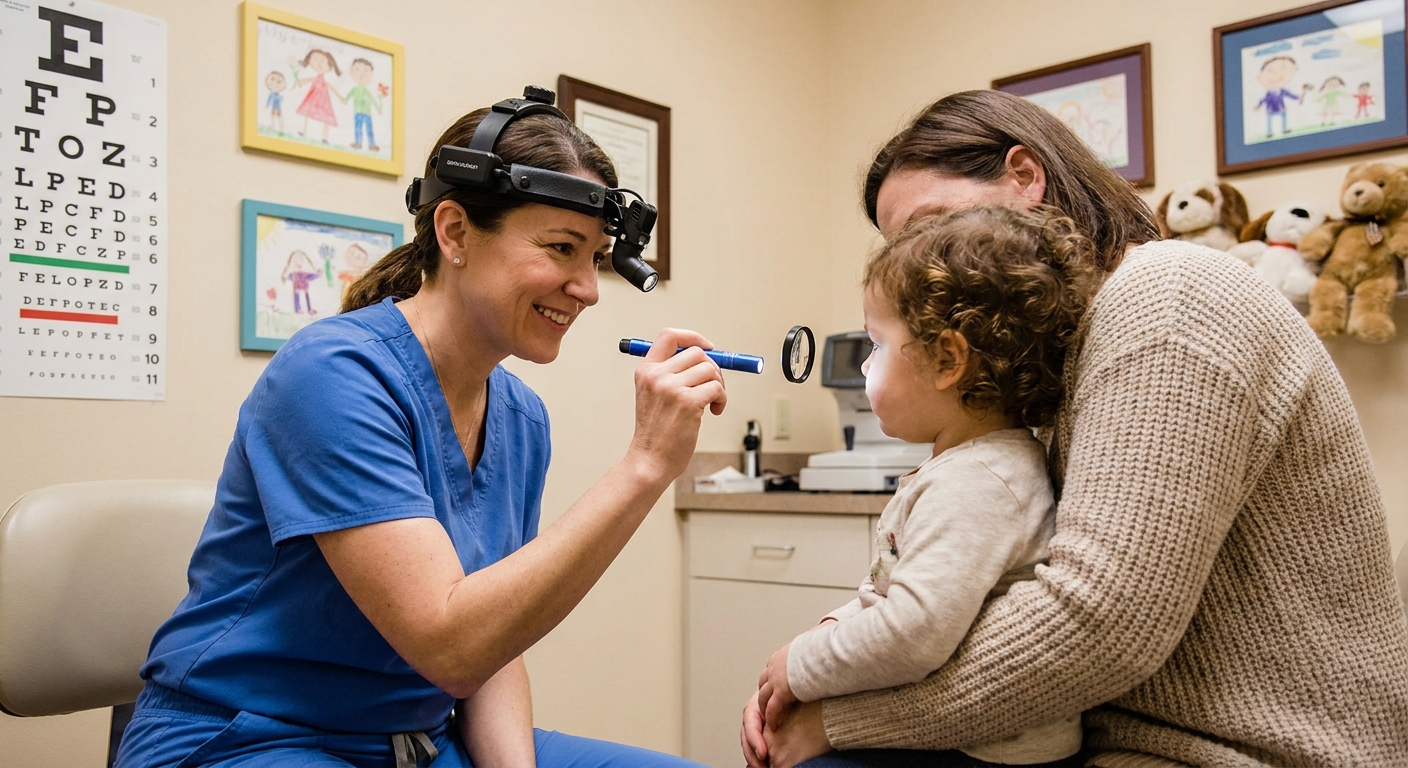
Who to see: Start with your pediatrician if that is easiest. For suspected amblyopia or an eye turn, a pediatric ophthalmologist (medical doctor) is often the most direct route. A pediatric optometrist can also do a thorough pediatric vision exam and, in many areas, can diagnose and treat amblyopia with glasses and patching or atropine. If surgery or complex medical causes are on the table, ophthalmology is the specialty that handles that.
Also worth knowing: routine vision screening is typically part of well-child care, and some practices use camera-based screening devices in very young kids. Screenings are helpful, but they are not perfect. If you are seeing consistent signs, you can request a comprehensive eye exam even if a screening was “normal.”
When it is urgent
Seek urgent medical care (same day) if you notice any of the following:
- White, gray, or yellow pupil that is new or seen repeatedly
- Sudden onset of a crossed or drifting eye
- Eye injury, significant redness with pain, or sensitivity to light
- Sudden vision concerns (your toddler repeatedly bumps into things, seems unable to track, or you see a big change)
If you are unsure, call your pediatrician’s nurse line. This is exactly what we are there for.
Treatment basics
Treatment depends on the cause, age, and how much vision is affected, but common approaches include:
- Glasses: Sometimes correcting the prescription difference (or a high prescription in both eyes) is enough to get vision developing more normally.
- Patching: Covering the stronger eye for a set number of hours a day to force the brain to use the weaker eye.
- Atropine drops: A drop in the stronger eye that temporarily blurs vision to encourage use of the weaker eye. It also dilates the pupil, so you can expect a larger pupil and sometimes light sensitivity, plus more blur up close.
- Treatment for an eye turn: This may include glasses and sometimes surgery to align the eyes. Vision therapy is sometimes used for specific binocular vision problems, and your specialist can tell you if it fits your child’s situation.
- Addressing anything blocking vision: For example, a significant droopy eyelid or cataract needs specialist care.
Most parents worry their toddler will never tolerate patching. Many do better than expected with a solid routine, a short timer, and a distraction that actually holds attention. Also, you are not being mean by treating this. You are protecting their vision.
Prep for the appointment
- Bring snacks and a comfort item. Eye clinics are kid-friendly, but toddlers are still toddlers.
- Bring photos. If you have pictures where the eye looks off, they can be helpful.
- Write down what you noticed. When does it happen, how often, which eye, and for how long?
- Know family history. Early glasses, lazy eye, eye turns, or significant vision problems in parents and siblings matter.
And if your toddler melts down halfway through the exam, you will not be the first family that day. Pediatric eye teams are impressively unbothered by toddler chaos.
FAQ
Can lazy eye go away on its own?
True amblyopia usually does not resolve without addressing the cause. The good news is that early treatment is often very effective.
Is a wandering eye always lazy eye?
Not always, but it is closely related. A wandering eye (strabismus) can cause amblyopia, and both need evaluation.
My toddler passed a vision screening. Could they still have lazy eye?
Yes. Screenings are helpful, but they are not perfect. If you are seeing consistent signs, it is reasonable to request a comprehensive exam.
What age is too late to treat?
Earlier is best, but treatment can still help many children beyond toddlerhood. Do not let “we missed the window” thinking stop you from getting an evaluation.
A quick pep talk
If you are here because you are worried, you are doing the right thing. Lazy eye can be subtle, and noticing small patterns is part of the parenting job description, even when you are running on cold coffee and four hours of sleep.
Take a few notes, grab a couple photos that show what you are seeing, and book an eye check. Most of the time, you will walk away with reassurance and a plan. And if treatment is needed, you caught it at the stage where it can make a big difference.
This article is for general education and is not a substitute for medical advice. If you are worried about your child’s eyes or vision, contact your child’s clinician.