Signs of Lazy Eye in Toddlers

Sarah Mitchell
Sarah Mitchell is a Registered Pediatric Nurse and a mother of three who has spent over a decade helping families navigate the beautiful, chaotic early years of childhood. She combines evidence-based medical knowledge with real-world parenting experience to offer practical, compassionate advice. At Awesome Parent, Sarah's mission is to help exhausted parents find solutions, trust their instincts, and finally get some sleep.
If you have ever looked at a photo of your toddler and thought, “Wait… why does one eye look different?” you are not alone. In the clinic, I saw this exact worry all the time, usually from very observant, very tired parents who just wanted a clear answer.
“Lazy eye” is one of those terms that sounds like a personality trait, but it is actually a vision development problem. The good news is that when it is caught early, treatment is often very effective. The tricky part is that toddlers are not exactly known for calmly reporting, “Mother, my left eye seems blurrier today.”
What “lazy eye” means
Lazy eye is the common name for amblyopia. It happens when the brain starts favoring one eye over the other, so the weaker eye does not develop normal vision. Over time, the brain essentially “ignores” the input from that eye.
Amblyopia is not the same thing as an eye that looks crossed, although the two can be related.
- Amblyopia (lazy eye): reduced vision in one eye because the brain is not using it properly.
- Strabismus: eyes are not aligned (one may turn in, out, up, or down).
- Refractive error: one eye may be much more nearsighted or farsighted than the other, which can lead to amblyopia even if the eyes look straight.
In toddlers, the reason we care is simple: the brain is learning to see right now, and early childhood is the most powerful window for that development.
One more nuance: amblyopia is often “one-eye dominant,” but in some cases (usually high refractive error in both eyes), both eyes can have amblyopia. It is less common, but it is another reason screening matters even when nothing looks obviously “off.”
Common signs in toddlers
Some toddlers have obvious signs, and others have very subtle ones. If you notice one or two items on this list, it does not automatically mean your child has amblyopia, but it is worth paying attention and discussing with your pediatrician or an eye doctor.
1) One eye turns or wanders
You might see one eye drifting inward (cross-eyed), outward, or occasionally up or down. Sometimes it only happens when your child is tired, sick, or focused on something close.
- Eye drifting that persists beyond about 3 to 4 months old deserves a check.
- Intermittent drifting can still matter, especially if it is happening often.
2) Squinting, closing one eye, or head tilting
Toddlers are little problem-solvers. If one eye is not seeing well, they may:
- squint to “sharpen” vision
- close one eye in bright light or when focusing
- tilt or turn their head to use the stronger eye
A consistent head tilt is a big clue, even if everything else seems normal.
3) Clumsiness that seems vision-related
All toddlers trip. It is practically part of the job description. What makes me pause is when a child consistently:
- misjudges steps or curbs
- bumps into door frames on one side
- has trouble catching a large ball after age 2 to 3
- struggles with placing objects (like stacking blocks) compared to peers
These can be normal toddler things, but paired with other signs, they can point toward a vision issue.
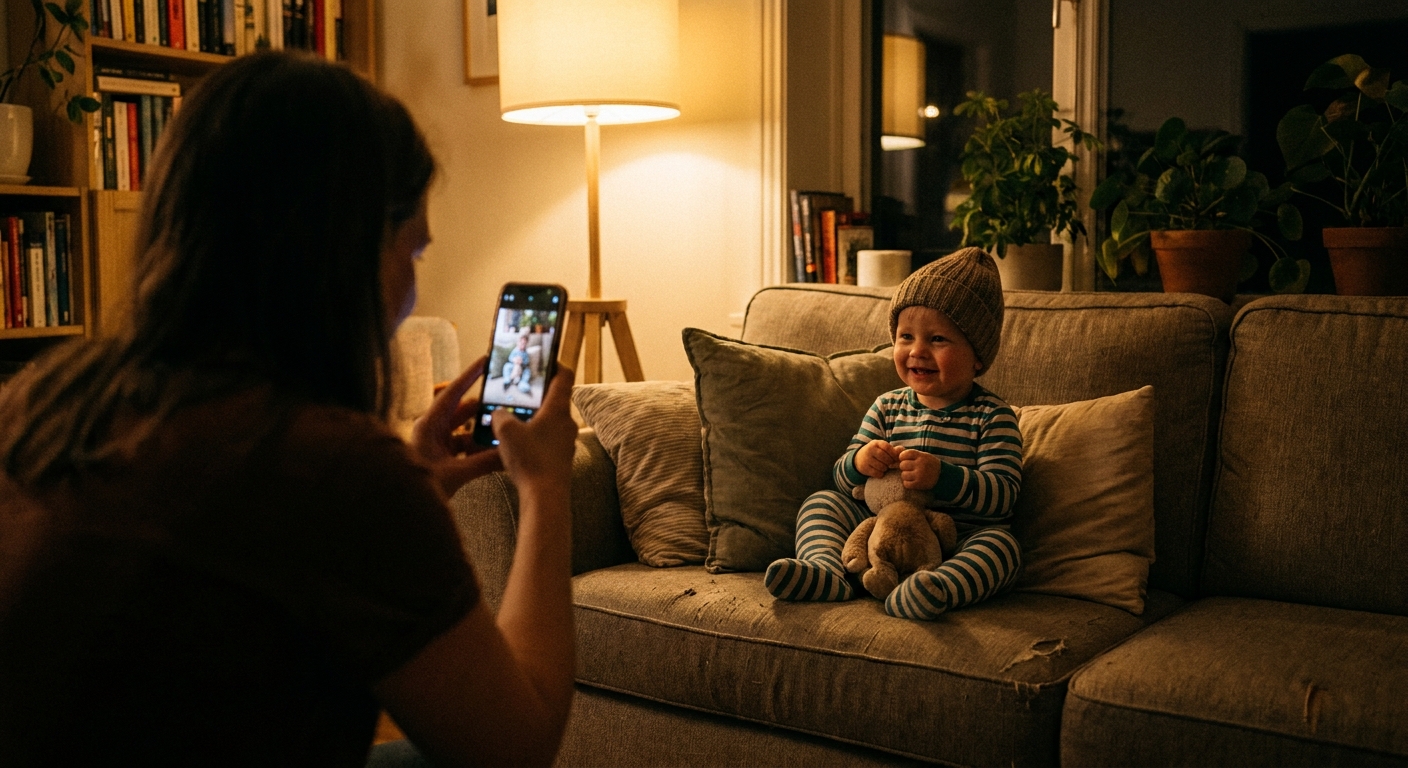
4) One eye looks “different” in photos
Parents often notice this first. In flash photos, a concerning sign can be an abnormal “red reflex,” such as:
- unequal red reflex (one eye looks much brighter than the other)
- a white or yellow reflection in one eye, also called leukocoria
- a reflex that looks missing or very dull in one eye
Lighting and angles can cause weird photo effects, so do not panic over a single picture. But if you see a repeated white or yellow reflex across different photos, or you notice it in person, that deserves prompt medical attention.
Subtle signs
These are the ones that can fly under the radar, especially if your toddler is chatty, active, and seems “fine.”
- Short attention span for books or close-up activities: not because they are bored, but because focusing up close is uncomfortable.
- Eye rubbing: especially during near work or at the end of the day.
- Frequent blinking: can be a habit, but persistent blinking can also be a sign of eye strain.
- Complaints like “my eye hurts” or “I can’t see”: toddlers may say this only occasionally and then move on.
- One eye watering more than the other: not a classic amblyopia sign, but can accompany irritation or strain.
At-home checks
These are not diagnostic tests, but they can help you decide whether to seek an evaluation sooner.
Important note: a “normal” home check does not rule out amblyopia. Some causes (like unequal prescription) can be very hard to spot without proper testing.
The cover test game
Pick a quiet moment and a fun target, like a sticker on the wall or a favorite toy.
- Have your child look at the target.
- Gently cover one eye with your hand for 2 to 3 seconds.
- Uncover it and watch what the uncovered eye does.
- Repeat on the other side.
What you are watching for: if the eye you uncover has to “jump” to find the target, the eyes may not be aligned.
If your toddler has a major meltdown when you cover one particular eye, it can be a clue that the covered eye is the stronger eye. In other words, they are upset because they are suddenly being forced to rely on the weaker eye. Also, it can be a clue that your toddler simply hates being covered. Both can be true.
Which eye do they favor?
Notice whether your child consistently turns their head the same way to look at screens, books, or distant objects. Consistent positioning can signal they are favoring one eye.
Safety note: Do not patch or cover an eye for extended periods at home unless an eye specialist has instructed you to. In some situations, patching the wrong way can make things worse.
When to get checked
Trust your instincts here. If something seems off, it is worth a conversation.
Make an appointment soon
Try to get in within days to a couple weeks if you notice:
- an eye that turns in or out consistently
- frequent eye drifting that persists beyond about 3 to 4 months old
- repeated abnormal-looking eye reflection in photos
- persistent head tilt or one-eye squinting
- your toddler seems to struggle seeing compared to peers
Get urgent care the same day
Seek urgent care if you notice:
- a white or yellow pupil reflection (leukocoria) that shows up repeatedly in photos or is visible in person
- sudden onset of a new eye turn, especially with illness, headache, or vomiting
- eye injury, significant redness with pain, or a sudden vision concern
Most causes are not emergencies, but leukocoria in particular deserves prompt medical attention.
What causes it
Lazy eye is usually caused by something that makes the brain prefer one eye:
- Strabismus: if the eyes are not aligned, the brain may suppress one eye to avoid double vision.
- Unequal prescription: one eye may be much blurrier (anisometropia), even if the eyes look straight.
- Blur in one eye: from something blocking vision, like a cataract (rare), droopy eyelid (ptosis), or significant corneal issues.
- High prescription in both eyes: sometimes both eyes can be blurry enough early on that both visual systems lag behind (bilateral amblyopia).
Family history matters. If a parent or sibling had amblyopia, strabismus, or needed strong glasses early, mention that.
What the eye doctor does
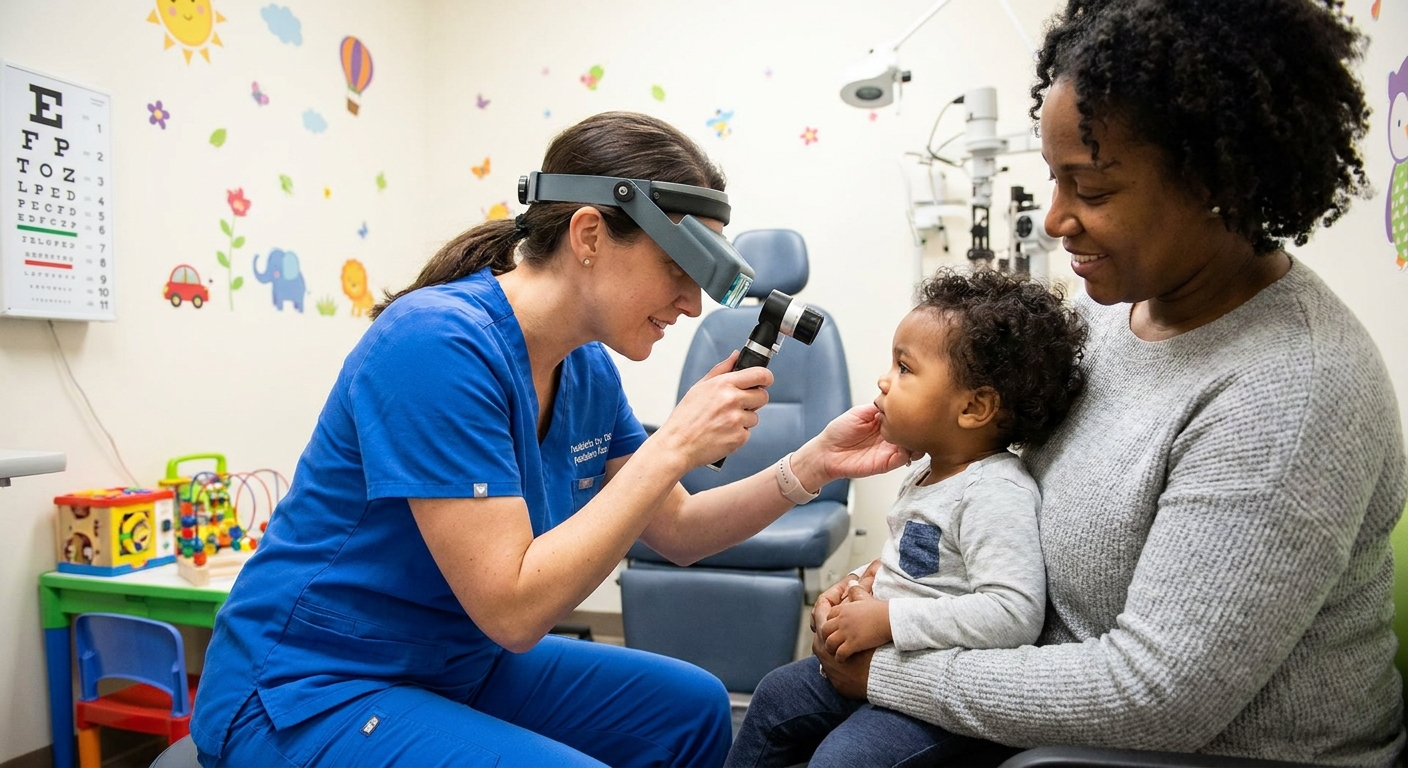
For toddlers, the visit is usually very kid-friendly and full of clever tricks.
- Vision testing: using pictures, matching games, or age-appropriate tools.
- Eye alignment checks: to see if the eyes point together.
- Dilated exam: drops may be used to look at the back of the eye and measure focusing.
If amblyopia is diagnosed, treatment may include:
- Glasses: sometimes this alone improves vision significantly.
- Patching: covering the stronger eye for prescribed times to strengthen the weaker eye.
- Atropine drops: used in some cases to blur the stronger eye instead of patching.
- Surgery: sometimes for strabismus (this aligns the eyes, but additional amblyopia treatment may still be needed).
Why early treatment matters
In plain terms: the earlier the brain learns to use both eyes well, the better the long-term outcome.
That does not mean older kids cannot be treated, but toddler and preschool years are prime time. If you are reading this because you have a nagging feeling something is off, it is a good moment to act on it.
Screening basics
Most kids get some level of vision screening at routine well visits, and many preschool programs do screenings too. These are helpful, but they are not perfect, especially for subtle amblyopia risks.
If your child is higher-risk (for example, a strong family history of amblyopia or strabismus, a noticeable eye turn, or concerns raised at a screening), it is reasonable to ask your pediatrician whether a formal exam with a pediatric optometrist or pediatric ophthalmologist is the next step.
FAQ
Is a lazy eye the same as a crossed eye?
Not exactly. A crossed or wandering eye (strabismus) can cause lazy eye, but you can also have lazy eye from unequal prescription with eyes that look straight.
Can toddlers grow out of a lazy eye?
A true amblyopia issue typically does not “grow out of it” without treatment because it is about brain wiring and vision development. The earlier it is addressed, the easier it is to correct.
Does screen time cause lazy eye?
No. Screen time does not directly cause amblyopia. It can contribute to eye strain, and sometimes it is when kids do a lot of close-up activities that parents notice squinting or a head tilt. But lazy eye is usually related to alignment, prescription differences, or something blocking clear vision.
If my toddler fights patching, does that mean it is working?
Sometimes. Kids often resist because the patched eye is the stronger one, and suddenly they have to rely on the weaker eye. That said, plenty of toddlers fight patching because it is annoying. Your eye doctor can help adjust timing and strategies.
Next step
If you suspect a lazy eye, you do not need to wait for your next well visit. Call your pediatrician and ask whether a referral to a pediatric optometrist or pediatric ophthalmologist makes sense, or book directly if your insurance allows.
And if you are feeling guilty for “not noticing sooner,” please drop that right now. Most lazy eye signs are subtle by design. Noticing now is exactly what a great parent does.