Signs of Lazy Eye in Toddlers

Sarah Mitchell
Sarah Mitchell is a Registered Pediatric Nurse and a mother of three who has spent over a decade helping families navigate the beautiful, chaotic early years of childhood. She combines evidence-based medical knowledge with real-world parenting experience to offer practical, compassionate advice. At Awesome Parent, Sarah's mission is to help exhausted parents find solutions, trust their instincts, and finally get some sleep.
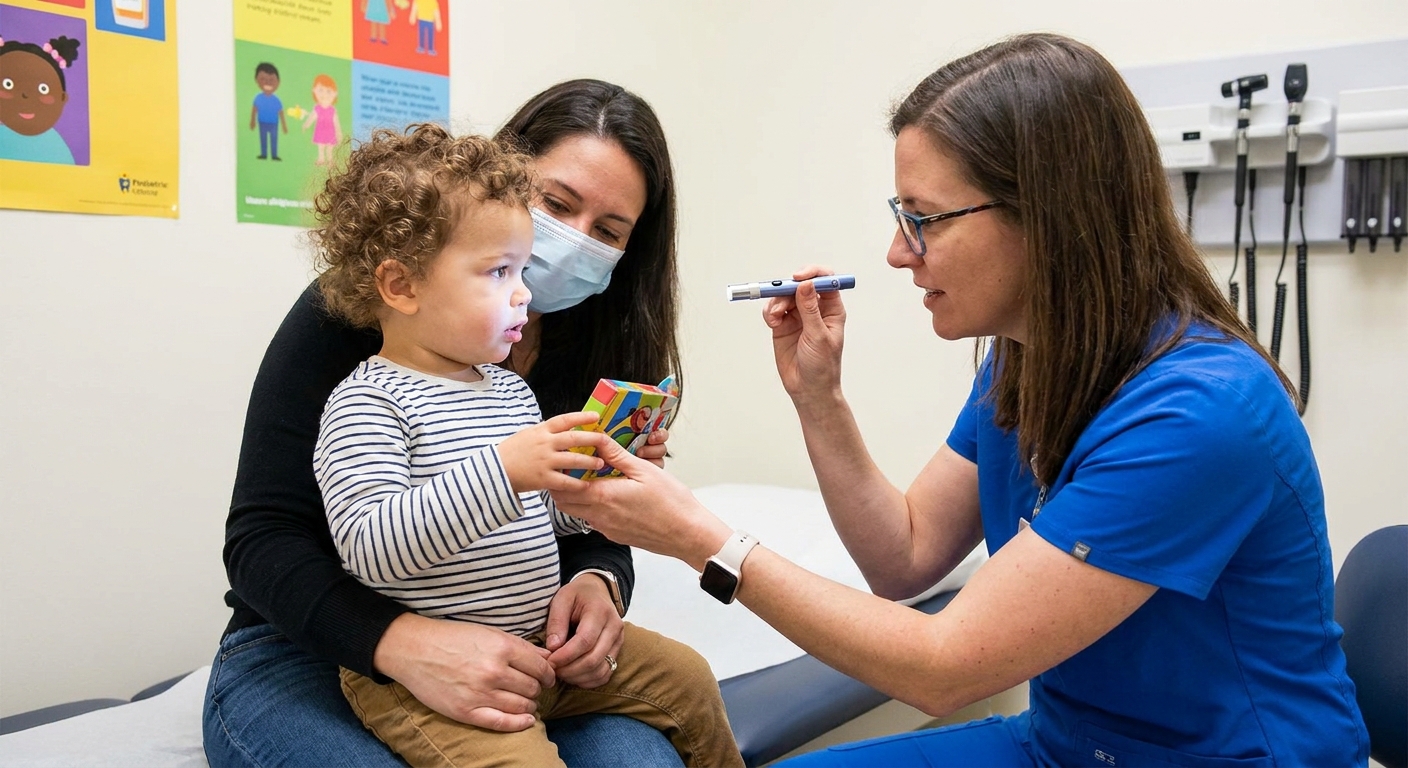
If you are here because something about your toddler’s eyes feels “off,” take a breath. You are not being dramatic. Lazy eye, also called amblyopia, is common, often subtle, and very treatable, especially when we catch it early.
As a pediatric nurse and a mom who has played the “is that normal?” game at 3 AM more times than I can count, here is what I want you to know: toddlers don’t reliably tell us they can’t see well. So we watch behavior, eye alignment, and how they use their eyes during everyday life.
What “lazy eye” means
Lazy eye (amblyopia) is not usually about a “weak” eye muscle. It happens when the brain starts favoring one eye because the images from the two eyes don’t match well. Over time, the brain pays less attention to the blurrier eye, and that eye’s vision doesn’t develop normally.
Common reasons this happens in toddlers include:
- Eye misalignment (strabismus): one eye turns in, out, up, or down some of the time or all of the time.
- Unequal prescription: one eye is much more nearsighted, farsighted, or has more astigmatism than the other.
- Something blocking vision: less common, but things like a cataract or a droopy eyelid can reduce input to one eye.
Not every crossed or wandering eye equals lazy eye, and not every lazy eye is obvious. That is why toddler vision screening is so important.
Most common signs in toddlers
Some signs are “eye signs” you can see. Others are “life signs” you notice during play.
1) One eye turns or wanders
If you consistently notice one eye turning in or out, even if it’s only when your child is tired, sick, or focusing up close, it’s worth an eye exam. Intermittent turns can still affect visual development.
Quick reassurance: some toddlers look cross-eyed but aren’t. A wide nasal bridge or epicanthal folds can create pseudostrabismus, where the eyes look misaligned even though they’re straight. The catch is that you can’t reliably tell the difference at home, so it’s still worth getting checked if you’re seeing it often.
2) Frequent squinting, closing one eye, or covering an eye
Toddlers may close one eye in bright sunlight or when looking at something detailed. Covering one eye during screen time or while looking at books can be a clue the brain is trying to “pick” the better image.
3) Head tilt or face turn
A persistent head tilt can be a sign your child is trying to use a “better” position to see clearly or to line up the eyes. Plenty of kids tilt their head for a photo. What we care about is a repeat pattern in daily life.
4) Bumping into things on one side
If your toddler seems clumsier than expected, bumps into doorframes, misjudges steps, or struggles with catching or stacking, vision can be part of the story. Toddlers are naturally wobbly, but you may notice they consistently miss in one direction.
5) Sitting very close to books or screens
This can signal nearsightedness or poor vision in one eye. It’s not proof of lazy eye, but it’s a good reason to check.
6) Complaints you might actually hear
Toddlers don’t always have the words, but you might hear:
- “My eye hurts” or “my head hurts” (especially after close work)
- “I can’t see” (often vague and inconsistent)
- “It’s blurry” or “double” (less common at toddler ages, but possible)
7) Photos that show a consistent “odd” reflection
In some flash photos, you might notice one pupil looks white, dull, or a different color than the other. Most of the time this is a lighting angle issue. But if you see it repeatedly in multiple photos, in the same eye, from different angles, call your pediatrician promptly. This is not a “wait and see” situation.
Quick at-home checks
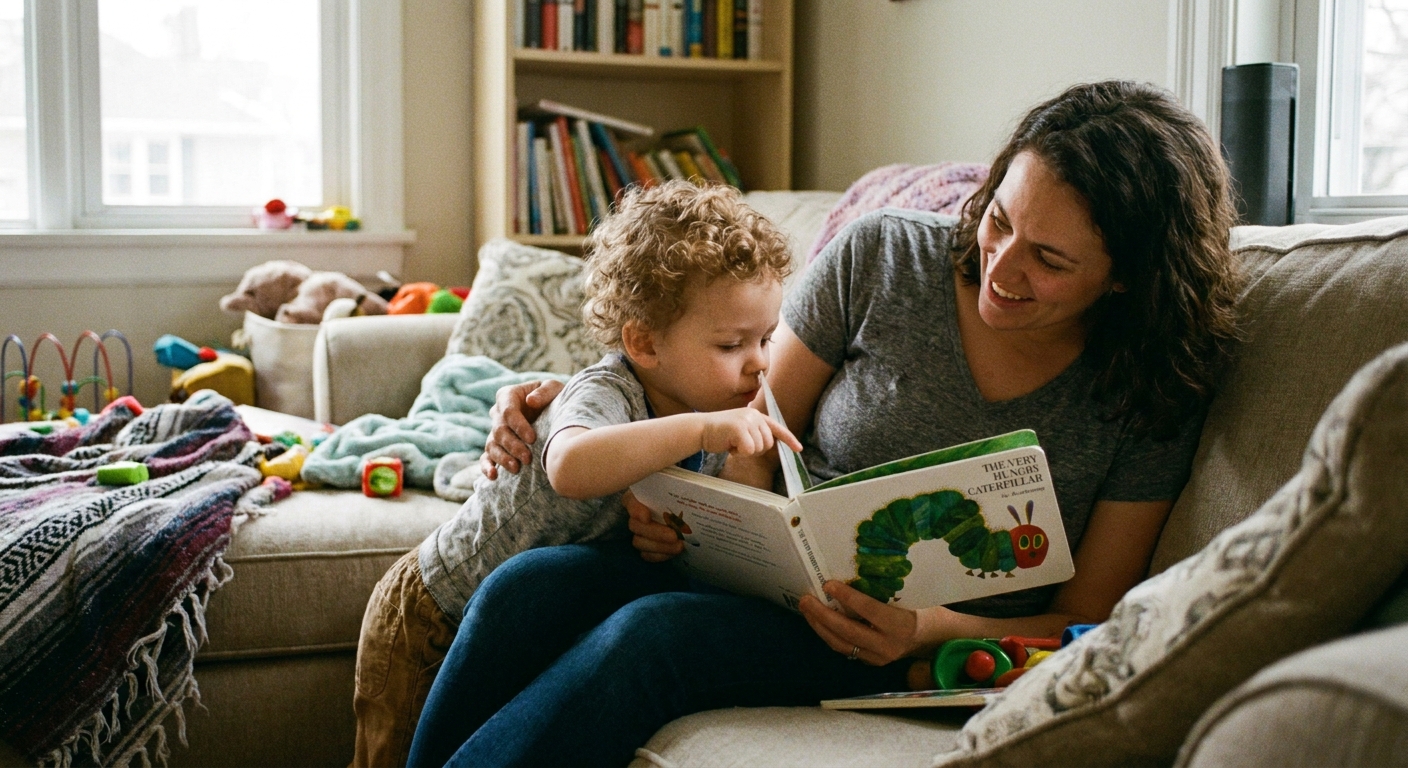
These are simple observations you can do at home. They don’t replace a proper eye exam, but they can help you decide whether to book one sooner.
Cover test, toddler style
- Pick a fun target: a sticker on the wall, a toy, a light-up object, or a picture in a book.
- Cover one eye gently with your hand (no pressure on the eyelid) for 2 to 3 seconds.
- Uncover and watch what happens.
- Repeat on the other eye.
What can be concerning: your toddler gets very upset when you cover one particular eye (because the uncovered eye may not see well), or you notice the uncovered eye “jumps” to re-fixate on the target.
Also, a gentle reminder from the clinic side: this is hard to interpret at home, and false alarms are common. If something seems off, that’s your cue to schedule an exam, not to try to diagnose it yourself.
Watch alignment in everyday moments
Pay attention when your toddler is:
- Looking at something up close, like snacks or stickers
- Looking far away, like a bird outside
- Tired, just woke up, or has a cold
Misalignment that shows up mainly with fatigue still counts.
Look for symmetry in photos
In well-lit photos without flash, do the eyes look similarly open? Does one eyelid droop? Is one eye consistently turned?
When to call the doctor
If you notice any of the signs above more than once or twice, it’s reasonable to call your pediatrician and ask about a referral to a pediatric ophthalmologist or a pediatric optometrist experienced with toddlers. Depending on your location and insurance, you may be able to self-refer to an eye clinic.
In general, call sooner if:
- One eye is turning in or out consistently
- Your toddler closes one eye or tilts their head often
- There’s a strong family history of lazy eye or strabismus
- Your child failed a vision screening at daycare or the doctor’s office
Trust your gut: if you’re seeing something that worries you, you don’t need to wait for a routine well visit.
Vision screening basics
Screening schedules vary by country and even by clinic, but many pediatric offices start formal, instrument-based vision screening in the toddler and preschool years. The most important rule is simple: screening is for kids without obvious concerns. If you have concerns, your child deserves a full eye evaluation, even if their next screening isn’t due yet.
Urgent red flags
Seek urgent medical care if you notice:
- A white, gray, or absent red reflex in photos or when light hits the eye, especially if it keeps showing up in the same eye. This can be leukocoria and needs a same-day evaluation. If you can’t get in quickly, go to urgent care or the ER.
- Sudden new eye turn, especially with illness, drooping eyelid, severe headache, or vomiting
- Eye injury, chemical exposure, or significant eye pain
- Sudden vision behavior change, like your child seems unable to track objects they previously could
Most of the time, the cause isn’t an emergency. But these specific signs are important to rule out promptly.
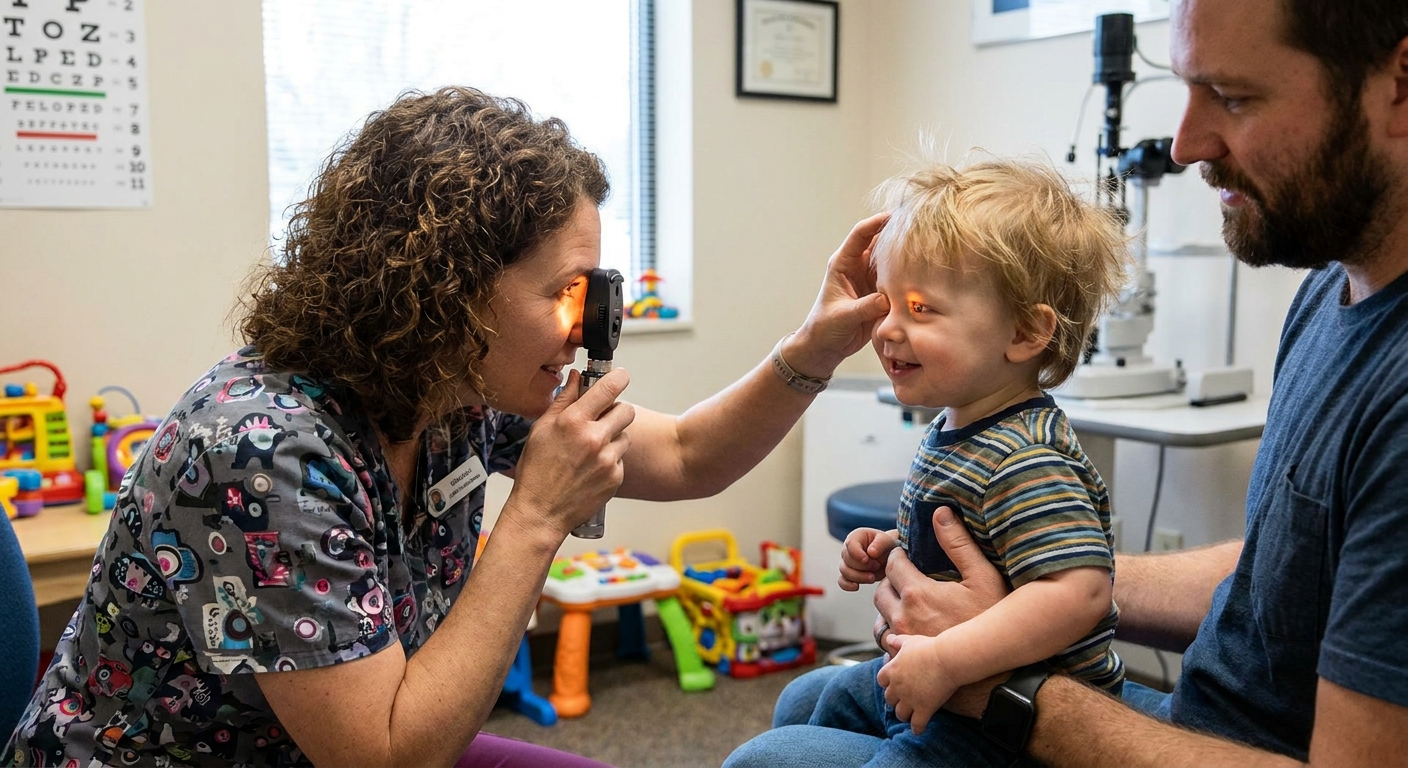
What the eye exam is like
Parents often worry the visit will be stressful or that their toddler won’t cooperate. Pediatric eye teams are basically toddler whisperers.
A typical visit may include:
- Visual behavior tests using shapes, pictures, or matching games
- Alignment checks to see if the eyes point together
- Refraction to measure prescription, often after dilating drops
- Eye health exam to make sure nothing is blocking vision
Dilating drops can sting briefly and may make your child light-sensitive for a few hours. Bringing sunglasses, a hat, and snacks is a pro move.
If it is lazy eye
The goal is to get the brain using both eyes properly again. Treatment depends on the cause and your child’s age. It also takes time. Progress is usually measured over weeks to months, and follow-up visits matter because plans often get adjusted.
Glasses
If unequal prescription is the main issue, glasses alone can sometimes dramatically improve amblyopia.
Patching
Covering the stronger eye for a prescribed amount of time helps the brain “practice” using the weaker eye. The schedule varies. Some kids do a couple of hours a day, others more. Consistency matters more than perfection.
Important: patching should be done under the guidance of your eye specialist, since over-patching can cause problems too.
Atropine drops
Sometimes a doctor uses medicated drops in the stronger eye to blur it temporarily, encouraging the weaker eye to work. This can be a good alternative for kids who can’t tolerate patches.
Treating strabismus
If misalignment is significant, treatment might include glasses and, in selected cases, orthoptics or vision therapy exercises. Sometimes surgery is needed to align the eyes. Surgery aligns the eyes, but amblyopia treatment like patching may still be needed to strengthen vision.
Timing matters: the earlier we treat amblyopia, the better the chance of improving vision because the visual system is still developing in early childhood.
And yes, amblyopia can sometimes creep back after treatment, which is why keeping follow-ups and finishing the plan matters even when things look better.
Making patching easier
- Start with a routine: same time each day, tied to a predictable activity like breakfast cleanup or a favorite song.
- Use “near work” during patch time: coloring, stickers, books, blocks, simple puzzles. This helps the weaker eye practice.
- Offer choices: “Do you want the patch before or after snack?” Toddlers love control.
- Expect feelings: frustration is normal, especially at first. Your calm matters.
- Ask about patch type: adhesive patches block vision best, but some kids need a different option due to skin sensitivity. Your eye team can help troubleshoot.
FAQ
Can a toddler grow out of lazy eye?
Some eye turns can seem to improve, and some vision issues become less noticeable as kids adapt. But amblyopia itself usually doesn’t “just go away” without treatment. The safest move is an eye exam if you suspect it.
Is a wandering eye always lazy eye?
No. A wandering eye (strabismus) can lead to amblyopia, but not every child with strabismus develops amblyopia. Also, some kids have amblyopia from unequal prescription without an obvious eye turn.
What about “crossed eyes” in babies?
In very young babies, intermittent crossing can be normal. By around 4 months (and certainly by 6 months), persistent or worsening misalignment should be evaluated.
Will screen time cause lazy eye?
Screen time doesn’t cause amblyopia. Lazy eye is typically related to alignment, focusing differences, or blocked vision. That said, lots of close-up screen time and near work is associated with myopia (nearsightedness) progression in kids, so it’s still smart to aim for balanced habits and plenty of outdoor play.
The bottom line
If you suspect lazy eye, you’re doing the right thing by paying attention now. The signs can be subtle, and toddlers are masters at compensating. An eye exam is low risk and can be hugely reassuring, even if everything turns out to be normal.
If you want a simple next step: write down what you notice, when it happens (tired, outdoors, looking up close), and bring a few photos where the concern shows up. That information genuinely helps your child’s clinician. It helps us help you.
Friendly reminder: This article is general education and not a medical diagnosis. If you’re worried about your child’s vision or eye alignment, schedule an evaluation with your pediatrician or a pediatric eye specialist.