A calming, parent-friendly guide to toddler eye turns, pseudostrabismus, screening ages, and why early glasses, patching, or drops can protect vision.
Signs of Lazy Eye in Toddlers

Sarah Mitchell
Sarah Mitchell is a Registered Pediatric Nurse and a mother of three who has spent over a decade helping families navigate the beautiful, chaotic early years of childhood. She combines evidence-based medical knowledge with real-world parenting experience to offer practical, compassionate advice. At Awesome Parent, Sarah's mission is to help exhausted parents find solutions, trust their instincts, and finally get some sleep.
If you are wondering whether your toddler has a “lazy eye,” you are not alone. In my practice, I see lots of parents come in feeling guilty because they did not notice something sooner. Here is the truth: lazy eye (called amblyopia) can be subtle, and toddlers are very good at adapting. The good news is that when it is caught early, treatment is often very effective.
This guide will help you spot the signs, understand what matters (and what doesn’t), and know when to call a pediatric eye doctor.
What “lazy eye” actually means
Lazy eye is not a “weak eye muscle,” and it is not something your child is doing on purpose. Amblyopia is a developmental vision problem. It happens when the brain starts favoring one eye and pays less attention to the other. Over time, the ignored eye does not develop clear vision the way it should.
One confusing part for parents is that the eye itself can look totally normal. The issue is how vision develops and how the brain is using (or not using) the input.
It often develops because of one of these issues:
- Eye misalignment (strabismus): one eye turns in, out, up, or down.
- Different prescription between eyes (anisometropia): one eye is much more farsighted, nearsighted, or has more astigmatism.
- Something blocking vision (deprivation): like a cataract, a droopy eyelid, or another problem that prevents a clear image.
Important note: not every eye turn equals amblyopia, and not every case of amblyopia has an obvious eye turn. That is why screening matters.
Signs in toddlers
Toddlers rarely tell you “I can’t see out of my left eye.” Instead, you’ll notice patterns. Here are the most common real-life signs.
1) One eye turns in or out, even sometimes
An eye that drifts or crosses can be a clue to strabismus, which can lead to amblyopia. Some toddlers only show it when they are tired, sick, or focusing up close.
- Watch for a consistent turn in photos and in everyday moments, not just one goofy face.
- If the eye turn is constant or getting more frequent, that’s more urgent to evaluate.
2) Squinting, head tilting, or turning the face to look at things
Kids will compensate in creative ways. A persistent head tilt or always turning the head to one side can mean they’re trying to use their “better” eye or line their eyes up in a way that feels clearer.
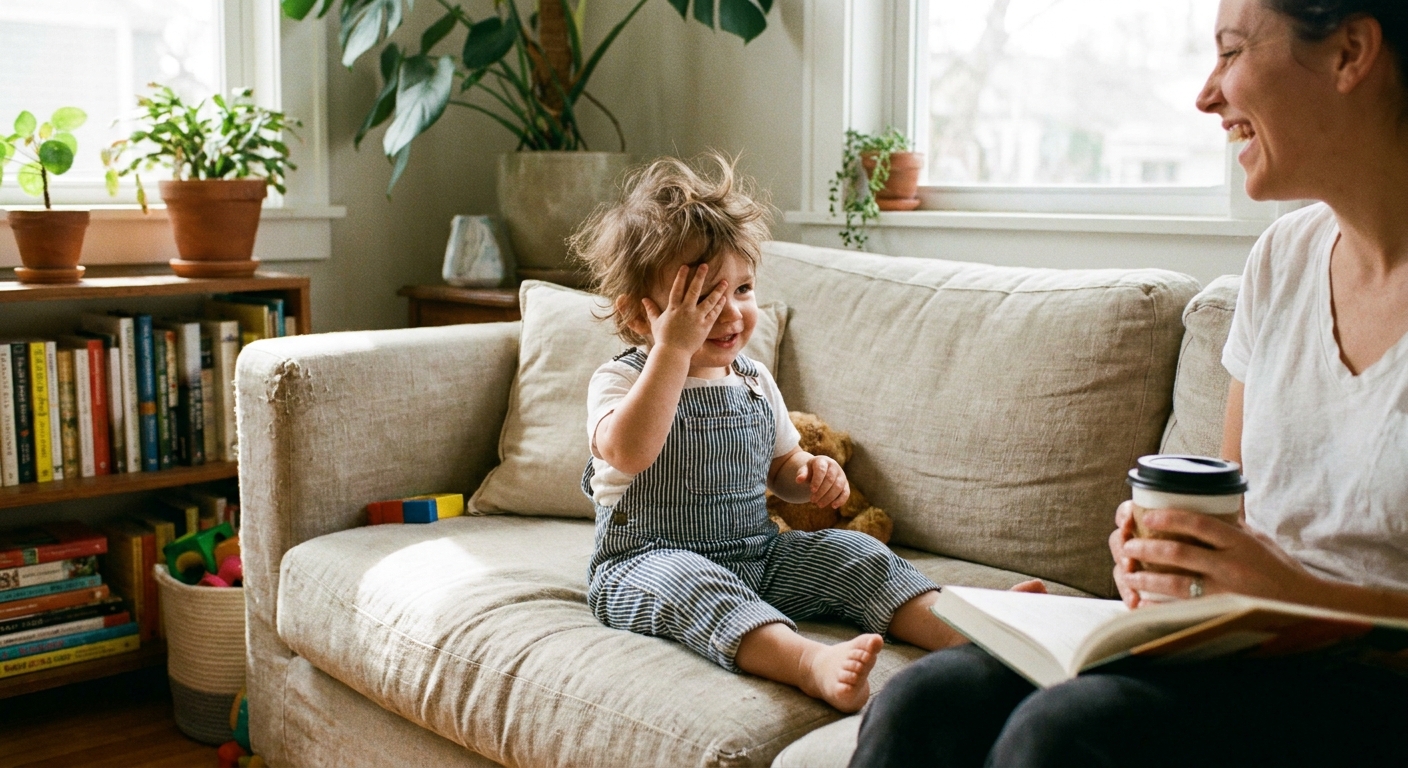
3) Covering or rubbing one eye
If your toddler covers one eye while watching TV, looking at books, or when out in bright sunlight, pay attention. Sometimes kids do this to reduce double vision from misalignment, or because one eye is working harder.
4) Bumping into things more than expected
Occasional toddler clumsiness is normal. But frequent misjudging of steps, doorways, or reaching for objects and missing can be a sign of a vision issue, including reduced depth perception.
5) Trouble recognizing familiar people or objects at a distance
If your child only seems to recognize you, siblings, or familiar items when they are close, it may point to a refractive error. Amblyopia can happen alongside a big difference in prescription between eyes.
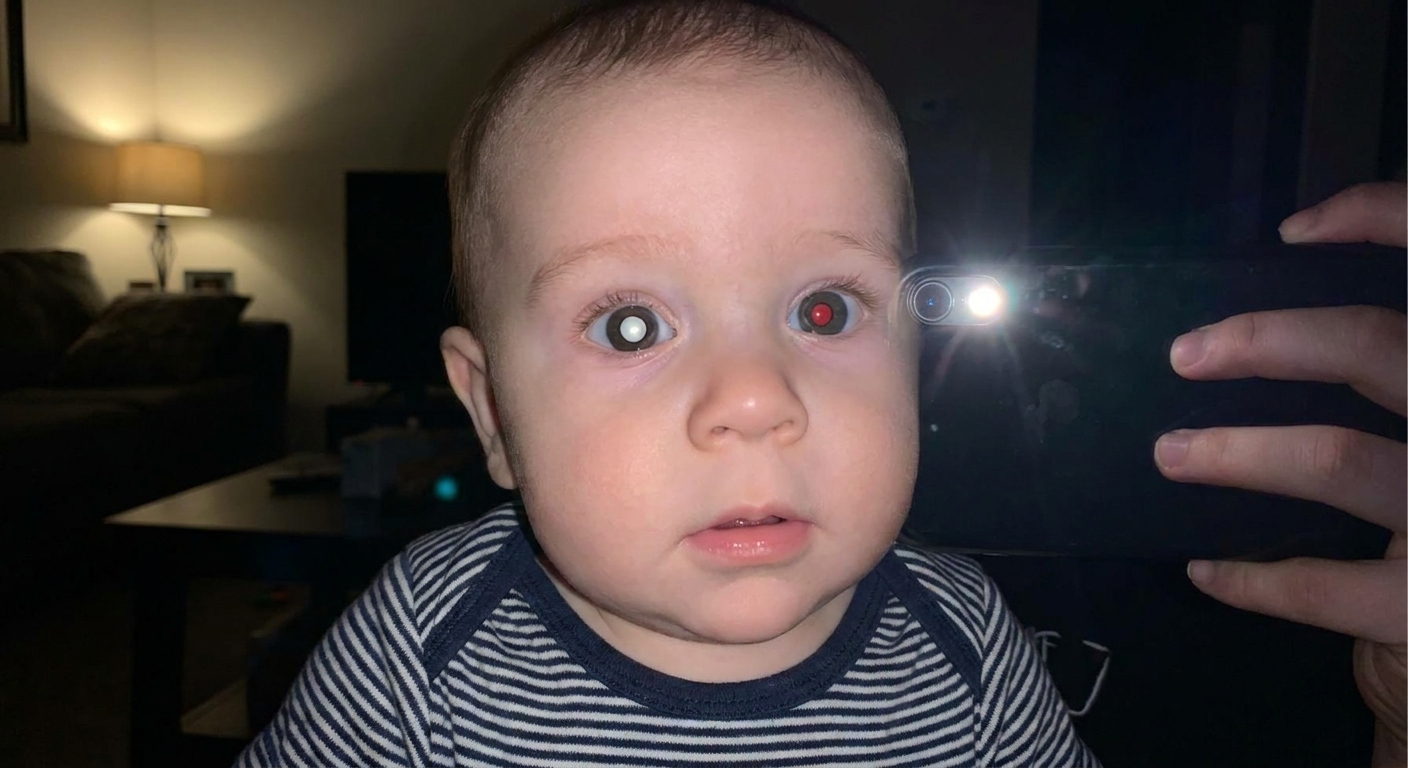
6) One eye looks “different” in photos
You might notice:
- One pupil looks white or gray in flash photos (this is rare but urgent).
- One eye always seems to reflect light differently.
- Only one eye appears centered while the other looks slightly off.
Photos are not diagnostic, but patterns are worth showing your pediatrician or eye doctor.
7) Complaints that are easy to miss
Toddlers may not have the words for vision problems. Instead you might hear:
- “My eyes hurt” after screens or books
- “I’m tired” when doing close-up activities
- More meltdowns with puzzles, coloring, or matching games
Call promptly (do not wait)
Most concerns can be scheduled routinely, but a few symptoms deserve faster evaluation.
- Constant eye turn in a toddler or child.
- White or gray appearance in the pupil in photos or in normal light (called leukocoria). This can have serious causes like cataract or, rarely, retinoblastoma, so it needs same-day guidance.
- Droopy eyelid that covers part of the pupil.
- Sudden change in eye alignment or vision behavior.
- Eye pain, significant light sensitivity, or redness that does not improve quickly.
If you see leukocoria or have a strong gut feeling something is off, call your pediatrician the same day for guidance. If it’s after hours and you’re worried, urgent care or the ER can help triage what needs immediate attention.
Quick at-home checks
I love simple, low-stress checks because they can give you better data to bring to the appointment. Keep it playful and brief. If your toddler refuses, that’s normal. Try another day.
The cover game (30 seconds)
- Pick a small target your child likes, like a sticker on the wall or a toy.
- Cover one eye gently with your hand for 2 to 3 seconds, then switch.
- Watch what happens when you uncover each eye.
What you’re looking for: a couple of clues can be helpful. One is if your child gets very upset only when one specific eye is covered, which can suggest they rely heavily on the other eye. Another is if you notice a small “catch-up” movement when you uncover an eye, as if it has to re-fixate on the target.
Important: this does not confirm amblyopia or rule it out. It only suggests an imbalance that’s worth a professional exam.
Photo clue: light reflection
In a well-lit room, take a few straightforward photos from a few feet away while your toddler looks at the camera. If the light reflection sits in a different spot in each eye consistently, mention it to your pediatrician or eye doctor.
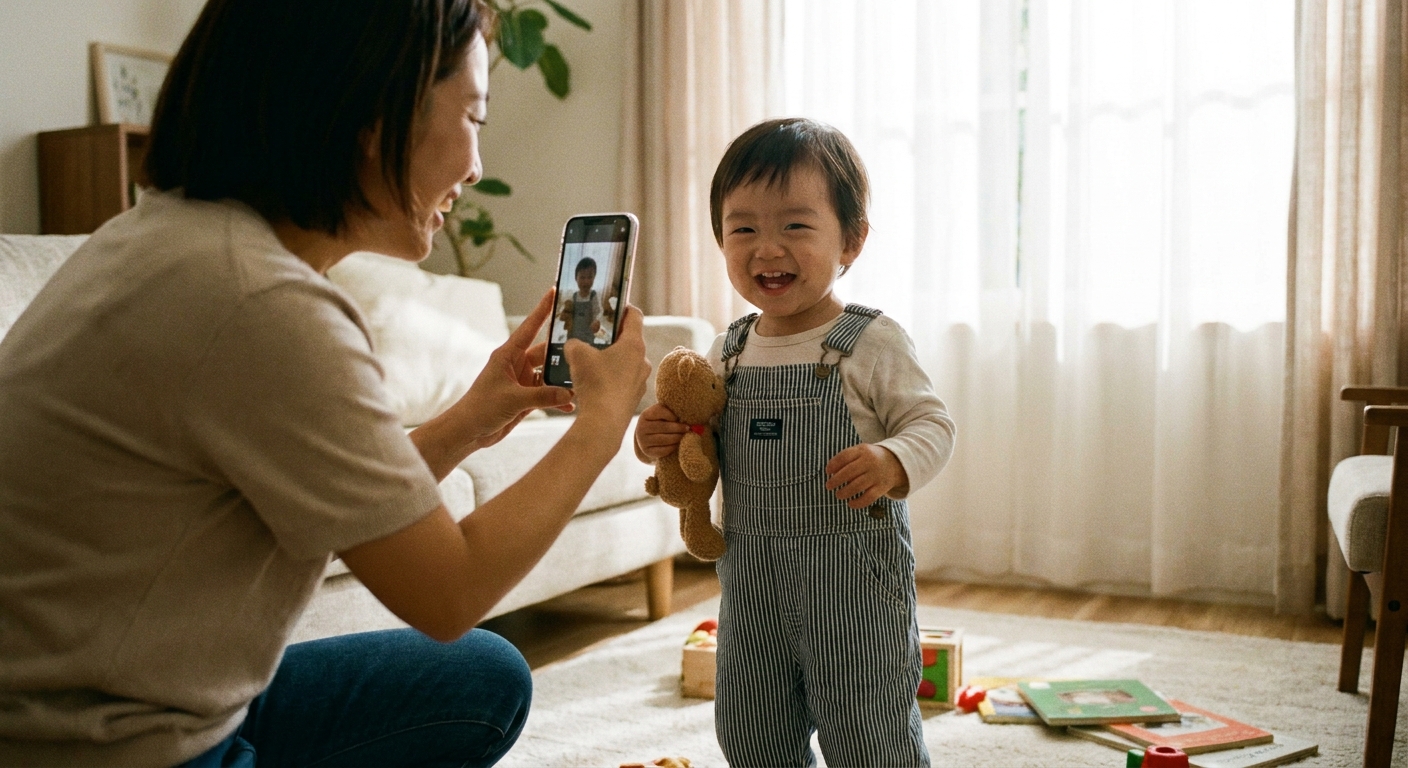
Please avoid: trying to diagnose using internet “flash tests” alone. They can create false alarms and false reassurance. Use them only as a prompt to get a professional exam.
When to get an eye exam
In the US, many pediatric offices do routine vision screening in the toddler and preschool years. Often this is instrument-based screening (sometimes called photoscreening), and later it becomes letter or symbol chart testing. Screening is helpful, but it is not the same as a full eye exam, and it can miss amblyopia in some kids.
Consider a comprehensive exam with a pediatric optometrist or pediatric ophthalmologist if:
- You notice any of the signs above.
- There is a family history of amblyopia, strabismus, or strong prescriptions at a young age.
- Your child was born prematurely or has medical conditions that increase vision risk.
- Your pediatrician’s screening was abnormal or could not be completed.
If you are unsure which specialist to choose: either one can diagnose amblyopia. A pediatric ophthalmologist is a medical doctor and surgeon, which can be helpful if there is strabismus that might require surgical consideration or if there is concern about cataract or other medical eye conditions.
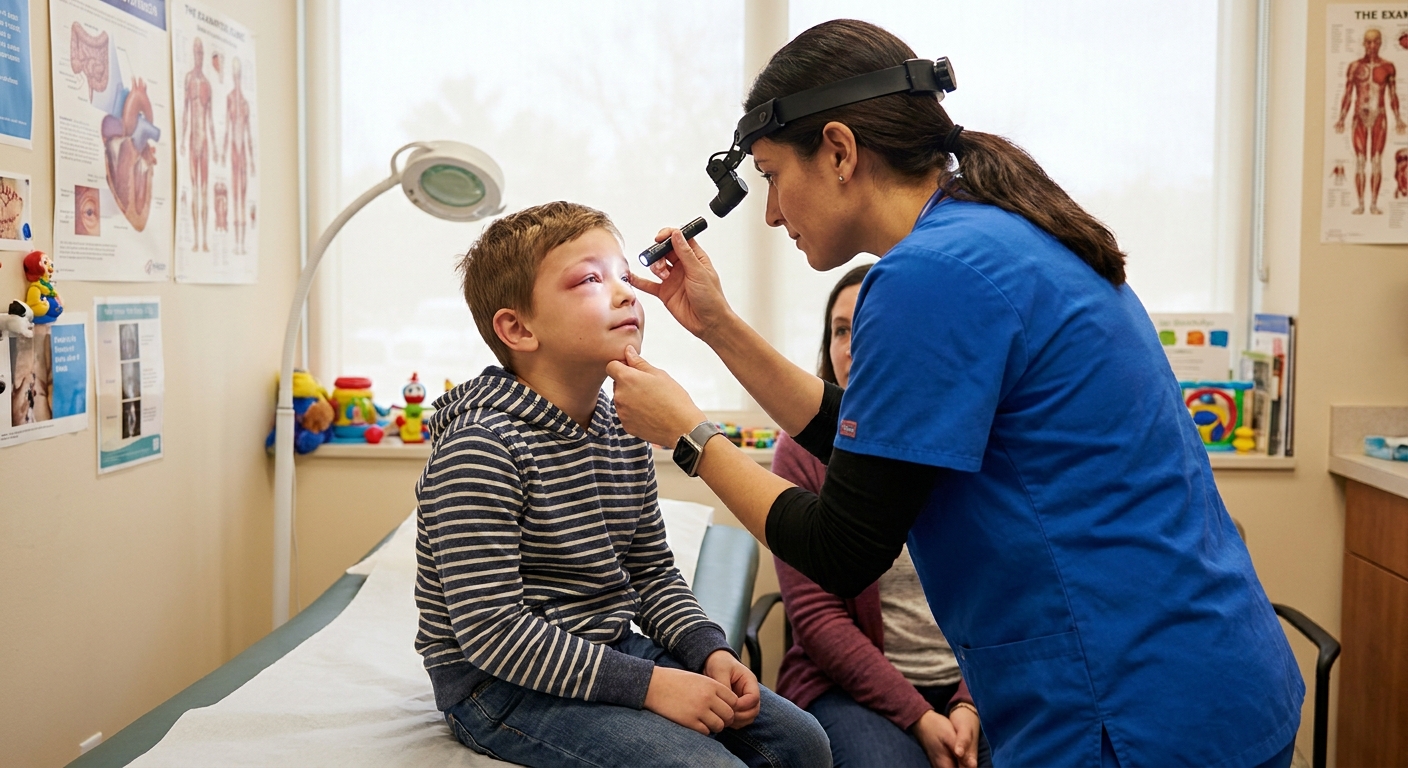
What the doctor checks
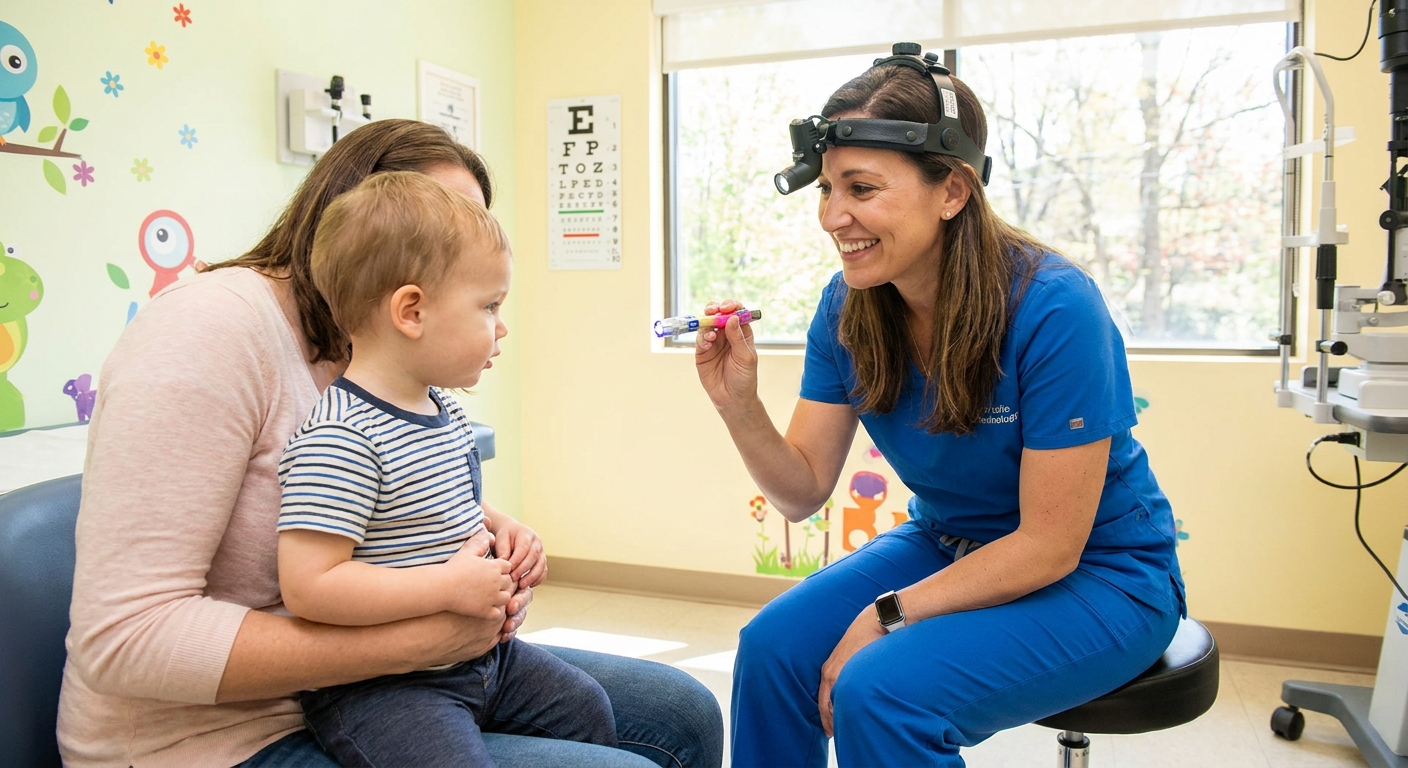
Most toddler eye exams are surprisingly kid-friendly. Expect some combination of:
- Checking how each eye tracks and focuses
- Looking at alignment and eye movement
- Checking visual acuity in an age-appropriate way (or looking for a fixation preference)
- Using drops to relax focusing so they can measure prescription more accurately
- Examining the health of the eye with special lights
Your toddler may not love the drops, but the exam itself is usually quick and gentle.
Treatment options
Treatment depends on the cause, but the goal is the same: help the brain use the weaker eye so vision can develop as well as possible.
- Glasses: If prescription differences are the issue, glasses alone may significantly improve vision.
- Patching: Covering the stronger eye for a set number of hours a day to train the weaker eye.
- Atropine drops: Sometimes used to blur the stronger eye instead of patching.
- Strabismus treatment: This can include glasses, and sometimes surgery to align the eyes. For specific binocular vision issues, some clinicians may recommend vision therapy. (Surgery aligns the eyes, but amblyopia treatment may still be needed.)
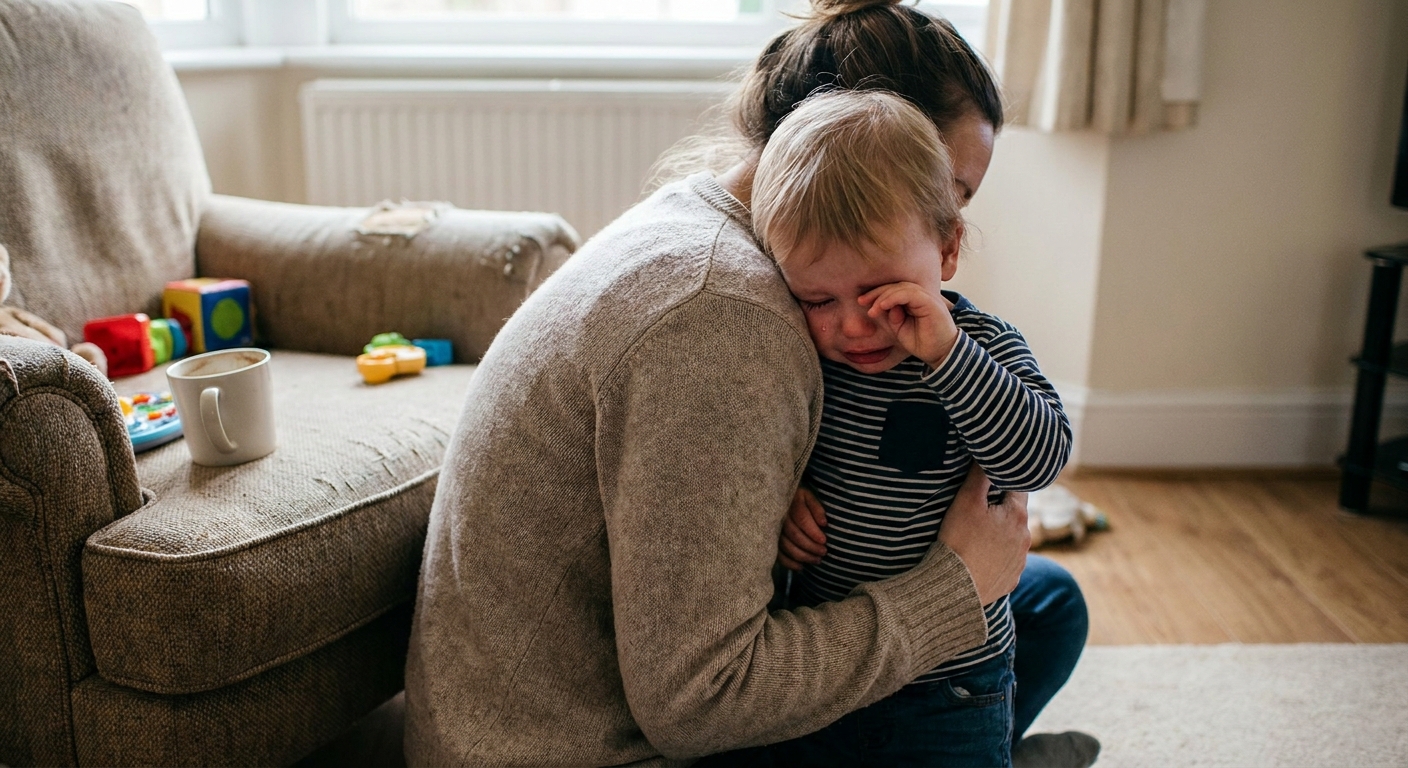
Parents often worry patching will be a daily battle. Sometimes it is, especially at first. But most families find a routine, and kids adapt more than you’d think, especially when they’re young.
One safety note: patching and atropine should be done with your eye doctor’s guidance. Over-treatment is uncommon, but it can temporarily blur the stronger eye too much, so follow the prescribed schedule and keep follow-ups.
Earlier treatment is often easier, but it is not “too late” just because your child is older. Many older kids can still improve with the right plan.
Common myths
- “They’d tell me if they couldn’t see.” Many kids can’t compare one eye to the other, so they assume their vision is normal.
- “They’re too young for an eye exam.” Pediatric eye specialists see babies and toddlers all the time.
- “They’ll grow out of it.” Some mild alignment issues resolve, but amblyopia itself usually needs treatment.
- “It’s just a little cross-eye in photos.” Sometimes it is nothing. Sometimes it is a pattern worth checking. An exam is the fastest way to stop guessing.
Talking to your pediatrician
If you’re bringing this up at a visit, a simple script can help:
“I’ve noticed their right eye drifting outward when they’re tired, and they tilt their head to the left when looking at books. Can we do a vision screening today and get a referral for a pediatric eye exam?”
Helpful to bring:
- 2 to 3 photos where you notice the issue
- Notes on when it happens (tired, bright light, close-up tasks)
- Any family history of glasses, strabismus, or amblyopia
When to take a breath
Many toddlers have things that look concerning but are normal, like a wide nasal bridge that makes eyes look crossed in photos (called pseudostrabismus). And yes, toddlers are dramatic about everything, including sunscreen and socks and sometimes eye drops.
Still, if your parent radar is pinging, it’s worth an eye exam. Getting checked is not overreacting. It is you doing the calm, practical thing that protects your child’s vision long term.
Quick FAQs
At what age can lazy eye be diagnosed?
Amblyopia can be diagnosed in toddlers, and sometimes even earlier, depending on the cause and the child’s cooperation. The earlier it is caught, the easier it typically is to treat. That said, older children can often still improve, so it’s always worth asking.
Does screen time cause lazy eye?
Screen time does not directly cause amblyopia. Lazy eye is usually related to alignment, prescription differences, or something blocking vision. Separately, lots of close-up time may contribute to myopia (nearsightedness) progression in some kids, and it can also reveal focusing issues or cause eye strain.
Can a lazy eye correct itself?
Amblyopia usually does not just go away. Treatment is aimed at strengthening the weaker eye while the visual system is still developing.
If my toddler fights the patch, is treatment failing?
No. Resistance is common, especially in the first 1 to 2 weeks. Your eye doctor can help adjust the plan and suggest routines that make it more doable.
Bottom line
If you notice an eye turn, frequent head tilting, one-eye covering, or clumsiness that feels beyond typical toddler chaos, schedule a pediatric eye exam. You are not looking for perfection here, just early detection. And if you are reading this at an odd hour while your toddler finally sleeps, consider this your gentle nudge: trust your instincts and make the call.
Sarah Mitchell
Sarah Mitchell is a Registered Pediatric Nurse and a mother of three who has spent over a decade helping families navigate the beautiful, chaotic early years of childhood. She combines evidence-based medical knowledge with real-world parenting experience to offer practical, compassionate advice. At Awesome Parent, Sarah's mission is to help exhausted parents find solutions, trust their instincts, and finally get some sleep.