Honey-crusted sores, quick spread, and lots of parent worry. Here’s how to recognize impetigo, treat it safely, prevent reinfection, and know when it’s okay ...
Staphylococcal Scalded Skin Syndrome in Babies

Sarah Mitchell
Sarah Mitchell is a Registered Pediatric Nurse and a mother of three who has spent over a decade helping families navigate the beautiful, chaotic early years of childhood. She combines evidence-based medical knowledge with real-world parenting experience to offer practical, compassionate advice. At Awesome Parent, Sarah's mission is to help exhausted parents find solutions, trust their instincts, and finally get some sleep.
I still remember the first time I saw staphylococcal scalded skin syndrome (SSSS) in clinic. The baby was miserable, the skin looked sunburned, and Mom kept saying, “It’s spreading so fast.” She was not overreacting. SSSS is one of those conditions where you trust your gut and get seen the same day.
SSSS is caused by a toxin made by certain strains of Staphylococcus aureus (staph). The toxin travels through the bloodstream and makes the top layer of skin loosen, which is why it can look like a burn or a bad scald. The good news is that with prompt treatment, most babies recover well. The key is getting the right care quickly.
It is most common in newborns and young children. It is much less common in older kids and adults (and when it happens in adults, it is usually in people with serious medical issues like kidney disease or a weakened immune system).
What SSSS looks like in babies
SSSS often starts subtly, then ramps up fast over hours to a day. In babies and young children, it commonly includes:
- Widespread tender redness that looks like a sunburn, often starting around the mouth, neck, underarms, groin, or diaper area and then spreading
- Skin that hurts to touch (babies may cry when you pick them up, change clothes, or wipe them)
- Fragile skin that wrinkles or blisters, then peels in sheets
- Irritability and overall “not themselves” behavior
- Fever can happen, but not always
A classic clue clinicians look for is that gentle rubbing can make the skin slough (sometimes called a positive Nikolsky sign). You do not need to test this at home. If your baby’s skin seems to be peeling easily, that alone is reason to call immediately.
Why it happens: the toxin effect
SSSS is not usually a rash from irritation, food, detergent, or “sensitive skin.” It is driven by a toxin made by staph bacteria. The actual infection source can be small or even hidden. Common sources include:
- a little crusty spot around the nose or mouth
- localized impetigo
- an umbilical stump infection in a newborn
- a minor skin cut or scratch
- staph living in the nose or throat (colonization) without an obvious skin spot
Less commonly, other infections can be involved too. The important parent takeaway is this: because the toxin spreads through the body, the skin findings can be much more widespread than the original source.
SSSS vs impetigo
Parents often Google “staph rash” and land on photos of impetigo. Impetigo and SSSS can both involve staph, but they look and behave differently.
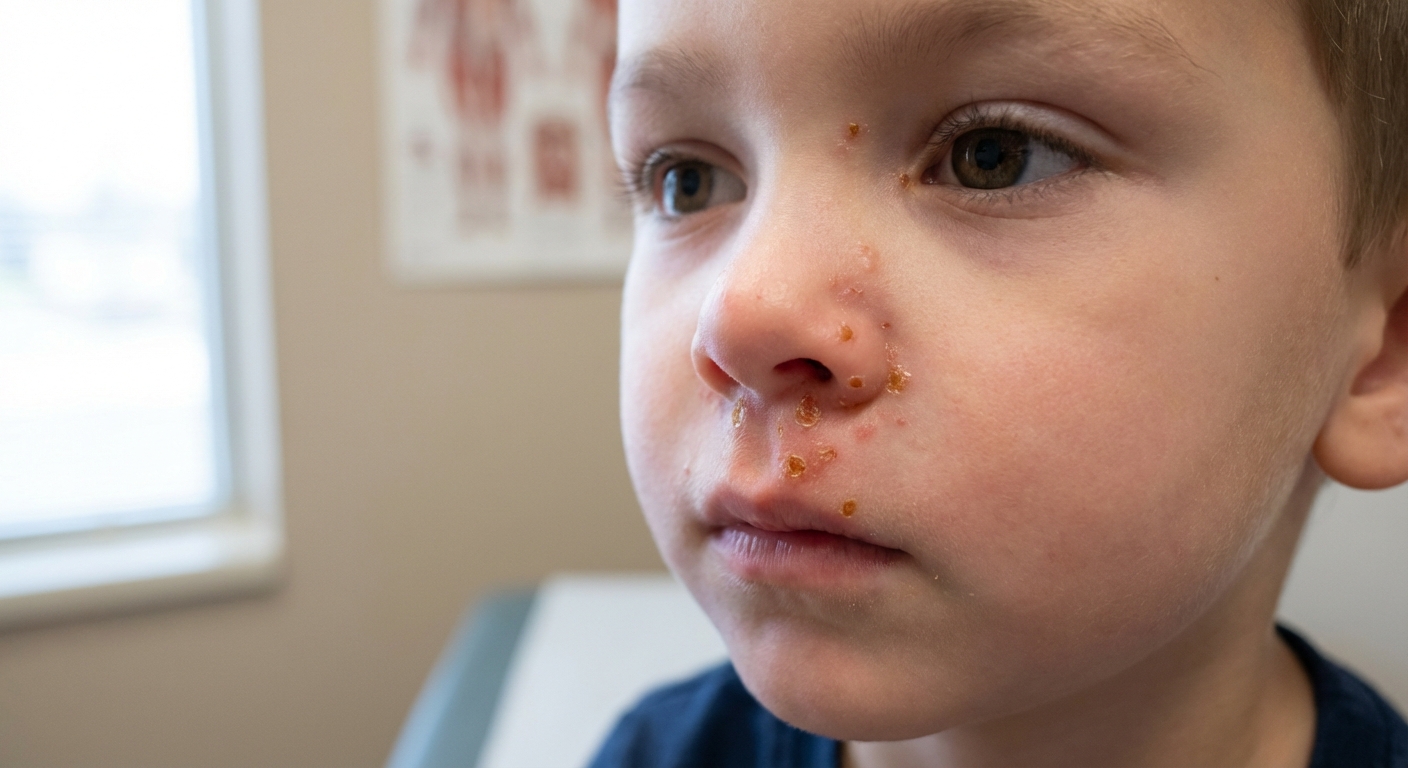
Impetigo is usually localized
- Small areas of infection, often around the nose and mouth (or on arms/legs)
- Honey-colored crusts are the signature look
- Skin might be itchy or mildly sore, but it is usually not a whole-body tenderness situation
- It can spread to other spots or other kids, but typically does not cause sheets of peeling skin
SSSS is usually widespread and painful
- Diffuse redness that spreads quickly
- Marked tenderness and irritability
- Blistering and peeling, sometimes around the mouth with cracking
- Often needs hospital-level evaluation, especially in young infants
One simple parent-friendly way to think of it: impetigo is usually “crusty patches.” SSSS is “sunburn-red skin that hurts and peels.”
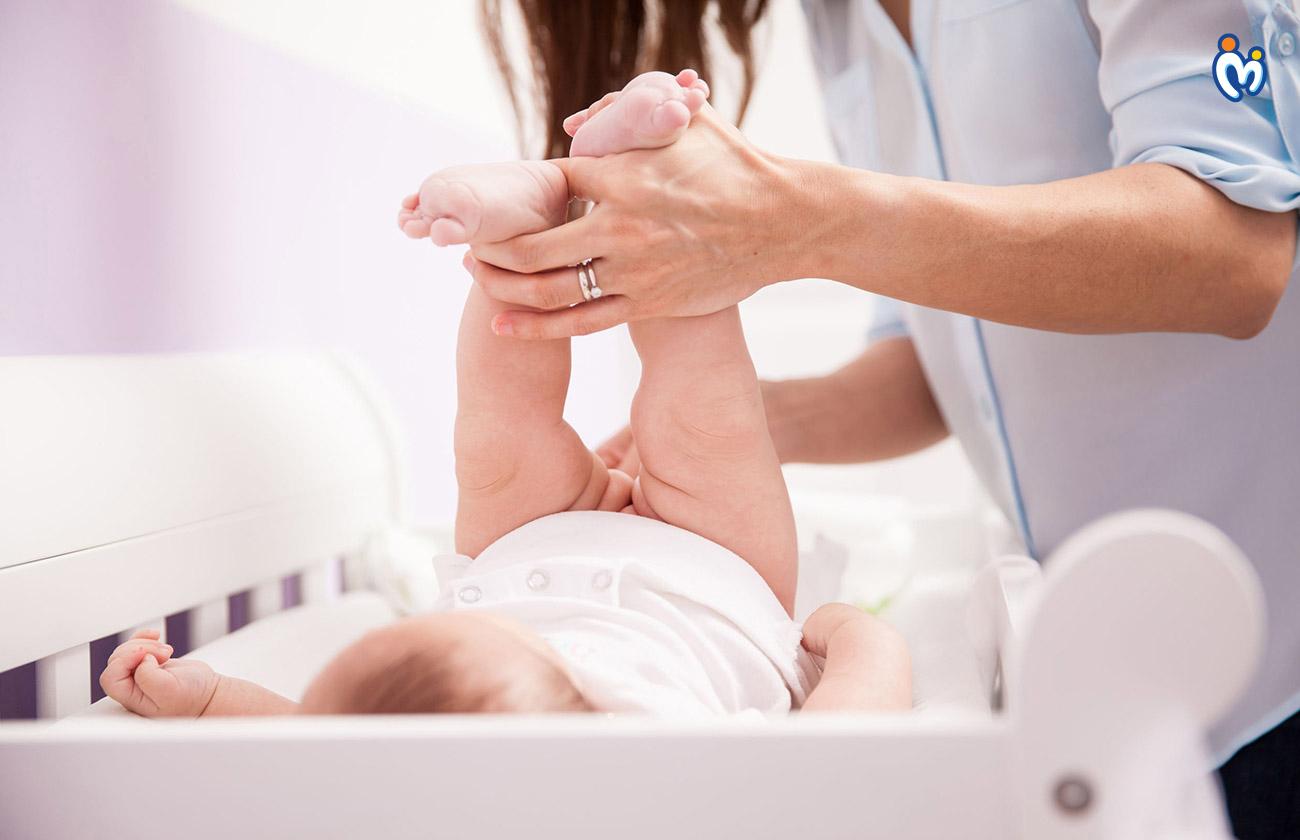
SSSS vs diaper rash
This is a big one because early SSSS can show up in the diaper area and fool even experienced parents. Here are the most helpful differences.
Typical diaper rash
- Stays mostly where the diaper touches
- Often improves with air time, barrier ointment (zinc oxide), and more frequent changes
- May look beefy red with tiny dots if yeast is involved, and yeast often affects skin folds
- Usually not intensely painful to the lightest touch (though babies can still be uncomfortable)
SSSS can start near the diaper area but does not act like diaper rash
- Redness looks more like a burn and can spread beyond the diaper borders
- Skin becomes very tender, with irritability that feels out of proportion
- May develop wrinkling, blistering, and peeling
- Does not steadily improve with your usual diaper routine
Why SSSS needs same-day care
SSSS is treatable, but it is not a “wait and see” situation in babies. The risks of delaying care include:
- Dehydration from fluid loss through damaged skin
- Temperature instability, especially in newborns
- Secondary infection in areas of broken skin
- Rapid progression of peeling and pain
Most babies with suspected SSSS need prompt evaluation and antibiotics. Depending on age and severity, clinicians may recommend emergency department assessment and sometimes hospital admission for IV antibiotics and supportive care (fluids, pain control, skin care).
Go to the ER now
If you see any of the following, do not wait for a routine appointment:
- Skin peeling in sheets or large areas of blistering
- Widespread bright redness that looks like a burn
- Newborn under 28 days with fever, low temperature, unusual sleepiness, or poor feeding
- Signs of dehydration: fewer wet diapers, very dry mouth, no tears, sunken soft spot
- Baby seems very ill: hard to wake, weak cry
Call 911 if your baby is struggling to breathe, turning blue or gray, having a seizure, or is unusually limp or unresponsive.
If your baby is stable but you suspect SSSS, call your pediatrician for same-day guidance. If you cannot be seen promptly, the ER is appropriate.
What doctors do for SSSS
In the clinic or hospital, care typically focuses on two things: treating the staph source and supporting the skin while it heals.
- Antibiotics to target staph. In young infants and more severe cases, this is often started IV, with a possible switch to oral medicine once improving.
- MRSA coverage may be added depending on local resistance patterns and your child’s risk factors.
- In some cases, clinicians add a second antibiotic (such as clindamycin) to help reduce toxin production. This is not automatic for every child, but it is part of the standard conversation in many hospitals.
- Pain control, because this condition can hurt
- Fluids if there is dehydration risk, sometimes through an IV
- Gentle skin care using non-stick dressings or ointments as recommended
- Testing: the diagnosis is often clinical, but clinicians may culture likely source sites (nose/throat, umbilicus, an impetigo spot). In very young infants or very ill children, blood tests and blood cultures may be considered.
SSSS is different from a deep skin infection. The peeling layer is superficial, but it still needs serious medical attention because babies can get sick and dehydrated quickly.
What you can do at home while getting care
Think “comfort and protection,” not aggressive scrubbing.
- Do not pop blisters or peel loose skin.
- Avoid harsh soaps, wipes, and fragranced products on affected areas.
- Keep baby warm and dressed in soft, loose clothing.
- If your baby seems uncomfortable, ask your pediatrician about the right dose of acetaminophen for age and weight. (Avoid ibuprofen in young infants unless your clinician tells you to use it.)
- Wash your hands before and after touching affected skin.
Most importantly: prioritize being seen. This is not the moment for a dozen product trials.
Is SSSS contagious?
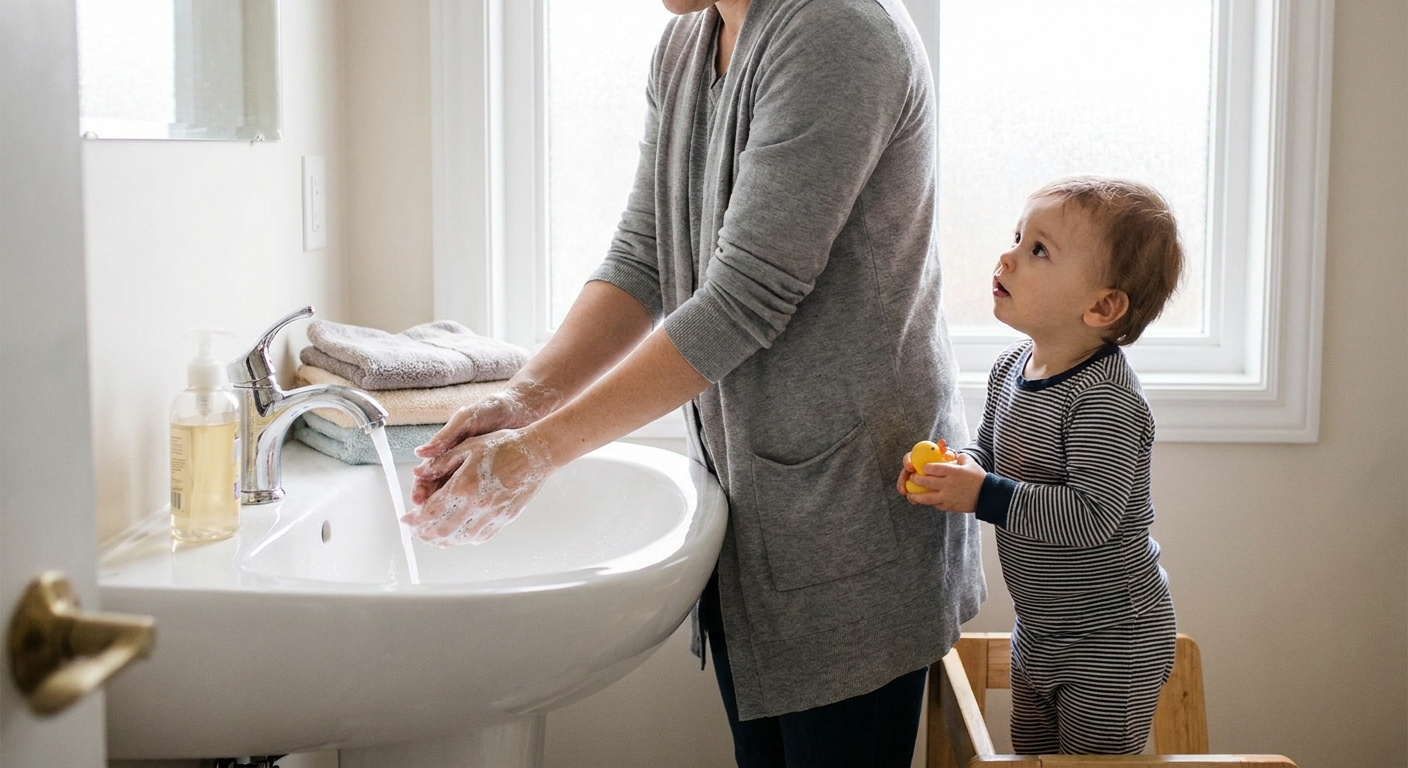
The syndrome is caused by a toxin response in your baby, but the underlying staph bacteria can be passed through contact. Some people also carry staph on their skin or in their nose without any symptoms. That means good hygiene matters:
- Handwashing for everyone in the house
- Do not share towels, washcloths, or bedding until washed
- Wash clothing, towels, and sheets in hot water when possible, and dry thoroughly
- Keep nails trimmed to reduce skin breaks from scratching
In recurrent cases or outbreaks, clinicians may discuss decolonization steps for household contacts, but this is not routine for every family. Your medical team will tell you if your baby needs specific precautions around siblings or daycare once improving.
How long does it take to get better?
With prompt treatment, many babies start to look and feel better over a couple of days, and the skin typically heals over the next week or two. Some peeling can look dramatic, but healthy new skin usually forms underneath.
If your baby seems worse after starting treatment, is not keeping fluids down, or develops new fever or lethargy, contact your clinician right away.
FAQ
Can SSSS be mistaken for an allergy?
Early redness can look like a nonspecific rash, but the combination of tenderness, rapid spread, and peeling is not typical for a simple allergy. Allergic rashes are more often itchy than painful.
Is this the same as a burn?
It can look like a scald or burn, but it is caused by a staph toxin. That “burn-like” look is exactly why it needs urgent evaluation.
Will my baby have scars?
SSSS affects the superficial skin layer, so scarring is not typical if treated promptly and if secondary infection is avoided. Your clinician can guide you on gentle wound care during healing.
Could this be Stevens-Johnson syndrome?
Parents sometimes see that term online and panic. Stevens-Johnson syndrome is different and is often linked to medication reactions and more significant mucous membrane involvement (mouth, eyes, genitals). It is also rare in babies. If your baby has widespread blistering or peeling, you do not have to figure out which one it is at home. You just need same-day medical care.
A final, calm reminder
If you are looking at your baby’s skin and thinking, “This is not a normal rash,” I want you to trust that instinct. SSSS is uncommon, but it is very real, and it can move quickly. Same-day evaluation is the safe move and it is what I would do for my own kids.
Sarah Mitchell
Sarah Mitchell is a Registered Pediatric Nurse and a mother of three who has spent over a decade helping families navigate the beautiful, chaotic early years of childhood. She combines evidence-based medical knowledge with real-world parenting experience to offer practical, compassionate advice. At Awesome Parent, Sarah's mission is to help exhausted parents find solutions, trust their instincts, and finally get some sleep.