A calm, step-by-step guide to potty training girls: readiness signs, realistic timelines, wiping front to back, UTI prevention, fear of the toilet, modesty, ...
Still in Diapers After 4: What’s Normal and When to Worry

Sarah Mitchell
Sarah Mitchell is a Registered Pediatric Nurse and a mother of three who has spent over a decade helping families navigate the beautiful, chaotic early years of childhood. She combines evidence-based medical knowledge with real-world parenting experience to offer practical, compassionate advice. At Awesome Parent, Sarah's mission is to help exhausted parents find solutions, trust their instincts, and finally get some sleep.
If your child is 4 (or even 5) and still in diapers, I know what you are feeling. Part worry, part frustration, and part, “Why does every other kid seem to have this figured out?” Let me be the calm voice for a minute: late potty training happens. It is not a moral failing. It is not proof you missed a window.
But it also deserves a thoughtful look, because sometimes the reason a child is avoiding the toilet is something very fixable, like constipation , fear, or a daycare routine that is not working for them.
What age is typical?
There is a wide normal range, and it helps to separate daytime pee, poop, and nighttime dryness.
- Daytime pee: Many kids get this between 2 and 4, but a meaningful number are still working on it at 4.
- Poop in the toilet: This often takes longer than pee. Some kids master pee first and hold poop for weeks or months.
- Nighttime dryness: This is largely developmental and can be normal well into early elementary school. Night diapers or pull-ups at 4 to 6 can be normal for many kids. If bedwetting continues beyond about age 7, or if there are daytime symptoms too, it is worth a conversation with your pediatrician .
So if your 4-year-old is still in diapers, the first question is: which piece is lagging? Daytime pee, poop, or nights. That tells us where to focus and what red flags matter most.
Readiness vs. avoidance
Parents are often told to wait until they are ready. Helpful idea, but it can get confusing at 4, when your child might be capable physically but still refusing.
Signs of readiness
- Stays dry for 2 hours or more
- Can follow 2-step directions
- Notices they are peeing or pooping (or right before)
- Can pull pants up and down with minimal help
- Can sit for 1 to 2 minutes
Signs of avoidance
- Hides to poop, crosses legs, stiffens, or holds
- Panics or screams when asked to sit on the toilet
- Will only go in a diaper, even if they seem to need to go
- Withholds all day at school or daycare, then floods at home
- Power struggles escalate quickly around potty talk
If it is avoidance, pushing harder usually backfires. We want to get curious about why the toilet feels unsafe or unpleasant.
Constipation and potty training
Pediatric clinicians see this constantly: a child labeled not potty trained who is actually stuck in a constipation cycle . Constipation does not always look like no poop for a week. Some kids poop daily and still can be constipated because stool is hard, large, or incomplete.
How constipation stalls progress
- Pain: If pooping hurts once, kids remember. They start holding. Holding makes stool larger and harder. Then it hurts more. Classic cycle.
- Less bladder control: A backed-up rectum can press on the bladder, causing urgency, frequent peeing, and accidents.
- Soiling (encopresis): Liquid stool can leak around hard stool. Parents often think the child is not trying, but it is overflow.
Clues your child might be constipated
- Poops are hard, dry, or very large
- Skid marks or frequent small smears in underwear
- Stomachaches, especially around meals or before school
- Straining, crying, or hiding to poop
- Frequent pee accidents or sudden urgency
If any of these ring a bell, talk to your pediatrician before you intensify potty training. Treating constipation often unlocks progress surprisingly fast.
One quick practical note: constipation support usually includes hydration, fiber, and a plan to reduce withholding. Some kids also need medication. Follow your pediatrician’s guidance rather than trying laxatives on your own.
Daycare and preschool factors
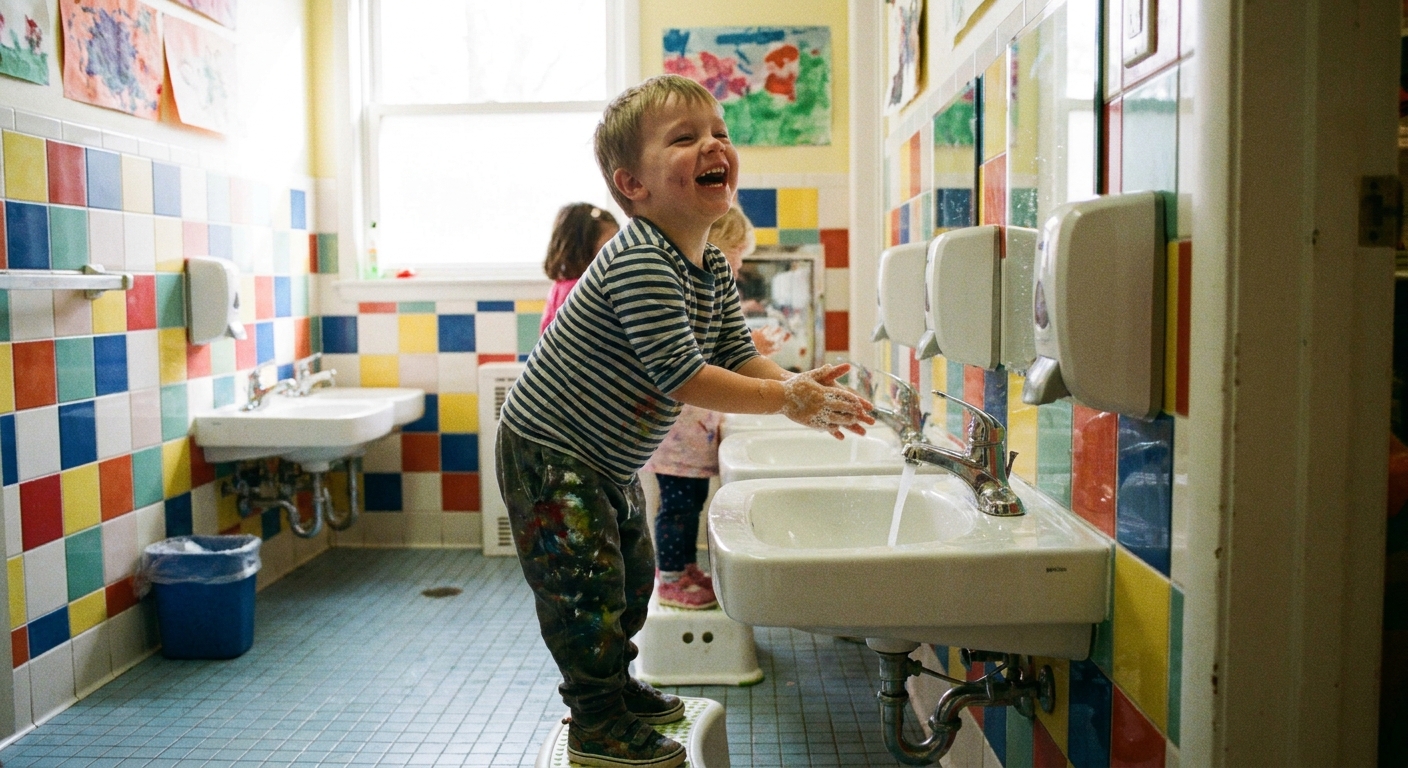
Even confident kids can stall if the potty environment is stressful. And some kids who do fine at home fall apart at school, or vice versa.
Common school factors
- Busy bathrooms: Loud flushing, multiple stalls, and little privacy can scare sensitive kids.
- Limited help: Some classrooms cannot help much with wiping or clothing, which can trigger anxiety.
- Schedule pressure: Everyone sits now can lead to resistance in strong-willed kids.
- Fear of missing out: Kids avoid the toilet because playtime feels more important.
- Accident shame: A single embarrassing accident can create long-lasting avoidance.
If daycare is involved, ask for a quick meeting. The goal is a simple, consistent plan that reduces pressure and increases predictability. Most teachers want to help, but they need a clear strategy.
What to do this week
For late potty training, I like a low drama, high consistency approach. You are not begging. You are not threatening. You are calmly building a routine and removing obstacles.
1) Reset the pressure
If you have been in a power struggle, consider a 1 to 2 week break from active training talk. Still keep the potty available, but stop prompting every 20 minutes and stop negotiating. Let everyone’s nervous system settle.
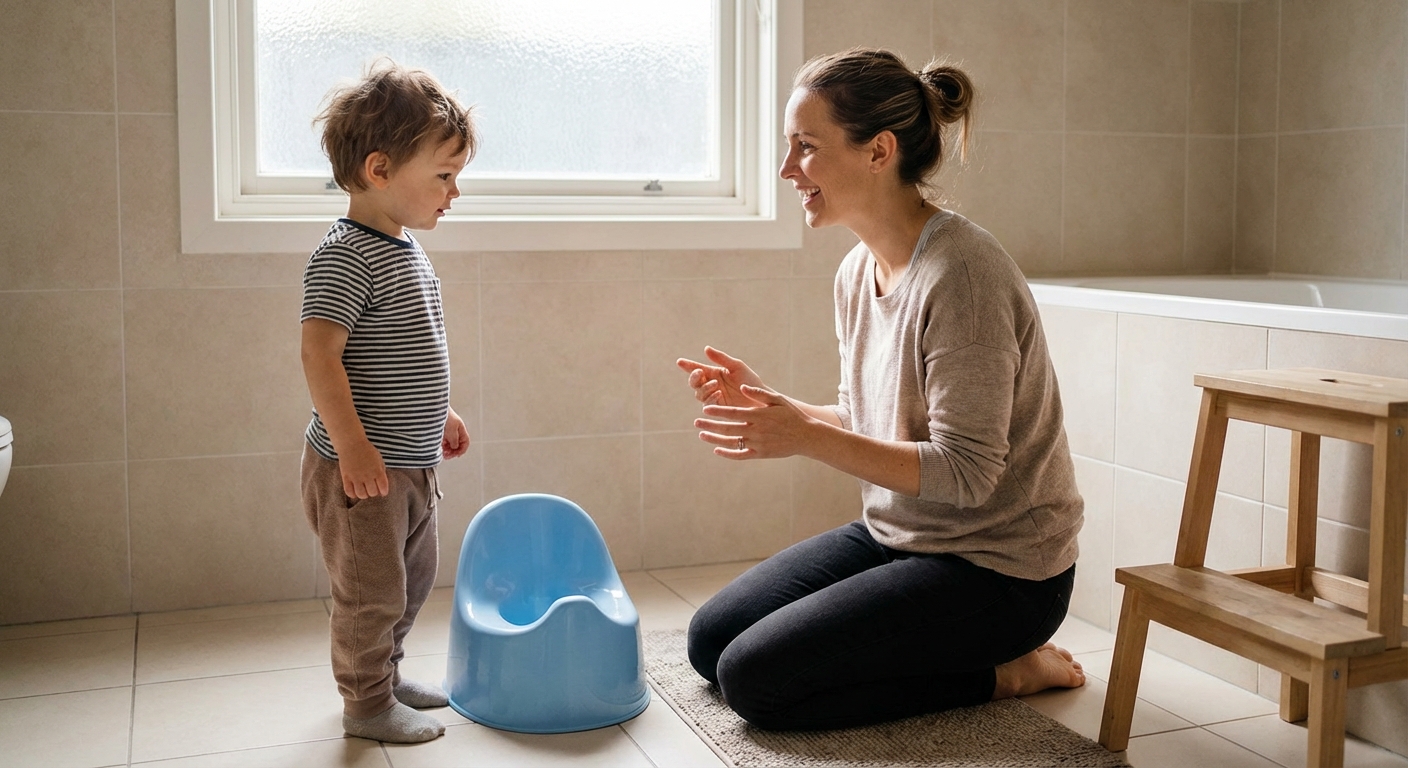
2) Make sitting comfortable
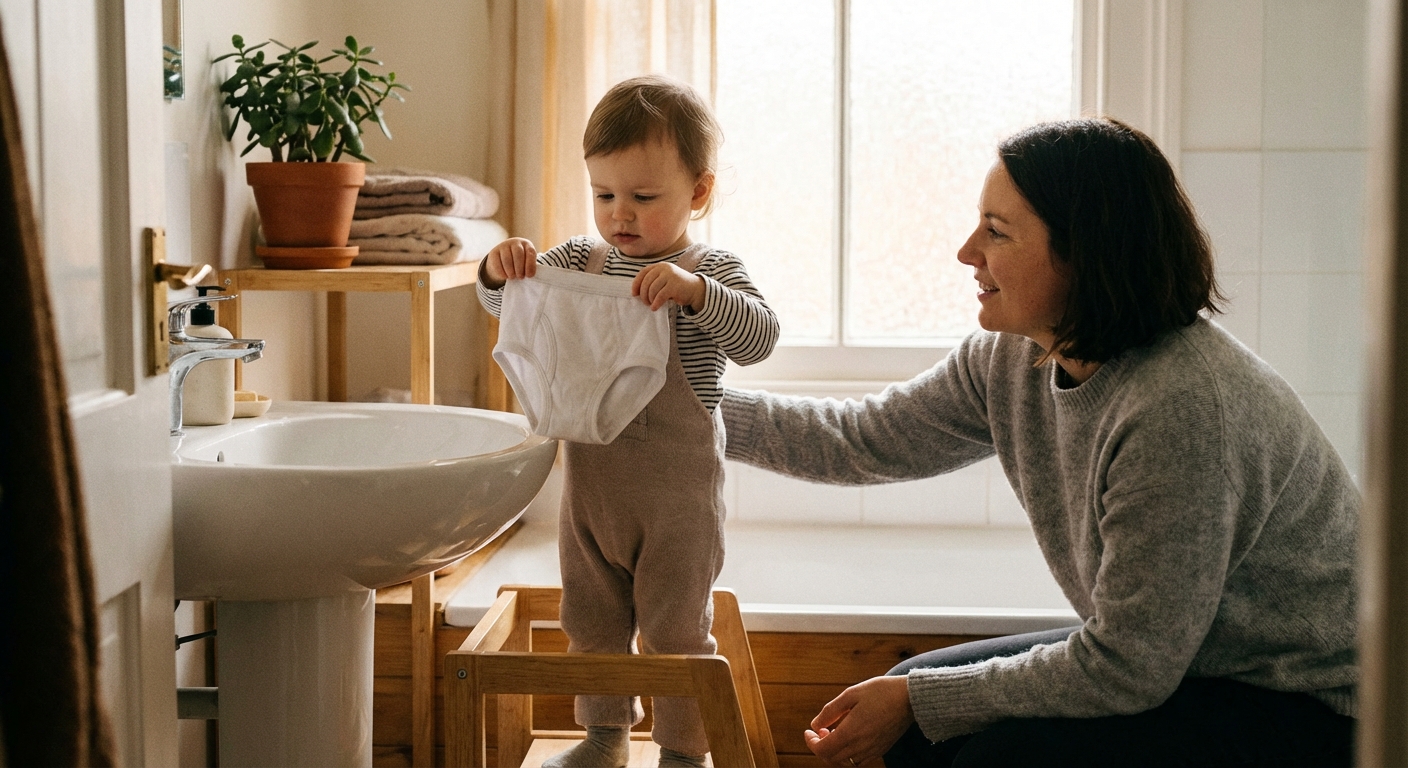
- Use a stable step stool so feet are supported
- Use a seat insert so they feel secure
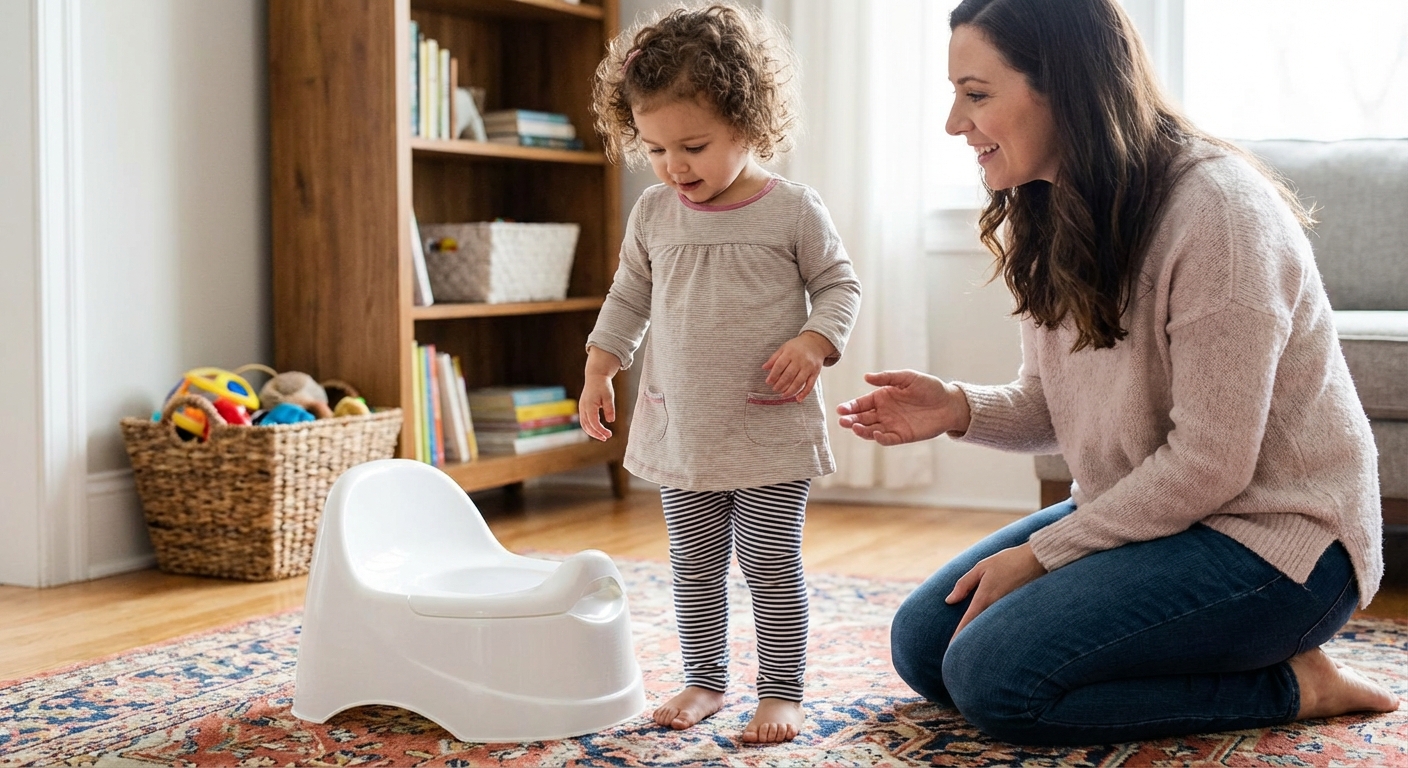
- Try a small potty chair if the big toilet is intimidating
Comfort is not a luxury here. Supported feet and a stable seat help kids relax their belly and pelvic muscles, which helps pee and poop actually happen.
3) Practice sits (to rebuild trust)
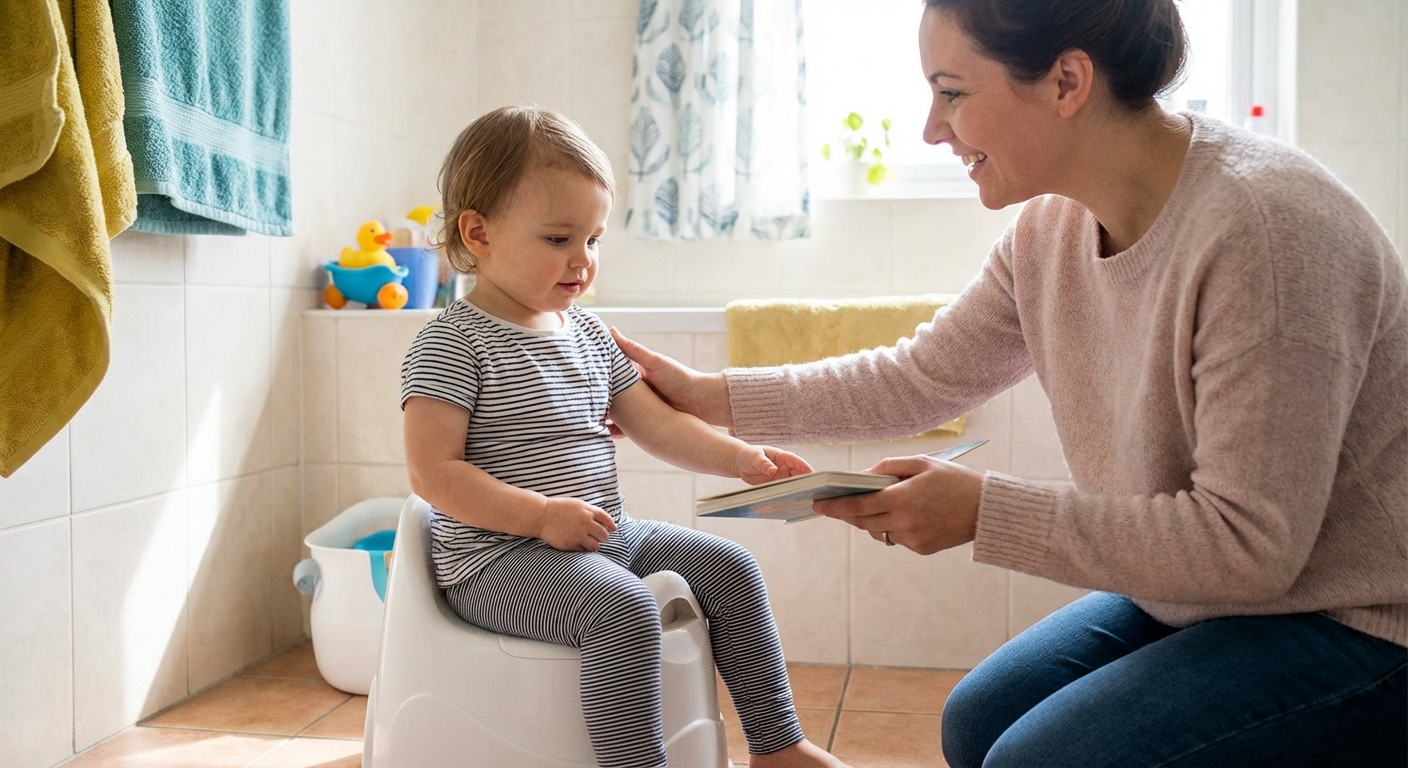
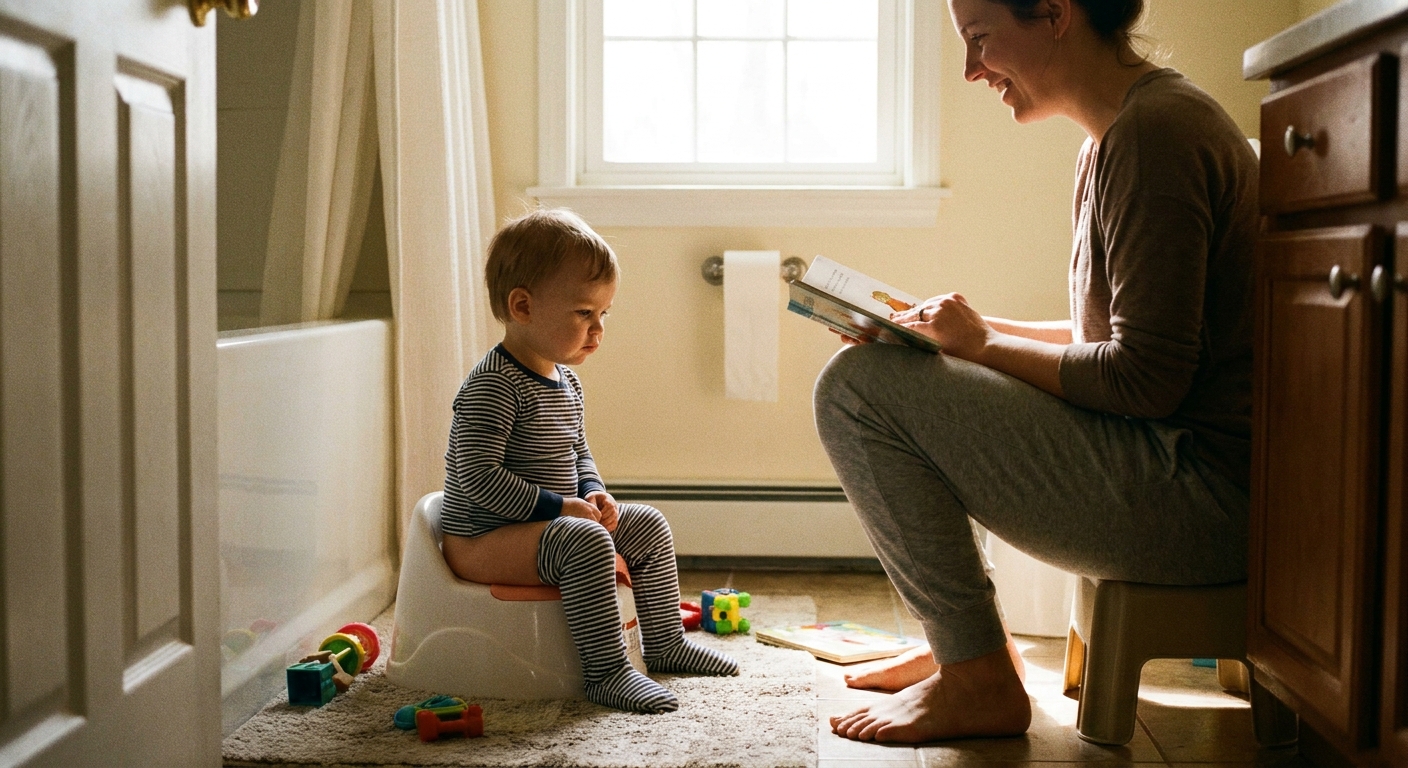
Start with 10 to 30 seconds, clothes on, once a day. Add bubbles, a short book, or a simple song. No, they do not have to pee. This is about safety and familiarity. Gradually increase to 1 to 2 minutes as tolerance improves.
Tip: many kids are more likely to poop 5 to 20 minutes after meals because of the gastrocolic reflex, which is the body’s natural after-eating signal. A relaxed sit after breakfast or dinner can work with their biology instead of against it.
4) Use neutral language
- Say: “Your body is telling you something. Let’s listen.”
- Avoid: “You’re too big for this,” or “Why are you doing this?”
5) Respond to accidents calmly
Accidents are information, not a character flaw. Try a script like: “Oops, your body let go. Let’s clean up. Next time we will try the potty.” Then move on. Avoid punishment or shame. It usually increases hiding and withholding.
6) Reward steps, not perfection
For older kids, rewards can still work, but aim them at steps: sitting, trying, telling you they need to go, pooping in the bathroom even if it lands in a diaper at first. Keep rewards small and consistent. Save bigger celebrations for bigger milestones.
7) If poop is the issue, focus there first
Some kids can learn pee quickly once poop anxiety is resolved. If poop is the sticking point, prioritize soft stools, routine sits after meals, and a calm plan with your pediatrician.
When to call the pediatrician
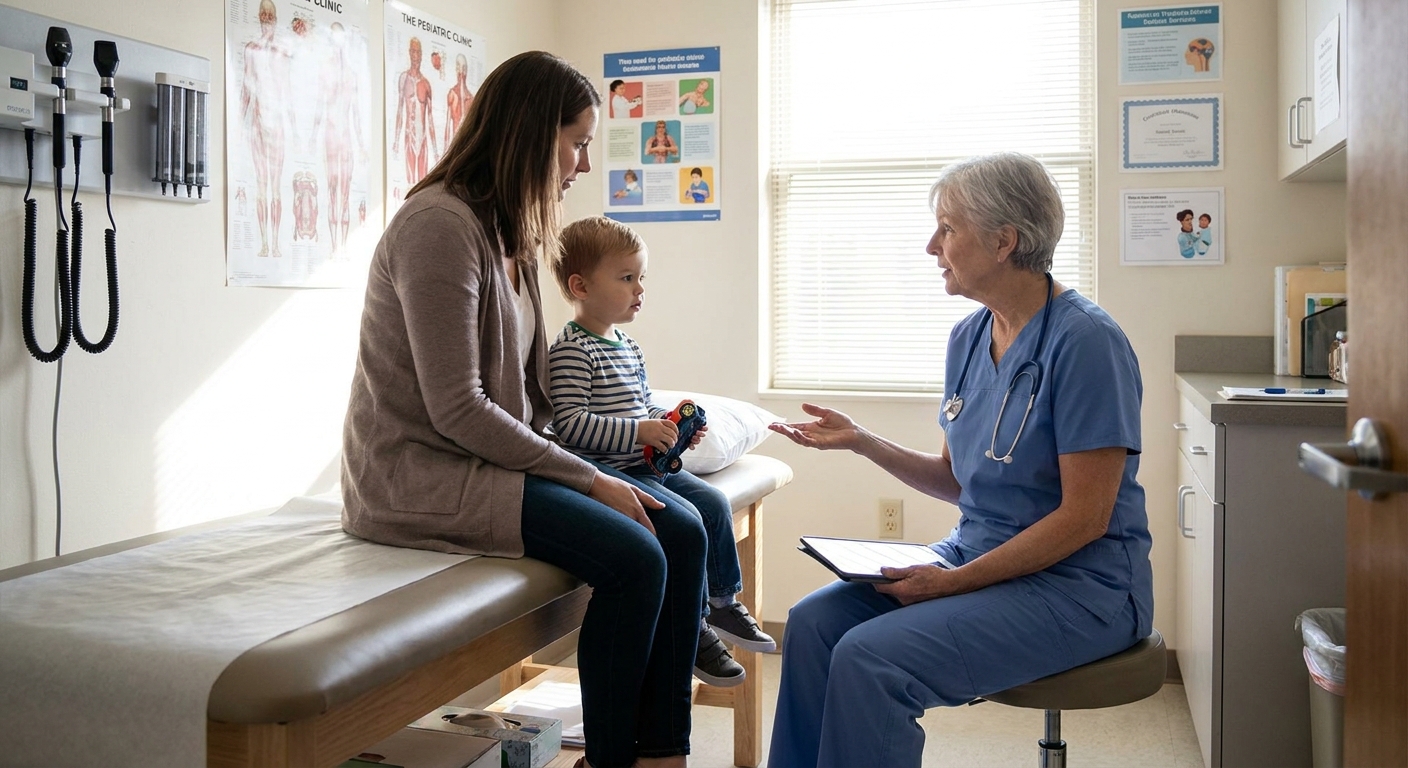
I am a big fan of early check-ins for late potty training. Not because something is wrong, but because a quick medical screen can save months of stress.
Call your pediatrician soon if:
- Your child is 4+ and has little to no progress with daytime training despite consistent attempts
- There is pain with peeing or pooping
- You see blood in the stool (even small streaks)
- Constipation, stool withholding, or soiling is present
- They are extremely thirsty, urinating very frequently, or losing weight
- There is a history of recurrent urinary tract infections
- You notice a weak urine stream, dribbling, or unusual genital irritation
- There are developmental concerns (speech delay, autism, significant sensory challenges) and training feels impossible without extra support
Seek urgent care today if:
- Your child cannot urinate, has severe abdominal pain, or is lethargic
- There is significant rectal bleeding
- There are signs of dehydration along with vomiting, severe belly pain, or a suspected bowel blockage
Your pediatrician may ask about stool patterns, diet, fluids, sleep, behavior, and stressors, and may recommend a constipation plan or referrals if needed.
When extra support helps
Sometimes kids need more than a sticker chart and a calm parent. That is not failure. It is appropriate support.
- Occupational therapy (OT): Helpful for sensory sensitivity, body awareness, clothing challenges, or strong bathroom avoidance. Practical tools can include visual schedules, choice boards, sensory warm-ups, and bathroom-specific routines.
- Child psychology or behavioral therapy: Helpful for anxiety, phobias, intense oppositional patterns, or big family stressors.
- Pediatric gastroenterology: Helpful for chronic constipation, soiling, or suspected encopresis that is not improving.
- Pediatric urology: Helpful for repeated urinary issues, unusual voiding patterns, or concerns found by your pediatrician.
The goal is not to label your child. The goal is to remove barriers so they can succeed.
What to tell yourself
If you are staring at a box of pull-ups and wondering what you did wrong, here is the truth: potty training is a developmental skill, and development is not a straight line. Some kids sprint, some kids stroll, and some kids hit a pothole like constipation or anxiety and need a detour.
You do not need to be a perfect parent. You need a plan that matches your child’s body and your family’s reality.
If your child is 4+ and still in diapers, you are not alone. Start by screening for constipation and stress, reduce pressure, build a calm routine, and bring in your pediatrician if progress is stalled or any red flags show up.
Quick FAQ
Is it normal to not be potty trained at 4?
It can be within the normal range, especially for poop training and nighttime dryness. But at 4, a stalled situation deserves a closer look for constipation, anxiety, sensory issues, or routine problems.
What if my child will only poop in a diaper?
This is very common and often linked to fear or constipation. Start by making stools soft and predictable, use low-pressure bathroom routines after meals, and consider involving your pediatrician early.
Should I take away diapers to force it?
For some kids, a clear switch helps. For many late trainers, forcing can intensify withholding and anxiety. If there is poop withholding, pain, or severe resistance, get medical guidance first.
Are pull-ups ruining potty training?
No. Pull-ups are a tool. The bigger issue is whether your child is avoiding the toilet due to discomfort, fear, constipation, or pressure.