
A calm, evidence-based guide to infantile hemangiomas: growth vs fading stages, red flags near the eye or airway, when to refer, and high-level treatment opt...
Stork Bites and Salmon Patches in Newborns

Sarah Mitchell
Sarah Mitchell is a Registered Pediatric Nurse and a mother of three who has spent over a decade helping families navigate the beautiful, chaotic early years of childhood. She combines evidence-based medical knowledge with real-world parenting experience to offer practical, compassionate advice. At Awesome Parent, Sarah's mission is to help exhausted parents find solutions, trust their instincts, and finally get some sleep.
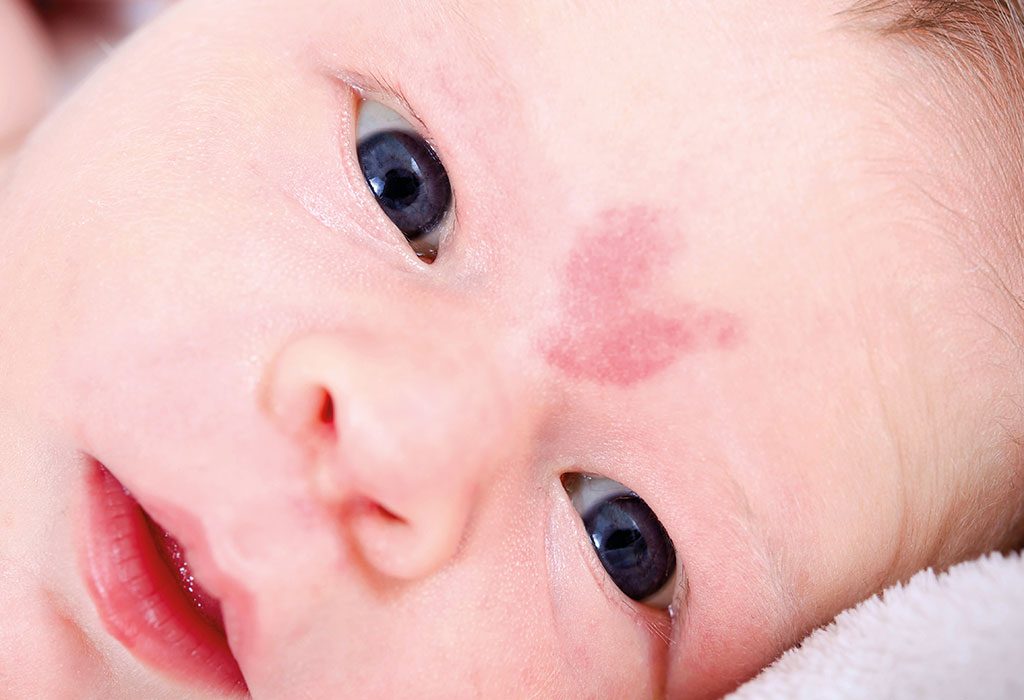
If you have a newborn, you have probably spent an impressive amount of time staring at their tiny face under bright lamplight, wondering if every little spot is “a thing.” One of the most common surprises is a flat pink or red mark on the forehead, eyelids, upper lip, or the back of the neck.
Most of the time, these are stork bites or salmon patches, also called nevus simplex. They are very common, harmless, and usually fade on their own. Let’s walk through what they look like, why they happen, what to expect over time, and when we think, “Yep, normal,” versus “Let’s take a closer look.”
How common are they? Extremely. Many newborns have at least one salmon patch, especially on the eyelids, between the eyebrows, or at the nape of the neck.
What they are
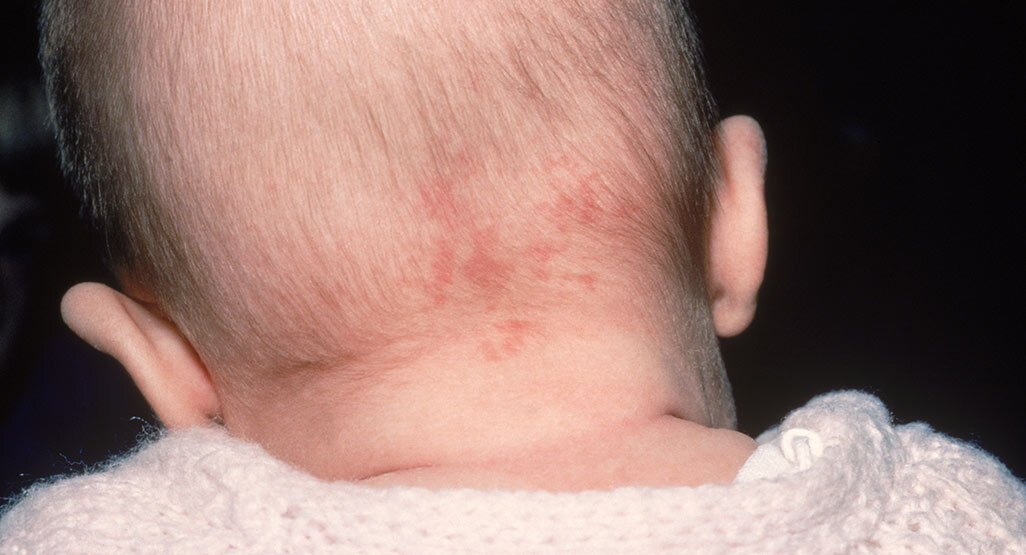
Stork bite is the common nickname for a salmon patch on the back of the neck. Salmon patch (nevus simplex) is the broader term for these faint pink to red patches caused by small surface blood vessels that are more visible in newborn skin.
They are:
- Flat (not raised)
- Pink, red, or salmon-colored
- Often symmetric, especially on the eyelids or across the center of the forehead
- More noticeable when baby cries, strains, gets warm, or is wriggling or agitated
These marks are not from anything you did during pregnancy. They are simply a common variation in how superficial blood vessels show up in early skin.
Common locations
Salmon patches have some classic “favorite spots.”
- Between the eyebrows (sometimes called an “angel kiss”)
- Upper eyelids (one or both)
- Upper lip (less common)
- Back of the neck (the classic stork bite)
- Scalp (often hidden by hair over time)
Why they happen
Newborn skin is thin, and the tiny blood vessels close to the surface can be more noticeable in certain areas. In nevus simplex, those vessels create a patch of pinkness that often fades as the skin matures and the vessels become less visible.
In triage we used to say, “If it’s flat, pink, and gets brighter when they’re mad, it’s usually one of the friendly ones.” Not a medical term, but it is oddly accurate.
Also normal: these patches can wax and wane. They may look brighter on warm days, during crying, or with a fever, then fade back down once your baby settles.
How long they last
Face (forehead, eyelids, upper lip)
Facial salmon patches tend to fade the fastest. Many lighten noticeably in the first few months. Many fade substantially by 12 to 18 months, and most are much less visible by 1 to 2 years, though timing varies.
Back of the neck (stork bite)
Stork bites are the ones that love to stick around. They often fade some, but it is common for a neck patch to remain faintly visible into childhood or even adulthood. The good news is that hair usually covers it, and it does not cause any health problems.
Typical pattern: fades over time, but may look like it “reappears” temporarily when your child is overheated, crying, or has a fever.
Salmon patch vs other birthmarks
Parents are often told “It’s just a birthmark,” which is true, but there are different types of vascular birthmarks. Here is a practical way to separate them.
Salmon patch (nevus simplex)
- Color: light pink to red
- Texture: flat
- Edges: often soft or blurry
- Behavior: more visible with crying, heat, or exertion
- Timeline: facial marks usually fade in 1 to 2 years; neck marks may persist
- Common locations: eyelids, between the eyebrows or center forehead, neck
Port-wine stain (capillary malformation)
- Color: deeper red to purple, like wine
- Texture: flat at first, can thicken or become bumpy with age
- Edges: usually well-defined
- Behavior: tends not to fade on its own
- Timeline: persists and may darken over time
- Common locations: often one side of the face, but can be anywhere
If a mark looks more like a port-wine stain, your pediatrician may recommend a dermatology evaluation. Sometimes port-wine stains are only skin-deep, but location can matter. For example, certain facial patterns can be linked with eye issues like glaucoma, and more rarely with neurological syndromes such as Sturge-Weber. This is not the norm, but it is why we take a careful look instead of guessing.
Hemangioma (infantile hemangioma)
- Color: bright red (“strawberry”) if superficial, or bluish if deeper
- Texture: often raised or becomes raised
- Behavior: typically grows after birth
- Timeline: may have a subtle early “precursor” at birth, but often becomes noticeable in the first weeks of life, grows for months, then slowly shrinks over years
- Common locations: head and neck are common, but can be anywhere
A key tip: salmon patches are usually present at birth and stay flat. Hemangiomas often become more noticeable after birth and get bigger.

When to call the pediatrician
Most salmon patches can be confirmed at a routine newborn visit. Call sooner if you notice any of the following.
Get seen promptly if the mark:
- Is raised, growing, or changing quickly (more suggestive of a hemangioma)
- Looks deep red or purple with sharp borders and does not lighten (possible port-wine stain)
- Is blistering, crusting, bleeding, or ulcerating
- Seems painful when touched (most birthmarks are not)
- Is near the eye and swelling affects opening the eyelid or tracking (important for vision development)
- Is mostly on one side of the face, looks segmental, or extends widely across the scalp or eyelid
- There are multiple vascular spots and new ones keep appearing
- Comes with other symptoms like fever in a newborn under 3 months, poor feeding, unusual sleepiness, or breathing trouble
Bring it up at the next visit if:
- You are not sure what you are looking at
- The mark is still prominent after 12 to 18 months (especially on the face)
- You have a family history of vascular birthmarks and feel anxious about it
In clinic, reassurance is not a brush-off. It is a plan: confirm what it is, tell you what changes are expected, and make sure you know what would be unexpected.
Treatment
Usually, no. Salmon patches are benign and typically fade without any treatment.
In the uncommon situation where a facial mark persists and a family wants to discuss cosmetic options, a pediatric dermatologist can talk through whether laser treatment is appropriate. That conversation is usually later, once it is clear what is and is not fading naturally.
What you can do at home
- Nothing special is required. Gentle baby skincare is enough.
- Sun protection matters for all babies older than 6 months. Sun does not cause salmon patches, but protecting skin helps prevent irritation and uneven redness.
- Take a monthly photo in similar lighting if you are unsure whether it is fading. Sleep deprivation makes memory unreliable, and photos are a calmer form of evidence.
Quick checklist
If your newborn’s pink mark is flat, faint, and on the forehead, eyelids, or back of the neck, odds are high it is nevus simplex.
- Flat? Yes
- Pink and lighter when calm? Yes
- Brighter when crying or warm? Yes
- Not growing or raised? Yes
- Baby otherwise well? Yes
That is the classic “friendly birthmark” pattern.
FAQs
Are stork bites genetic?
They can run in families, but many babies have them without any family history. They are extremely common either way.
Can a salmon patch turn into a hemangioma?
A salmon patch itself does not “turn into” a hemangioma. They are different types of vascular findings. If something that was once faint starts growing and becoming raised, it deserves a check to confirm what it is.
Is a salmon patch connected to a health problem?
On its own, nevus simplex is typically just a benign skin finding. If a mark looks more like a port-wine stain or is associated with other unusual findings on exam, your pediatrician may recommend follow-up.
My baby’s mark looks brighter some days. Is that normal?
Yes. These marks often intensify with crying, straining, temperature changes, or fever, then fade again. If your newborn has a fever (100.4°F / 38°C or higher), call your clinician right away, regardless of the birthmark.
Bottom line
Stork bites and salmon patches are common, harmless newborn pink marks that often fade with time, especially on the face. The most important job is simply making sure the mark behaves like a salmon patch: flat, soft-edged, and not steadily getting darker or larger.
If you are unsure, bring it to your pediatrician’s attention. You deserve a clear answer and a calm plan, not another 2 AM spiral.
Sarah Mitchell
Sarah Mitchell is a Registered Pediatric Nurse and a mother of three who has spent over a decade helping families navigate the beautiful, chaotic early years of childhood. She combines evidence-based medical knowledge with real-world parenting experience to offer practical, compassionate advice. At Awesome Parent, Sarah's mission is to help exhausted parents find solutions, trust their instincts, and finally get some sleep.