Compassionate, evidence-based tips to make daycare drop-offs smoother, reduce tears, and build your toddler’s confidence with simple routines and calm good...
Stranger Anxiety in Babies and Toddlers

Sarah Mitchell
Sarah Mitchell is a Registered Pediatric Nurse and a mother of three who has spent over a decade helping families navigate the beautiful, chaotic early years of childhood. She combines evidence-based medical knowledge with real-world parenting experience to offer practical, compassionate advice. At Awesome Parent, Sarah's mission is to help exhausted parents find solutions, trust their instincts, and finally get some sleep.
If your baby used to grin at everyone in line at the grocery store and now clings to you like you are the last life raft in the ocean, welcome to stranger anxiety. It can feel sudden, intense, and honestly a little awkward when a well-meaning adult leans in and your child reacts like they just saw a bear.
(Also, a quick nuance that can be reassuring: in the early months, many babies smile pretty freely. It does not always mean they are truly “socially comfortable” with everyone. As their memory and preferences sharpen, the vibe can change.)
The good news: in most cases, stranger anxiety is a healthy developmental milestone. It is your child’s brain saying, “I know who keeps me safe, and you are not on the list yet.” Let’s walk through what’s normal by age, how it connects to separation anxiety, and gentle ways to help without forcing your child to “be friendly.”
What it is (and is not)
Stranger anxiety is distress or wariness around unfamiliar people. It can look like:
- Turning away, burying their face in your shoulder
- Crying when someone approaches, talks loudly, or tries to hold them
- Freezing, staring, or getting very quiet
- Clinging, wanting to be picked up, or refusing to leave your arms
It is different from:
- Separation anxiety: distress when you leave, even if your child stays with a familiar caregiver.
- General anxiety (older toddlers and kids): worries that show up across many situations, not just strangers.
- Temperament: some kids are naturally slow-to-warm. That is not a problem to “fix.”
This phase is often a sign of growing memory and attachment. Your baby is learning who belongs in their inner circle.
When it starts and peaks
There is a wide range of normal. The timeline below is a general guide, not a scorecard.
Typical timeline
- 0 to 4 months: Many babies will tolerate being held by others, especially if their needs are met and the environment is calm.
- 4 to 6 months: Babies often start showing preferences for familiar caregivers. You might see more watchfulness with unfamiliar faces.
- 6 to 9 months: Stranger anxiety often becomes more obvious. Babies can recognize familiar versus unfamiliar people more reliably.
- 9 to 18 months: This is a very common window for it to feel intense, but the peak varies by child. Some peak earlier, some later.
- 18 to 24 months: Many toddlers gradually improve, especially with repeated, low-pressure exposure to familiar people and routines. Some kids also have a “second wave” here, especially with big life changes.
- 2 to 3+ years: Stranger anxiety usually softens, but caution with new adults can persist. It is also common for toddlers to be wary in new settings while being perfectly confident at home.
What can make it feel “worse” sometimes: illness, teething, missed naps, travel, big developmental leaps, new siblings, moving, starting daycare, or a parent returning to work. In other words, life.
Why it happens
Stranger anxiety tends to show up as babies develop:
- Attachment: strong preference for the people who consistently meet their needs
- Object permanence: the understanding that you still exist even when out of sight, which can also contribute to worry during changes or transitions
- Memory and pattern recognition: “That face is not one I know”
Some children also have a more cautious temperament. A slow-to-warm toddler is not being “difficult.” They are gathering data before they commit.
Stranger vs. separation anxiety
These two often travel together, but they are not the same thing.
Stranger anxiety is about “who”
Your child is upset because a person is unfamiliar, or because a familiar person is acting “different” (new hat, big beard, loud voice, strong perfume, sunglasses).
Separation anxiety is about “where you are”
Your child is upset because you are leaving, even if they are with someone they know well.
Where it gets messy
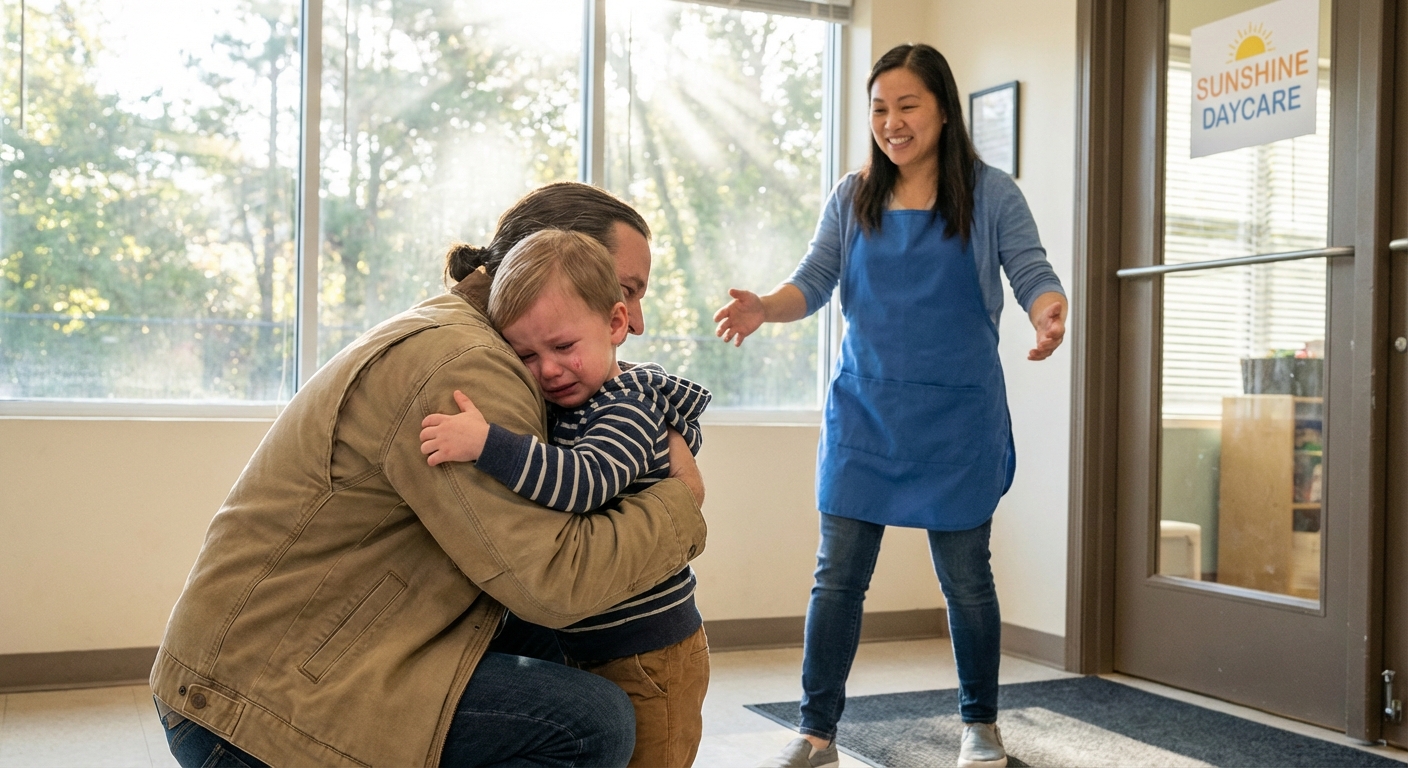
At daycare drop-off, family gatherings, or babysitter handoffs, both can be happening at once. Your toddler might be thinking: “New room, new grown-up, and now you are leaving? Absolutely not.”
Instead of trying to label it perfectly, focus on the same goals: predictability, connection, and a gentle pace.
Gentle ways to help
You cannot talk a baby out of stranger anxiety, but you can help them feel safe while their confidence catches up.
1) Be the safe base
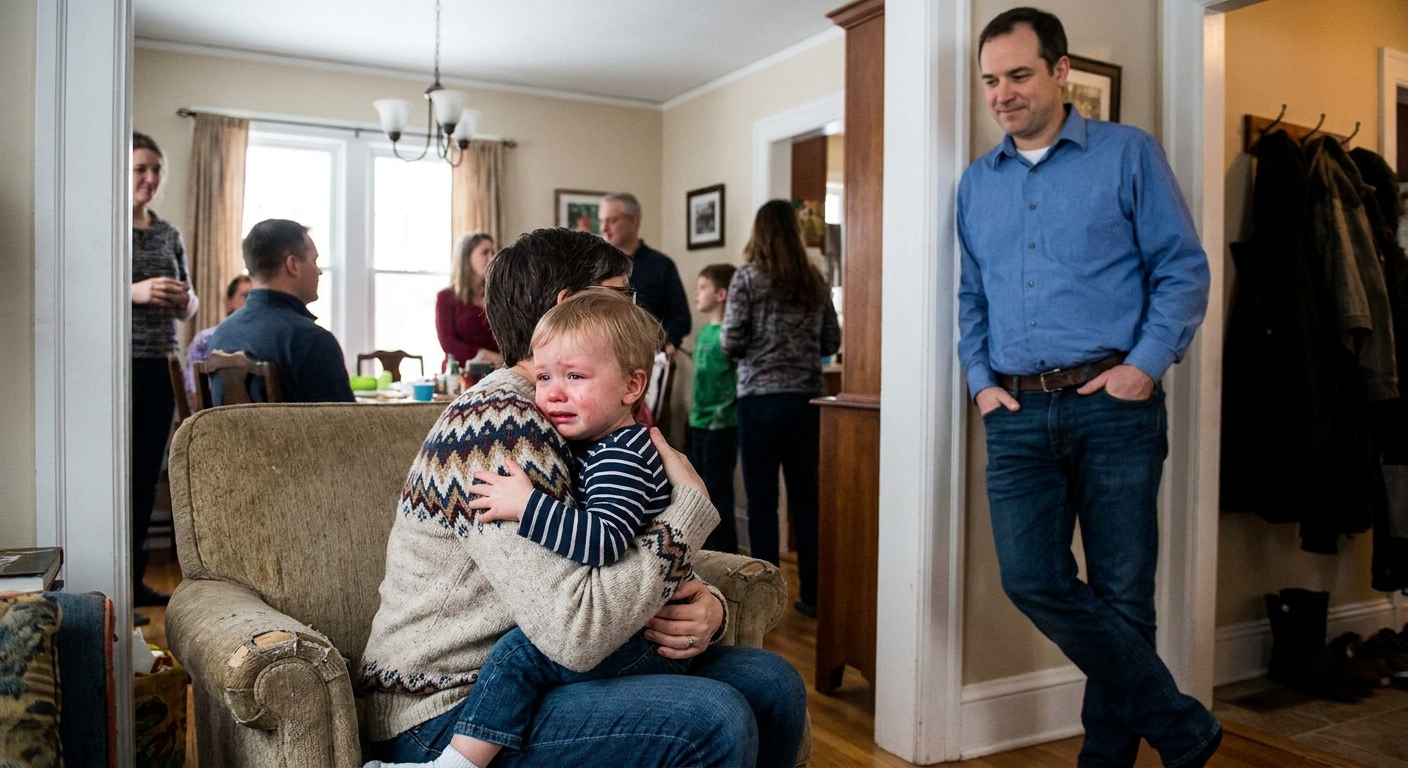
Hold them, let them hide their face, and stay calm. When you act like the situation is manageable, your child picks up on that too.
2) Default to warm-up time
Some toddlers need a solid chunk of observation time before they engage. It might be a few minutes, or it might be half an hour. Arrive early to gatherings when possible, and skip the immediate pass-the-baby routine.
3) Use your body as a buffer
Keep your body between your child and the new person so they do not feel crowded. Have the new person talk to you first while your child watches.
4) Let your child choose the distance
Coach relatives to sit nearby rather than leaning in. A child who controls the space often warms up faster.
5) Offer a bridge object
A favorite lovey, blanket, pacifier, or small toy can help. For toddlers, a snack can also be a powerful peace treaty.
6) Practice quick, positive exposures
Short, low-pressure encounters help. Think: wave from your arms, smile, then move on. You are building tolerance, not forcing affection.
7) Skip the common traps
- Do not force hugs or kisses. Besides increasing distress, it teaches kids their boundaries do not matter.
- Do not apologize for your child. Calmly narrate: “She needs a minute.”
- Do not label them as “shy” in front of others. Kids absorb identities quickly. Try “He warms up slowly.”

How other adults can help
If you are the relative, friend, neighbor, or friendly stranger, here is the magic formula: be warm, be patient, and be less intense.
- Greet the parent first, then let the child observe.
- Get low and give space (side-by-side beats face-to-face).
- Use a softer voice and slower movements.
- Offer, do not insist: “Do you want to see my watch?” not “Come give me a hug.”
- Let the child come to you. Backing up a step can be surprisingly effective.
- Do not grab hands, cheeks, or feet. Even “cute” touches can feel like too much.
When relatives want to hold the baby
Relatives often mean well, but your baby is not a hot potato. Here are scripts you can use without starting a family group chat war.
Quick scripts
- “She needs a few minutes to warm up. You can talk to her from here.”
- “He’s in a clingy phase. Let’s let him watch you for a bit.”
- “No thank you, we’re not passing her around today.”
- “If he reaches for you, you’re in. If not, we’ll try later.”
- “Please don’t take him from my arms. That tends to backfire.”
What relatives can do instead
- Sit on the floor nearby and play with a toy
- Offer a snack to you, not directly to the child
- Read a book aloud while your toddler listens from your lap
- Make gentle eye contact, then look away (less intense)
One of my favorite lines as a parent is: “She’s not being rude. She’s being cautious.” It reframes the moment for everyone.
Note on culture and manners: In some families and cultures, greetings and affection are a big deal. You can still honor that value while respecting your child’s boundaries. Try: “We say hi in our family. You can wave, blow a kiss, or stay close to me.”
Daycare drop-off
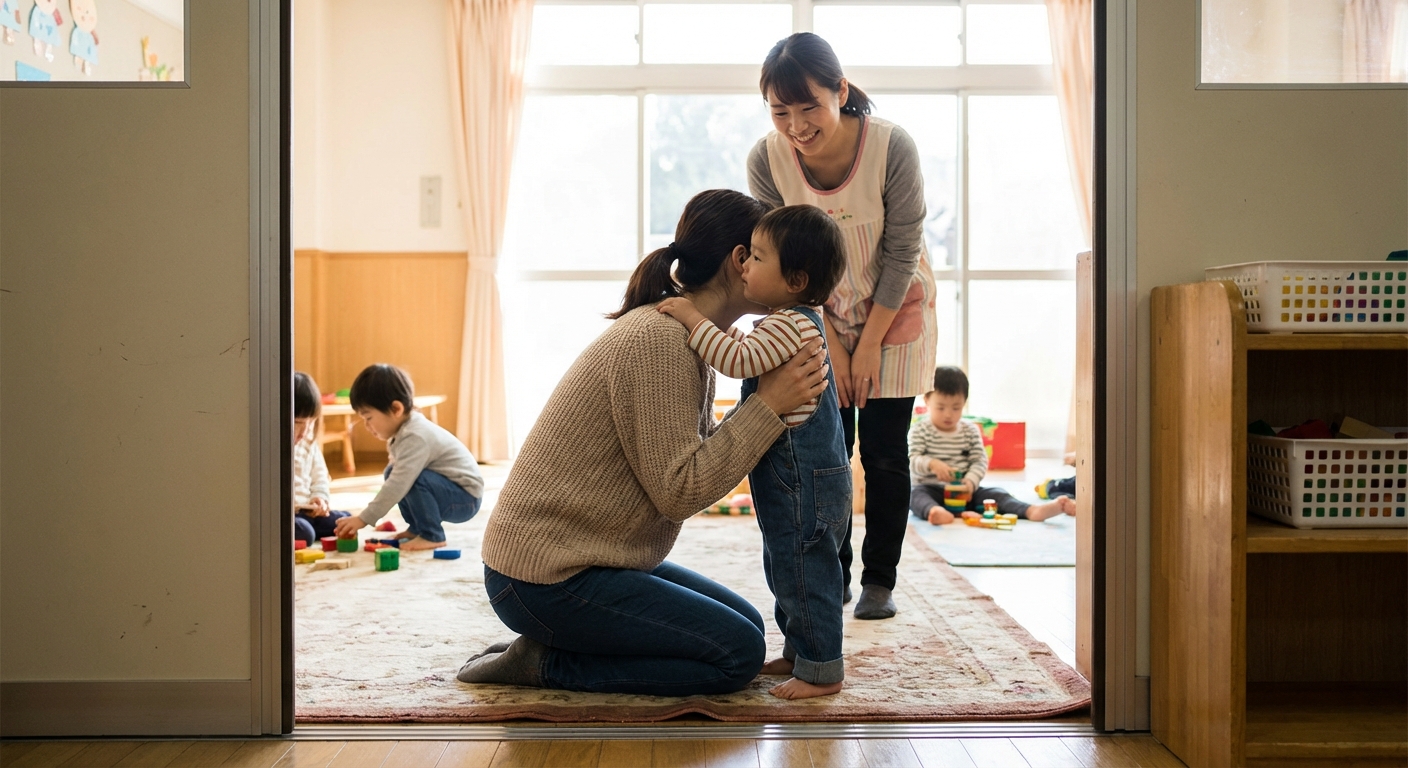
Stranger anxiety can flare at drop-off, especially with new teachers, new classrooms, or after weekends and vacations. This is common even for kids who do great once you leave.
What helps most
- Predictable goodbye routine: same words, same steps, same confidence
- Short and clear exit: lingering often increases distress
- Connection first: one minute of full attention before you hand off (phone away)
- Teacher handoff: pass your child to a familiar caregiver whenever possible
- Comfort object: if the program allows it
What not to do
- Do not sneak out. It can backfire by making separations feel less predictable next time.
- Do not keep restarting goodbye. One goodbye is kind. Five goodbyes is torture for everyone.
A simple goodbye script
“I’m going to work. You’re safe with your teacher. I will be back after snack and outside play. I love you. Bye-bye.”
Then go. The confident exit is a gift, even if it feels brutal for 20 seconds.

Common triggers
Grandparents or familiar relatives
Yes, it can happen even with people your child has met before. If visits are infrequent, the person may still feel unfamiliar. Also, changes like glasses, hats, a new haircut, or a louder voice can throw toddlers off.
After a big change
Moves, travel, a new sibling, illness, or sleep disruption can lower your child’s tolerance for new people. Expect a temporary spike and give extra warm-up time.
Doctor’s offices and “uniform strangers”
White coats, masks, or medical equipment can be intimidating. Hold your child during exams when possible and narrate calmly: “This is a stethoscope. It feels cold. Then we are done.”
When to worry
Most stranger anxiety is normal and improves with time. But occasionally, intense fear can be a sign your child needs extra support.
Consider talking with your pediatrician if you notice:
- Extreme, persistent distress that does not improve over months and interferes with daily life
- Panic-like reactions to most people outside immediate caregivers, even in calm settings
- Regression with no clear trigger (sleep, feeding, speech, or social engagement)
- Limited social engagement across settings, not just caution at first meetings (for example, rarely making eye contact, rarely responding to name by around 12 months, limited back-and-forth interaction)
- Intense fear combined with other concerns such as delayed communication, very rigid routines, or frequent sensory overwhelm
- Sudden, severe fear after a specific event, or any concern about harm, abuse, or a scary incident
A quick note from my parent brain: stranger anxiety alone does not equal autism or an anxiety disorder. But if your gut says, “This feels bigger than a phase,” it is absolutely appropriate to ask for screening and early intervention guidance. You are not overreacting. You are paying attention.
FAQ
How long does it last?
For many children, it’s most noticeable from about 6 months through 18 months, then gradually improves. Some toddlers stay slow-to-warm into preschool years, especially in new settings. That can still be normal.
Should I make my toddler say hi?
No. You can model a greeting and offer an option: wave, high five, blow a kiss, or stay close. Forcing a greeting often increases anxiety and can teach kids to ignore their own discomfort.
Will holding my baby make it worse?
In general, no. Responsive comfort helps kids feel secure, and secure kids tend to explore more over time. The key is to comfort calmly and give opportunities to observe and warm up, not to push interaction too fast.
What if my baby cries when someone looks at them?
Start with more distance, quieter voices, and fewer people at once. Have new adults talk to you instead of directly to baby. If it is intense and persistent, or you have other developmental concerns, bring it up at the next well visit.
Bottom line
Stranger anxiety is usually a normal, healthy sign of attachment and growing awareness. Your job is not to “fix” it. Your job is to help your child feel safe while their social confidence catches up.
And if anyone gives you grief about your baby not wanting to be passed around, you have my blessing to smile sweetly and say: “We’re following the baby’s lead today.”
Sarah Mitchell
Sarah Mitchell is a Registered Pediatric Nurse and a mother of three who has spent over a decade helping families navigate the beautiful, chaotic early years of childhood. She combines evidence-based medical knowledge with real-world parenting experience to offer practical, compassionate advice. At Awesome Parent, Sarah's mission is to help exhausted parents find solutions, trust their instincts, and finally get some sleep.