A calm, evidence-based guide to tongue tie in babies: how to spot it, common feeding symptoms, what a release is like, recovery tips, and how to avoid over-d...
Sucking Blisters on Baby Lips

Sarah Mitchell
Sarah Mitchell is a Registered Pediatric Nurse and a mother of three who has spent over a decade helping families navigate the beautiful, chaotic early years of childhood. She combines evidence-based medical knowledge with real-world parenting experience to offer practical, compassionate advice. At Awesome Parent, Sarah's mission is to help exhausted parents find solutions, trust their instincts, and finally get some sleep.
If you’ve spotted a little bubble or peeled spot on your baby’s lip, take a breath. In clinic, this was one of the most common “Is this normal?” questions I heard from brand-new parents. Most of the time, what you’re seeing is a sucking blister, a small friction blister from enthusiastic feeding. It looks dramatic, but it’s usually harmless and temporary.
This article will walk you through what causes sucking blisters, what you can do at home to help them heal, and the signs that mean it’s time to check in with your pediatrician.

What is a sucking blister?
A sucking blister is a small blister or callus on a baby’s lip, usually on the upper lip (sometimes the lower). It forms from friction and suction during feeding. You might notice:
- A clear, white, or slightly yellowish bubble on the lip
- A peeled flap of skin on the lip after feeding
- A small “callus” or thickened patch that comes and goes
These are especially common in the newborn period, when babies feed often and are still learning an efficient latch.
Why sucking blisters happen
Think of it like a tiny “hot spot” from repetitive motion. Babies use their lips and tongue to seal, suction, and transfer milk. That repeated friction can irritate delicate skin.
Common causes
- Breastfeeding : Baby is building suction and may be adjusting to latch.
- Bottle-feeding: Nipple shape, flow rate, and how baby seals around the nipple can create rubbing.
- Pacifier use: Frequent sucking, especially with a pacifier that rubs the same spot.
- Dry lips: Dryness makes skin more likely to crack or peel after a long feeding session.
In many cases, a sucking blister is simply a sign baby is practicing a skill that usually improves quickly. It can also happen even with a good latch, so if your baby is thriving and feeds are comfortable, you may not need to change anything.
How long do sucking blisters take to heal?
Most sucking blisters improve quickly, often within a few days. Some babies will develop a small callus that comes and goes for a few weeks, especially during growth spurts and cluster feeding (periods when babies want to feed very frequently for a day or two).
If the blister keeps reopening, gets larger, or your baby seems uncomfortable during feeds, it’s worth taking a closer look at latch, bottle flow, and overall hydration.
What you can do at home
In general, sucking blisters heal best with a “leave it alone” approach. Your job is comfort and prevention, not peeling or popping.
Do
- Leave the blister intact. The blister roof protects the skin underneath.
- Keep feeds going. If baby is eating well and comfortable, you can continue breastfeeding or bottle-feeding.
- Consider a drop of breast milk on the lip after feeds if you’re breastfeeding, if your pediatrician or lactation consultant agrees. Some parents find this soothing.
- Use a very thin layer of plain petroleum jelly on the lip if it looks dry or cracked. Avoid globs and do not put it inside the mouth. (Avoid medicated balms unless your pediatrician recommends them.)
- Watch diaper output . Good hydration helps everything heal.
Don’t
- Do not pop the blister.
- Do not peel the loose skin, even if it’s tempting. It can cause bleeding and increase infection risk.
- Avoid harsh wipes on the mouth area. Use warm water and a soft cloth if milk residue needs cleaning.

Check the latch: breastfeeding tips
If you’re breastfeeding and seeing repeated blisters, it can be a clue that baby is working extra hard to stay latched.
Signs latch may need a tweak
- Lip blister plus nipple pain or damaged nipples
- Clicking sounds during feeds
- Baby frequently loses the latch
- Long feeds with baby still seeming hungry
Quick latch checks
- Wide mouth: Baby takes a big gape of breast, not just the nipple.
- Lips flanged: Both lips should be turned outward like “fish lips,” not tucked in.
- Comfort and transfer: Nursing should feel like tugging, not pinching. You should see rhythmic sucking and hear or see swallowing, with baby seeming satisfied after feeds.
- Growth and output: Baby is gaining weight and making the expected wet and dirty diapers for their age.
If you’re struggling, you are not failing. A session with a lactation consultant can be a game changer, especially in the early weeks when small adjustments make a big difference.
Check the bottle: nipple and flow tips
Bottle-fed babies can get friction blisters too, especially if the flow is too fast or too slow and they compensate with extra suction.
What to look for
- Flow too fast: Coughing, gulping, milk leaking from mouth, frequent breaks.
- Flow too slow: Collapsing nipple, baby getting frustrated, very long feeds, intense sucking.
Simple fixes
- Try paced bottle-feeding : Hold baby more upright, keep the bottle more horizontal, and pause every few minutes to mimic breastfeeding rhythm.
- Check nipple size: Many newborns do best with preemie or slow-flow nipples at first.
- Replace worn nipples: Old nipples can change flow unpredictably.

Pacifiers and sucking blisters
Pacifiers are not “bad,” and plenty of babies use them without issue. If you suspect the pacifier is rubbing the same spot repeatedly:
- Try a different shape or size appropriate for your baby’s age.
- Make sure the shield isn’t pressing tightly against the lips.
- Offer breaks if baby is comfort-sucking for long stretches and lips look irritated.
If your baby is breastfeeding and you are still establishing supply or working on latch, talk with a lactation consultant about timing and pacifier use in your specific situation.
How to tell a sucking blister from other mouth issues
Most lip blisters are simple friction blisters, but a few other common baby mouth findings can look similar at first glance.
It might be a sucking blister if
- It’s on the lip (often upper lip)
- It looks like a clear or whitish bubble or a peeled patch
- Baby feeds well and seems comfortable overall
It might be something else if
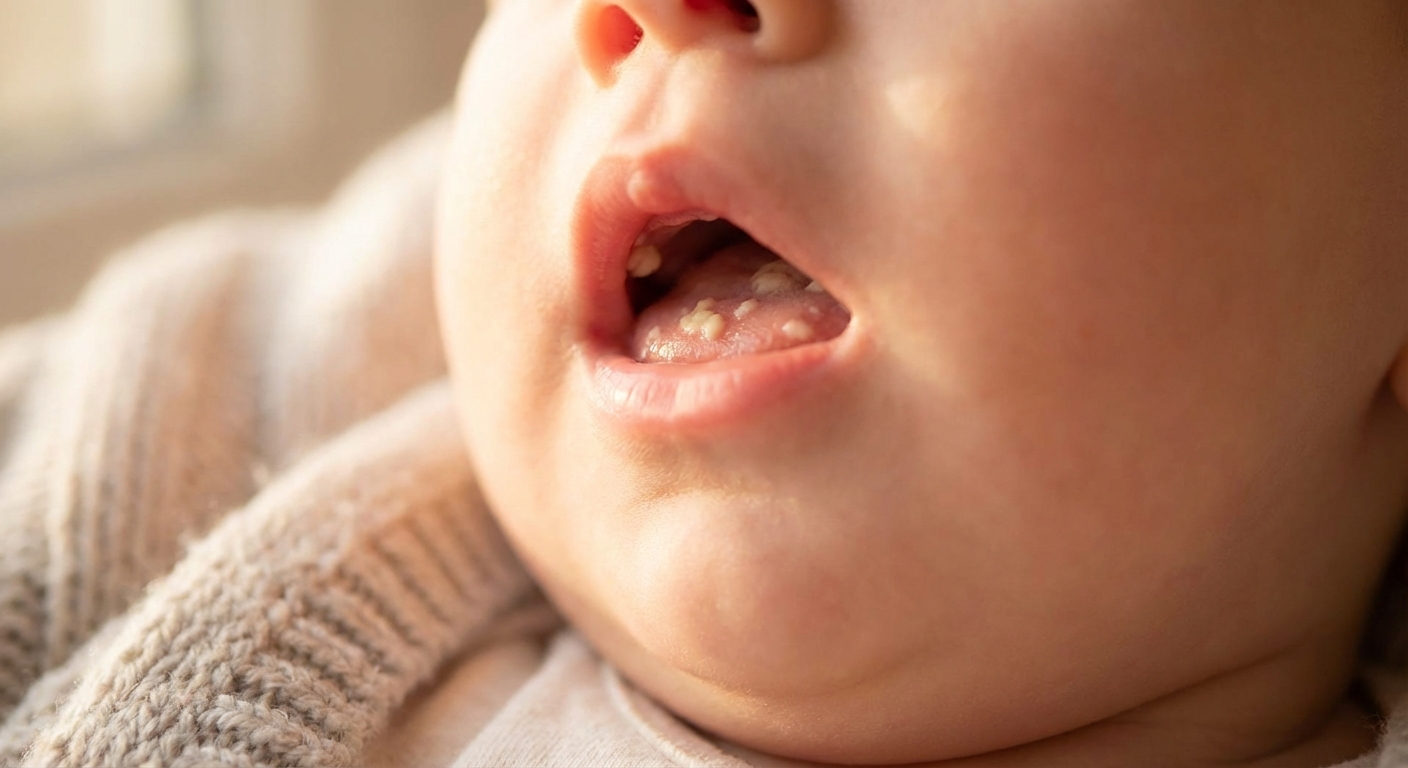
- Thrush : White patches on the tongue or inside cheeks that do not wipe away easily, sometimes with diaper rash. Babies may be fussy at the breast or bottle.
- Cold sore (HSV): Clustered small blisters, redness, or crusting, sometimes with fever or poor feeding. Newborns with possible HSV need urgent medical evaluation.
- Hand, foot, and mouth disease: Mouth sores plus rash on hands and feet, usually in older infants and toddlers.
- Eczema or irritation: Red, dry skin around the mouth rather than a single blister.
If you’re unsure, a quick photo and message to your pediatrician can save you a lot of late-night spiraling.
When to worry: call your pediatrician if you notice these
Sucking blisters are usually benign, but you should reach out for medical advice if you see signs of infection, dehydration, or feeding problems.
Call within 24 hours for guidance if
- The blister is getting bigger, seems painful (for example, baby cries when it is touched or during feeds), or keeps bleeding
- You see increasing redness spreading beyond the lip
- There is yellow crusting, pus-like drainage, or a foul smell
- Baby is very fussy during feeds or suddenly refuses breast or bottle
- You suspect thrush or you have new nipple pain or burning with breastfeeding
Seek urgent care now if
- Baby is under 3 months and has a fever (follow your pediatrician’s threshold, commonly 100.4°F or 38°C rectal)
- Baby has signs of dehydration (see below)
- Blisters are clustered or spreading, especially with lethargy or poor feeding
- Baby seems unusually sleepy, weak, or hard to wake for feeds
Dehydration signs to watch for
Because sucking blisters are related to feeding, I always tell parents to keep one eye on hydration. Call your pediatrician if you notice:
- Fewer wet diapers than expected for your baby’s age
- Very dark urine (and sometimes stronger-smelling urine), which may be a sign of concentrated urine
- Dry mouth or no tears when crying (in older babies)
- Sunken soft spot (fontanelle) on the head
- Baby is too sleepy to feed or feeds much less than usual
As a general example, many babies have around 6 or more wet diapers per day after day 4, but the “right” number can vary based on age, feeding method, and weight trends. If you’re in the newborn stage, your pediatrician can tell you what diaper counts to expect based on day of life and your baby’s growth.
Will it affect feeding?
Most babies are not bothered by a small sucking blister and will continue feeding normally. If your baby seems uncomfortable, it’s usually not the blister itself but the underlying cause, like a shallow latch, a flow issue, or mouth irritation from dryness.
If feeding is painful for you or stressful for baby, you deserve help. A pediatrician visit, lactation support, or a feeding evaluation can turn this around quickly.
Frequently asked questions
Can I put nipple cream on my baby’s lip?
In general, stick with simple options like a drop of breast milk (if your pediatrician or lactation consultant agrees) or a tiny amount of plain petroleum jelly on the outside of the lip. Some nipple creams are safe, but others include ingredients you may not want on baby’s mouth. If you want to use a lanolin-based product, ask your pediatrician or lactation consultant which brand is appropriate.
Should I stop breastfeeding or switch bottles?
Not automatically. If baby is gaining weight, having adequate wet diapers, and feeds are comfortable, you can usually continue as-is. If blisters keep recurring or feeds are painful, check latch and flow and consider support.
My baby’s lip looks “rolled in” while nursing. Is that bad?
Tucked-in lips can increase friction. You can gently flip the lip outward after latch if it stays tucked. If it keeps happening, a latch adjustment often helps.
The bottom line
Sucking blisters on baby lips are common, especially in the first weeks, and they usually heal on their own with gentle care. Keep the blister intact, check latch or bottle flow, and watch for red flags like spreading redness, drainage, fever, or signs of dehydration.
If you’re unsure, trust your gut and reach out. You’re not overreacting. You’re parenting.