Sunscreen for Babies: When to Start and Apply Safely

Sarah Mitchell
Sarah Mitchell is a Registered Pediatric Nurse and a mother of three who has spent over a decade helping families navigate the beautiful, chaotic early years of childhood. She combines evidence-based medical knowledge with real-world parenting experience to offer practical, compassionate advice. At Awesome Parent, Sarah's mission is to help exhausted parents find solutions, trust their instincts, and finally get some sleep.
If you have ever tried to put sunscreen on a wiggly baby who believes lotion is a personal insult, you are in good company. Sun protection matters at every age, but the rules are a little different for infants, especially under 6 months. Here is the calm, evidence-based version of what pediatric experts recommend, plus the real-life tricks that make it doable.
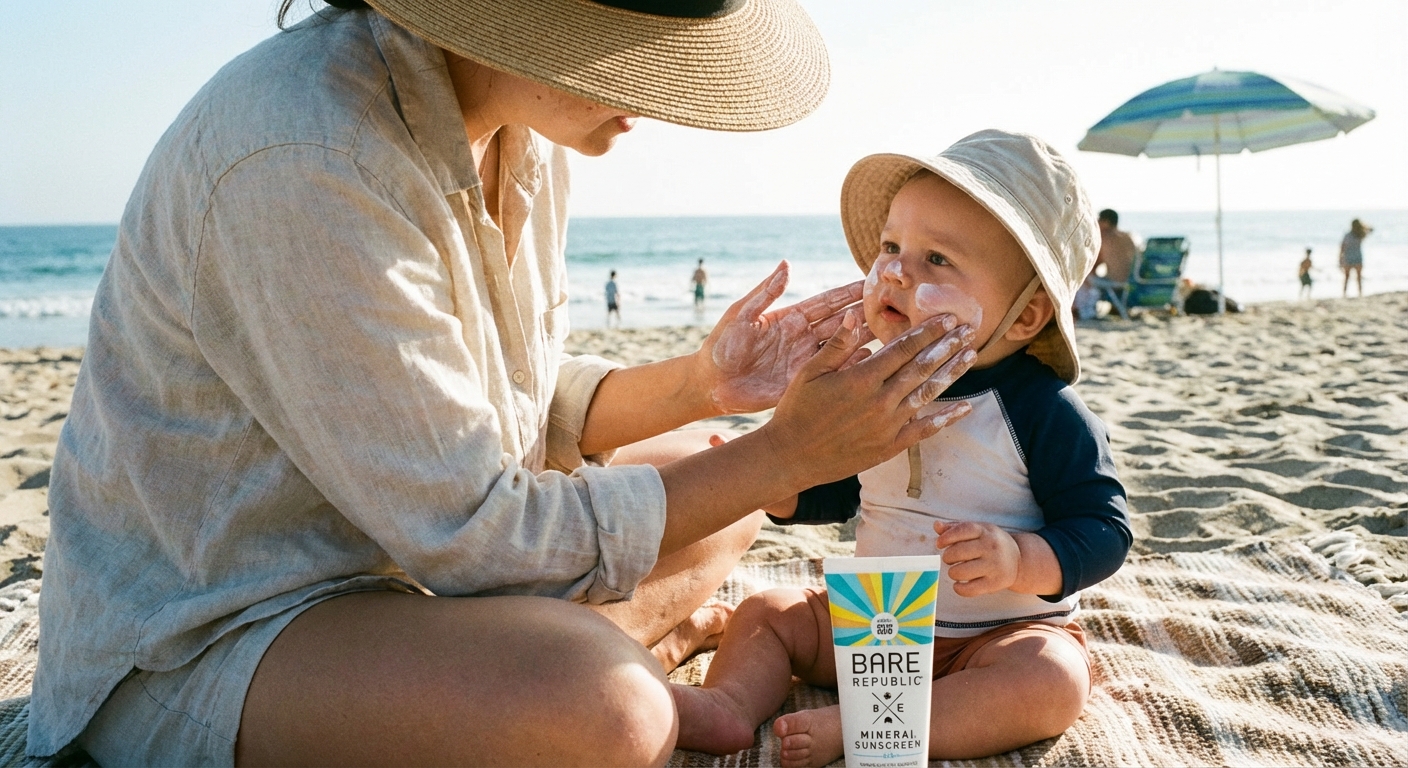
When babies can start wearing sunscreen
Under 6 months: prioritize shade and clothing
The American Academy of Pediatrics (AAP) advises keeping babies under 6 months out of direct sunlight as your main strategy (see AAP guidance on HealthyChildren.org). Their skin is thinner, more sensitive, and more likely to react to ingredients, heat, and sun exposure.
If you cannot avoid sun exposure (think: a short stroller walk, a necessary car-to-building trek, or a family event where shade is limited), the AAP says it is okay to use a small amount of sunscreen on small exposed areas like the face and backs of the hands.
6 months and up: sunscreen becomes routine
Once your baby is 6 months old, sunscreen is recommended for any time they will be outdoors. It should still be paired with shade, hats, and sun-protective clothing because sunscreen works best as a backup layer, not the only layer.
Quick rule: Under 6 months, avoid sun first and use tiny amounts of sunscreen only when you have to. Over 6 months, use sunscreen regularly plus other protection.
Mineral vs. chemical sunscreen for babies
Not all sunscreens feel the same on the skin, and not all are equally well tolerated by babies. For little ones, especially sensitive-skinned kids, I generally point parents toward mineral sunscreen.
Mineral sunscreen (often best for babies)
Mineral sunscreens use zinc oxide and/or titanium dioxide as active ingredients. They form a protective film on the skin and primarily absorb and scatter UV rays. Parents often like them because they tend to be less irritating and start working right away.
- Look for: zinc oxide, titanium dioxide
- Why it is baby-friendly: usually less stinging on sensitive skin, especially around the eyes
- Common downside: the white cast, and it can feel thicker to rub in
Chemical sunscreen (works, but can irritate some)
Chemical sunscreens absorb UV rays using ingredients like avobenzone, octisalate, octocrylene, homosalate, and others. Many families use them without issues, but some babies and toddlers get more stinging around the eyes or irritation, especially with eczema-prone skin.
- Look for: avobenzone, octisalate, octocrylene, homosalate (and similar)
- Potential downside for kids: can sting eyes, more likely to irritate very sensitive skin
What SPF should you choose?
For babies and kids, a broad-spectrum sunscreen with SPF 30 or higher is a solid target. SPF 50 is fine too, but the biggest issue I see in real life is not the number. It is not using enough and not reapplying.
Water-resistant matters
If there will be water play, sweating, sprinklers, or the classic toddler full-body puddle sit, choose water-resistant (40 or 80 minutes). Water-resistant does not mean waterproof. It means you still need to reapply on schedule.
Check the expiration date
Before you slather on last summer’s half-used tube, check the label. Expired sunscreen may not protect as well, and heat-stored sunscreen (like one that lived in a hot car) can break down faster than you think.
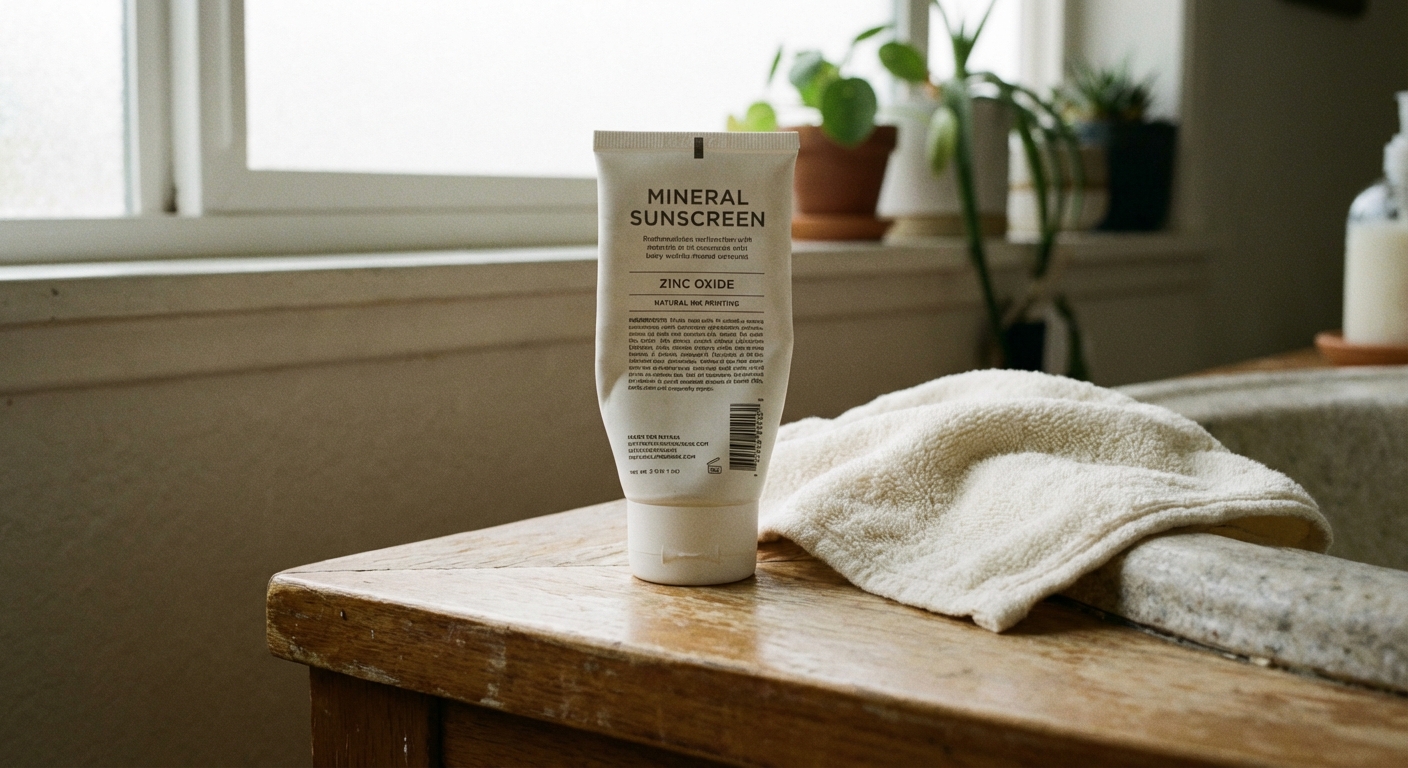
How to apply sunscreen safely
The goal is a generous, even layer on all exposed skin. The challenge is that babies behave like you are trying to paint them for a school play. Here is what helps.
Step-by-step for squirmy babies
- Start before you go outside. Apply sunscreen indoors where it is cooler and you can see what you are doing.
- Use small dots, then spread. Dot sunscreen on cheeks, forehead, ears, neck, tops of feet, and hands. Then rub it in section by section.
- Do face last. Babies touch their face constantly. If you do it last, there is less time for them to immediately smear it into their eyes.
- Use your hands, not the nozzle. Put sunscreen into your palm first, then apply with your fingers so you control where it goes.
- Distract like a professional. A mirror, a toy they only get during sunscreen, a song, or letting them hold the cap can buy you 30 seconds, which is basically a spa day in baby time.
How much sunscreen does a baby need?
There is no perfect teaspoon-per-baby formula, but here is the practical version: use enough that the skin looks a little shiny before you rub it in. If you are applying so thinly that it disappears instantly, it is probably not enough.
Be careful around eyes and mouth
For the face, especially near the eyes, many families do best with a mineral sunscreen stick or a thicker zinc-based formula. Apply with your finger and keep it off the eyelids and waterline. Around the mouth, apply a thin layer and expect some to be licked off because babies are committed to the bit.
Avoid broken or irritated skin
Skip sunscreen on open cuts, raw rashes, or actively irritated skin whenever you can. Cover the area with clothing and shade instead, and ask your pediatrician if you are unsure what is safe for a specific rash.
Patch test for sensitive skin
If your baby has eczema or very reactive skin, do a quick test first: apply a small amount to the inside of the forearm and watch for redness or bumps over the next 24 hours. Even with a good patch test, the eye area can still be more sensitive, so go slowly on the face.
How often to reapply sunscreen
This is where even very organized parents get tripped up. Sunscreen needs touch-ups.
- Reapply every 2 hours when outdoors.
- Reapply after swimming, sweating, or towel-drying, even if the product says water-resistant.
- Reapply more often if your baby is rubbing their face a lot or you can see the sunscreen has worn off.
If you are in and out of shade, it can feel like a lot. A simple approach: keep sunscreen by the diaper bag and set a phone timer when you arrive.
Beyond sunscreen: the real MVPs
Sunscreen is helpful, but physical barriers are the true MVP for baby sun safety. They protect consistently and reduce how much product you need to put on delicate skin. Also, sunscreen should not be used to justify longer time in the sun. If it is hot or the UV index is high, the best move is still to limit exposure.
Shade
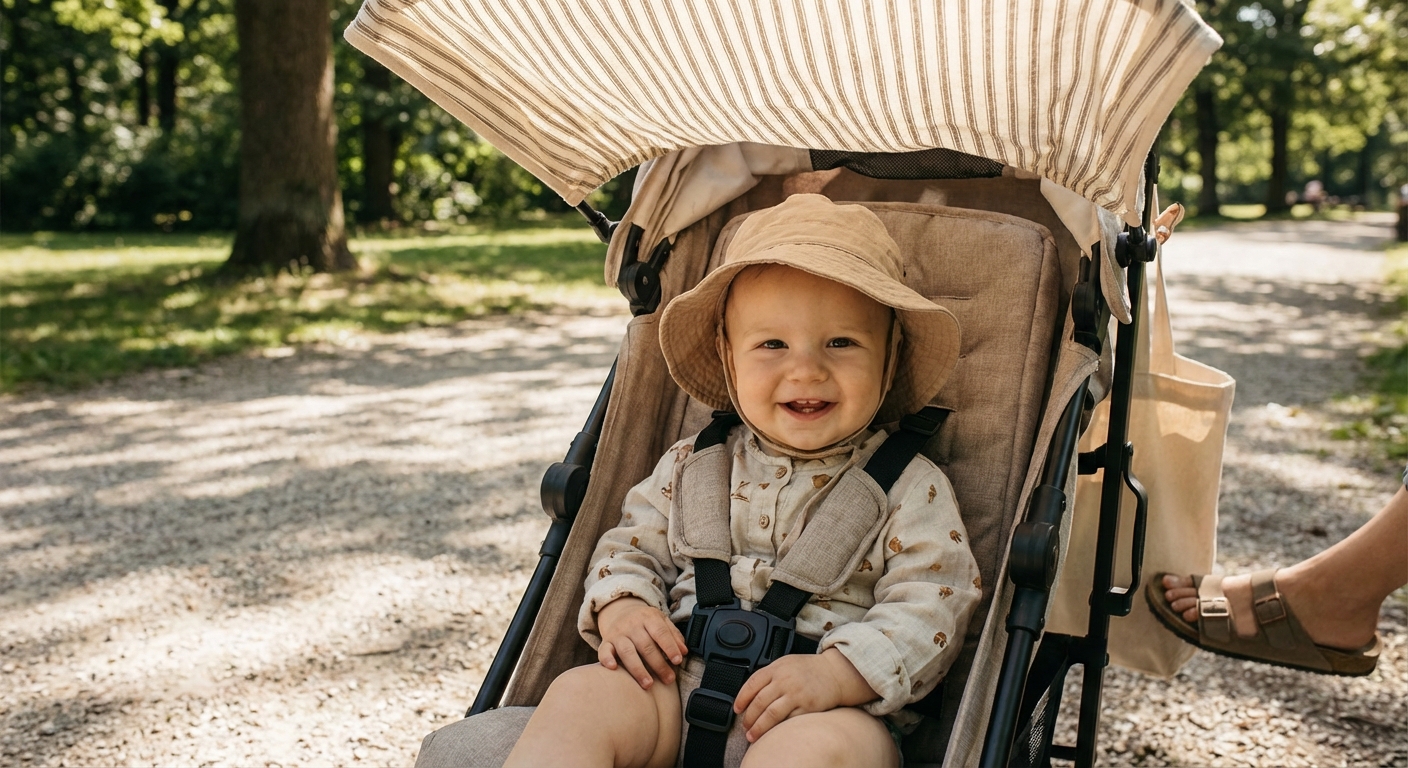
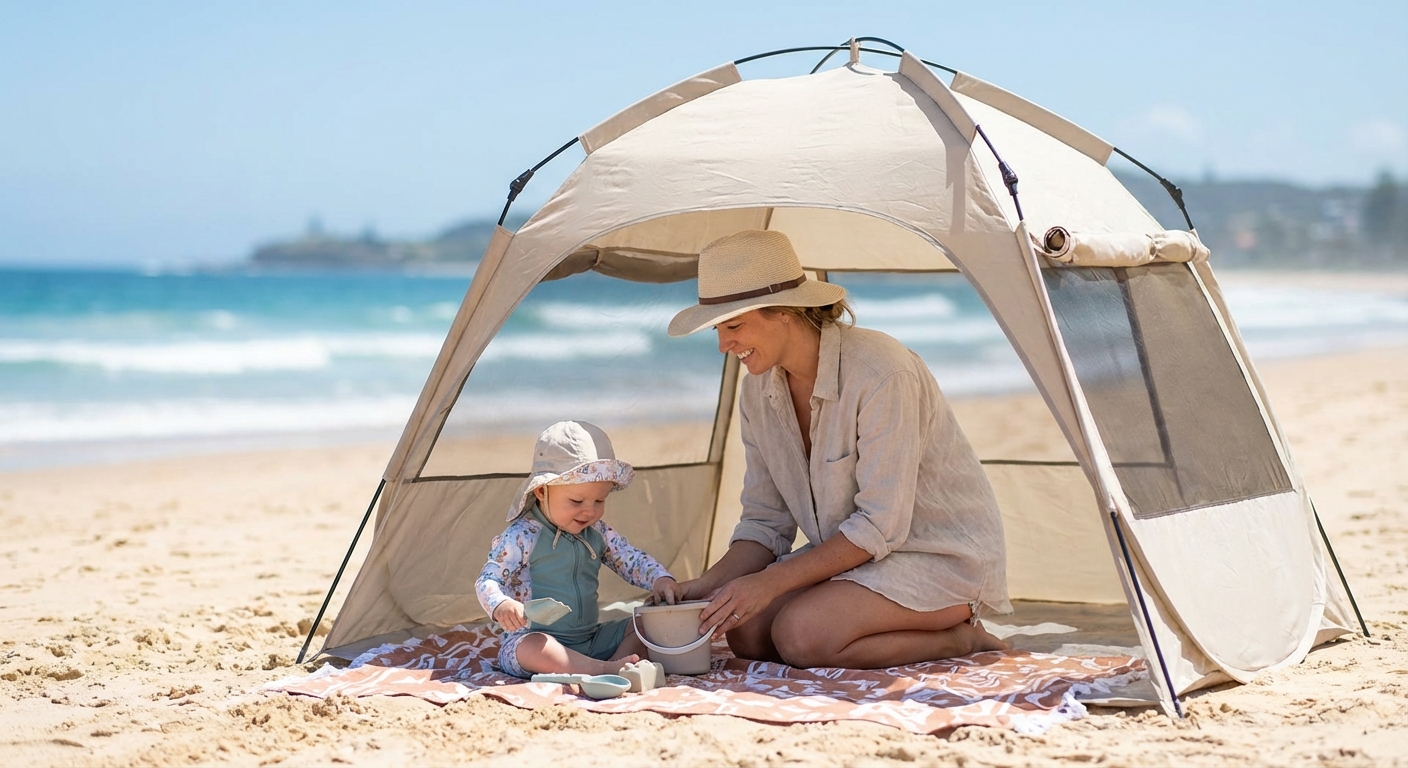
- Use a stroller canopy, umbrella, or pop-up tent.
- Aim to keep babies out of direct sun, especially during peak hours (roughly 10 a.m. to 4 p.m.).
- Note: the UV index can still be high outside those hours depending on season and location, so it is worth checking a weather app.
- Remember: sand, water, and even concrete reflect UV rays upward.
Clothing
- Lightweight long sleeves and long pants can be more comfortable than constant sunscreen reapplication.
- Consider UPF-rated swim shirts and hats for pool and beach days.
- Darker colors and tighter weaves generally block more sun than thin, white, gauzy fabrics.
- UPF clothing is great, but you still need sunscreen on exposed areas like hands, feet, face, and any gaps.
Hats and sunglasses
- Choose a wide-brim hat that covers face, ears, and back of neck.
- Baby sunglasses should be labeled for 100% UV protection and fit snugly.
Heat safety and hydration
Sun safety and heat safety are a package deal, especially for infants. Offer feeds more often in hot weather, take shade and cooling breaks, and watch for overheating (flushed skin, unusual fussiness, lethargy, or fewer wet diapers). If something feels off, get your baby out of the heat and check in with your pediatrician.
Common questions from real parents
Is sunscreen safe for babies?
For babies 6 months and older, sunscreen is considered safe and recommended as part of sun protection. For babies under 6 months, the AAP recommends primarily using shade and protective clothing, using small amounts of sunscreen only on small exposed areas when necessary.
Can I use my sunscreen on my baby?
Sometimes, but I would not assume. Many adult sunscreens are fine, but some contain fragrances, essential oils, or formulas that sting eyes. For babies, look for broad-spectrum SPF 30+, ideally fragrance-free, and consider mineral formulas for sensitive skin.
What about sunscreen spray?
Sprays are fast, but with babies they are tricky. It is easy to miss spots, and you do not want them inhaling a cloud of sunscreen. If you use a spray, spray it into your hands away from your baby, then rub it in thoroughly.
Do babies need sunscreen in the shade?
Shade helps a lot, but UV rays can reflect. If your baby is 6 months or older and you will be outside for a while, sunscreen is still a good idea for exposed skin, even with shade.
When to call your pediatrician
Most sun issues are manageable at home, but you should call your pediatrician (or seek urgent care if severe) if your baby has:
- Blistering sunburn
- Fever, chills, vomiting, or unusual sleepiness after sun exposure
- Signs of dehydration (very few wet diapers, dry mouth, no tears when crying)
- A widespread rash or hives after sunscreen use
And if you are reading this while staring at a pink little nose and feeling guilty, take a breath. Sunburn happens fast, even to careful parents. Your job is not perfection. Your job is adjusting the plan for next time.
Baby sun safety checklist
- Under 6 months: shade and clothing first, tiny amounts of sunscreen only when unavoidable
- 6 months and up: broad-spectrum SPF 30+ on exposed skin
- Choose: fragrance-free, preferably mineral (zinc oxide and/or titanium dioxide) for sensitive skin
- Check: expiration date and avoid heat-damaged old tubes
- Apply: generously and evenly, do face last
- Reapply: every 2 hours and after water or sweating
- Use barriers: hats, UPF clothing, and shade whenever possible
- Support hydration: more frequent feeds and cooling breaks in hot weather