Surviving the 4-Month Sleep Regression

Sarah Mitchell
Sarah Mitchell is a Registered Pediatric Nurse and a mother of three who has spent over a decade helping families navigate the beautiful, chaotic early years of childhood. She combines evidence-based medical knowledge with real-world parenting experience to offer practical, compassionate advice. At Awesome Parent, Sarah's mission is to help exhausted parents find solutions, trust their instincts, and finally get some sleep.
If your baby went from “pretty decent sleeper” to “tiny nighttime DJ” sometime around 3 to 5 months, you are not imagining it. What people call the 4-month sleep regression is a very common, commonly reported phase. It is not a formal diagnosis and not every baby goes through it, but plenty do, and it can feel personal at 2:47 AM when you are on your third reheat of the same cup of coffee.
As a pediatric nurse and a mom of three, here is my calming truth: this is usually a sign of healthy brain development, not a sign you broke your baby. Let’s talk about what is happening, what you can do tonight, and how to gently guide sleep back into something that resembles a routine.

What it actually is
Around 4 months, many babies shift from newborn sleep patterns to more mature infant sleep cycles. Newborns can drop into deep sleep more easily. As babies mature, they cycle through lighter sleep more often, and that means they may wake more between cycles.
In practical terms, your baby might:
- Wake more often at night, sometimes as frequently as every 45 to 90 minutes
- Take shorter naps, often 20 to 40 minutes
- Need more help falling asleep than they did a few weeks ago
- Get fussier at bedtime
These are common patterns, not rules. The reason it can feel so sudden is that it is not “bad habits” appearing overnight. It is a developmental shift colliding with a baby who is still learning how to settle between sleep cycles.
Why it happens
1) Sleep cycles shift
Many 4-month-olds have more clearly defined sleep cycles, often with lighter sleep phases that make them easier to wake. If they fall asleep one way, then wake between cycles and everything feels different, they protest. Loudly.
2) Your baby is more aware
At this age, babies become more alert to their environment. If they used to fall asleep on you and now wake in the crib, that change can trigger a full wake-up.
3) Hunger still matters
Many babies still need night feeds at 4 months. Some wake-ups are true hunger. Others are “I woke up and now I am mad about it.” Both can be normal.
4) Daytime sleep gets messy
Short naps can lead to an overtired baby by evening, and overtired babies rarely glide into bedtime like a peaceful little angel. They tend to fight sleep, then wake more.
5) New skills can stir things up
This is also a time when many babies are working on rolling, bringing hands to mouth, squealing, and generally practicing being a person. Those exciting new milestones can leak into sleep, especially if your baby is waking up to “practice.”

First, rule out the basics
Sleep regressions get blamed for everything. Before you assume it is developmental, do a quick check for common disruptors.
- Feeding: Is baby taking full feeds during the day? Is there more spit-up than usual? Any signs of reflux discomfort?
- Illness: New cough, congestion, fever, diarrhea, vomiting, ear pulling, unusual irritability?
- Teething: Drooling and chewing are common at this age, but true teething pain varies. If sleep suddenly worsens plus daytime crankiness ramps up, it could contribute.
- Schedule: Is your baby staying awake too long before naps or bedtime?
- Sleep environment: Too warm, too cold, too bright, too noisy?
Call your pediatrician if you see breathing difficulty, signs of dehydration (fewer wet diapers, very dry mouth), persistent vomiting, or you suspect an ear infection. For fever, follow your pediatrician’s guidance, and be especially cautious with younger infants (for example, under 3 months), where fever should be addressed urgently.
This article is general education, not personalized medical advice. If something feels off, trust your gut. You know your baby.
Your plan (in order)
When parents tell me they have tried “everything,” what they usually mean is they have tried everything at once for two nights while running on fumes. Let’s simplify.
Step 1: Anchor wake time and bedtime
Pick a realistic morning wake time and keep it fairly consistent for a week (within about 30 minutes). Then aim for a bedtime that fits your baby’s age and how naps went that day. For many 4-month-olds, bedtime often lands between 6:30 and 8:00 PM, but consistency and avoiding overtiredness matter more than the exact clock time.
If naps were terrible, bedtime may need to be earlier. Early bedtime is not “giving in.” It is often the fastest way out of the overtired spiral.
Step 2: Set up the room to help sleep
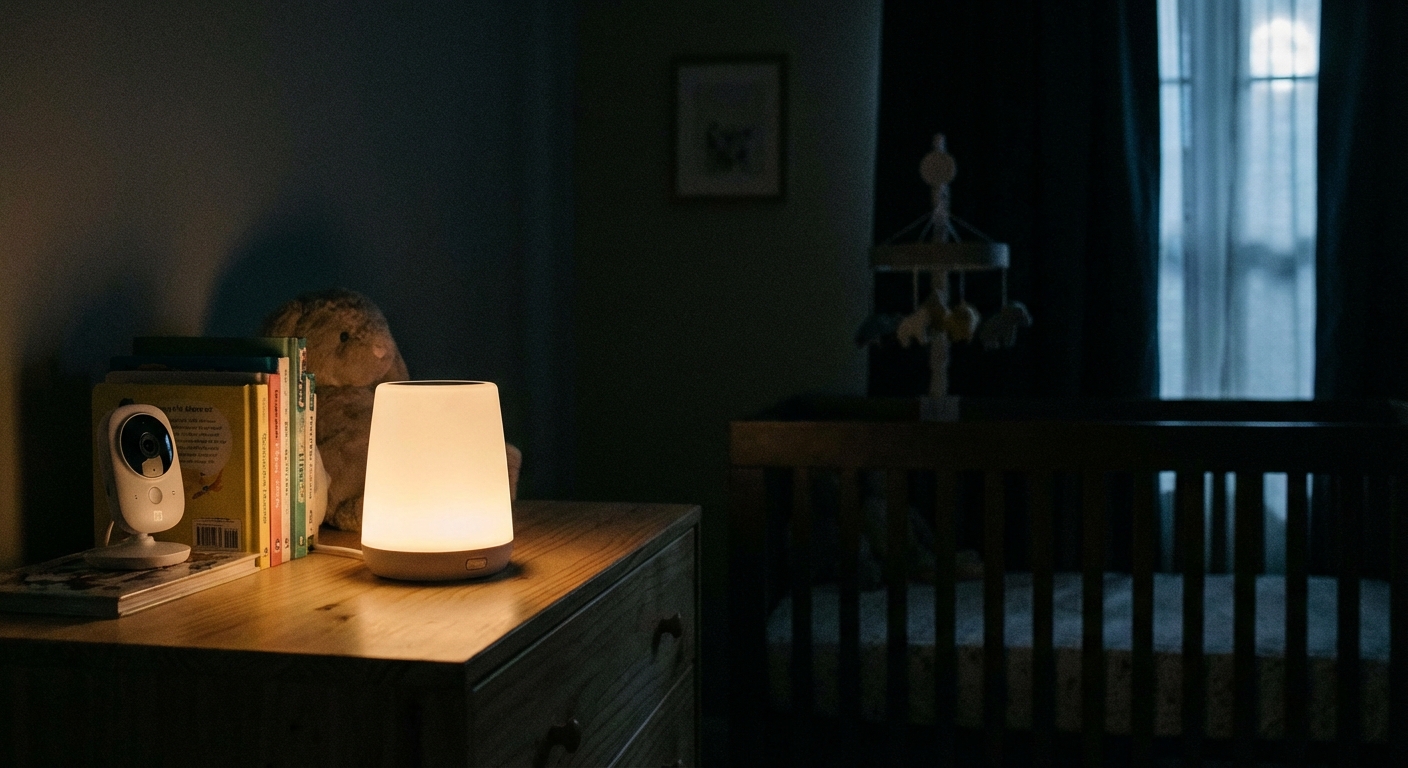
- Dark: Blackout curtains help a lot for naps and early morning wakes.
- Cool: Aim for a comfortable room temperature (many babies sleep best slightly cool).
- Sound: Use continuous white noise if it helps.
- Safe sleep: Back to sleep, firm flat surface, no loose blankets, pillows, bumpers, or stuffed animals in the crib.
Think of this step as making sleep easier, not forcing it.
Step 3: Keep bedtime routine simple
Keep it short, boring, and consistent, about 20 to 30 minutes. Example:
- Diaper and pajamas
- Feed (try to keep baby awake enough to get a full feed)
- Sleep sack
- Dim lights, a short book or song
- Into crib
The goal is the same “landing sequence” every night so your baby’s body starts expecting sleep.
Step 4: Practice falling asleep in the crib (gently)
“Drowsy but awake” can make parents want to throw something across the room. Here is what it really means: help your baby practice falling asleep in the same place they will wake up.
If your baby currently needs to be fully rocked to sleep, ease toward independence in small steps:
- Rock until very drowsy, then place in crib.
- If they fuss, try a hand on the chest and gentle shushing for 30 to 60 seconds.
- If they escalate, pick up to calm, then place back down.
You are not trying to “win” bedtime. You are teaching a skill slowly.
Swaddle note: At this age, many babies are close to rolling or already rolling. If your baby shows signs of rolling, stop swaddling and switch to a sleep sack for safety.
Step 5: Decide your overnight response
The biggest sanity-saver is having a plan before you are half asleep. Here are gentle options that are commonly used:
- Pause: Give baby 30 to 90 seconds to see if they resettle. Many babies squawk between cycles.
- Minimal help: Try soothing in the crib first (hand on chest, shush, pacifier if you use one).
- Feed if it makes sense: If it has been a reasonable amount of time and baby seems hungry, feed. Keep it calm, dark, and quiet.
- Pick up, calm, put down: If baby is escalating, pick up to calm, then place back down.
Try not to change your response every wake-up. Consistency helps babies learn what to expect.
Feeding at 4 months
Night waking can be hunger, habit, or both. A few practical clues can help you decide what you are seeing:
- Hunger is more likely if baby takes a full feed, you hear strong swallowing, they seem satisfied afterward, and it has been a typical interval since the last feeding.
- Comfort waking is more likely if baby only snacks for a minute or two and then dozes, or if they wake very frequently and settle quickly with a non-feeding soothe.
- Growth and weight gain matter: If you have concerns about intake, weight gain, or how many night feeds are appropriate for your baby, ask your pediatrician for a plan tailored to your child.
Many families land on a middle path: feed when it is truly needed, and use other soothing methods for the “in between” wakes.
Naps: keep it realistic
Naps often fall apart first. That does not mean you are doomed.
Wake windows (starting point)
Many 4-month-olds do well with awake times around 1.5 to 2.5 hours, depending on temperament. If your baby is melting down before a nap, their window may be too long. If they fight every nap like it is a personal insult, they may not be tired enough yet.
A nap strategy that protects bedtime
- Aim for 3 to 4 naps a day for many babies this age.
- Rescue naps if needed: If every nap is 28 minutes, it is okay to do one contact nap, stroller nap, or carrier nap to prevent an overtired evening.
- Watch total daytime sleep: Too little can make baby overtired, too much can push bedtime later. Needs vary widely.
Short naps are developmentally normal around 4 months. We are playing the long game.
Common questions
How long does this last?
It varies. Some babies move through it in 1 to 2 weeks. Others take longer, especially if they are also dealing with new skills, growth spurts, or inconsistent routines. Once babies get better at settling between sleep cycles, sleep often improves, although feeding needs and temperament still play a role.
Will I create “bad habits” if I help my baby sleep?
You cannot spoil a 4-month-old. You can create patterns, but you can also adjust them gently. If rocking or feeding to sleep is the only way anyone rests right now, do what you need to do and work on one small change at a time.
Is this the same as sleep training?
No. Building routines, optimizing the environment, and practicing falling asleep in the crib are foundational sleep skills. Some families later choose formal sleep training methods, and some do not. You are not required to do anything that does not fit your baby or your values.
What about the pacifier?
If a pacifier helps your baby settle, it can be a useful tool. The downside is that some babies wake repeatedly when it falls out and want help replacing it. Around 4 to 6 months, some babies start learning to grab and replace it themselves, which can reduce night wake-ups.
7-day survival routine
If you want a simple plan you can actually follow while sleep-deprived, here you go.
Days 1 to 2: Stabilize
- Set a consistent morning wake time
- Dark room, white noise, safe sleep setup
- Keep bedtime routine consistent
- Rescue at least one nap if baby is overtired
Days 3 to 5: Practice one small skill
- At bedtime, place baby down drowsy at least once a night
- Pause briefly before responding to wake-ups
- Use the same soothing steps each time
Days 6 to 7: Fine-tune timing
- Adjust wake windows by 10 to 15 minutes if naps are consistently too short or baby is fighting sleep
- Move bedtime earlier if evenings are a nightly meltdown
- Keep expectations realistic. Progress often looks like fewer wake-ups, not zero wake-ups
If you are falling apart
This is the part no one says out loud: this phase is hard because you are a human who needs sleep to function. So here is your permission slip.
- Take shifts if you have a partner or support person. Even a 4-hour protected block can change your whole mood.
- Lower the bar on everything that is not essential. This is not the week for deep-cleaning baseboards.
- Rest when help is available, even if it is not a perfect nap.
- Ask for help early if you are feeling anxious, depressed, or hopeless. Postpartum mood issues can show up anytime in the first year.
Quick troubleshooting
- Waking every 45 minutes: Focus on bedtime settling. How baby falls asleep at bedtime often predicts the whole night.
- False start (wakes 30 to 60 minutes after bedtime): Often overtiredness. Try bedtime 15 to 30 minutes earlier for a few nights. If that does not help, look at the last wake window, hunger, and whether bedtime has gotten overstimulating.
- Early morning wakes: Dark room, white noise, treat anything before your target wake time like a night wake (low stimulation).
- Naps are 20 minutes: Very common. Try one rescued nap daily and keep wake windows age-appropriate.
When to get extra help
Beyond acute illness, it is worth looping in your pediatrician or a qualified pediatric sleep professional if:
- Sleep is severely disrupted for several weeks and your baby seems miserable during the day
- You have concerns about feeding, reflux pain, or weight gain
- You are so sleep-deprived you feel unsafe driving, caring for baby, or managing your mental health
You do not have to white-knuckle this.
The bottom line
What people call the 4-month sleep regression is usually a sign your baby’s sleep is maturing, even if it feels like it is regressing straight into chaos. With a consistent routine, a sleep-friendly environment, and gentle practice falling asleep in the crib, many babies settle into longer stretches again.
And if tonight is still rough, do the next right thing: keep baby safe, keep the room calm, and remember you will not be awake at 3 AM forever. It just feels like it right now.