Swimmer’s Ear in Kids: Symptoms, Treatment, and Prevention

Sarah Mitchell
Sarah Mitchell is a Registered Pediatric Nurse and a mother of three who has spent over a decade helping families navigate the beautiful, chaotic early years of childhood. She combines evidence-based medical knowledge with real-world parenting experience to offer practical, compassionate advice. At Awesome Parent, Sarah's mission is to help exhausted parents find solutions, trust their instincts, and finally get some sleep.
If your child has been living in the pool lately and suddenly starts complaining about ear pain, you are not alone. Every summer, I see a wave of kids with swimmer’s ear, and parents who are understandably confused because it sounds like “an ear infection”… but it is a very different kind.
Let’s walk through what swimmer’s ear is, how to recognize it in kids (including the sneaky signs like ear tugging), what actually helps, and when it is time to call the pediatrician.
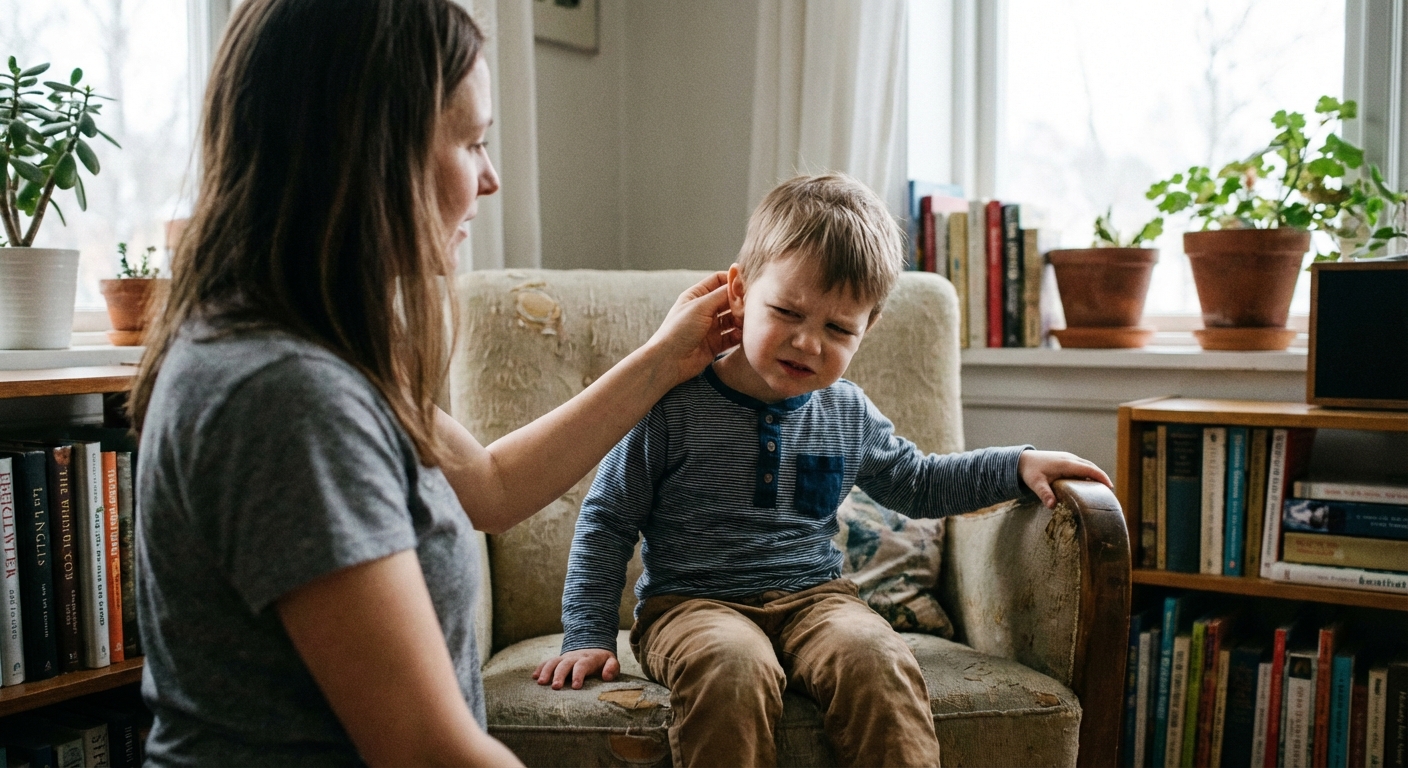
What is swimmer’s ear?
Swimmer’s ear is the everyday name for otitis externa, an infection or inflammation of the ear canal, the canal that runs from the outside opening of the ear to the eardrum.
It often happens after swimming because moisture gets trapped in the canal. That damp environment makes it easier for bacteria (and occasionally fungus) to grow. It can also happen without swimming if a child has eczema in the ear, irritation from cotton swabs or earbuds, or if the canal is blocked or narrow. Impacted earwax can trap water, and attempts to “dig it out” can scratch the skin, which sets the stage for infection.
Why it hurts so much
The ear canal skin is thin and sensitive. When it gets inflamed, even small movements like chewing, putting on a shirt, or touching the outside of the ear can feel surprisingly painful.
Swimmer’s ear vs. middle ear infection
This is where parents get whiplash from the internet. A middle ear infection (otitis media) happens behind the eardrum. Swimmer’s ear happens in the ear canal.
They can both cause ear pain, but the clues and treatments are different.
Quick comparison
- Swimmer’s ear (otitis externa): Pain is often worse when you touch or move the outer ear (the pinna) or press the little flap in front (the tragus). The canal may look red or swollen. Drainage can happen. Hearing may feel muffled.
- Middle ear infection (otitis media): Pain is usually deeper and not triggered as much by touching the outer ear. Often follows a cold. Fever is more common. Younger kids may have trouble sleeping or feeding. A clinician typically sees a bulging eardrum on exam.
If you are not sure which one it is, that is normal. The “outer ear hurts when touched” clue is helpful, but an exam is the best way to confirm what is going on.

Symptoms in kids
Kids do not always say “my ear canal hurts.” Instead, you might see behavior changes that make you wonder if it is teeth, a sore throat, or just summer crankiness.
Common signs
- Ear pain that ramps up quickly, especially after swimming or baths
- Pain when touching the outer ear or when the ear is gently pulled back
- Ear tugging or rubbing, especially in younger children
- Itching in the ear canal (often an early sign)
- Drainage that may look clear, cloudy, or yellowish
- Muffled hearing or “my ear feels plugged”
- Pain with chewing or when lying on that side
Less common
- Fever (usually low-grade if present at all)
- Swollen lymph nodes near the ear or upper neck
Nurse-mom tip: If your child yelps when you gently press on the tragus (the small flap in front of the ear opening) or when you lightly wiggle the outer ear, swimmer’s ear jumps to the top of my list.
Treatment
The good news: swimmer’s ear is very treatable. Many kids start to feel noticeably better within 48 to 72 hours once the right treatment starts, even though the ear still needs time (and the full course of drops) to fully heal.
1) Ear drops are the main treatment
For uncomplicated swimmer’s ear, the standard treatment is prescription ear drops. These may include:
- Antibiotic drops to treat bacterial infection
- Steroid drops to reduce swelling and pain (often combined with antibiotics)
- Antifungal drops if a fungal infection is suspected (less common)
These drops go directly where the problem is, which is why they work so well.
Typical course: many prescriptions are used for about 7 to 10 days. Even if your child feels better quickly, finish the drops as directed so the infection does not bounce back.
One more practical note: do not use leftover drops from an old ear infection unless your clinician specifically tells you to. The medication might be wrong for this infection, expired, or contaminated.
When are oral antibiotics needed?
Most kids with swimmer’s ear do not need oral antibiotics. They are usually reserved for specific situations, such as:
- Infection that appears to be spreading beyond the ear canal (for example, increasing redness or swelling of the outer ear or nearby skin)
- A child with certain medical conditions that affect immune response (your pediatrician will guide this)
- Severe swelling that prevents drops from reaching the canal, sometimes combined with a wick placement and close follow-up
If you have been told in the past that “ear infections need antibiotics,” that advice often refers to middle ear infections. Swimmer’s ear usually needs topical antibiotics, not oral ones.
2) Pain relief at home
Swimmer’s ear can be very uncomfortable, so pain control matters. If your child can take them safely, ask your clinician about using:
- Acetaminophen or ibuprofen based on age and weight
- Warm compress held against the outer ear for 10 to 15 minutes
Avoid putting any drops in the ear that were not recommended by a clinician, especially if there is drainage or you are not sure whether the eardrum is intact.
3) Keep the ear as dry as possible while healing
Usually this means a break from swimming until symptoms improve. Your pediatrician may recommend avoiding submerging the ear for a few days, depending on severity.
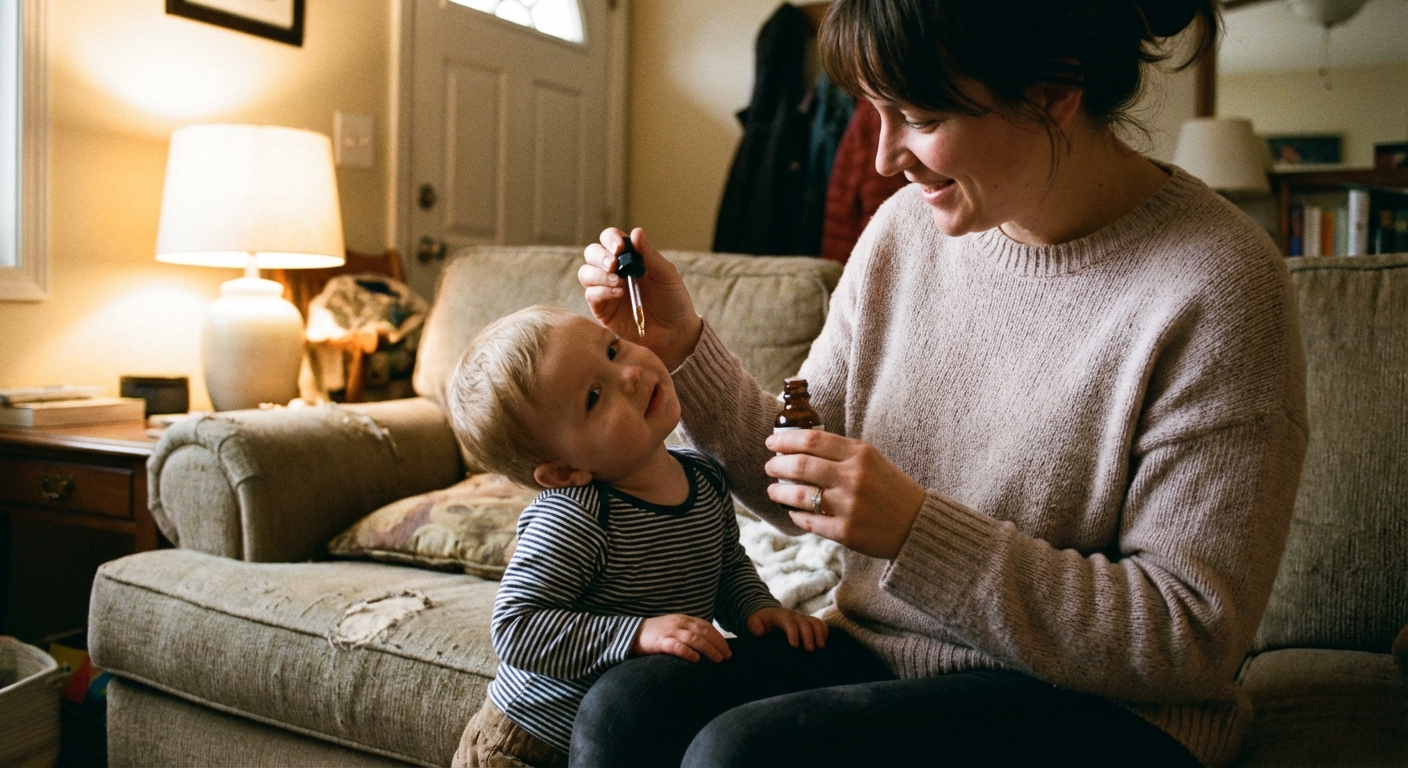
Using ear drops
Ear drops work best when they reach the inflamed canal skin. If the canal is swollen, the drops may need a little help getting in.
Step-by-step
- Warm the bottle in your hands for a minute. Cold drops can sting.
- Have your child lie on their side with the affected ear facing up.
- Place the prescribed number of drops into the ear.
- Gently move the outer ear (a small back-and-forth wiggle) to help the drops flow down. Do not push anything into the canal.
- Stay in position for about 1 to 2 minutes if your child will tolerate it.
Two sanity-saving tricks
- Distraction works. One short video, one song, one sticker, one job. Anything that buys you 90 seconds.
- Do drops when they are sleepy. Right before bed is often easier.
If drops are repeatedly running right back out, or your child is in too much pain to allow them, call your clinician. Sometimes the canal is swollen enough that a small wick is needed to help medication reach the deeper canal.
Prevention
Prevention is all about keeping the ear canal from staying wet and irritated.
What helps
- Dry ears after swimming. Tilt head side to side to let water drain. Use a soft towel on the outer ear.
- Use safe drying methods. If your child tolerates it, you can use a hair dryer on cool or low, held several inches away, to gently dry the outer ear area. Do not aim strong heat into the canal.
- Consider swim earplugs if your child gets swimmer’s ear repeatedly and will tolerate them.
- Skip cotton swabs. They can scratch the canal and remove protective earwax, which makes infection more likely.
- Manage skin conditions. If your child has eczema or dermatitis around the ears, ask about keeping the area calm with clinician-recommended products.
What about drying drops?
Some families use over-the-counter drying drops after swimming. These are often isopropyl alcohol and acetic acid solutions that help evaporate water and make the canal less friendly to germs. They can also sting, and they can irritate the middle ear if the eardrum is not intact.
Do not use them if your child has ear tubes, a known or suspected eardrum perforation, current ear drainage, or if your pediatrician has told you to avoid them.
If your child has frequent swimmer’s ear, ask your pediatrician whether preventive drops are appropriate and which type is safest for your child’s situation.
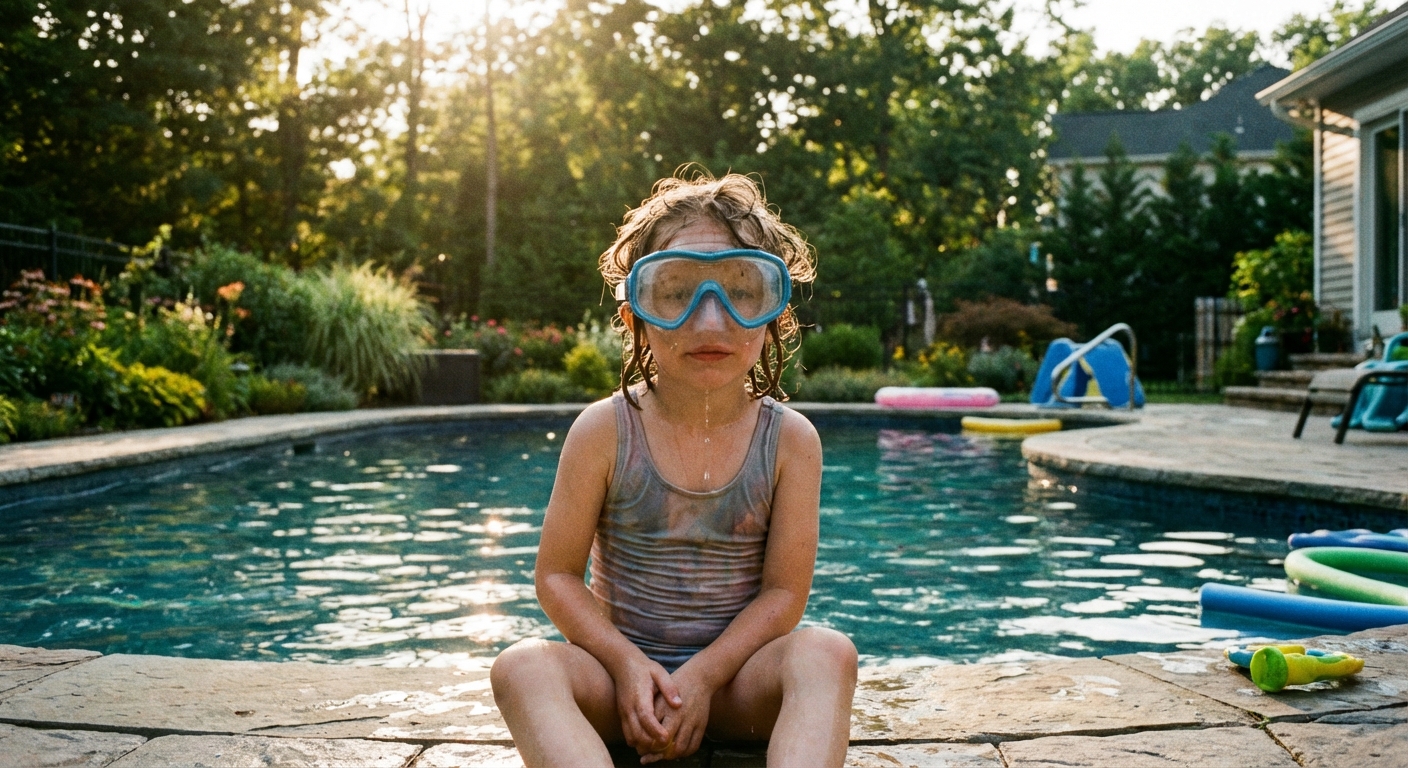
When to call the pediatrician
Swimmer’s ear is usually straightforward, but there are times you should get medical advice quickly.
Call within 24 hours if
- Your child has significant ear pain, especially pain when touching the outer ear
- There is ear drainage
- Symptoms started after swimming and are getting worse
- Your child has ear tubes, a history of eardrum perforation, or chronic ear problems
- You tried appropriate pain medicine and they are still miserable
Seek urgent care today if
- Fever is high or your child looks unusually ill
- Redness or swelling is spreading to the outer ear or face
- Your child has severe pain, especially at night, or pain out of proportion to what you see
- Your child is immunocompromised or has diabetes (rare in kids, but important because severe forms of otitis externa can be more dangerous in these groups)
- You notice swelling behind the ear or the ear sticking out more than usual (this can suggest a different, more serious infection like mastoiditis, which needs prompt evaluation)
Also call back if your child is not improving after 48 to 72 hours of treatment, or if symptoms keep coming back each time they swim. Recurrent cases sometimes need a different medication, a check for fungal infection, or a plan to prevent repeat moisture trapping.
Common questions
Can my child swim with swimmer’s ear?
Usually, it is best to take a short break from swimming until pain and drainage improve. Water exposure can slow healing and make drops less effective. Your pediatrician can give the most accurate guidance based on severity.
Is swimmer’s ear contagious?
No. The infection is usually caused by bacteria that take advantage of moisture and irritated skin in the ear canal. It is not something kids “catch” from each other like a cold.
Will it go away on its own?
Mild irritation might settle if the ear is kept dry, but true swimmer’s ear often needs prescription drops to clear fully and prevent worsening pain. If the outer ear is tender to touch, I would not wait it out for long.
The bottom line
Swimmer’s ear is an outer ear canal infection that loves summer. The classic sign is pain when the outer ear is touched, often with itching, drainage, or a “plugged” feeling. Most kids improve quickly with prescription ear drops, while oral antibiotics are only needed in select cases. Drying the ears well, avoiding cotton swabs, and having a prevention plan for frequent swimmers can go a long way toward keeping the season fun instead of painful.
If you want to tell me your child’s age, symptoms, and whether they have ear tubes, I can help you think through whether this sounds more like swimmer’s ear or a middle ear infection, and what to do next.