Switching From Breastmilk to Formula Without Tummy Trouble

Sarah Mitchell
Sarah Mitchell is a Registered Pediatric Nurse and a mother of three who has spent over a decade helping families navigate the beautiful, chaotic early years of childhood. She combines evidence-based medical knowledge with real-world parenting experience to offer practical, compassionate advice. At Awesome Parent, Sarah's mission is to help exhausted parents find solutions, trust their instincts, and finally get some sleep.
If you are reading this at an odd hour with a baby on your lap, I see you. Switching from breastmilk to formula can feel emotionally loaded and strangely technical at the same time. The good news is that most babies can transition smoothly with a slow, consistent plan and a little patience for their tiny digestive systems.
This guide walks you through choosing a formula, mixing it safely, and easing into the change in a way that helps prevent gas, constipation, spit-up, and general “why are we all crying?” nights.
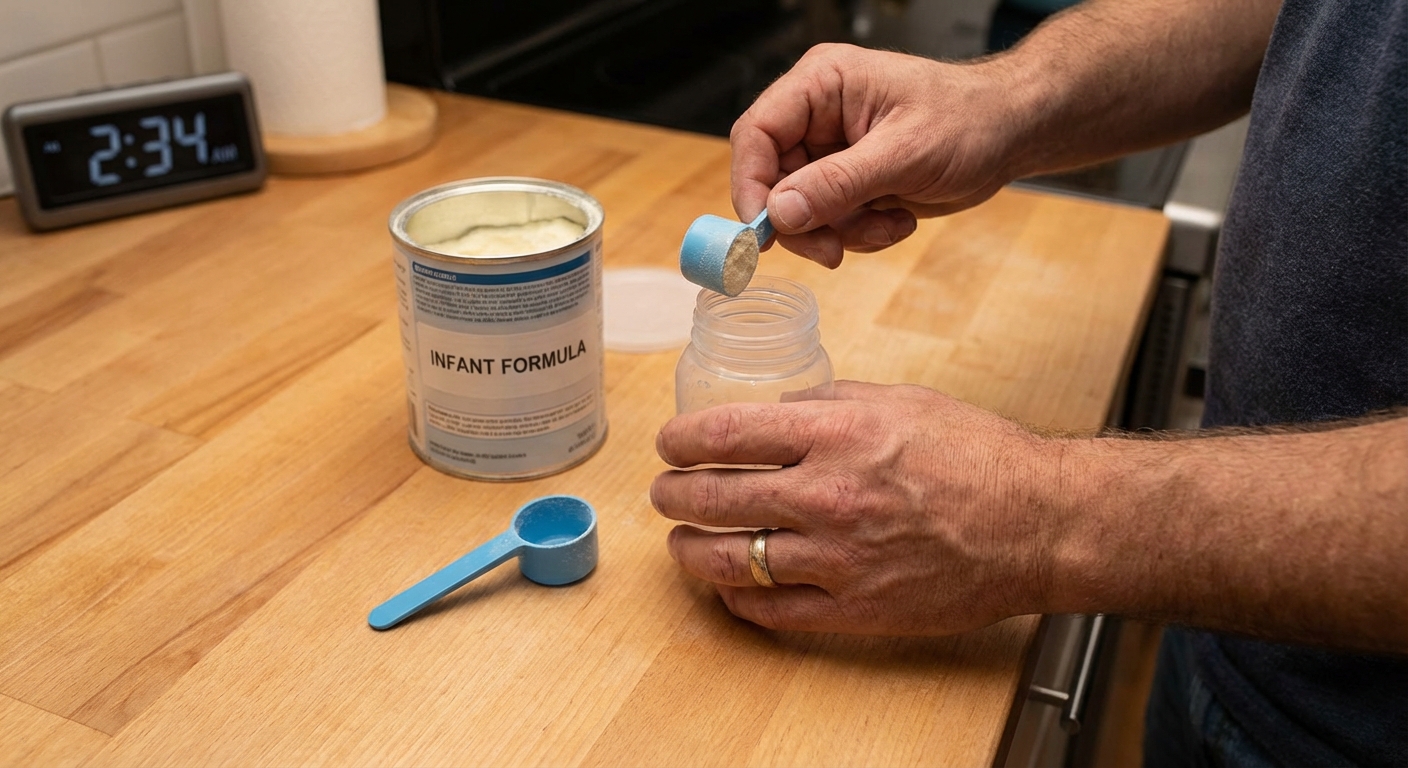
Before you start: belly-friendly basics
In clinic triage, the biggest tummy-upset triggers I saw during formula transitions were not the formula itself. They were the pace of the switch, inconsistent mixing, and frequent brand-hopping. A few ground rules help a lot.
- Go slow when you can. A gradual change gives the gut time to adjust.
- Mix exactly as directed. Too concentrated can raise dehydration risk (and may worsen constipation). Too diluted can be unsafe and reduce calories.
- Give one formula a fair trial. If baby is safe and growing, try to avoid switching formulas every couple of days unless your pediatrician advises it.
- Expect some adjustment. Mild gas, a slightly different poop smell or color, and a short period of fussiness can happen.
Important: If your baby is under 12 months, use infant formula, not toddler formula or plant-based “milk.” If your baby was born premature or has medical needs, ask your pediatrician for a specific plan.
Choosing the right formula
Standing in the formula aisle can make even confident parents feel like they need a nutrition degree. Here is the simple version.
Start with a standard cow’s-milk-based formula
For most babies, a standard cow’s-milk-based iron-fortified formula is the right first choice. In the US, infant formulas are regulated to meet nutritional requirements, so brand-to-brand differences are usually small.
When “gentle,” “sensitive,” or specialty formulas help
- Partially hydrolyzed (“gentle”) formulas: Proteins are partially broken down, which may help some babies with gas or fussiness. This is often a reasonable first tweak if your baby seems uncomfortable.
- Lactose-reduced (“sensitive”) formulas: True lactose intolerance in infants is uncommon. These formulas sometimes help temporarily after a stomach bug, but they are not automatically better for everyday fussiness.
- Extensively hydrolyzed or amino acid formulas: These are for babies with a suspected cow’s milk protein allergy or specific medical conditions and should be used with pediatric guidance.
- Anti-reflux formulas: Sometimes helpful for significant spit-up, but reflux management is more than thickened formula. Talk with your pediatrician before switching.
What about goat milk formula?
Goat-milk-based infant formulas can be a good alternative for some families. They are still dairy and still contain lactose. They are not a solution for cow’s milk protein allergy because many babies who react to cow’s milk protein also react to goat milk protein (cross-reactivity). If you want to try one, choose an infant formula that meets your country’s safety standards.

How to transition: simple schedules
There is no single perfect schedule. Choose the pace that matches your baby’s temperament and your reality. If your baby is older, healthy, and you need the switch to happen sooner, you can move faster. If your baby has a sensitive belly, slower is usually kinder.
Option A: 7 to 14 days
This is my favorite for reducing tummy drama.
- Days 1 to 3: 75% breastmilk, 25% prepared formula
- Days 4 to 6: 50% breastmilk, 50% prepared formula
- Days 7 to 9: 25% breastmilk, 75% prepared formula
- Day 10+: 100% formula
If your baby has noticeable gas or constipation, stay at the current ratio for a few extra days before moving up.
Option B: One bottle at a time
If you are combo feeding or feeling emotionally attached to nursing sessions, this approach can feel more manageable.
- Start by replacing the easiest feed with formula (often midday).
- Keep morning and bedtime feeds as breastmilk at first, since babies often care about those the most.
- Every 2 to 4 days, replace another feed.
Option C: 3 to 5 days
Sometimes life makes the decision for you. If you need to transition in 3 to 5 days, you can increase formula more quickly, but keep mixing precise and watch hydration and diapers.
Mixing breastmilk and formula safely
This is where I see the most confusion, so let’s make it very clear.
Rule #1: Mix formula with water first
Always mix formula according to the container directions using the correct amount of water first. Then, if you are combining, add breastmilk.
Do not use breastmilk in place of water to mix powdered or concentrated formula unless your pediatrician specifically instructs you. It changes the concentration and can be unsafe.
Rule #2: Decide how you will combine (and waste less)
- Same bottle is fine: Prepare the formula with water first, then add breastmilk.
- Separate bottles is also fine: Many parents offer breastmilk first, then “top off” with a small amount of prepared formula so less breastmilk gets wasted if baby does not finish.
Rule #3: Measure, do not eyeball
Use the scoop that comes with that specific formula. Level scoops. No “just a little extra.” Tiny bodies notice tiny changes. Also: do not swap scoops between brands or different product lines. Scoop sizes vary.
Rule #4: Use clean technique and safe water
- Wash hands before making bottles.
- Use clean bottles and nipples.
- Powdered formula is not sterile. For babies under 2 months, born premature, or immunocompromised, ask your pediatrician what your local public health guidance recommends for safer preparation. In many places, guidance for higher-risk babies includes reconstituting powder with hot water (around 70°C or 158°F) to reduce risk from germs like Cronobacter, then cooling to feeding temperature.
- Follow local guidance on tap water safety. If you use well water, consider having it tested.
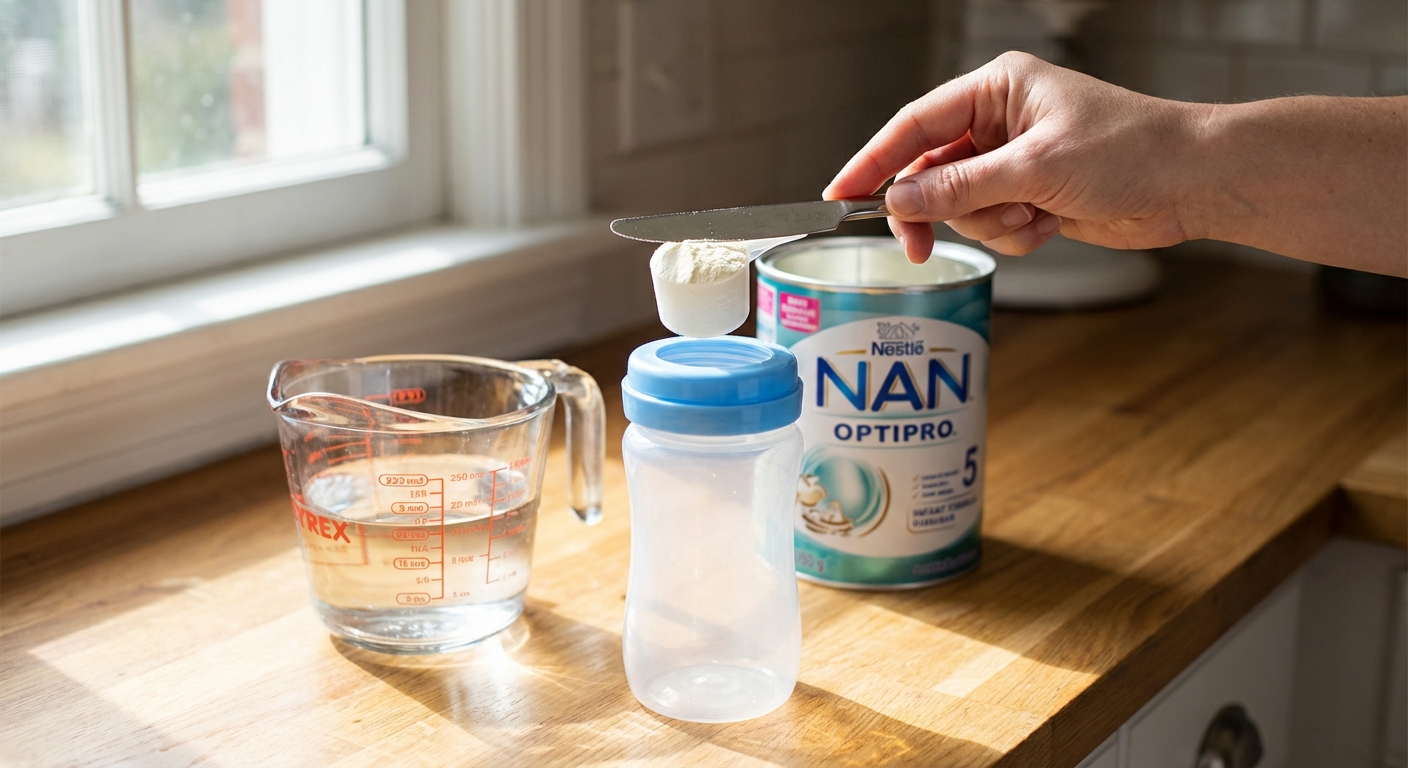
Formula types: quick prep notes
Different formula forms have different “rules.” Always read your specific label, but these basics prevent a lot of mistakes:
- Powder: Measure water first, then add scoops. Mix well. (Remember: not sterile.)
- Liquid concentrate: Must be mixed with the correct amount of water.
- Ready-to-feed: Do not add water. Pour and feed (or pour and refrigerate as directed).
How to avoid tummy upsets
1) Pace the bottle
Some babies gulp formula faster than they nurse, which can mean more air and more spit-up. Try paced bottle-feeding:
- Hold baby fairly upright.
- Keep the bottle more horizontal so milk flows slower.
- Pause every few minutes to burp.
- Let baby take short breaks like they would at the breast.
2) Burp more often
During transitions, I recommend burping at least every 2 to 3 ounces, or halfway through the bottle, plus at the end.
3) Match nipple flow to your baby
If the flow is too fast, you can see gulping, coughing, leaking milk, and extra spit-up. If it is too slow, baby may get frustrated and swallow more air. Many babies do well staying on a slower flow longer than the package suggests.
4) Keep everything else stable
If you change formula, bottle type, nipple flow, and feeding schedule all at once, it is hard to know what is helping or hurting. Change one thing at a time when possible.
5) Expect poop changes (and know what is normal)
Formula-fed poop often becomes:
- More pasty or peanut-butter-like
- More strongly scented
- Tan, yellow-brown, or brown
That can be normal. What we do not love is hard, dry pellets, obvious pain with every stool, or blood in the stool.
Common problems and what to do
Gas and fussiness
- Slow down feeds with paced bottle-feeding.
- Burp frequently.
- Try bicycle legs and tummy time when awake.
- Consider staying at the current breastmilk-to-formula ratio for a few more days.
Constipation
First, make sure it is truly constipation. Going less often can be normal if stools are still soft.
Signs of constipation include hard stools, pellet-like stools, or significant straining with discomfort.
- Double-check formula mixing accuracy.
- Offer feeds on schedule and watch wet diapers.
- For babies over about 4 to 6 months, some clinicians may recommend small amounts of water or pear or prune juice for constipation. Do not start this without guidance, and avoid making juice a routine.
- If constipation is significant or persistent, ask your pediatrician whether a different formula type is appropriate.
Spit-up
- Keep baby upright for 15 to 20 minutes after feeds.
- Avoid tight diapers and waistbands after feeding.
- Offer slightly smaller, more frequent feeds if your baby seems to overfill.
Rash, hives, wheezing, vomiting, or blood in stool
These can be signs of allergy or another medical issue. Stop and call your pediatrician. Seek urgent care immediately for breathing trouble, swelling of lips or face, or repeated projectile vomiting with lethargy.
Is baby getting enough?
During a switch, it is easy to second-guess everything. A few practical signs you are generally on track:
- Wet diapers stay steady. If wet diapers drop noticeably, call your pediatrician.
- Baby is alert at least part of the day and not too sleepy to feed.
- Weight gain stays on their curve. This matters more than a fussy day or two.
If you are not sure what is normal for your baby’s age, it is always okay to ask your pediatrician for “what should I watch for this week?”
How long to trial a formula
Unless your baby is having red-flag symptoms, it is reasonable to give a new formula about 1 to 2 weeks to see how baby settles. Many babies have a bumpy first few days and then do fine.
If symptoms are severe, your baby is not feeding well, wet diapers drop, or you are seeing blood in stool, do not wait it out. Call your pediatrician.
Storing and warming bottles
- Prepared formula can often be stored in the refrigerator for up to 24 hours if refrigerated promptly and kept at 4°C (40°F) or colder, but always follow the label directions for your specific product and form (powder, concentrate, or ready-to-feed).
- If prepared formula (or breastmilk) sits out at room temperature, follow your product guidance and food-safety rules. When in doubt, discard.
- Once baby starts drinking from a bottle, use it within 1 hour. Bacteria can grow after saliva mixes in.
- To warm, use a bowl of warm water or a bottle warmer. Avoid microwaves because they can create hot spots.

If you are weaning from nursing
If you are switching because breastfeeding is not working for you anymore, I want you to hear this clearly: feeding your baby is the goal. Full stop.
For your comfort and to reduce engorgement, many parents do best dropping one nursing or pumping session every few days rather than stopping abruptly. Watch for signs of mastitis like fever, chills, flu-like feelings, or a hot painful red area on the breast, and call your clinician if those show up.
Vitamins and iron: a quick note
This is a common question during the switch. Infant formula is fortified with iron and vitamin D. Many breastfed babies take vitamin D drops, and some take supplemental iron depending on age and risk factors. If you are stopping breastfeeding or reducing it significantly, ask your pediatrician whether you should continue vitamin D (or iron) supplements based on your baby’s age, how much formula they take, and their medical history.
When to call the pediatrician
Trust your gut. You do not need to wait for things to become an emergency to ask for help. Call your baby’s pediatrician if you notice:
- Fewer wet diapers than usual or signs of dehydration (dry mouth, no tears when crying, sunken soft spot)
- Blood in the stool or black stools (outside of meconium in the first days of life)
- Persistent vomiting, especially green vomit or projectile vomiting
- Wheezing, hives, swelling, or any breathing difficulty
- Poor weight gain or a baby who is too sleepy to feed
- Inconsolable crying that feels different than typical fussiness
Quick checklist
- Pick one iron-fortified infant formula to start.
- Transition gradually if possible.
- Always mix formula with water first, then add breastmilk if combining.
- Measure carefully and use the scoop that came with that formula.
- Use paced bottle-feeding and burp often.
- Expect small poop changes, but know the red flags.
If you want, tell me your baby’s age and what your current feeding looks like (exclusive nursing, pumping, combo feeding, etc.), and I can suggest a transition schedule that fits your day-to-day.