Teething Rash and Drool Rash in Babies

Sarah Mitchell
Sarah Mitchell is a Registered Pediatric Nurse and a mother of three who has spent over a decade helping families navigate the beautiful, chaotic early years of childhood. She combines evidence-based medical knowledge with real-world parenting experience to offer practical, compassionate advice. At Awesome Parent, Sarah's mission is to help exhausted parents find solutions, trust their instincts, and finally get some sleep.
If your baby is teething, it can feel like drool is suddenly everywhere. Cheeks, chin, neck folds, even the top of the chest. And then comes the “bonus feature” no one asked for: a red, bumpy rash that can seem to show up overnight.
In pediatric triage, drool rash was one of the most common “Is this normal?” questions I heard. And as a mom, I can confirm it always looks angrier at 2:47 AM under the hallway nightlight.
The good news: most teething-related drool rash is harmless and very treatable at home with gentle care and a solid moisture barrier. The important part is knowing when it might actually be something else, like eczema, yeast, allergic irritation, or an infection that needs a clinician’s eyes.
Quick note: this is general information, not a substitute for medical advice. When you’re unsure, it’s always appropriate to check in with your pediatrician.
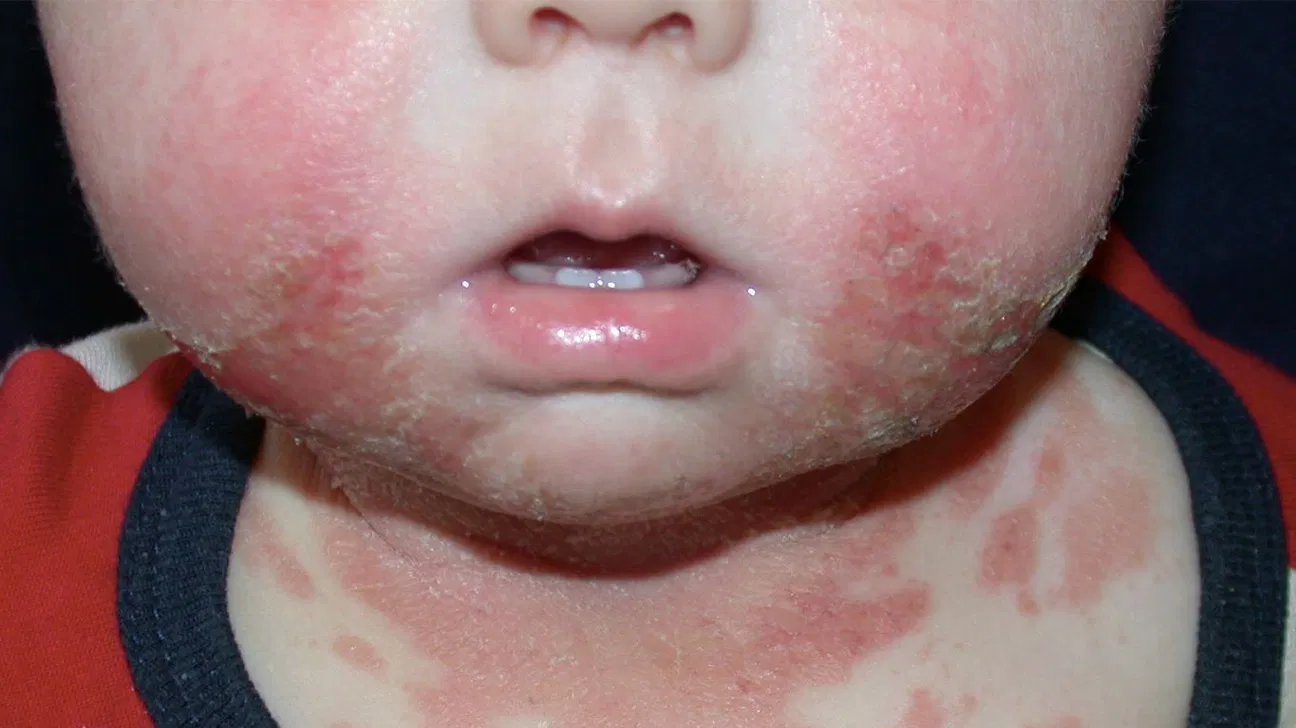
What teething drool rash looks like
Drool rash is a type of irritant contact dermatitis. Translation: saliva, moisture, and friction irritate the skin barrier, especially when a bib or shirt rubs the same spot all day.
Common drool rash clues
- Location: around the mouth, chin, jawline, cheeks, neck folds, and sometimes upper chest.
- Appearance: pink to red patches, tiny bumps, and skin that looks chapped or shiny. It can also look slightly raw in the deepest folds.
- Pattern: often worse after naps, feedings, car rides, or any time drool sits on the skin.
- Feel: may be tender or itchy, so baby rubs their face on you, the mattress, or their own hands.
Drool rash can flare fast, but it also tends to improve quickly once the skin stays drier and protected.
Drool rash vs eczema vs yeast
Many rashes overlap, and babies love to keep us humble. Here are the patterns I use to help parents sort out common look-alikes.
Drool rash (irritant rash)
- Where: chin, around lips, cheeks, neck folds.
- What it looks like: redness, fine bumps, chapping, sometimes mild peeling.
- Key clue: tied to wetness and wiping. Often improves with barrier ointment and less friction.
Eczema (atopic dermatitis)
- Where: cheeks and scalp in infants, also arms and legs later. It can be anywhere, not just “drool zones.”
- What it looks like: dry, rough patches that can look scaly. Often very itchy.
- Key clue: skin is generally dry overall, and flares might not match drool exposure. Family history of eczema, asthma, or allergies can be a hint, but it’s not required.
Yeast (candida) in folds
- Where: warm, moist folds like the neck, under the chin, armpits, groin, diaper area.
- What it looks like: beefy red rash that can look “wet,” often with small red “satellite” bumps nearby.
- Key clue: persists despite barrier care, loves moisture, and can spread within folds. It often looks more intensely red than simple irritation.
Impetigo (bacterial skin infection)
- Where: around mouth and nose is common.
- What it looks like: oozing spots that form honey-colored crusts.
- Key clue: crusting, spreading, and contagiousness. It needs medical treatment.
Allergic or irritant reaction (contact dermatitis)
- Where: wherever a new product touches, often cheeks, around the mouth, neck, or chest.
- What it looks like: redness, bumps, sometimes a sharper border that matches the contact area.
- Key clue: started after a switch in wipes, soap, lotion, laundry detergent, bib material, or a new sunscreen. If this is on your radar, going back to fragrance-free basics can help.
Hand, foot, and mouth disease (viral)
- Where: can include mouth sores plus rash on hands, feet, diaper area, and sometimes the trunk.
- What it looks like: small spots or blisters, often with fever or fussiness.
- Key clue: the combo of fever plus mouth sores or a more widespread rash. Teething age and viral illness age overlap a lot, so they can show up around the same time.
If you’re on day 3 to 5 of solid drool-rash care and it isn’t improving at all, or it’s getting worse, that’s a good time to message your pediatrician. Persistent rashes deserve a second look.
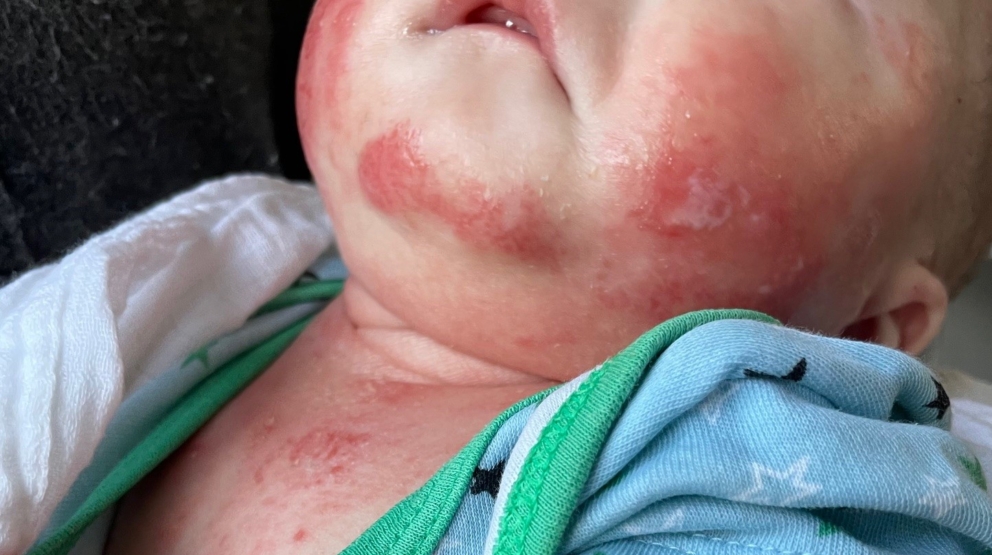
Daily care that helps
Drool rash improves when you do three things consistently: reduce wetness, reduce friction, and protect the skin barrier.
1) Blot, don’t scrub
Frequent wiping can keep the area inflamed. Instead:
- Blot drool gently with a soft cloth.
- If you need to clean, use lukewarm water and a very soft washcloth, then pat dry.
- Avoid scented wipes or harsh soaps on the face and neck.
2) Keep bibs and shirts dry
- Use absorbent bibs and change them often.
- If the rash is on the chest, swap out damp shirts quickly.
- Wash bibs and clothes with a fragrance-free detergent if you can, since leftover fragrance can keep sensitive skin irritated.
3) Use a barrier early and often
Think of barrier ointment like a raincoat. It doesn’t “treat” teething, but it helps keep saliva from sitting directly on skin.
- Apply a thin layer to clean, dry skin.
- Reapply after meals, naps, and baths.
- If you’re wiping frequently, you’ll likely need to reapply more often too.
4) Keep bath time gentle
- Short baths with lukewarm water.
- Use a fragrance-free, gentle cleanser only where needed.
- Pat dry and apply barrier within a few minutes.
5) Clean the things that rub
- Wash pacifiers, teethers, and teether straps regularly.
- If a pacifier or strap is constantly rubbing one spot, take breaks when you can and keep that area protected with a barrier.
Barrier options
For most drool rashes, you’re looking for bland, fragrance-free products. Here’s how the common options stack up.
Petrolatum (petroleum jelly)
- Best for: classic drool rash and chapped skin.
- Why: strong barrier, low irritation risk.
- How to use: thin layer multiple times per day.
Zinc oxide paste
- Best for: very irritated skin, raw-looking patches, and neck fold rashes where moisture is constant.
- Why: excellent barrier, stays put longer.
- Tip: apply gently. If it’s thick, don’t scrub it off. Let it wear away and reapply.
Fragrance-free moisturizing cream
- Best for: a baby who also has eczema or overall dry skin.
- Why: supports the skin barrier, reduces dryness and itch.
- Tip: cream first, then a barrier ointment on top for drool zones.
What to avoid on drool rash
- Heavily scented lotions and products with lots of botanical additives. “Natural” can still irritate.
- Powders (talc or cornstarch). They can irritate lungs if inhaled, clump in moist folds, and cornstarch can potentially feed yeast in those warm, damp areas.
- Essential oils on baby skin.
- Topical anesthetics for teething discomfort on the skin or gums unless your pediatrician specifically recommends them.
If you’re unsure what to use, start with plain petrolatum. Simple is often best for irritated baby skin.

When it’s stubborn
If you’re doing the basics and it’s not improving, a few common “sneaky” issues may be getting in the way.
Common reasons it lingers
- Constant wetness: teething can be a drool marathon. More bib changes and more barrier can make a big difference.
- Friction: pacifiers, teether straps, shirt collars, and scratchy bib seams can keep skin inflamed.
- Neck folds: moisture gets trapped. Dry the fold fully and use a barrier that stays in place.
- Underlying eczema: if your baby’s cheeks are dry and rough beyond the drool zone, ask about an eczema plan.
- Yeast: if it looks intensely red in folds with small satellite bumps, it may need an antifungal your clinician recommends.
- New irritants: if you recently changed wipes, soap, lotion, detergent, or bibs, consider switching back to fragrance-free basics and see if the skin calms down.
As a general cautious-care rule: if a rash isn’t clearly improving after several days of good home care, check in with your pediatrician. A quick photo message through the patient portal can save you a lot of trial and error.
Red flags
Most drool rashes are mild, but broken skin plus constant moisture can invite infection. Call your pediatrician or seek urgent care depending on severity if you notice any of the following.
Signs of possible infection
- Honey-colored crusting, oozing, or blisters.
- Pus or increasing drainage.
- Rapid spreading redness beyond the drool area.
- Warmth, swelling, or increasing pain to touch.
- Red streaking away from the rash.
- Fever or your baby seems notably unwell.
Other reasons to check in
- Rash involving the eyes or eyelids.
- Rash that looks like open sores or is bleeding.
- Severe itching that disrupts sleep and feeding.
- Your baby is under 12 weeks old with a new, worsening rash.
- You suspect an allergic reaction (hives, facial swelling, vomiting, trouble breathing). Seek emergency care for breathing trouble or swelling of lips and tongue.
Trust your instincts here. If your baby’s rash is changing quickly or your baby seems off, it’s always appropriate to call.
Simple routine
If you want a simple plan (because nobody has time for a 14-step skincare routine for a drooly human), try this for the next few days:
- Morning: rinse or wipe gently with water if needed, pat dry, apply petrolatum or zinc oxide to chin and neck folds.
- After feeds: blot drool and milk residue, reapply barrier.
- Midday: swap bibs and shirts when damp, check neck folds, add barrier if skin looks pink.
- Bath: gentle cleanse, pat dry well, barrier right away.
- Overnight: use a fresh dry onesie or sleep sack and protect skin with barrier before sleep. No bibs, teether straps, or neckwear in the crib. Follow safe sleep guidance from your pediatrician.
If your baby’s skin is improving but still looks a little pink, that’s normal. The goal is steady improvement, not instant perfection.
Frequently asked questions
Does teething cause a rash?
Teething usually doesn’t directly cause rashes all over the body. What teething does commonly cause is extra drool, and drool can irritate skin where it sits and rubs. If your baby has a widespread rash, fever, or seems sick, it may be unrelated to teething. Viral illnesses are common at the same ages as teething, so it’s worth a check-in.
Can I use diaper rash cream on the face?
Many zinc oxide products can be used as a barrier on the chin and around the mouth area, but keep it to a thin layer on intact skin and avoid getting it into the mouth or eyes. Choose fragrance-free options when possible, and stop if you notice more irritation. If the skin is broken or the rash is severe, ask your pediatrician what they recommend.
Should I use hydrocortisone?
For true eczema flares, clinicians sometimes recommend a very short course of low-strength hydrocortisone (often 0.5 to 1 percent). But don’t start steroid cream on a baby’s face without guidance. Facial skin is sensitive, and infections can look like eczema. Avoid using it near the eyes unless you’re specifically instructed to. When in doubt, send a photo to your pediatrician.
How long does drool rash last?
With consistent barrier protection and less friction, many drool rashes often start improving within a few days. If it isn’t improving after several days, or it’s worsening, check in to rule out yeast, bacterial infection, or a contact reaction.
The calm takeaway
Drool rash is common, irritating, and usually very fixable. Keep the skin clean, dry, and protected with a simple barrier. If the rash is spreading, crusting, oozing, or your baby seems unwell, skip the guesswork and call your pediatrician. You’re not overreacting. You’re doing exactly what good parents do: noticing changes and getting your baby comfortable.