A calm, parent-friendly guide to scrotal swelling: communicating vs non-communicating hydroceles, how hernia bulges change with crying, and emergency warning...
Testicular Torsion in Boys: When Sudden Scrotal Pain Is an Emergency

Sarah Mitchell
Sarah Mitchell is a Registered Pediatric Nurse and a mother of three who has spent over a decade helping families navigate the beautiful, chaotic early years of childhood. She combines evidence-based medical knowledge with real-world parenting experience to offer practical, compassionate advice. At Awesome Parent, Sarah's mission is to help exhausted parents find solutions, trust their instincts, and finally get some sleep.
If your son has sudden testicle or scrotum pain, I want you to hear this clearly: this can be an emergency that needs surgery within hours. Testicular torsion is one of those rare parenting moments where “wait and see” is not the safe move.
I know that is scary. It is also empowering, because when families act fast, we can often save the testicle and prevent long-term problems.
What is testicular torsion?
Testicular torsion happens when a testicle twists on the spermatic cord, the “tether” that carries blood vessels to the testicle. That twist can cut off blood flow.
No blood flow means the tissue can be injured quickly. That is why torsion is treated like a race against the clock.
How fast is “fast”?
Doctors aim to treat torsion as soon as possible, with the best chance of saving the testicle in the first 4 to 6 hours after symptoms start. Sometimes the testicle can still be saved later, but the odds drop quickly as time passes. So the safest plan is simple: go to the ER immediately.
Who gets torsion?
Torsion can happen at any age. It is most common in:
- Newborns (perinatal torsion)
- Boys in puberty and the teen years (roughly ages 12 to 18)
It can also happen in younger school-age kids, so do not rule it out just because your child is “too young.”
It can happen during sports, sleep, or a totally normal day. Many kids do not have a clear injury or trigger.
Symptoms parents should not ignore
Torsion usually announces itself loudly. These are the classic red flags:
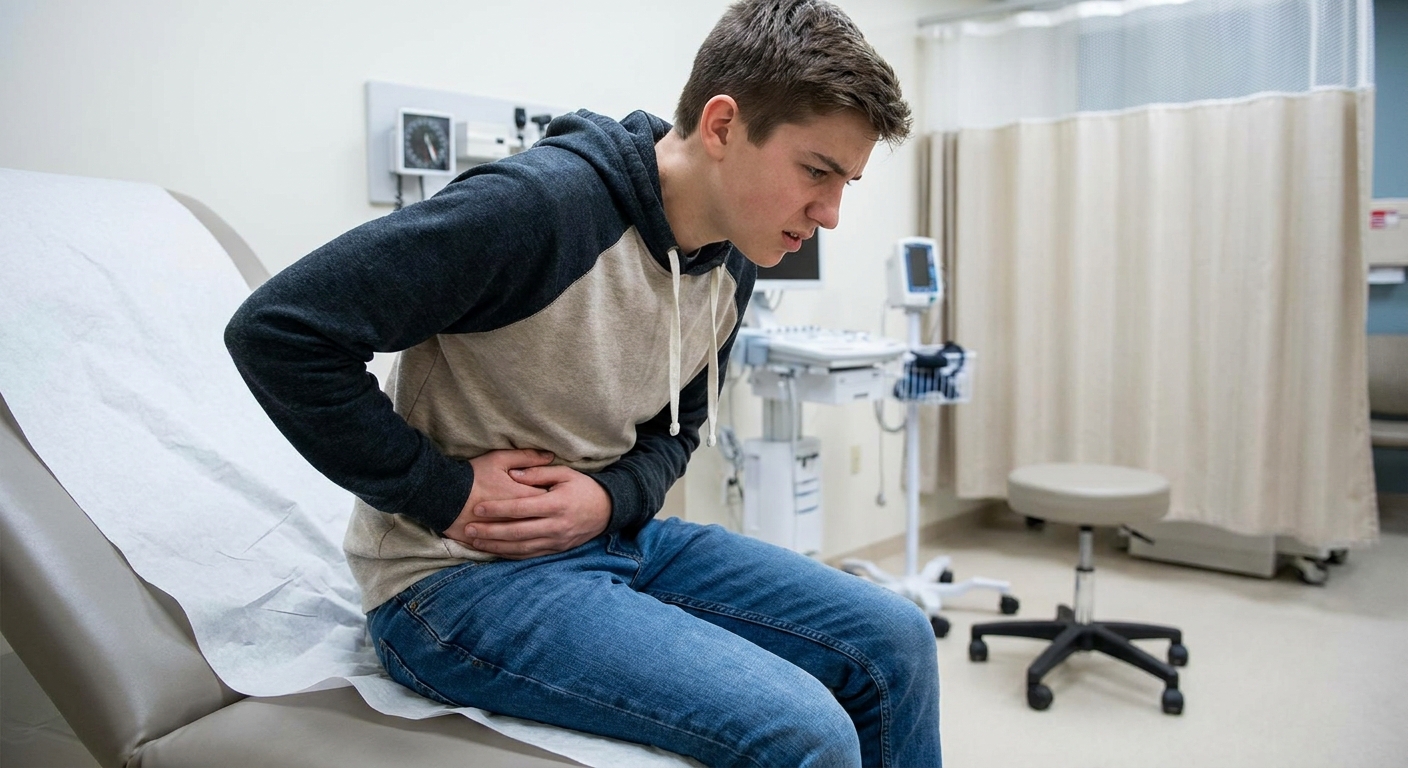
- Sudden, severe pain in one testicle or one side of the scrotum
- Scrotal swelling or redness
- Nausea or vomiting (very common)
- Lower belly pain instead of, or along with, scrotal pain
- One testicle sitting higher than the other or at a different angle
- Pain that wakes your child from sleep
Some boys feel embarrassed and try to tough it out. You can normalize it with something like: “You are not in trouble. This is a body part like any other. If it hurts, we get help.”
What to do right now
If torsion is even a possibility, the safest action is the same every time.
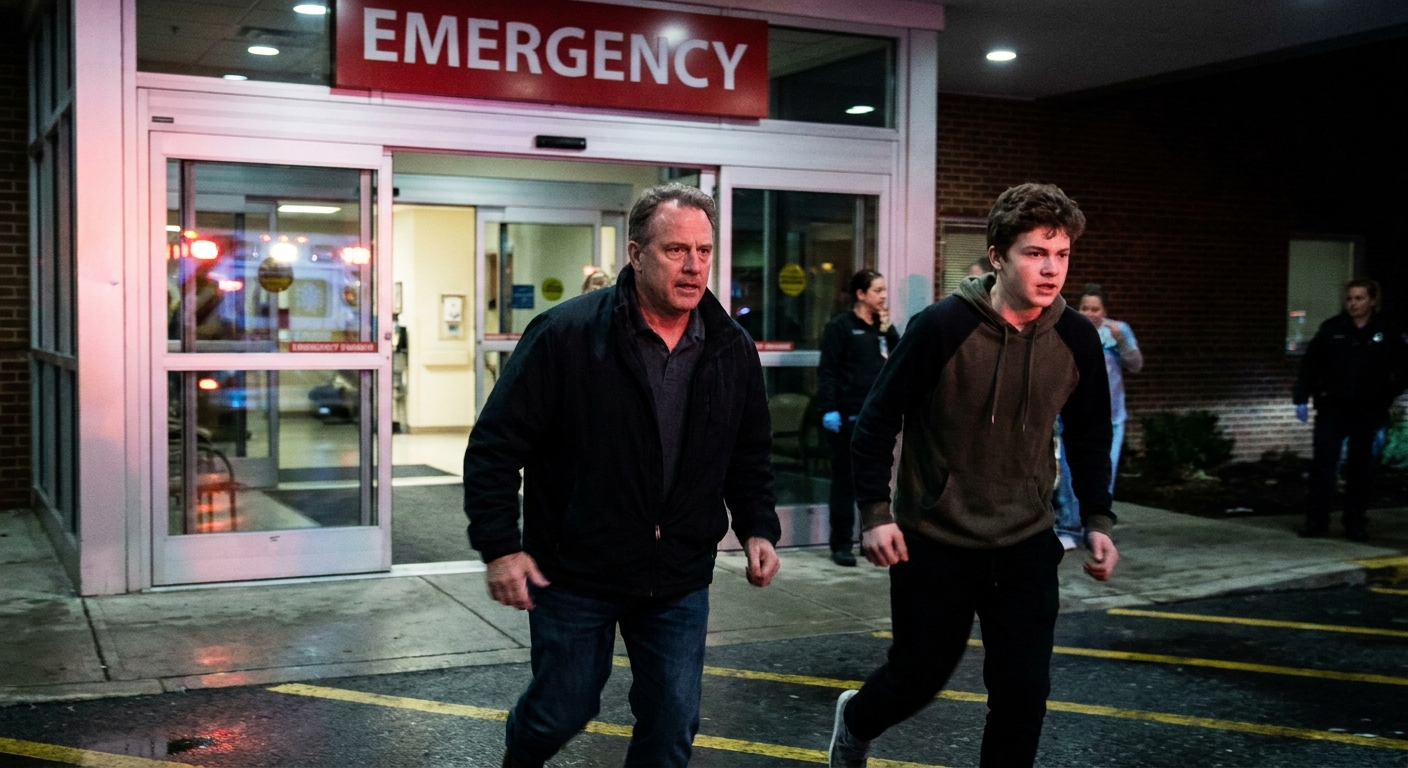
Go to the ER now
- Do not drive around to multiple clinics. Many urgent care centers cannot do the necessary imaging or arrange emergency surgery quickly.
- Do not wait for the pediatrician to open. Nighttime and weekends are common times torsion shows up.
- Call 911 if your child has severe pain, is fainting, or you cannot safely transport them.
Skip delays at home
It is normal to think about a bath, ice pack, or pain medicine. The key point is: do not delay care to try home treatments.
- Do not try to “massage” or reposition anything.
- Do not use heat and assume it is a pulled muscle.
- Avoid food or drink if you can, because surgery and anesthesia may be needed. If your child needs an essential medication, or you are traveling a long distance and they truly need sips for comfort, ask EMS or the ER team for guidance.
If you already gave an age-appropriate dose of pain medicine, still go now. Tell the ER staff what you gave and when.
What will the ER do?
The ER team will focus on one thing: Is blood flow to the testicle threatened?
What to expect:
- Quick history and exam of the abdomen and scrotum
- Ultrasound with Doppler in many cases to check blood flow
- Immediate urology consult if torsion is suspected
Sometimes, if the symptoms are very convincing, a surgeon may recommend going straight to the operating room rather than waiting for imaging. That is not an overreaction. That is time-sensitive medicine. Even when an ultrasound is available, it is not perfect, and doctors may prioritize treatment when clinical suspicion is high.
If it is torsion, what is the treatment?
The standard treatment is surgery to untwist the testicle and then secure it so it cannot twist again. Usually the surgeon also secures the other testicle as prevention, because the same anatomy can exist on both sides.
If blood flow has been cut off too long, the testicle may not survive and may need to be removed. I know that sentence can land hard. The reason we push the ER message so strongly is to reduce the chance of that outcome.
What about long-term effects?
If one testicle is healthy, most boys still go through normal puberty and can have normal fertility later. Your urologist will guide follow-up and answer the questions that matter most for your child.
What is recovery like?
Many kids go home the same day after surgery. Expect some soreness and a period of limited activity. Your surgeon will give specific instructions for sports, school, and bathing.
Other causes of scrotal pain
There are other reasons boys have groin or scrotal symptoms. Some are urgent, some are less so. The tricky part is that at home, they can look similar, which is why sudden pain always deserves fast evaluation.
Torsion vs. epididymitis
Epididymitis is inflammation or infection of the epididymis (the coiled tube behind the testicle). Pain can be significant, but it is often more gradual than torsion. Some boys also have fever, urinary burning, or urinary frequency. Treatment depends on the cause and may include antibiotics.
Parents often hear this diagnosis after torsion is ruled out. It still needs medical care, but the “act this minute” urgency is different from torsion.
Torsion vs. torsion of an appendage
Torsion of the appendix testis (a small, harmless bit of tissue) can cause sudden scrotal pain and tenderness. It can mimic torsion, especially early on. The good news is it usually does not require surgery, but the important point is this: you cannot safely tell the difference at home, so it still deserves prompt evaluation.
Torsion vs. hernia
An inguinal hernia often shows up as a bulge in the groin or scrotum that may come and go, especially with crying, coughing, or straining. It might be uncomfortable, or it can be painless.
Emergency signs for hernia include severe pain, vomiting, a firm tender bulge that will not go back in, or skin color changes over the bulge. Those signs also warrant the ER.
We cover hernias in detail on Awesome Parent in a separate article, but the takeaway here is: a new painful scrotum could be torsion or a trapped hernia, and both can be emergencies.
Torsion vs. undescended testicle
An undescended testicle is usually noticed as a testicle that is not in the scrotum, often without sudden pain. It is typically identified in infancy or early childhood during well checks.
It is important and needs medical follow-up, but it usually is not the same “drop everything right now” situation as torsion. That said, if a child with an undescended testicle develops sudden groin pain, that is still a reason to seek urgent evaluation.
Pediatrician or ER?
Go straight to the ER for:
- Sudden testicle or scrotum pain, especially on one side
- Scrotal swelling or redness with pain
- Nausea or vomiting with groin or testicle pain
- A testicle that looks higher than usual or “twisted”
- Severe pain after even minor groin trauma
Call the pediatrician for guidance (same day) if:
- Mild, gradual discomfort with no swelling, no vomiting, and your child looks well
- Questions about an undescended testicle or a painless scrotal difference
If you are unsure, err on the side of safety. In triage, we would much rather evaluate a child and rule torsion out than see a child come in too late.
Common parent questions
Can testicular torsion come and go?
Yes. Some boys have intermittent torsion where pain suddenly starts and then improves. That can feel confusing and can tempt families to stay home. But intermittent torsion can become complete torsion, so it still needs urgent evaluation.
Will my child be embarrassed?
Many are. You can help by staying calm and matter-of-fact. ER teams evaluate scrotal pain often. Privacy is taken seriously, and the goal is to get your child comfortable and safe quickly.
Could it just be “growing pains” or a pulled muscle?
Groin strains happen, especially in sports. But a strain usually follows a clear activity and does not typically cause a suddenly swollen scrotum or vomiting. When the pain is sudden and located in the testicle or scrotum, torsion must be considered first.
The bottom line
Sudden scrotal or testicle pain in boys is an emergency until proven otherwise. If you suspect torsion, go to the ER right away. You are not being dramatic. You are being protective, and timing truly matters.
If you are reading this in the middle of the night with a kiddo in pain, take this as your sign to stop Googling and head in. I will be rooting for you from afar, coffee in hand.
Sarah Mitchell
Sarah Mitchell is a Registered Pediatric Nurse and a mother of three who has spent over a decade helping families navigate the beautiful, chaotic early years of childhood. She combines evidence-based medical knowledge with real-world parenting experience to offer practical, compassionate advice. At Awesome Parent, Sarah's mission is to help exhausted parents find solutions, trust their instincts, and finally get some sleep.