The Dream Feed

Sarah Mitchell
Sarah Mitchell is a Registered Pediatric Nurse and a mother of three who has spent over a decade helping families navigate the beautiful, chaotic early years of childhood. She combines evidence-based medical knowledge with real-world parenting experience to offer practical, compassionate advice. At Awesome Parent, Sarah's mission is to help exhausted parents find solutions, trust their instincts, and finally get some sleep.
If you have ever stared at your baby monitor at 10:30 PM thinking, “If you wake up in 45 minutes, I may simply evaporate,” you are my people. The dream feed is one of those old-school, surprisingly practical tricks that can help some babies stretch that first chunk of night sleep. It is not magic. It is not mandatory. But when it works, it can feel like winning the tired-parent lottery.
Let’s walk through what a dream feed is, how to do it safely, the most common ways it goes sideways, and how to know when your baby is ready to drop it.

What is a dream feed?
A dream feed is a feeding you offer while your baby is still mostly asleep, usually right before you go to bed. The goal is to top off their tank so they (hopefully) sleep longer before their next wake-up.
In real life, it often looks like this: you scoop up a drowsy baby around 10 to 11 PM, offer breast or bottle with minimal stimulation, and then put them back down without fully waking them.
What a dream feed is not
- Not a feed you do because your baby is hungry right now and crying.
- Not a replacement for safe sleep or feeding cues earlier in the day.
- Not a guarantee your baby will sleep through the night.
Who is a dream feed for?
Dream feeds tend to work best for babies who:
- Are in the early months when longer stretches are starting to emerge (often around 6 weeks to 6 months, but it varies a lot by baby)
- Have a fairly predictable first stretch of night sleep
- Often wake up “just once” after you go to bed, typically between midnight and 2 AM
- Can transfer back to the crib or bassinet relatively easily
It may be less helpful if your baby is already waking frequently for reasons that are not hunger (like needing help connecting sleep cycles, reflux discomfort, or a too-bright bedtime environment).
Safety and readiness
If your baby was born premature, has a medical condition affecting feeding or growth, or you have been instructed to feed on a strict schedule for weight gain, check in with your pediatrician before changing nighttime feeds. And if your baby still needs scheduled overnight feeds for medical reasons, a dream feed is optional at best, and sometimes not appropriate.
When to do a dream feed
The classic timing is between 10 PM and 11 PM, or roughly 2 to 3 hours after bedtime. Many families also do it simply right before the adult bedtime.
Here is the reasoning: you want to offer the feed before your baby naturally wakes up hungry. If you wait until they are already waking, you are just doing a normal night feed.
Timing is individual, though. Some babies get more disrupted if you catch them in a deeper sleep window. If the dream feed consistently backfires (full wake-ups, lots of resettling), try shifting it earlier by 30 to 60 minutes or skipping it entirely.
Timing examples
- Bedtime 7:00 PM → dream feed around 9:30 to 10:30 PM
- Bedtime 8:00 PM → dream feed around 10:00 to 11:00 PM
If you are not sure, start with the time you normally go to bed. Consistency helps you see whether it is actually improving sleep.
How to do a dream feed
Think “sleepy and boring.” The more your baby believes it is still nighttime, the better.
1) Set the scene
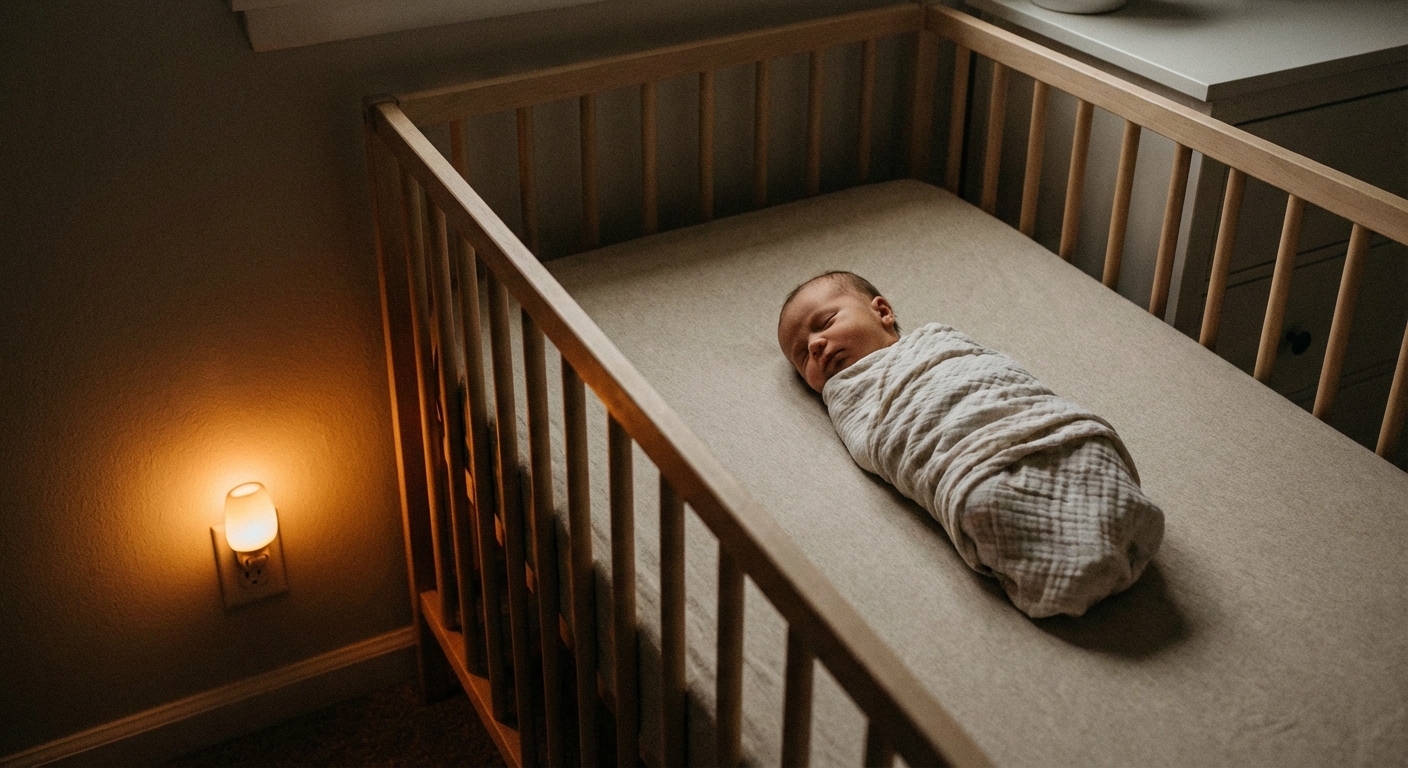
- Keep lights dim (use a nightlight or very low lamp)
- Keep sound low and voices off
- Skip diaper changes unless necessary (more on that below)
2) Feed in a safe spot
Choose a spot where you can stay fully awake and keep your baby positioned safely (support head and neck, keep the airway clear). Avoid feeding on a couch or cushy chair if you are at risk of dozing off. If you think you might fall asleep, it is safer to do a regular wake-and-feed plan that keeps you alert, or ask for help.
3) Pick up gently, keep them drowsy
Lift slowly and support their head and neck. Many babies will root or latch even with eyes closed.
4) Offer the feed
- Breastfeeding: offer a calm latch, let them take what they want, and avoid “waking techniques” like tickling feet.
- Bottle-feeding: use paced feeding when possible. Keep the bottle just tipped enough to keep the nipple filled (not fully vertical), which can help reduce air swallowing.
Do not stress about a perfect amount. Some babies take a full feed. Others take a small “top off” and that can still be useful.
5) Burp briefly if needed
Some babies can go right back down without a burp. Others will wake 20 minutes later with trapped air and strong opinions about it. If your baby tends to be gassy, do a short, gentle burp.
6) Put baby back down
Place your baby back in their safe sleep space (bassinet or crib) on their back, ideally still drowsy or asleep. Keep the sleep space clear of loose bedding, pillows, and positioners.
Common mistakes
Mistake 1: Waking baby all the way up
If your baby pops awake like it is party time, the dream feed can backfire and lead to a longer wake window.
Fix: dim the lights more, avoid talking, keep movements slow, and skip diaper changes unless there is poop or a leak.
Mistake 2: Doing it too late
If you do the dream feed after your baby has already partially woken, or you hit a deep sleep phase that does not like being interrupted, it may not extend sleep.
Fix: move it 30 to 60 minutes earlier for a few nights and reassess.
Mistake 3: Expecting it to solve all night waking
Some babies wake because of habit, sleep associations, temperature changes, illness, developmental leaps, or plain old baby temperament, not hunger.
Fix: use the dream feed as one tool. Make sure daytime feeds are solid, bedtime routine is consistent, and the sleep environment is supportive (cool, dark, steady white noise if you use it). And remember: some night waking can be completely normal even when intake is great.
Mistake 4: Pushing ounces
Forcing a bigger feed can increase spit-up, discomfort, and wake-ups.
Fix: let your baby lead. Offer the feed, then stop when they slow down, unlatch, or refuse.
Mistake 5: Creating a new wake-up
Occasionally, parents add a dream feed and suddenly the baby starts waking at that time even on nights you skip it.
Fix: if that happens consistently for 4 to 7 nights, the dream feed may not be a fit right now. It is okay to stop.
Dream feed FAQ
Will a dream feed help my baby sleep through the night?
Sometimes it helps lengthen the first stretch and reduce one wake-up. “Sleeping through” varies by baby and age, and many babies still need night feeds well beyond the early months. A dream feed is more about buying you a longer initial block of sleep, which can be life-changing even if there is still a 3 AM feed.
Is a dream feed the same as a scheduled night feed?
Not quite. A dream feed is typically done before the baby wakes, with the baby mostly asleep. A scheduled night feed might involve waking a baby on purpose at a specific time for medical or weight-gain reasons. If you have been told to wake to feed, follow your clinician’s guidance.
Should I change the diaper during the dream feed?
Usually, no. Diaper changes are the number one way to accidentally turn your dream feed into a wide-awake hangout session.
- Change if there is poop, a leaking diaper, or your baby is very prone to rashes.
- Skip if it is just a wet diaper and your baby is comfortable.
Can I dream feed if my baby is breastfed?
Yes. Many breastfed babies do great with dream feeds. If your baby tends to do short, snacky feeds at night, you can try gentle breast compressions to help milk flow without waking them.
One expectation setter: for some nursing parents, adding a dream feed feels like it increases night nursing overall (especially if baby starts expecting it). For others, it replaces a later wake-up and everyone sleeps more. If it is not a clear win after a week, you are allowed to ditch it.
What if my baby spits up after a dream feed?
Small spit-up can be normal, especially if your baby stays sleepy and takes in air.
Some babies do better with a brief upright hold after feeding (a few minutes), plus a gentle burp if needed. But if staying upright fully wakes your baby, it might not be worth it. Follow your pediatrician’s guidance if reflux is a concern.
If spit-up is forceful, painful, or affecting weight gain, talk with your pediatrician.
How long to try it
Give it 4 to 7 nights with consistent timing.
It is “working” if you see one or more of these:
- Your baby’s next wake-up shifts later by 1 to 3 hours
- Night wakings decrease by one
- You get a more predictable first stretch of sleep
If nothing changes after a week, or sleep gets worse, you can confidently call it and move on. That is not failure. That is good data.
When to stop
Many families drop the dream feed sometime in the later infant months, but the right time is when it stops helping or starts causing more disruption. Some babies still need night feeds beyond this, and that can be normal.
Signs it is time to wean
- Your baby is waking up during the dream feed and has trouble going back down
- They start taking less and less (a few sips) and do not seem to need it
- Your baby sleeps the same whether you do it or not
- They are consistently sleeping past the time they used to wake hungry
- You feel like you are the one interrupting a good sleep stretch
Daytime intake changes
As babies increase daytime intake with more efficient feeds and, later, solids, many naturally stop needing that late-night top-off.

How to wean
Option 1: Reduce the amount
This is often the smoothest approach.
- Bottle: decrease by 0.5 to 1 oz every 2 to 3 nights.
- Breast: shorten the feed by 1 to 2 minutes every 2 to 3 nights.
When you are down to a tiny amount, stop entirely.
Option 2: Move it earlier
If the dream feed is bumping into a deep sleep window, you can gradually shift it earlier by 15 to 30 minutes every couple of nights until it blends into the bedtime feed.
What if baby wakes hungry when we stop?
That can happen, especially during growth spurts. If your baby wakes and seems genuinely hungry, feed them. Then reassess in a few nights. Sometimes you pause weaning for a week and try again later.
Troubleshooting
Check daytime feeds
A common reason babies still wake often is that daytime feeds are distracted, short, or spaced too far apart. If daytime intake is light, night calories may stay high.
That said, frequent waking is not always a calorie problem. Development, temperament, and normal sleep cycle changes can all play a role.
Look at bedtime timing
Overtired and undertired babies both wake more. If bedtime is drifting too late, a dream feed may not compensate for a cranky, fragmented night.
Consider reflux or discomfort
If your baby arches, coughs, seems uncomfortable lying flat, or wakes shortly after feeds, talk with your pediatrician. A dream feed can aggravate symptoms for some refluxy babies.
Rule out illness or environment
Stuffy noses, teething discomfort, a cold room at 2 AM, or new developmental skills can all create wake-ups that look like hunger.
When to call the pediatrician
Reach out if you notice:
- Poor weight gain, fewer wet diapers, or concerns about intake
- Persistent vomiting (not just small spit-ups)
- Feeding seems painful, very fussy, or consistently stressful
- Your baby is under 12 weeks and suddenly feeds much less, is hard to wake, seems unusually sleepy or lethargic, has fewer wet diapers, or has a fever
If you are doing everything “right” and you are still exhausted, you are not doing it wrong. Baby sleep is not a character test. It is biology plus temperament plus a dash of chaos.
Bottom line
A dream feed is a low-drama experiment: offer a sleepy feed before you go to bed and see if it buys you a longer stretch of sleep. Keep it dim, quiet, and boring. Give it about a week, then keep it only if it truly helps.
And when it stops working, you can wean it with zero guilt. The best sleep strategy is the one that gets your family the most rest with the least stress.