Thermal Burns and Scalds in Toddlers

Sarah Mitchell
Sarah Mitchell is a Registered Pediatric Nurse and a mother of three who has spent over a decade helping families navigate the beautiful, chaotic early years of childhood. She combines evidence-based medical knowledge with real-world parenting experience to offer practical, compassionate advice. At Awesome Parent, Sarah's mission is to help exhausted parents find solutions, trust their instincts, and finally get some sleep.
If your toddler gets burned, your brain will instantly try to do three things at once: comfort them, assess the damage, and time travel back 10 seconds to prevent it. Take a breath. Most small thermal burns and scalds can be helped a lot by what you do in the first minutes.
This page is about thermal burns and scalds from hot liquids, steam, or hot objects like a pan or curling iron. It is not about sunburn. Sunburn is its own thing and has its own page on Awesome Parent.
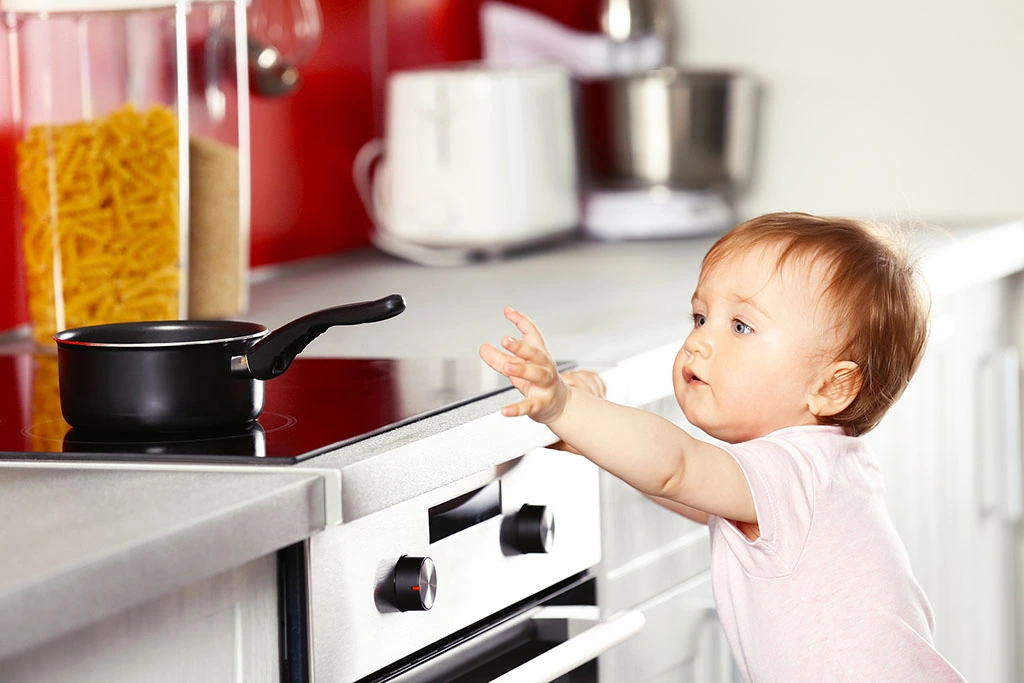
First steps (start within 60 seconds)
1) Stop the burning
Move your child away from the hot liquid, steam, or hot object. Remove the heat source if you can do it safely (turn off the burner, move the pan, unplug the curling iron).
If clothing is on fire (rare, but possible), use stop, drop, and roll, then extinguish with a blanket or water.
2) Cool the burn with cool running water
Use cool (not icy) running water for 20 minutes if you can, as soon as you can. This helps stop heat from continuing to damage the skin and can reduce pain and depth of injury.
- Use a sink faucet, shower, or a cup to pour cool water continuously over the area.
- If the burn is on the face, use cool wet compresses and re-wet them frequently.
- If you cannot do a full 20 minutes right away, do what you can and start again when you can. Even 5 to 10 minutes helps.
3) Remove tight items, but do not peel stuck fabric
While cooling, remove rings, bracelets, shoes, or tight clothing near the burn before swelling starts.
- Do remove clothing that is wet with hot liquid if it comes off easily.
- Do not pull off clothing or diapers that are stuck to the skin. Cut around it and leave the stuck part in place. Pulling can tear damaged skin and make the injury worse.
4) What not to put on a fresh burn
- No ice or ice water. It can cause additional tissue injury.
- No butter, oils, toothpaste, or powders. They trap heat and increase infection risk.
- Avoid topical numbing sprays or creams (especially anything with “-caine” ingredients), particularly for young kids, large areas, or broken skin, unless your clinician specifically recommends it.
Only after cooling, cover the area loosely with a clean, non-stick dressing or plastic wrap (cling film) laid over the burn (not wrapped tightly). Avoid anything that sticks (like adhesive bandages directly over the burn) or fluffy cotton that can shed fibers into open skin. Then decide what level of care you need.
When to call 911 (and when to go now)
Toddlers have smaller bodies and thinner skin, so burns can become serious quickly. Trust your instincts. If your child looks unwell or the burn looks “wrong,” it is absolutely okay to seek urgent help.
Call 911 right away if:
- Your child is having trouble breathing, has wheezing, persistent coughing after exposure to steam or smoke, or you suspect inhalation injury.
- The burn is from electricity (even if the skin looks okay) or a chemical.
- There are signs of shock: pale or clammy skin, weakness, fast breathing, unusual drowsiness, hard to wake, or not acting like themselves.
- The burn is large, rapidly swelling, or looks deep (white, leathery, charred, or numb).
- It involves the face, eyes, inside the mouth, or there is any concern the airway may swell.
Go to the ER or urgent care the same day if:
- The burn is on the hands, feet, genitals, buttocks, or across a major joint (wrist, elbow, knee, ankle).
- The burn is larger than the size of your child’s palm (a practical at-home size check), or multiple smaller burns add up to about that size.
- There are blisters that are widespread, tense, or in a high-risk area (hands, face).
- Your child is under 12 months (always worth a prompt call to a clinician for guidance).
- Pain is not improving with cooling and appropriate dosing of acetaminophen or ibuprofen (if age-appropriate).
- The burn was caused by very hot liquids (like boiling water, hot tea or coffee) and covers the torso, thigh, or multiple areas.
If you are unsure, you can call your pediatrician’s after-hours line or a local nurse advice line. If your child looks ill or the burn is extensive, do not wait for a callback. Go in.
Chemical burns: do this now
Chemical burns need fast action and specific advice. If your child was exposed to a chemical (cleaner, drain opener, pool chemical, battery contents), treat it as urgent.
- Dry chemical on the skin: Brush or wipe it off first (use gloves if possible), then rinse.
- Rinse with running water: Rinse the skin with lots of room-temperature water right away and keep rinsing while you get help.
- Get expert guidance: In the US, call Poison Control at 1-800-222-1222. If your child is having breathing trouble, is very sleepy, or the exposure is severe, call 911.
How to tell how bad a burn might be
Burn depth can be hard to judge at home, even for clinicians, because it can evolve over the first 24 to 48 hours. Here is a parent-friendly guide to what you might see.
Superficial (first-degree)
- Red, warm, tender skin
- No blisters
- Example: brief touch to a warm surface
Usually manageable at home if small and not on a high-risk area.
Partial-thickness (second-degree)
- Blisters, wet or shiny surface
- Very painful
- Can look bright red to pink
Often needs medical evaluation, especially if larger than your child’s palm or on hands, face, or genitals.
Full-thickness (third-degree)
- White, waxy, leathery, or charred appearance
- May be less painful in the center (nerves are damaged)
- Edges may still be very painful
This is an emergency-level burn. Seek immediate care.
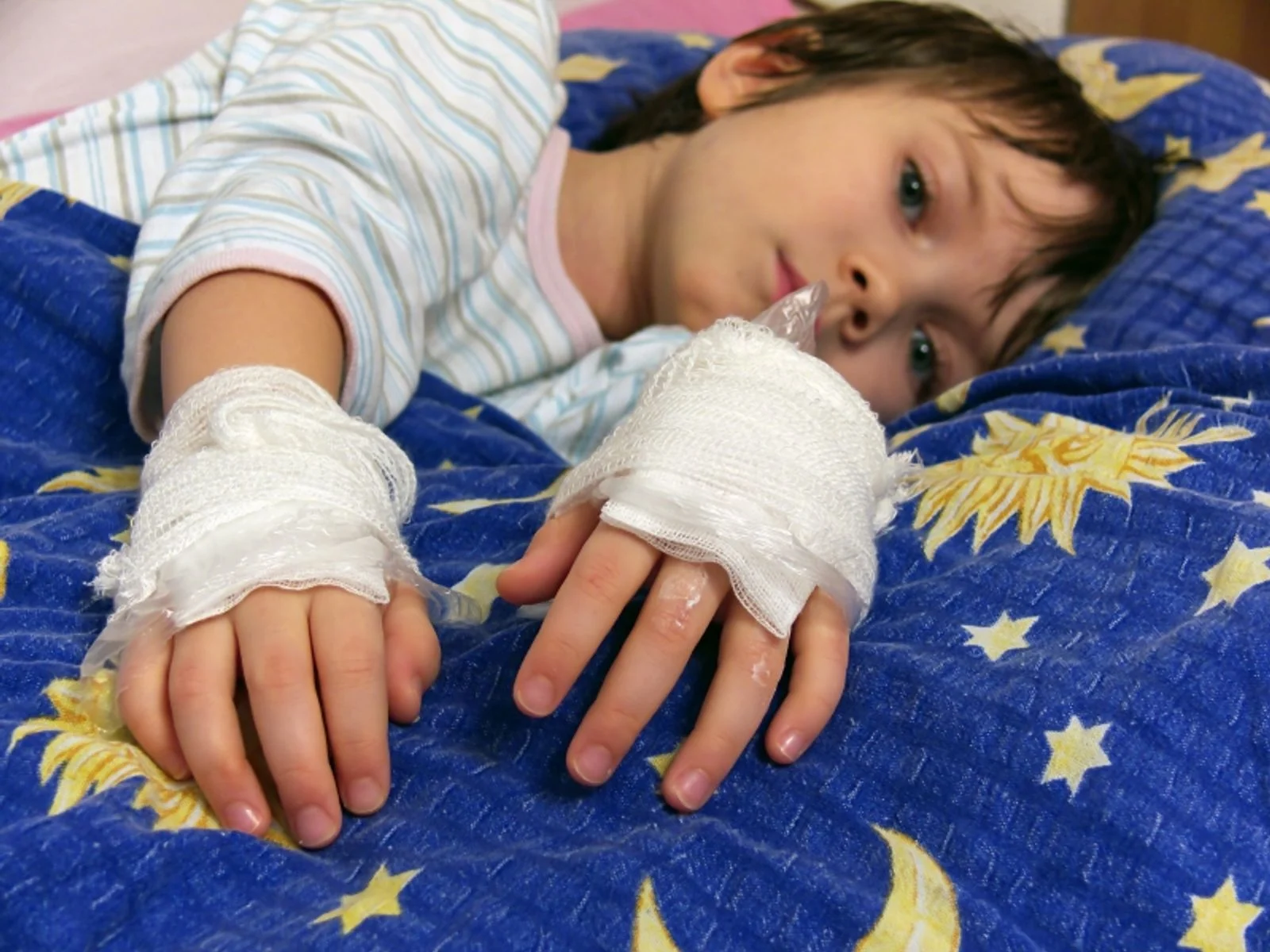
Blister care
Blisters are your child’s skin doing its best to protect what is underneath. As tempting as it is to pop them, an intact blister is like a built-in sterile dressing.
Do not pop blisters at home
- Popping increases infection risk.
- It can remove a natural barrier and make pain worse.
If a blister breaks on its own
- Wash your hands first.
- Gently rinse with clean water. Mild soap around the area is okay, but do not scrub the blister roof.
- If a flap of skin is hanging, do not rip it off. Lay it back down gently.
- Cover with a non-stick pad (look for “non-adherent” dressings) and a loose gauze wrap.
What ointment should you use?
For small burns, a thin layer of plain petroleum jelly can keep the dressing from sticking. Some clinicians recommend a small amount of antibiotic ointment for certain open blisters, but it is not always necessary and some kids react to it. If you are unsure, ask your pediatrician.
How often to change the dressing
- Change once daily, or sooner if it gets wet or dirty.
- Each time, look for infection signs (more below).
Pain control
Burns hurt, and pain can make it harder to keep the area cooled and covered.
- Acetaminophen and ibuprofen can be used in age-appropriate children. Dose based on your child’s weight and follow the product label or your clinician’s guidance.
- A cool compress after the initial cooling can help, but do not use ice.
- Keep the burned area elevated when possible to reduce throbbing and swelling, especially hands and feet.
If pain is severe, persistent, or out of proportion to how the burn looks, get medical care.
Infection warning signs (and what normal healing looks like)
Some redness and mild swelling are normal early on. What we worry about is a burn that becomes more inflamed, more painful, and more “angry” as days pass.
Call your pediatrician or seek urgent care if you see:
- Increasing redness spreading beyond the burn
- Warmth and swelling that is worsening
- Pus or cloudy drainage
- Foul odor
- Fever (especially if the burn is more than tiny)
- Red streaking up an arm or leg
- Your child seems increasingly ill, lethargic, or inconsolable
What healing usually looks like
- Superficial burns: often improve a lot in 2 to 3 days and peel like a mild sunburn.
- Superficial partial-thickness burns: often heal in about 1 to 2 weeks, sometimes longer depending on size and location.
- If a burn is not clearly improving day by day, looks worse after 24 to 48 hours, or still looks open at 2 weeks, get it checked.
Tetanus note
If skin is broken or the burn is more than superficial, it is a good reason to confirm your child’s tetanus protection is up to date. If you are not sure, your clinician can guide you.
Extra caution areas
Face and eyes
Any burn to the face, eyelids, or near the eyes deserves prompt medical evaluation. If hot liquid splashed into the eye, irrigate with clean, cool or room-temperature running water (or saline) for 15 to 20 minutes if you can, then seek urgent care.
Hands and feet
Even small burns can affect function as they heal. Because toddlers use their hands for everything, burns here often benefit from clinician guidance and sometimes special dressings.
Genitals and buttocks
These burns are at higher risk for infection and may be associated with more significant scald exposure. Get same-day medical care.
Across joints
Burns over wrists, elbows, knees, and ankles can tighten as they heal. Early evaluation can help prevent stiffness.
Bath and kitchen scald prevention
Most toddler scalds happen in the two places you are already juggling the most: the kitchen and the bathroom. Prevention is less about “watching closer” and more about changing the setup so a normal toddler moment does not become an emergency.
In the bathroom
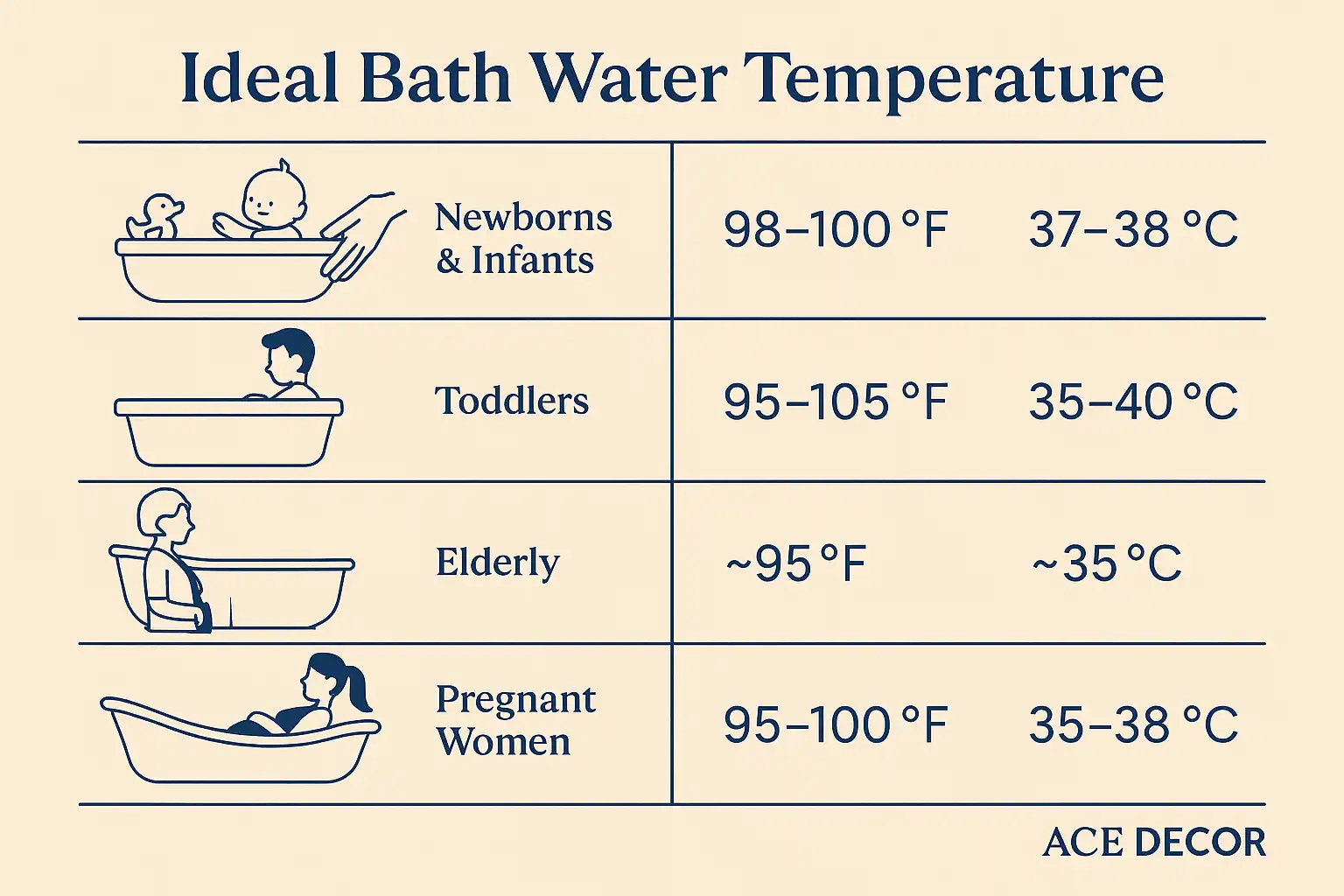
- Set your water heater to 120°F (49°C) or lower if possible.
- Turn on cold water first, then warm. Turn off warm first.
- Always test bath water with your wrist or elbow, and swirl the water to avoid hot pockets.
- Keep your toddler within arm’s reach. If you must step away, take them with you.
- Consider anti-scald devices for faucets and showerheads.
In the kitchen
- Use back burners when you can and turn pot handles inward.
- Create a “no kid zone” around the stove, even if it is just a line of tape on the floor.
- Avoid holding your toddler while carrying hot drinks, soup, or ramen.
- Skip tablecloths and long placemats that little hands can yank.
- Keep hot appliances (kettle, slow cooker, air fryer) pushed back with cords out of reach.
- Microwaved foods can have hot spots. Stir well and let cool before serving.
Quick checklist
- Move away from heat source and stop the burning.
- Cool running water for 20 minutes if you can.
- Remove jewelry and loose clothing. Do not peel stuck fabric.
- After cooling, cover loosely with a clean non-stick dressing or plastic wrap laid over the area.
- Call 911 for breathing issues, electrical or chemical burns, deep or large burns, or face or airway concerns.
- Seek same-day care for palm-sized burns (or multiple burns adding up), significant blistering, hands, feet, genitals, buttocks, or burns across joints.
And one last thing I tell parents in clinic all the time: you are not “overreacting” by getting help. Burns can change quickly, and you deserve clear guidance, not guesswork at 2 AM.