Thrush in Babies

Sarah Mitchell
Sarah Mitchell is a Registered Pediatric Nurse and a mother of three who has spent over a decade helping families navigate the beautiful, chaotic early years of childhood. She combines evidence-based medical knowledge with real-world parenting experience to offer practical, compassionate advice. At Awesome Parent, Sarah's mission is to help exhausted parents find solutions, trust their instincts, and finally get some sleep.
If you have ever lifted your baby’s lip at 2 AM and thought, “Is that milk… or something else?” you are in very good company. Oral thrush is a common infant issue I saw in clinic and one of the most stressful for parents because it can look dramatic and come with feeding fussiness.
The reassuring part: thrush is usually very treatable. Let’s walk through what it looks like, why it happens, how to tell it apart from normal milk residue, and what actually helps.
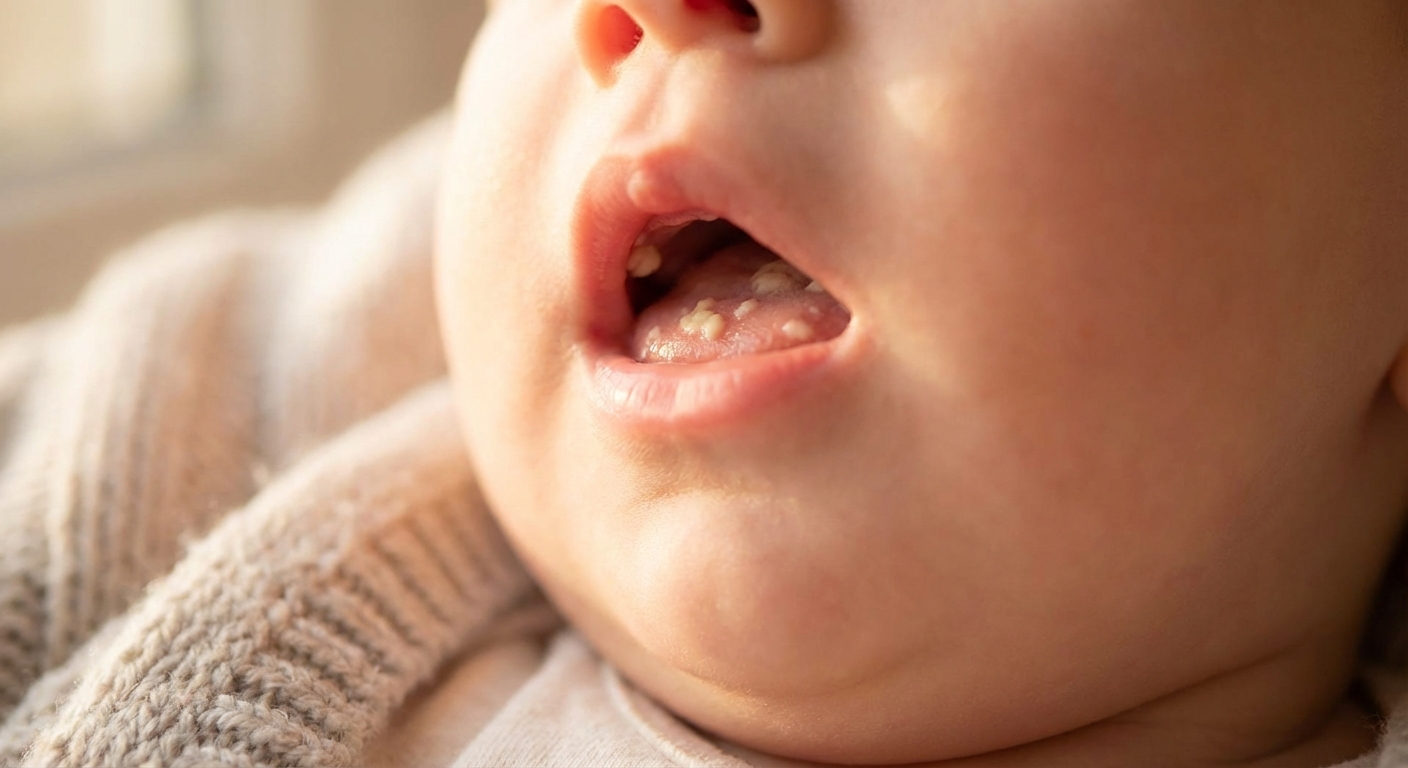
What is thrush?
Thrush is a yeast infection in the mouth caused by an overgrowth of Candida, a fungus that commonly lives on skin and mucous membranes in small amounts. Babies have developing immune systems and a warm, moist mouth environment that can make it easier for Candida to multiply.
Oral thrush is not a sign you did anything wrong. It is common in newborns and young infants, especially in the first few months.
Thrush symptoms in babies
Thrush can show up in a few classic ways. Some babies act totally fine, while others get fussy and uncomfortable, especially during feeds.
What you might see
- White patches on the tongue, inner cheeks, gums, or roof of the mouth
- Patches that look like cottage cheese or thick milk curds
- Red, irritated tissue underneath the white patches
- Cracking at the corners of the mouth (less common)
What you might notice in behavior
- Fussiness during breastfeeding or bottle-feeding
- Clicking off the breast or bottle repeatedly
- Seeming uncomfortable when sucking
- Decreased feeding in some babies
If thrush is also affecting the diaper area, you might see a stubborn diaper rash at the same time (more on that below).
Thrush vs milk residue
This is the big question. Milk residue is common, especially on the tongue. Thrush tends to stick and spread beyond the tongue.
A simple check at home
- Milk residue often wipes or brushes off fairly easily with a soft, damp cloth or gauze. The skin underneath looks normal.
- Thrush is often harder to wipe away. If you try to remove it, the area underneath may look red or irritated, and sometimes it can bleed a tiny bit.
A very important note from your 3 AM nurse friend: this “wipe test” is helpful, but it is not perfect. Some milk coating can be stubborn, and mild thrush can sometimes partially wipe. Another clue is location. Milk residue is often mostly on the tongue, while thrush frequently shows up on the inner cheeks and gums too.
If you are not sure, it is completely reasonable to message your pediatrician with a photo or schedule a quick check. Thrush is often diagnosed with a simple mouth exam.
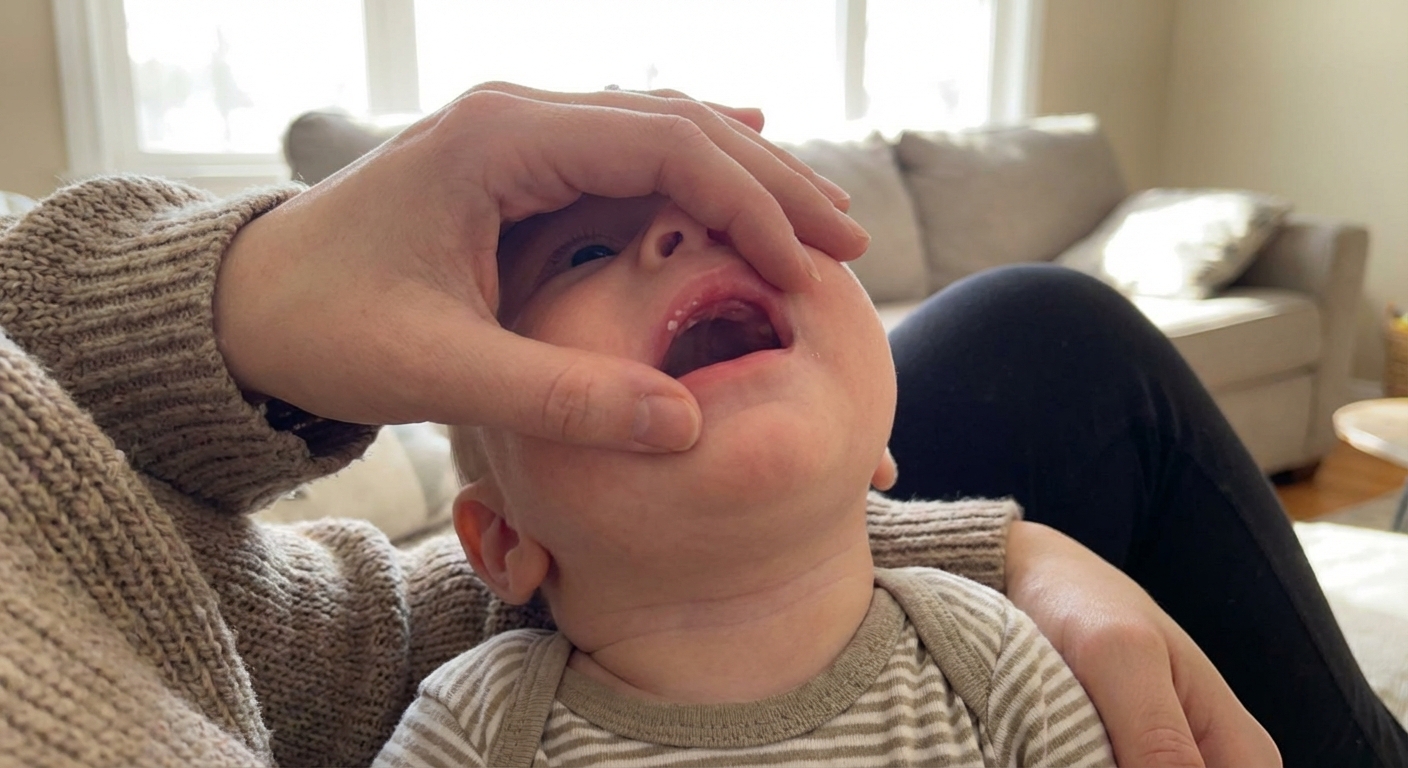
What causes thrush in infants?
Candida thrives when the normal balance of microbes is disrupted or when the mouth stays warm and moist, which is basically a baby’s full-time job.
Common triggers
- Antibiotics for baby or breastfeeding parent, which can reduce healthy bacteria and allow yeast to overgrow
- Immature immune system, especially in newborns and young infants
- Pacifiers and bottle nipples that are frequently in the mouth (normal, but they can harbor yeast if not cleaned well)
- Breastfeeding transfer between baby’s mouth and a parent’s nipples
- Recent illness or stress on the body (less common, but it can contribute)
Sometimes there is no obvious trigger. That is normal too.
How is it diagnosed?
Most of the time, thrush is diagnosed by a clinician taking a look inside the mouth and asking a few quick questions about feeding and symptoms. Tests are rarely needed unless the diagnosis is unclear or symptoms are not improving as expected.
Breastfeeding and spread
Yes, thrush can pass back and forth between a baby’s mouth and a breastfeeding parent’s nipples. This is one reason it can feel like it “keeps coming back” if only one of you is treated.
Signs a breastfeeding parent may have yeast
- Nipple pain that feels burning, stinging, or sharp during or after feeds
- Itchy, shiny, or flaky nipples
- Cracked nipples that do not improve with usual latch support
- Shooting breast pain (sometimes described as deep pain)
One gentle but important reality check: nipple and breast pain has lots of causes. Latch issues, vasospasm, dermatitis, and bacterial imbalances can look and feel similar. So while yeast is on the list, it is not the only answer. If pain is significant or persistent, check in with your pediatrician, OB-GYN, midwife, or lactation consultant so you treat the right thing.

Treatment for baby thrush
Thrush often needs prescription treatment. The goal is to reduce the yeast overgrowth and prevent it from bouncing between baby and parent.
Antifungal medicine
In many pediatric practices, the most common first step for oral thrush in babies is nystatin oral suspension (a liquid). Your clinician will tell you the dose and how often to use it. If thrush is more stubborn, more extensive, or not improving with nystatin, clinicians may use other options such as fluconazole. In some countries, miconazole oral gel is used, but age guidance and safety considerations vary by region, so this is one to follow closely with your clinician.
Practical tips for giving medicine
- Give it exactly as prescribed.
- It often works best when it is placed along the inner cheeks and affected areas, not just squirted to the back of the mouth.
- Many clinicians suggest giving it after feeds so it stays in contact with the mouth longer. If your clinician gives different instructions, follow theirs.
- It can take several days to improve. Many clinicians recommend continuing for a short period after symptoms clear to reduce recurrence.
Please do not put over-the-counter antifungal creams into a baby’s mouth.
If you are breastfeeding
If thrush is suspected in baby, clinicians often recommend treating the breastfeeding parent’s nipples at the same time (commonly with a topical antifungal). This is the “treat both to stop the ping-pong” strategy.
Home care that helps
Home care cannot usually replace antifungal medication, but it can make treatment work better and help prevent reinfection.
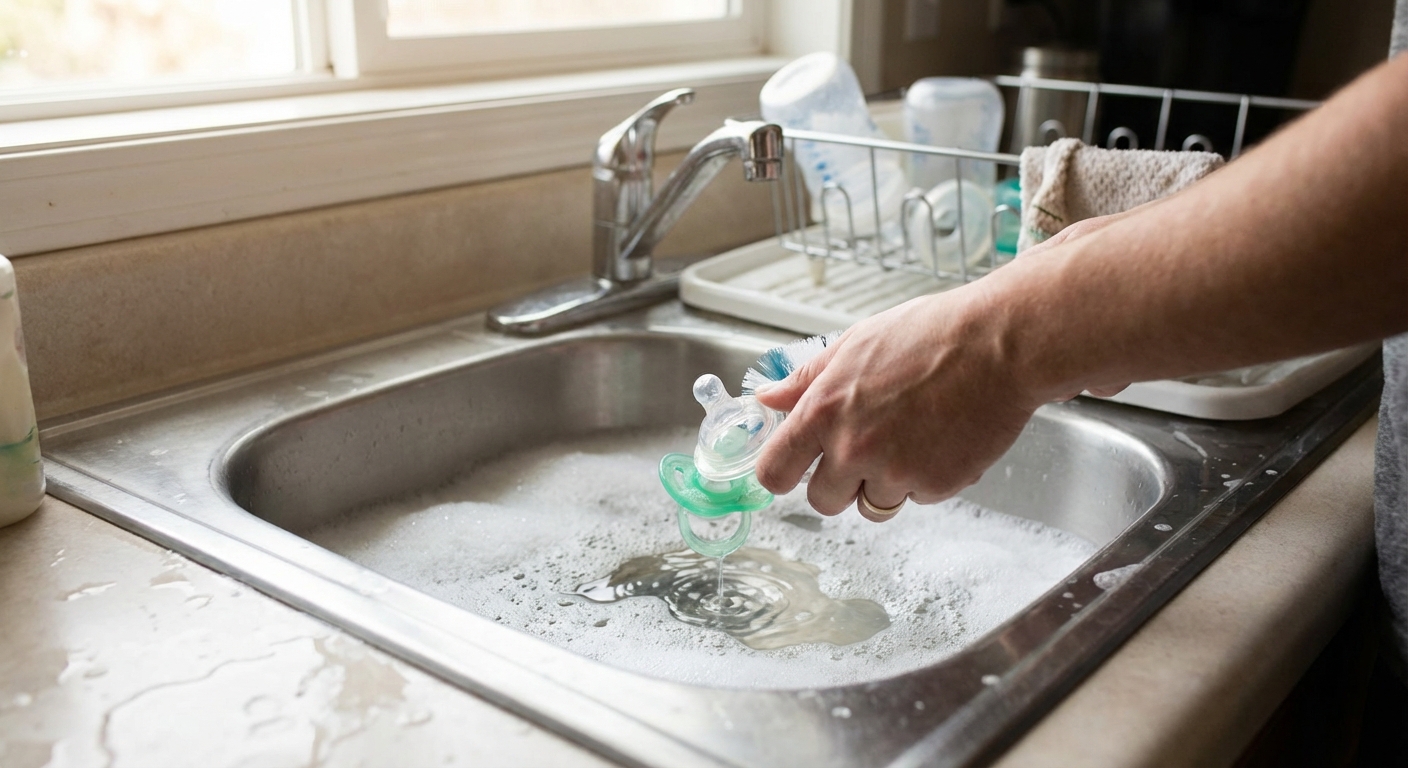
Clean feeding items daily
- Pacifiers, bottle nipples, and teething toys should be washed thoroughly with hot, soapy water.
- If the item is safe to boil or sanitize, you can do so during treatment if feasible. Always follow the manufacturer’s directions.
- Replace worn pacifiers and nipples that have cracks, which can trap yeast.
Breastfeeding hygiene tips
- Wash hands before and after feeds and diaper changes.
- Keep nipples clean and dry between feeds, but skip harsh soaps or aggressive scrubbing that can irritate skin.
- Change breast pads frequently if you use them.
- Wash bras and reusable nursing pads in hot water if possible during treatment.
Diaper area check
Candida can also cause a yeast diaper rash. If your baby has a rash that looks very red, irritated, and does not improve with usual diaper cream, ask your clinician if it could be yeast. Treating both mouth and diaper area when needed helps stop recurrence.
What not to do
- Do not scrape hard at the patches. It can irritate the mouth and cause bleeding.
- Do not use home remedies inside the mouth unless your pediatrician specifically recommends them. Some popular internet suggestions are not safe for infants.
- Do not stop medication early just because it looks better after a day or two. Yeast can be stubborn, and stopping early increases the chance it returns.
How long does thrush last?
With treatment, many babies start to look better within a few days, but it can take longer for the mouth to fully clear. If you are not seeing improvement after a few days of using medication exactly as prescribed, call your pediatrician. Your baby may need a different approach or an in-person exam to confirm the diagnosis.
If it keeps coming back
Most thrush clears up with the usual treatment plan. If your baby has recurrent or persistent thrush, your clinician may want to double-check the diagnosis, review how medication is being given, and look for contributors (like repeated antibiotic exposure). In some situations, frequent infections can be a sign to look more closely at overall health and immune function, especially in babies who were born very prematurely or have other medical conditions.
When to call the pediatrician
Thrush is usually not an emergency, but you should check in with your baby’s clinician if:
- Your baby is under 3 months and you suspect thrush (young infants should be assessed promptly)
- Your baby was born very premature, is immunocompromised, or has significant medical conditions, and you suspect thrush
- Your baby is feeding poorly, refusing feeds, or seems in pain while eating
- You see white patches on cheeks or gums that do not wipe away
- There is bleeding in the mouth
- Symptoms are not improving after starting treatment
- Your baby has recurrent thrush or frequent infections
Go in urgently if
- Your baby shows signs of dehydration (fewer wet diapers, very dry mouth, no tears when crying)
- Your baby is very lethargic, has trouble breathing, or you are worried they look seriously ill
- Your baby has a fever, especially if they are under 3 months, since fever in young infants needs prompt medical advice
Can you prevent thrush?
You cannot prevent every case, but you can lower the odds and reduce recurrence.
- Clean and fully dry pacifiers, bottle nipples, and pump parts regularly.
- Replace worn pacifiers and nipples.
- Wash hands often, especially after diaper changes.
- If you or your baby need antibiotics, watch for symptoms afterward and call early if you notice changes.
- If breastfeeding is painful, get help early. A good latch reduces nipple damage, which can make infections more likely.
A quick pep talk
Thrush looks alarming, and it can make feeding feel like a marathon with zero snacks and no finish line. But most babies do very well with the right antifungal treatment and a little extra cleaning routine for a week or two.
If you are unsure whether you are seeing milk or thrush, you do not have to guess alone. Snap a photo, call your pediatrician, and let someone who has seen it many times help you make the call.
Sources
- American Academy of Pediatrics (HealthyChildren.org): Thrush
- Centers for Disease Control and Prevention (CDC): Candidiasis
- National Health Service (NHS): Oral thrush (mouth thrush) and Breastfeeding and thrush