Toddler Afraid of the Dark

Sarah Mitchell
Sarah Mitchell is a Registered Pediatric Nurse and a mother of three who has spent over a decade helping families navigate the beautiful, chaotic early years of childhood. She combines evidence-based medical knowledge with real-world parenting experience to offer practical, compassionate advice. At Awesome Parent, Sarah's mission is to help exhausted parents find solutions, trust their instincts, and finally get some sleep.
If your toddler suddenly treats bedtime like a tiny horror movie premiere, you are not alone. One week they happily waved goodnight to their stuffed giraffe. The next week they are convinced the shadows in the corner are plotting something.
Fear of the dark is a very common toddler worry and it often shows up around ages 2 to 3 as imagination takes off. The good news: most of the time it is a normal developmental phase, and there are gentle, practical ways to help your child feel safe without turning your evenings into a two-hour negotiation.
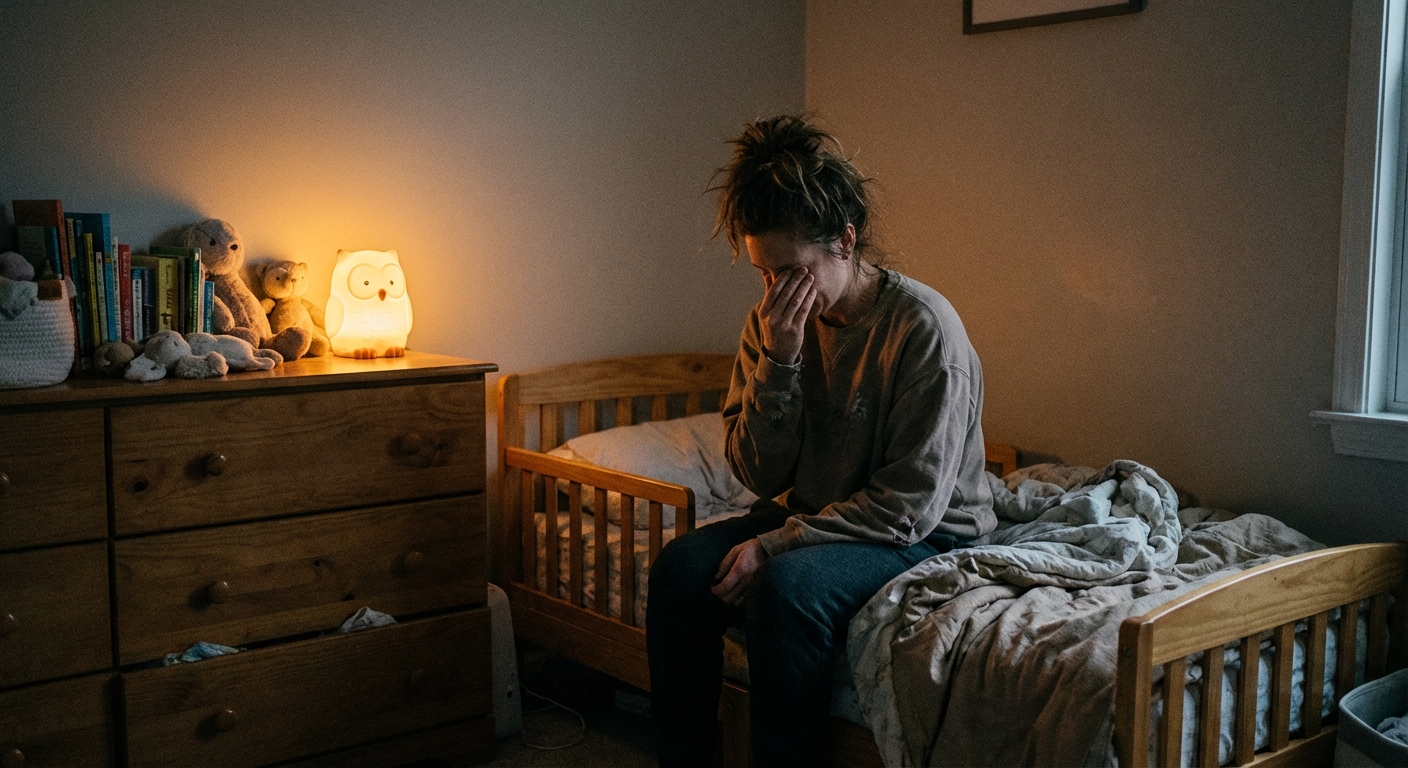
Why fear of the dark starts around age 2 to 3
In my pediatric triage days, I heard this question constantly: “Why now? Nothing changed.” Usually, something did change, just not in your house. Your child’s brain is growing fast.
1) Imagination wakes up before logic does
Around 2 to 3 years old, toddlers begin to imagine things that are not right in front of them. That is a wonderful skill for play. It is also the reason they can picture “a monster” even when the room is empty.
The tricky part is that the ability to imagine develops before the ability to reason through fear. So when they picture something scary, it feels real.
2) They notice separation more at night
Bedtime is a daily separation. During the day, your toddler can check that you still exist by yelling “Mom!” from the bathroom. At night, the house is quiet, it is dark, and you are not in the room. That alone can spark anxiety.
3) The dark looks different, even in familiar rooms
Shadows distort shapes. A chair becomes a “person.” A pile of laundry becomes a “bear.” Their brains are trying to make sense of limited visual information, and toddlers tend to fill in the blanks with dramatic conclusions.
4) Life events can amplify it
Even normal changes can make nighttime fears louder, including:
- Starting daycare or preschool
- Moving rooms or switching from crib to bed
- A new sibling
- Illness, especially ear infections that disrupt sleep
- Scary scenes in a movie or even a “kid” show (they can be surprisingly intense)
Is this normal or something more?
Most fear of the dark is typical and temporary. But parents also deserve clear guidance on when to look deeper.
What’s usually normal
- Fear shows up mainly at bedtime or during night wakings
- Your toddler can be comforted and eventually settles
- They function well during the day
- The fear comes and goes in phases (often during big developmental leaps)
When to talk to your pediatrician
Consider reaching out if you notice any of the following:
- Persistent, intense distress that does not improve over several weeks despite consistent support
- Daytime anxiety that interferes with play, preschool, or separation from caregivers
- Frequent nightmares or night terrors that are escalating or causing significant sleep loss
- Physical symptoms tied to fear (repeated stomachaches, headaches) especially around bedtime
- Trauma exposure (a scary event, accident, violence, or significant loss)
- Safety worries like sleepwalking, seizures, or breathing concerns
Quick note from the nurse in me: night terrors are different from nightmares. Night terrors typically happen in the first third of the night (deep non-REM sleep). Kids can look awake but are not fully awake and usually do not remember it in the morning. If it is a night terror, trying to fully wake them can sometimes make the episode longer. Nightmares happen later in the night, and kids often remember the scary dream.
If you are not sure which you are seeing, your pediatrician can help you sort it out.
Other things that can look like “fear”
Sometimes the real issue is that something is making sleep uncomfortable or fragmented. It is worth mentioning to your pediatrician if you notice:
- Loud snoring, gasping, pauses in breathing, or very restless sleep (possible sleep-disordered breathing)
- Reflux symptoms, chronic cough at night, or pain complaints that flare at bedtime
- A new medication or supplement that seems to affect sleep
What not to do (even though it is tempting at 2 AM)
When you are exhausted, it is easy to default to quick fixes. Some help short term but make fears stick around longer.
- Do not dismiss it. “There’s nothing to be scared of” can make kids feel alone with their fear. Try “I hear you. That felt scary.”
- Do not use fear as a threat. Avoid “If you get out of bed, the monster will get you.” (Yes, people still say this. No, it does not help.)
- Do not accidentally train the pattern you do not want. If every scream results in a long snuggle party in your bed, your toddler’s brain learns that calling out leads to a bigger, more interesting bedtime. This is not manipulation. It is simple learning.
- Do not overexplain. A long lecture on how shadows work is less effective than a quick comfort routine and a consistent plan.
How to help: practical strategies that actually work
You do not need a perfect bedtime routine. You need a predictable one. Think: calm, repeatable, and boring in the best way.
Validate first, then lead
A simple script you can repeat:
“You feel scared. I’m right here. We’re safe. It’s time for sleep.”
This acknowledges the feeling without confirming the scary story.
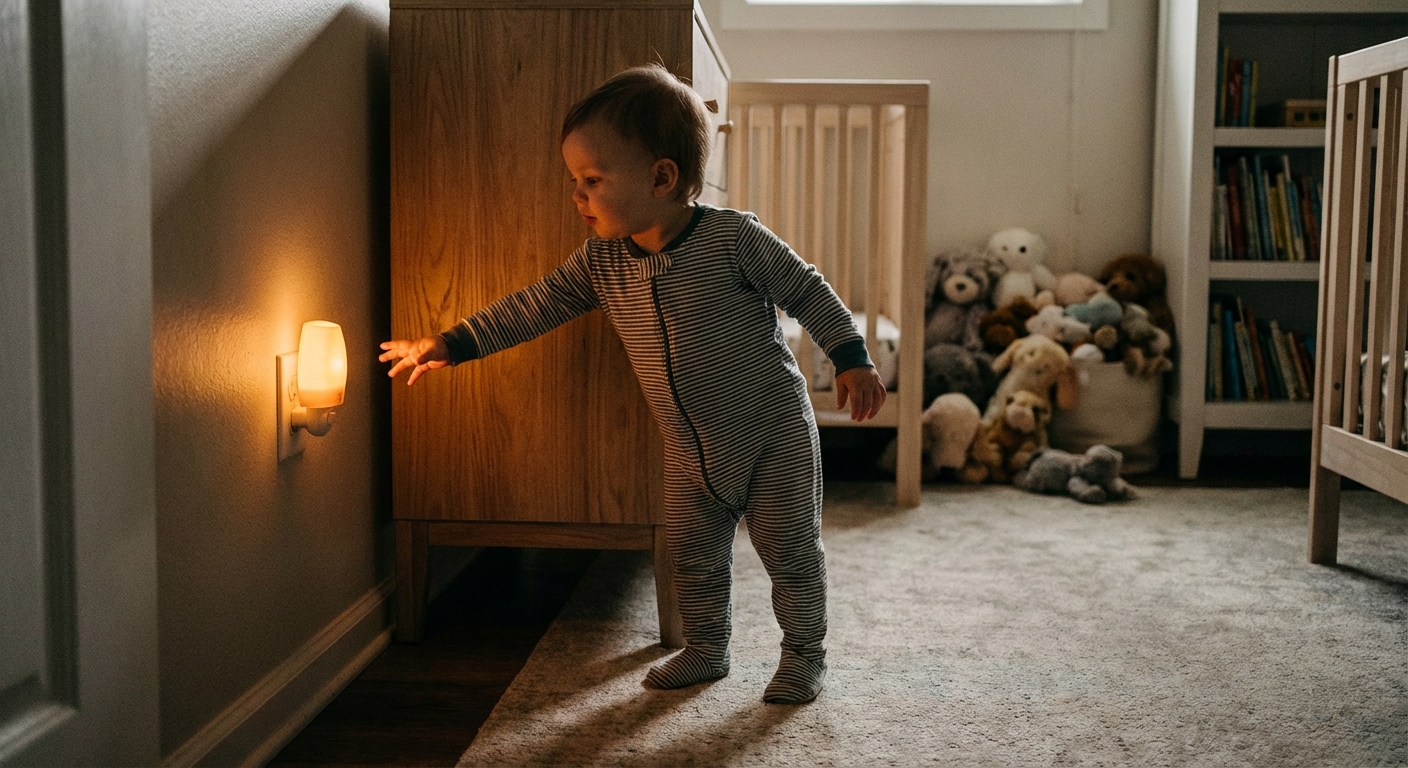
Use a nightlight, but choose it wisely
Nightlights can be extremely helpful, especially if your toddler wakes and feels disoriented.
- Pick a warm, dim light (amber tones if possible).
- Avoid very bright or cool (blue-leaning) lights late at night. Bright, blue-heavy light can signal the brain to stay more alert and may make it harder to fall back asleep.
- Place it so it lights the room gently, not shining directly into your child’s face.
Try a quick “room check” routine
This works best when it is short and consistent. You are showing leadership, not launching a nightly investigation.
- Turn on a lamp.
- Do a 20 to 30-second scan together: “All clear.”
- Point out a few normal items: “That’s your chair, that’s your laundry basket.”
- Lights back to bedtime setting, then back to your routine.
Make “monster spray” your ally
Monster spray is a pretend tool that works because it boosts confidence and gives toddlers a sense of control.
- Use a small spray bottle filled with water.
- If you want a scent, choose something gentle and avoid irritants. Plain water is totally fine.
- Let your child help you spray under the bed and in corners.
- Then end with a firm closing line: “All done. Monsters are not allowed in our house. Now we sleep.”
The key is not the spray. The key is the calm confidence you bring to the routine.
Offer a “bravery job”
Toddlers love jobs. Try:
- “You hold your flashlight while I tuck you in.”
- “You check that your stuffed bunny is safe.”
- “You press the nightlight button.”
Use a step-down plan for kids who demand full lights on
If your toddler insists on the overhead light, a gentle step-down plan often works better than a sudden “no.”
- Start with the room slightly dimmer than they want for 2 to 3 nights.
- Move the dimmer down or switch to a lamp for 2 to 3 nights.
- Transition to nightlight only.
Small steps tell the nervous system, “We can handle this.”
Build a bedtime routine that signals safety
A solid routine is less about length and more about predictability. Aim for 20 to 30 minutes.
- Bath or warm washcloth
- Pajamas and toothbrushing
- Two short books (avoid scary themes)
- One song
- Same final phrase every night: “You’re safe. I love you. See you in the morning.”
If your toddler keeps stalling, consider a simple bedtime chart with pictures. Not as a punishment, just as a visual reminder of what comes next.
Make the room feel less “unknown”
- Keep familiar objects nearby: a favorite stuffed animal, family photo, or special blanket.
- Use a white-noise machine if random house sounds trigger worry.
- Close closet doors if the “dark closet” is a major fear.
- Reduce confusing shadows: reposition a nightlight, move a coat off the chair, tidy the “laundry monster.”
- Do a quick media check. If your child is watching anything even slightly spooky, intense, or fast-paced close to bedtime, move it earlier in the day or take a break.
- Keep the room comfortable. Too hot, too cold, or itchy pajamas can make bedtime feel harder than it needs to be.
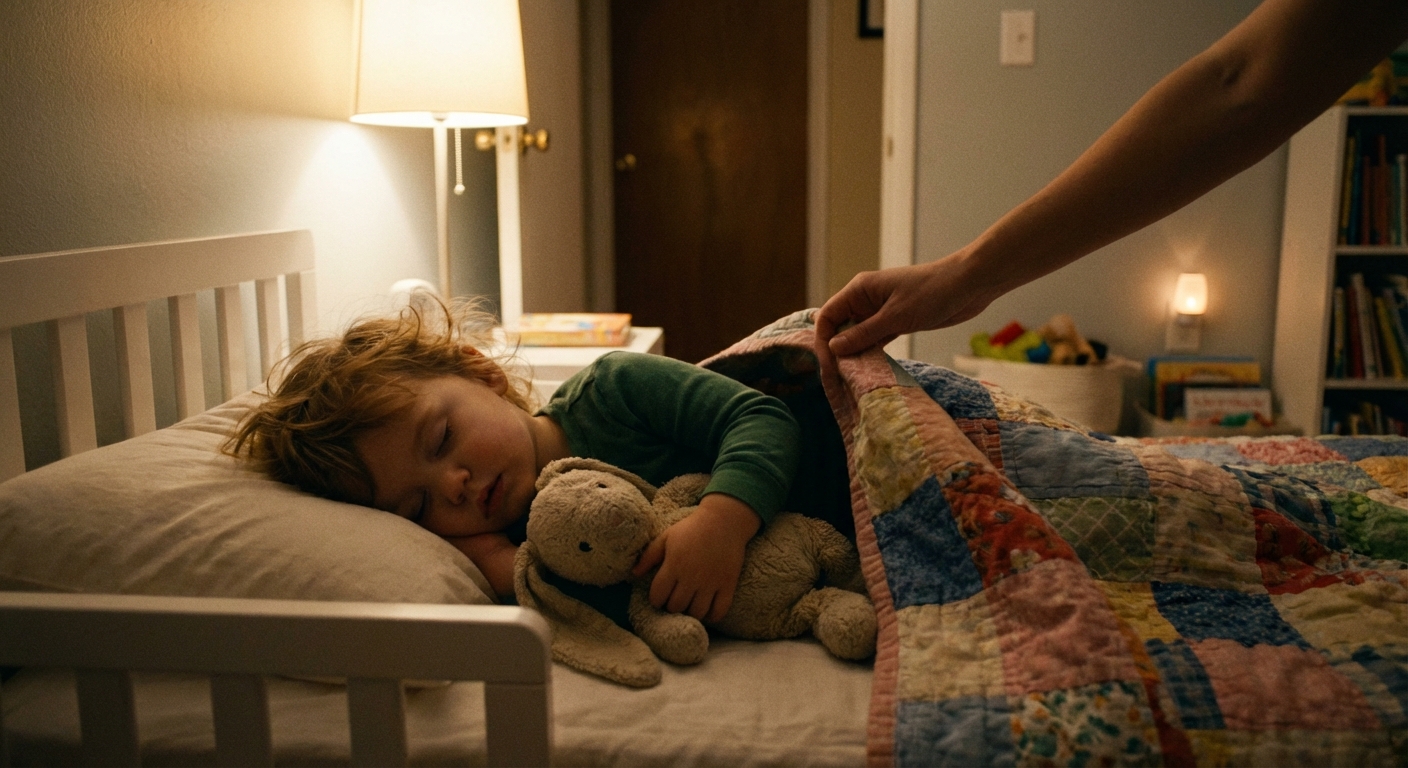
Teach simple coping tools during the day
Toddlers learn best when they are calm, not at peak panic. Practice during daylight hours:
- Balloon breaths: “Smell the flower, blow the candle.” (Inhale, exhale.)
- Bravery phrase: “I am safe in my room.”
- Safe picture: Think of a happy place, like the park or Grandma’s house.
Keep nighttime responses brief and boring
If your toddler wakes scared, your goal is comfort without turning it into a fully awake hangout.
- Go in quickly.
- Use your script: “You’re safe. It’s nighttime.”
- Quick room check or monster spray if that is part of the plan.
- Back to bed, minimal talking.
This approach is kind and also clear. You are not ignoring them. You are teaching them what happens at night: we get safe, then we sleep.
Make a clear plan for getting to you
Some kids calm down once they know exactly what to do if they wake up scared. Decide what you want, then explain it simply.
- If you are comfortable with them coming to your door, say that.
- If you prefer they call for you, practice it: “If you need me, you call and I will come check on you.”
The goal is clarity, not making anyone feel trapped.
Common questions parents ask
Should I let my toddler sleep with me?
You are not a bad parent no matter what you choose. If co-sleeping happens occasionally during a rough patch, many families do just fine.
If your goal is independent sleep, try a middle path:
- Offer comfort in their room first.
- Sit in a chair for a few minutes, then leave.
- If you bring them to your bed in the middle of the night, be aware it can become the new expectation very quickly.
Quick safety note: this article is about toddlers, but if you have an infant in the home, follow infant safe-sleep guidance. Bed-sharing is not recommended for babies.
Is a flashlight a good idea?
Often, yes. A small toddler-friendly flashlight can give a sense of control. Just set a boundary that it is for a quick check, not playtime.
Will talking about monsters make it worse?
It depends how you talk about them. If you treat monsters like real creatures, it can reinforce fear. If you treat it like pretend play and focus on your child’s sense of safety and control, it can help. Monster spray works because the underlying message is, “You are safe and I am in charge.”
When you’re doing everything “right” and it still happens
This is the part I wish more articles said out loud: even with the perfect routine, toddlers still have phases. Development is not a straight line. Your child may be brave for two weeks, then suddenly terrified again after a busy weekend, a growth spurt, or a random scary dog bark outside.
Consistency is what pays off. Calm, confident repetition teaches your toddler’s brain that nighttime is safe.
A simple 7-day plan to start tonight
Nights 1 to 2: Set the foundation
- Pick your bedtime script and use it every time.
- Add a warm nightlight and white noise if needed.
- Create a short room-check routine.
Nights 3 to 5: Add control and coping
- Introduce monster spray or a bravery job.
- Practice balloon breaths during the day.
- Keep nighttime wake responses brief and consistent.
Nights 6 to 7: Gently step back
- If you have been staying in the room, shorten the time by a minute or two each night.
- Praise effort in the morning: “You felt scared and you stayed in bed. That was brave.”
If you need to repeat the week, repeat the week. Parenting is a lot of reruns.
The bottom line
Fear of the dark is usually a sign of healthy development: a growing imagination plus a toddler who is learning how to handle big feelings. You do not have to talk them out of it. You just have to help them feel safe and show them a reliable path back to sleep.
You are not creating a “dependent” child by offering comfort. You are teaching your child, over and over, that scary feelings can be handled, and that bedtime does not have to be a battle.