Toddler Bedtime Routine by Age (1 to 3 Years)

Sarah Mitchell
Sarah Mitchell is a Registered Pediatric Nurse and a mother of three who has spent over a decade helping families navigate the beautiful, chaotic early years of childhood. She combines evidence-based medical knowledge with real-world parenting experience to offer practical, compassionate advice. At Awesome Parent, Sarah's mission is to help exhausted parents find solutions, trust their instincts, and finally get some sleep.
If toddler bedtime feels like a tiny, determined negotiator took over your house, you are not alone. Toddlers are wired to test limits, crave connection, and fall apart when they are overtired. The good news is that a predictable routine can do a lot of heavy lifting, even if your child still protests sometimes.
Below you will find age-specific routines for 1-, 2-, and 3-year-olds, including timing, a simple step-by-step sequence, how to handle stalling, and what to do when the crib-to-bed transition throws everything off.
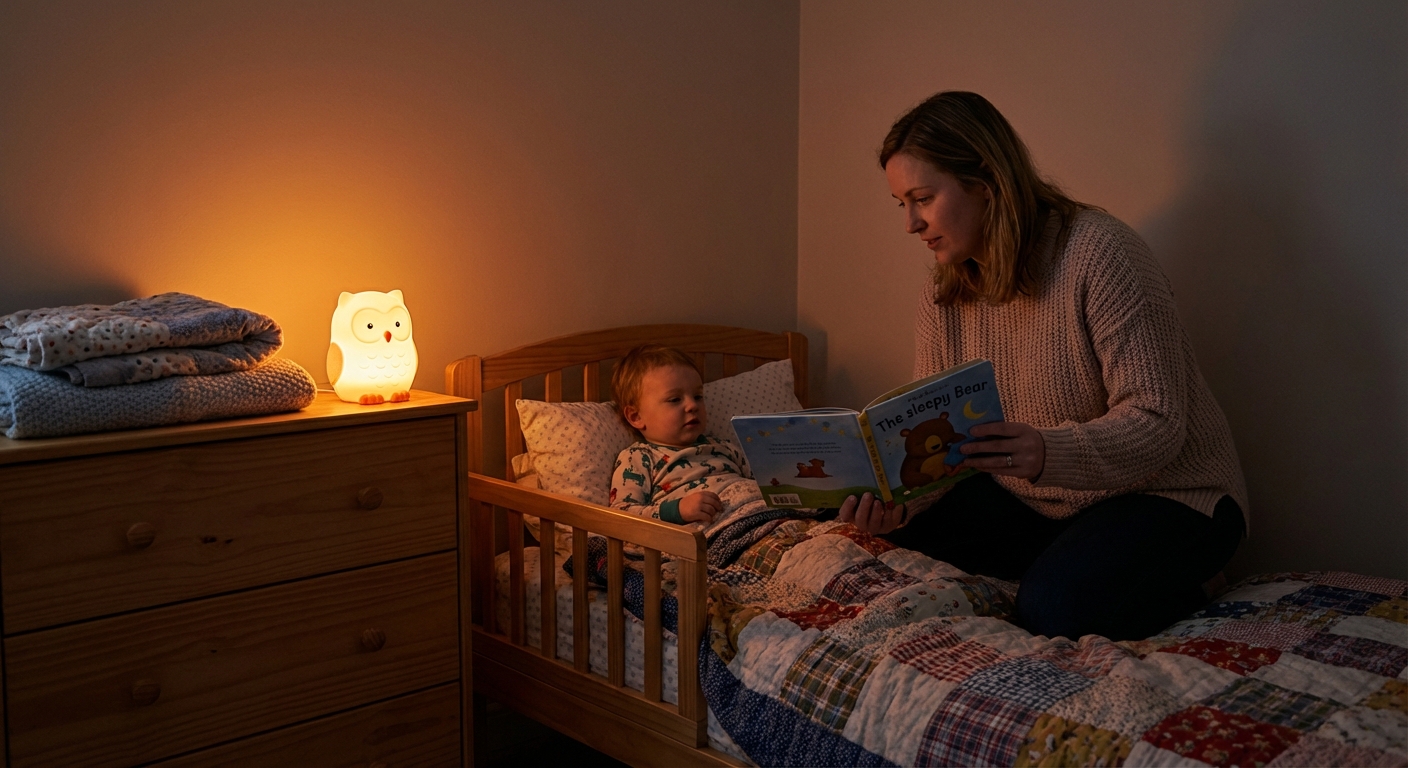
What makes a toddler bedtime routine work
In clinic, I used to tell parents: the routine is not magic because it is long. It works because it is consistent and predictable. Think of it as your child’s runway for landing.
- Same order, same vibe: Try to keep the steps in the same sequence every night.
- Short enough to repeat: A routine is usually easiest to sustain when it is about 20 to 45 minutes, depending on age and temperament.
- Connection first: Toddlers often stall most when they feel disconnected.
- Boundaries are part of the routine: The routine includes the limit: “After books, it’s sleep.”
Helpful baseline: Many toddlers do best with a bedtime somewhere between 7:00 and 8:00 p.m., but the real sweet spot depends on wake time, nap timing, and total sleep needs.
One more thing that helps a lot: Avoid screens for about 1 hour before bed when you can. Even “calm” shows tend to wind toddlers up and make it harder for their brains to shift into sleep mode.
Quick timing guide by age (1 to 3)
These are common ranges, not moral rules. Your toddler is not “bad at sleep” if their sweet spot is different.
- 12 to 18 months: Many do best with bedtime around 6:30 to 7:30 p.m. Overtired can happen fast.
- 18 to 24 months: Many do well with bedtime around 7:00 to 8:00 p.m. Many are on one nap.
- 2 years: Many do well with bedtime around 7:00 to 8:30 p.m. Watch for nap issues.
- 3 years: Many do well with bedtime around 7:30 to 9:00 p.m., especially if napping. If no nap, bedtime may need to be earlier.
Rule of thumb: If bedtime battles are intense and your toddler wakes early, try moving bedtime 15 to 30 minutes earlier for a week. Overtired toddlers often do not “crash easier.” They usually fight harder.
Bedtime routine for 1-year-olds (12 to 18 months)
At this age, the goal is a calm, quick routine with very clear cues. Many 1-year-olds get a “second wind,” so keep the last 30 minutes low-key.
Ideal routine length
20 to 30 minutes
Step-by-step routine
- Last call snack and milk (optional): If your child is hungry, offer a small snack 30 to 60 minutes before bed. Brush teeth after milk, and avoid bottles in bed to protect teeth and reduce sleep associations.
- Bath or wipe-down: Bath does not have to be nightly. The key is that this step signals “we’re switching gears.”
- Pajamas + diaper: Use the same short phrase: “Pajamas on, then books.”
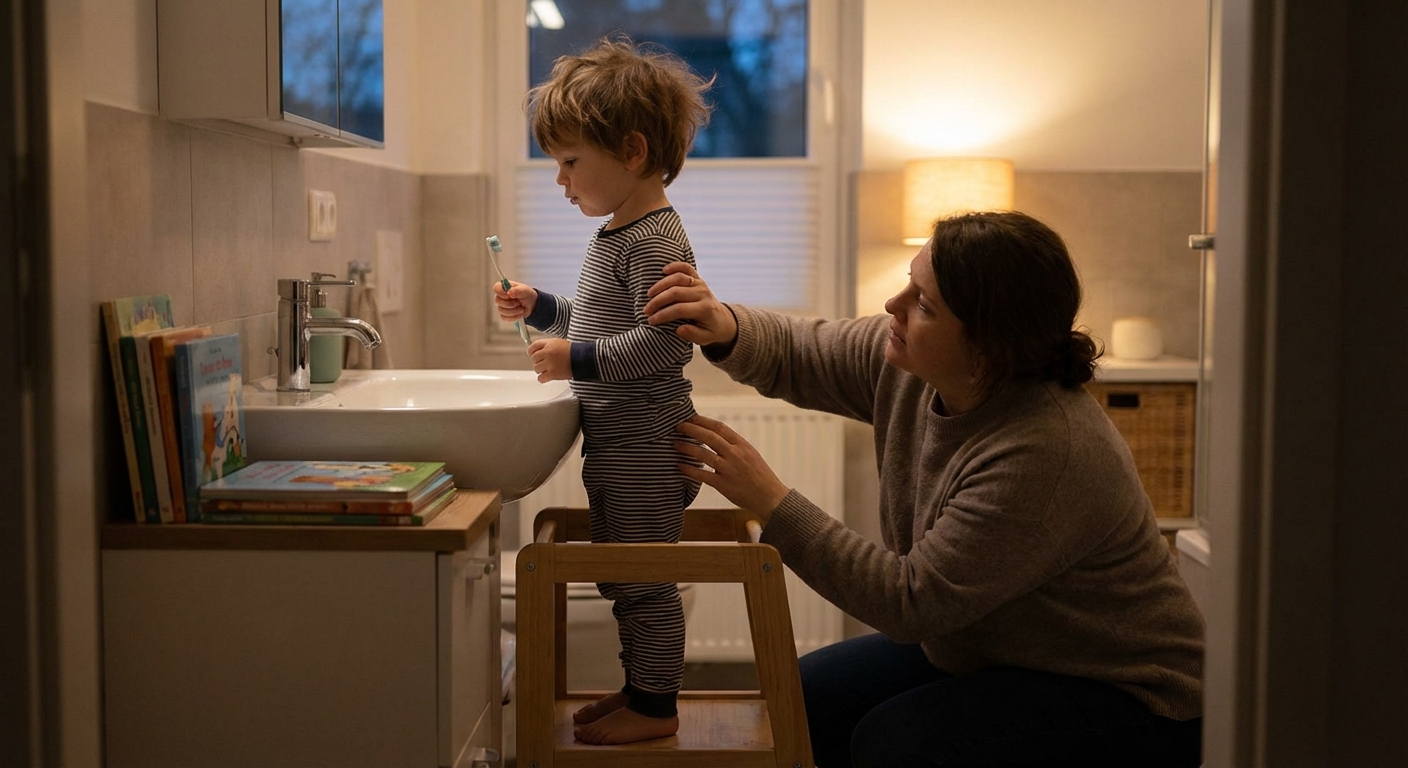
- Brush teeth: Quick, consistent, no big production.
- Two short books: Board books are perfect. Keep it predictable.
- Song + cuddle: One song. Same chair, same order.
- Into crib/bed awake and calm (when possible): Some toddlers settle best with “awake and calm” rather than “drowsy.” Either way, aim for a consistent handoff and a clear goodnight script.
Goodnight script
“I love you. You are safe. It’s time to sleep. I’ll see you in the morning.”
Common 1-year-old stalling and what to do
- Standing up and crying: Keep responses boring and consistent. Check in briefly, place them back down, repeat the same phrase. Avoid new activities.
- Demanding more bottles or snacks: If hunger is a real concern, build a small snack into the routine earlier. Otherwise, offer water and stick to the plan.

Bedtime routine for 18 to 24 months
This is the age where separation anxiety can spike and big feelings show up the second the lights dim. The routine stays simple, but you can add a tiny dose of toddler control.
Ideal routine length
25 to 35 minutes
Step-by-step routine
- Kitchen closes: Offer water, last snack if needed, then announce: “Kitchen is closed after teeth.” Brush teeth after any milk.
- Bath (optional): If bath is exciting, move it earlier and do a quick calm activity after.
- Pajamas + teeth: Let your toddler choose between two pajama options.
- Dim lights + white noise: Same cues every night.
- 3 books or 2 books + 1 song: Keep the number fixed.
- Goodnight rounds: Say goodnight to 2 to 3 things (stuffed animal, window, door). Not the whole house.
- Into bed/crib: Short script, then out.
Toddler control that does not backfire
- “Do you want to hop like a bunny to the bathroom or walk like a bear?”
- “Two books. You pick the first one.”
- “Do you want the door cracked or mostly closed?”
If they panic when you leave
Try a gradual retreat for a few nights: sit near the bed, quiet and boring, then move your chair farther away every 2 to 3 nights. Keep the same bedtime and the same script.
Bedtime routine for 2-year-olds
2-year-olds are brilliant and relentless. They also thrive on predictable boundaries. A solid routine at this age often includes a plan for stalling, because “one more thing” becomes a hobby.
Ideal routine length
30 to 45 minutes
Step-by-step routine
- Wind-down warning: “In 10 minutes, we start bedtime.” Use a timer if that helps.
- Clean up + choose comfort items: Quick room reset, pick a lovey, pick pajamas.
- Bath or wash: If bath turns into a splash party, keep it short or switch to a warm washcloth routine.
- Pajamas + teeth + potty (if training): Potty is a quick try, not a 20-minute hangout.
- Books in bed: 2 to 3 books.
- One song + lights out: Same song, same order.
- Goodnight script + exit: Calm, confident, and brief.
How to handle classic stalling tactics
Here are the big three I see as a nurse and a mom, plus what to do without getting pulled into a debate.
- “I need water” (for the 5th time): Give a small cup of water once right before books. After that: “Water is all done. It’s sleeping time.” If you think they will fixate, leave a spill-proof cup where they can reach it.
- “One more book”: Decide the number before you start. Point to the routine: “We read three books. We did three books. Now it’s sleep.”
- “I have to potty” (especially during training): Do a quick, boring potty try. No chatting, no toys, dim light. If they do not go, back to bed. If this repeats nightly, add a rule: “One potty try after teeth, then bed.”
A consistency tip that works
Pick your boundary and repeat the same phrase like a broken record. Not because your toddler is not smart, but because your calm repetition is the boundary.
Bedtime routine for 3-year-olds
3-year-olds can imagine monsters, negotiate like tiny lawyers, and suddenly decide they hate pajamas. They also love rituals and can participate in a simple bedtime checklist.
Ideal routine length
35 to 50 minutes
Step-by-step routine
- Transition out of play: “In 10 minutes, we start bedtime.” Then “5 minutes.” Then “Bedtime now.”
- Snack (if needed) + water: Keep it small and predictable. Brush teeth after any milk.
- Bath or wash + pajamas: Let them help with simple tasks like putting pajamas in the hamper.
- Teeth + potty: One try, then done.
- Pick tomorrow comfort: Choose outfit for morning or daycare bag. This reduces morning battles and helps some kids settle.
- Books: 2 longer books or 3 short ones.
- Talk time (2 to 5 minutes): A brief “best part of your day” chat can prevent the delayed emotional dump after lights out.
- Lights out + one last check: “Do you need anything else before I go?” Then you handle it once.
- Goodnight script: Same words, then leave.
Stalling at 3
At this age, I like the bedtime pass method: give one small card or object that allows one request after lights out (a hug, a drink, a quick question). After they use it, the pass stays with you and you return them to bed with minimal talking.
If fears show up
- Name it: “You feel scared. That makes sense.”
- Keep it brief: Long reassurance talks can accidentally reward the fear loop.
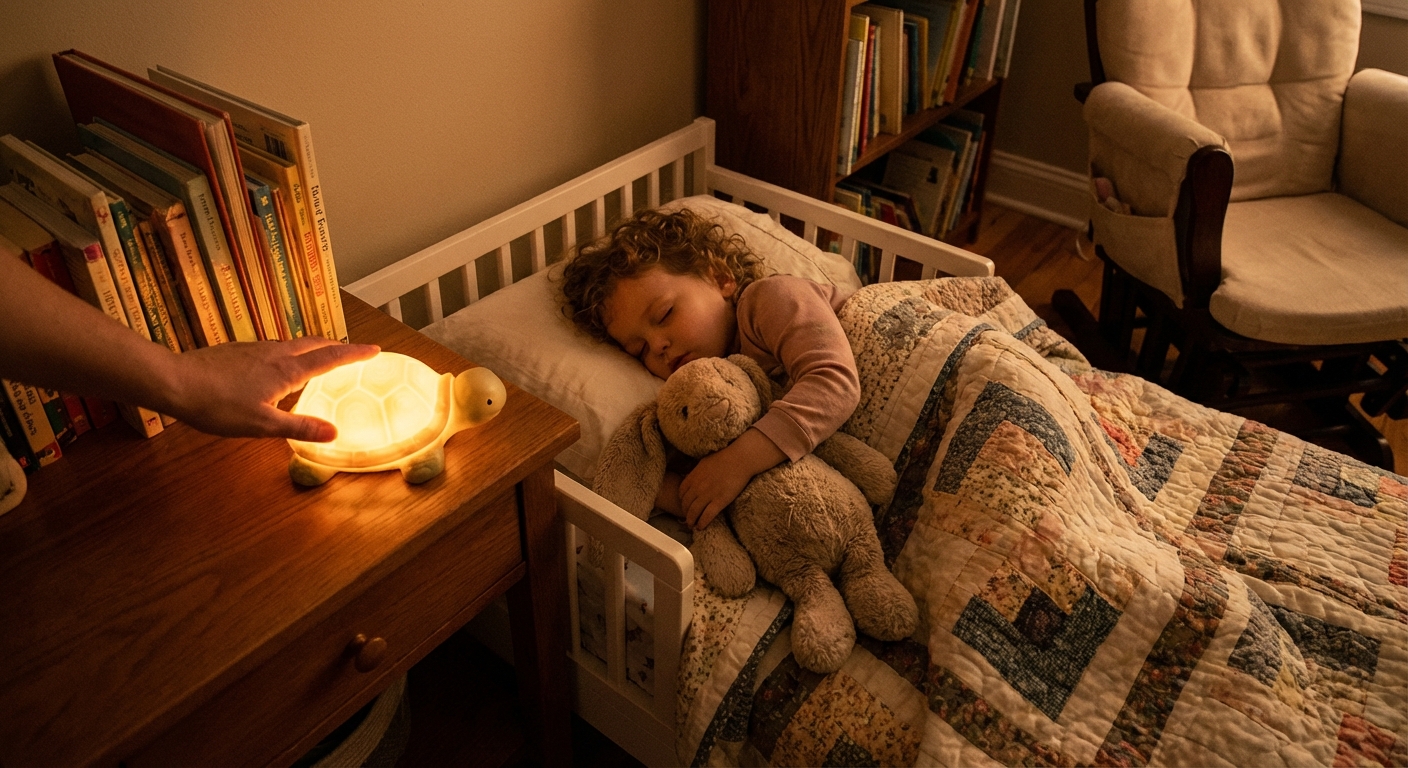
- Offer a simple tool: Nightlight, door cracked, white noise, comfort item.
- Do a quick room check together: 30 seconds, then back to bed.
Crib to bed transition
This transition is a common sleep disruption, even for great sleepers. Your toddler is not “regressing.” They just gained freedom and they plan to use it.
When to switch (if you have a choice)
- Switch if your child is climbing out of the crib or is tall enough that it is no longer safe.
- If safety is not an issue, many kids do better waiting until closer to 3 years.
- Also check your crib manual: Manufacturers list specific height and rail limits. Those rules matter more than any general age guideline.
Set the room up for success
- Toddler-proof the room: Anchor furniture, cover outlets, secure cords, lock away hazards.
- Keep the bed simple: One blanket, one lovey, minimal distractions.
- Consider a baby gate at the door: For some families, it provides safety without locking a child in a room.
- Use an “okay to wake” light: This often works best around age 3 and up, but some 2-year-olds can learn it with practice.
What to do when they keep getting out of bed
Use the silent return approach: walk them back with as little interaction as possible. No lectures, no negotiations, no new bedtime steps. Just “It’s bedtime,” place them back, and leave. Expect a lot of repetitions the first few nights. The more neutral you are, the faster it usually improves.
Common mistake
Adding new “extras” every time they pop out. That teaches: getting out of bed equals more attention and more activities. Your routine should be the same whether they stay in bed or not.
Consistency tips
- Use the same order nightly: Bath, pajamas, teeth, books, song, bed.
- Start at the same time: A 30-minute swing can create overtired chaos.
- Keep weekends close to weekdays: If bedtime shifts later, keep it within 30 to 60 minutes.
- Get daylight and movement: Morning light and physical play help sleep pressure build naturally.
- Protect the nap sweet spot: Late naps can sabotage bedtime, but skipping naps too early can also backfire.
If you are co-parenting, pick a routine you can both follow. Toddlers do not need perfection, but they do notice when the rules change depending on who is on duty.
Nap transitions to watch
- 2 naps to 1 nap: Common around 12 to 18 months. During the transition, bedtime often needs to be earlier for a while.
- Dropping the nap: Some children stop napping around 3 to 5 years. A child who still naps may need a later bedtime. A child who no longer naps often needs an earlier one.
Troubleshooting
“My toddler is suddenly fighting bedtime”
- Try bedtime 15 to 30 minutes earlier for a week.
- Check for changes: new sibling, travel, daycare shift, dropping a nap.
- Make sure the routine includes connection (cuddle, talk time) before you expect separation.
“They nap fine but bedtime is a disaster”
- Consider shortening or capping the nap (for some kids), especially if bedtime is drifting late.
- If they still need the nap, move bedtime slightly later but keep the routine calm and consistent.
“They fall asleep fine but wake up a lot”
- Make sure sleep environment is consistent: dark room, steady white noise, comfortable temperature.
- Watch for sleep associations that require you to recreate them at night (for example, falling asleep only while being rocked).
- If you suspect illness, reflux, allergies, or snoring, check in with your pediatrician.
Middle-of-the-night returns
If your toddler comes into your room or pops out of bed overnight, use the same approach you use at bedtime: calm, boring, minimal talking. A quick bathroom trip if needed, then a silent return back to bed. Consistency matters even more at 2:00 a.m.
“Night terrors or nightmares”
Nightmares are common in older toddlers and kids can often remember them. Night terrors are different and kids usually do not remember them. Either way, stick with a calm routine. If episodes are frequent, severe, or you are worried about safety, talk with your child’s clinician.
When to call the pediatrician
Most bedtime battles are behavioral and developmental, but trust your gut. Reach out if you notice:
- Snoring most nights, gasping, or pauses in breathing
- Sleep issues plus poor growth, chronic vomiting, or significant feeding problems
- Bedtime resistance with severe anxiety or panic
- Frequent night waking with ear pain, fever, or signs of illness
If you are simply stuck in a cycle and nothing is improving after two consistent weeks, it is also reasonable to ask for help. Sometimes one small tweak makes a big difference.
Note on perspective: I share what I’ve seen as a nurse and a mom, but this article is not a substitute for medical advice for your child.
A simple routine to start tonight
If your current bedtime routine is a patchwork of survival tactics, start here. Keep it boring, predictable, and kind:
- Pajamas
- Teeth
- 2 books
- 1 song
- Goodnight script
- Lights out
And if bedtime is still messy for a while, that does not mean you are doing it wrong. It means you are parenting a toddler. With consistency, most routines start to feel easier within 1 to 2 weeks.