A sudden tug can make a toddler stop using an arm. Here’s how nursemaid’s elbow happens, what it looks like, why it usually isn’t a fracture, and what ...
Toddler Buckle Fracture After a Fall: Wrist Pain With Little Swelling

Sarah Mitchell
Sarah Mitchell is a Registered Pediatric Nurse and a mother of three who has spent over a decade helping families navigate the beautiful, chaotic early years of childhood. She combines evidence-based medical knowledge with real-world parenting experience to offer practical, compassionate advice. At Awesome Parent, Sarah's mission is to help exhausted parents find solutions, trust their instincts, and finally get some sleep.
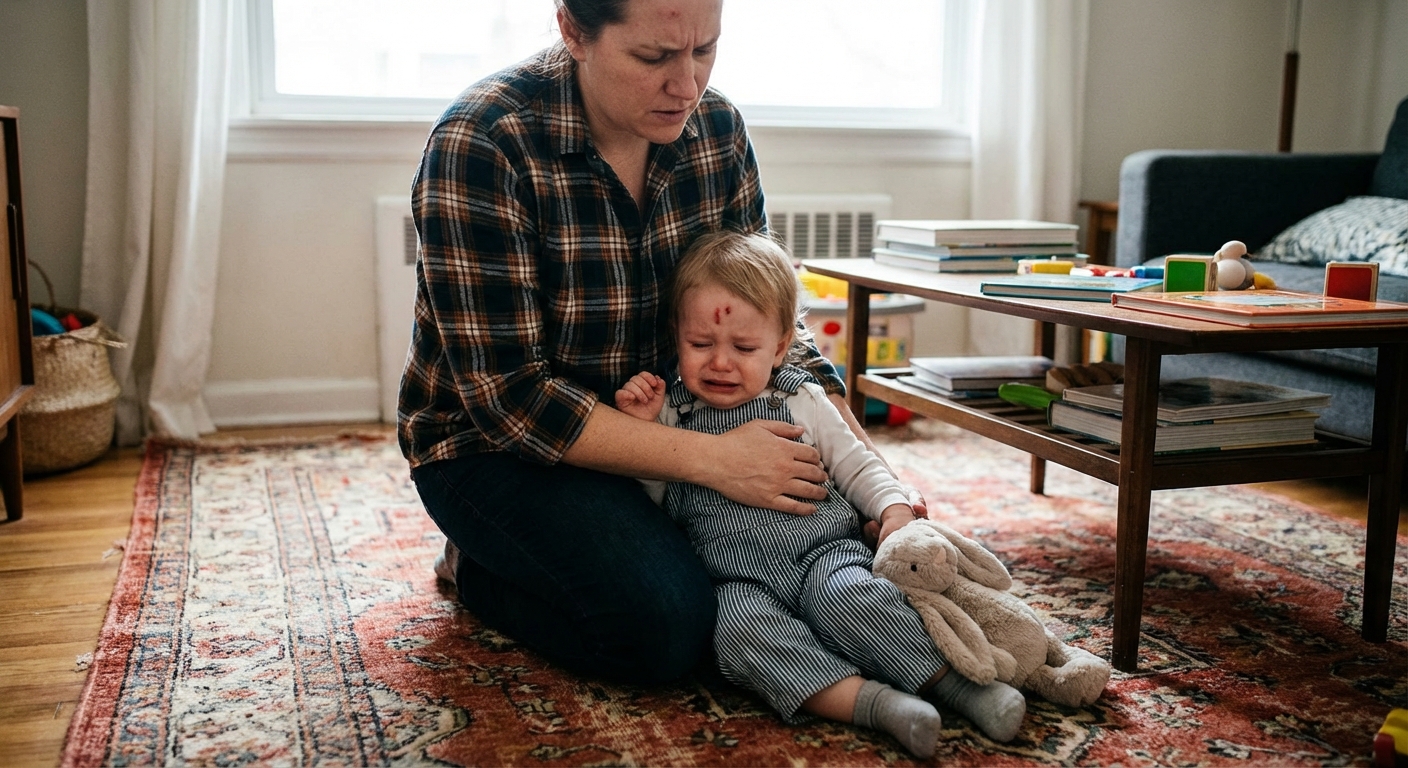
If your toddler took a seemingly small tumble and now refuses to use their hand, you are not overreacting. One common injury after a low-energy fall is a buckle fracture (also called a torus fracture) of the wrist. It can be sneaky because swelling may be minimal and your child might not point to the exact spot; they just “guard” the whole arm like it is not part of today’s plan.
As a pediatric nurse and a mom who has watched more than one kid wipe out on a living-room rug, I can tell you this: wrist buckle fractures are usually very treatable, but they deserve a proper check so your child can be comfortable and heal well.
Quick medical note: This article is for general education and is not a substitute for medical diagnosis or care. If you are worried, trust that and get your child checked. If something seems urgent, seek emergency care.

What a buckle fracture is
Young bones are more flexible than adult bones. In a buckle fracture, the bone does not snap all the way through. Instead, the bone compresses and buckles on one side, usually near the wrist at the end of the radius (one of the forearm bones).
This often happens when a child falls forward and lands on an outstretched hand. The force is not high enough to cause a dramatic break, but it can be enough to “crumple” the bone near the wrist.
Common toddler scenarios
- Falling off a couch or bed
- Tripping while running and landing on a hand
- Falling from a low step or playground equipment
Clues with little swelling
Parents expect a broken bone to look obvious. Buckle fractures often do not. Here are the patterns I see over and over in clinic and in real life.
Signs that make me think “possible buckle fracture”
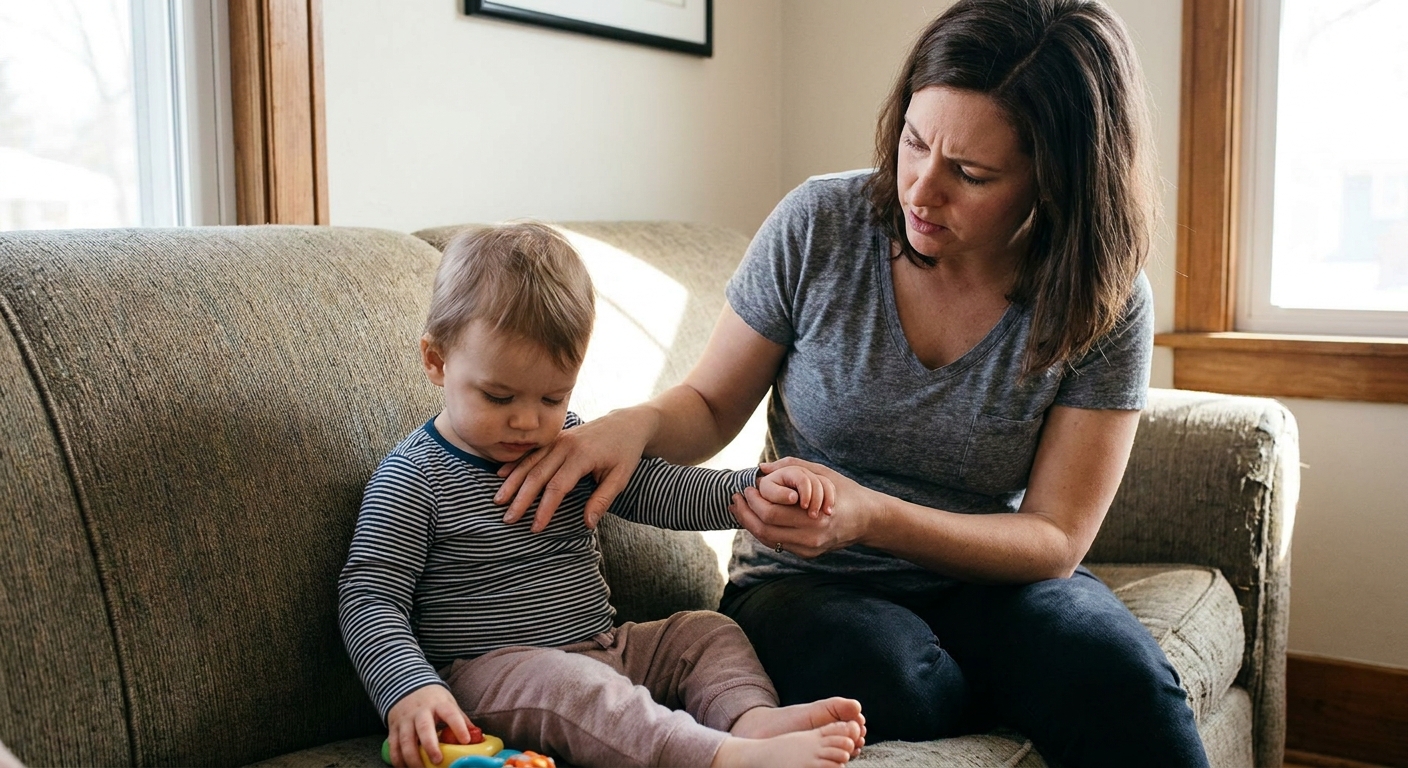
- Guarding the arm: they keep the elbow bent, hold the arm close, or protect it with the other hand.
- Refusing to use the hand: not wanting to grip a cup, hold a spoon, push up from the floor, or bear weight while crawling or climbing.
- Pain with twisting: the motion of turning a doorknob, opening a snack pouch, or rotating the forearm palm up or down.
- Point tenderness near the wrist: they may pull away or cry when you press along the thumb side of the wrist or just above it.
- Mild swelling or a little warmth near the wrist, sometimes so subtle you only notice compared with the other side.
- No big bruise: bruising can show up later or not at all.
In toddlers, the biggest clue is often behavioral: “They are acting fine, but they will not use that hand.” That is worth paying attention to.
When an X-ray makes sense
If your toddler has wrist pain after a fall and is not using the arm normally, an X-ray is often the quickest way to get clarity and pain relief.
It is reasonable to get an X-ray today if:
- Your child is still refusing to use the hand or wrist after a short period of calming and rest (for example, 1 to 2 hours)
- There is tenderness right at the wrist or just above it
- You see swelling, even mild swelling
- Pain wakes them up or keeps them from settling
- They cannot comfortably do normal kid things like holding a toy, feeding themselves, or pushing up from the floor
Go to urgent care or the ER now if:
- The wrist or arm looks deformed (crooked or an unusual angle)
- There is an open wound near the injury
- Fingers are blue, pale, cold, or your child cannot wiggle them
- Your child has severe pain that is not improving with comfort measures
- There was also a concerning head injury (loss of consciousness, repeated vomiting, unusual sleepiness, seizures, or a worsening headache)
A quick note on X-rays: Classic buckle fractures are often visible, but some subtle injuries can be hard to see at first. If the first X-ray is read as normal and your child still will not use the wrist 24 to 48 hours later, it is appropriate to recheck with your pediatrician or return for reassessment.
Another important note: Growth-plate injuries (often called Salter-Harris injuries) can sometimes look like a “sprain” at first and may not be obvious without the right exam and imaging. Persistent tenderness near the wrist after a fall is a good reason to be evaluated.
Nursemaid’s elbow vs wrist injury
Parents often google “won’t use arm” and end up at nursemaid’s elbow, which is common, but it has a different story and a different location.
Nursemaid’s elbow (radial head subluxation)
- Mechanism: usually a pull on the arm, not a fall. Think lifting a child by the hand, yanking away from traffic, swinging by the arms, or a sudden tug during a tantrum.
- Location: the problem is at the elbow, not the wrist.
- How the arm looks: child typically holds the arm slightly bent and close to the body, with the forearm turned inward (palm down). Often there is no swelling.
- Tenderness: many kids dislike elbow movement, but the wrist itself may not be particularly tender.
- Treatment: a clinician can often reduce it quickly with a simple maneuver, and many children start using the arm within minutes.
Buckle fracture
- Mechanism: commonly a fall onto an outstretched hand.
- Location: wrist or just above the wrist.
- Swelling: may be mild, but tenderness is often focused around the wrist.
- Treatment: immobilization with a splint or brace, and a healing period of weeks.
If your toddler fell and now points to the wrist area, a buckle fracture is a strong possibility.
What to do at home
If you are on the fence and your child is stable, comfortable, and you are heading in for evaluation soon, you can do a few things that help without risking harm.
Comfort and protection
- Limit movement: encourage your toddler to keep the arm still. If they will tolerate it, you can loosely support the forearm across the body with a scarf or small towel like a sling.
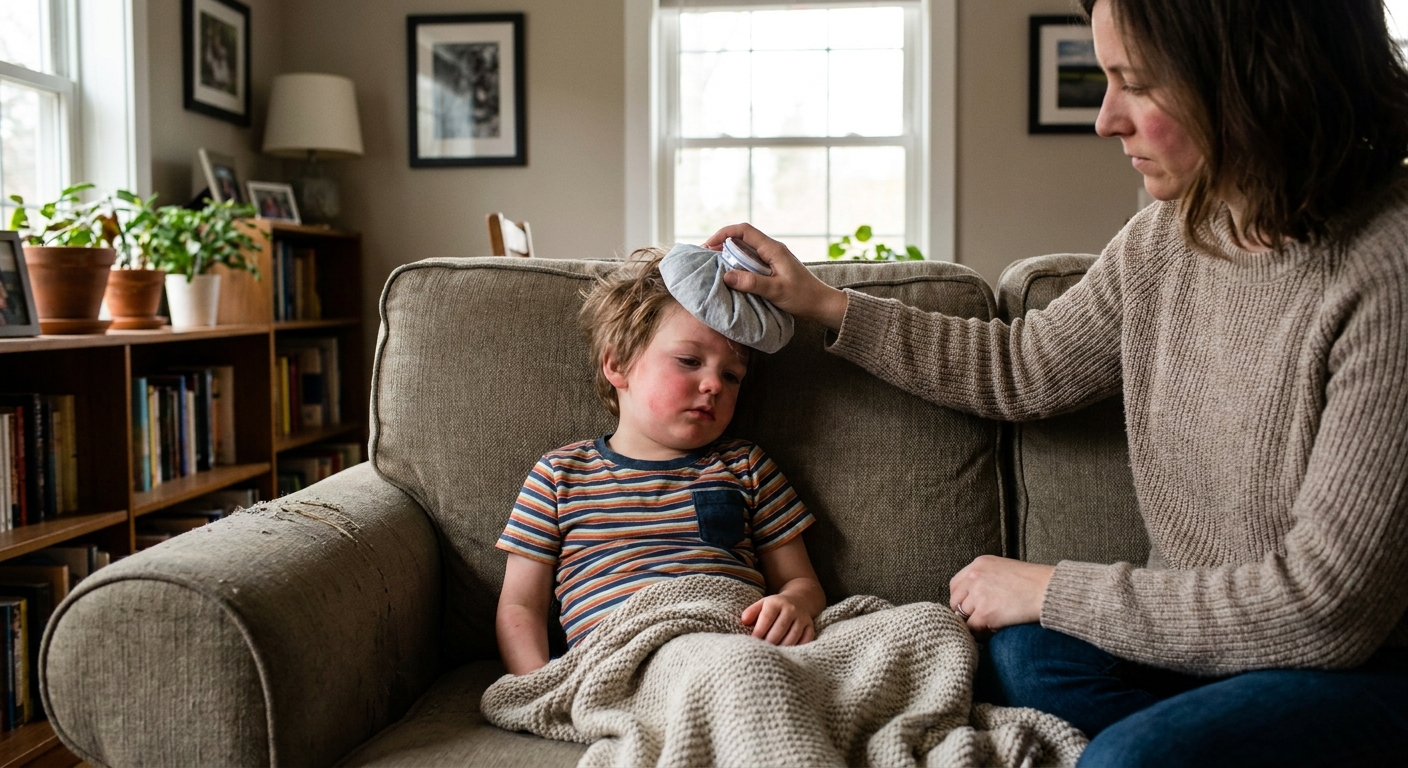
- Cold pack: 10 to 15 minutes at a time, with a cloth barrier. Little kids often prefer “cold for a song” rather than “cold for a timer.”
- Pain relief: use weight-based acetaminophen or ibuprofen if your child can take them. Follow the dosing on your bottle or your pediatrician’s guidance.
- Remove tight items: take off bracelets or snug sleeves in case swelling increases.
Avoid these pitfalls
- Do not repeatedly “test” the wrist to see if it still hurts.
- Do not force rotation or have them do push-ups “to prove it is fine.”
- Do not apply a tight wrap that could reduce circulation.

What splinting looks like
If the X-ray shows a buckle fracture, many clinics treat it with a removable wrist splint or brace. Some providers use a short arm cast, but removable splints are very common for uncomplicated buckle fractures because they are comfortable and easy for families.
What to expect
- Immobilization: splint or brace that keeps the wrist from bending.
- Duration: often around 3 to 4 weeks, depending on age and the exact fracture. Your clinician will give a specific timeline.
- Pain improvement: many kids feel noticeably better within a few days once the wrist is supported.
- Return to activity: typically, no climbing, rough play, scooters, trampolines, or playground falls until your clinician says it is OK. A good rule at home is that they should be comfortable and using the arm normally before returning to higher-risk play.
Splint care basics
- Keep it dry and clean.
- Check fingers several times a day for color, warmth, and swelling.
- Call if the splint seems too tight, pain is worsening, or fingers look pale or bluish.
Follow-up
Follow-up varies by region and provider, but buckle fractures are usually straightforward.
Common follow-up plans
- Pediatrician follow-up in 1 to 2 weeks to check comfort, fit of the splint, and function.
- Orthopedic follow-up may be recommended if the fracture is closer to a growth plate, there is any question about alignment, your child is very young, or symptoms are not improving as expected.
- Repeat X-ray is not always needed for classic buckle fractures, but some clinicians do repeat imaging depending on the case and local protocols.
Call your clinician sooner if
- Pain is not improving after a few days in the splint
- Your toddler still refuses to use the hand at all after a week
- Swelling is increasing or new bruising spreads quickly
- Numbness, tingling, or finger color changes occur
Safety note: If the story of the injury does not match what you are seeing, there are multiple injuries, or you have any concern about possible abuse or unsafe handling, seek immediate medical evaluation. You do not need to be certain to ask for help.
FAQ parents ask at 3 AM
Can a fracture really happen with barely any swelling?
Yes. Especially with buckle fractures. Many toddlers have very mild swelling, and the biggest sign is refusing to use the hand.
What if my child is using the hand a little?
Partial use does not rule out a fracture. Some kids will still hold a toy or eat a snack but avoid twisting, pushing up from the floor, or putting weight on the wrist.
Could it just be a sprain?
It could, but true ligament sprains are less common in toddlers than in older kids and adults. After a fall, persistent wrist tenderness and guarding makes an X-ray a reasonable next step.
Is it okay to wait until morning?
If there is no deformity, no circulation concerns in the fingers, and your child can be kept comfortable, waiting until morning for an urgent care or pediatric visit is often reasonable. If anything feels off or pain is severe, go in sooner.
The bottom line
A toddler can absolutely injure a wrist from a small fall, and buckle fractures are a classic “minimal swelling, big guarding” problem. If your child is not using the hand normally, especially after landing on an outstretched hand, an X-ray is a sensible move. The good news is that treatment is usually straightforward with a splint or brace and a relatively short healing window.
If you are stuck deciding, trust the part of you that noticed something is different. That instinct gets a lot of tired parents to the right care at the right time.