Toddler Constipation: Causes and Home Remedies

Sarah Mitchell
Sarah Mitchell is a Registered Pediatric Nurse and a mother of three who has spent over a decade helping families navigate the beautiful, chaotic early years of childhood. She combines evidence-based medical knowledge with real-world parenting experience to offer practical, compassionate advice. At Awesome Parent, Sarah's mission is to help exhausted parents find solutions, trust their instincts, and finally get some sleep.
If your toddler is straining, crying on the potty, or producing tiny hard “rabbit” poops, you are not alone. Constipation is a very common reason parents end up reaching out to their pediatrician. The good news is that most toddler constipation is caused by very fixable things like low fiber, not enough fluids, or a little potty-training power struggle.
Let’s walk through what constipation really means at ages 1 to 4, what commonly triggers it, what you can safely do at home, and the specific red flags that mean it is time to get medical help.
What counts as constipation in toddlers
Constipation is not just “not pooping every day.” Some toddlers poop twice a day, some go every other day, and some healthy kids go every 2 to 3 days. All of those can be normal if stools are soft and easy to pass.
Typical signs of constipation
- Hard, dry stools that look like small pellets or a thick, dry log
- Painful pooping, straining, crying, or arching the back
- Skipping stools for several days plus discomfort or hard stool when it finally comes
- Very large stools that may clog the toilet
- Stool withholding behaviors (more on this below)
- Stomachaches, low appetite, or a firm belly that improves after a bowel movement
- Skid marks or accidents in underwear after being potty trained (this can happen when softer stool leaks around a hard “plug”)
Frequency: what is normal?
Many toddlers go anywhere from 3 times a day to every 2 to 3 days. What matters more than the number is whether stool is soft and easy to pass.
Constipation is more likely when your toddler has hard or painful stools and or is going less often than their usual pattern for a sustained stretch.
Stool appearance: a simple way to judge
If you want a quick visual guide, here’s the practical version parents use:
- Healthy: soft, formed, easy to pass
- Borderline: thicker and drier than usual, some straining
- Constipated: pellets, cracked dry stools, very large hard stools, or any stool that causes significant pain
If you are seeing blood on the outside of the stool or on the wipe, it is often from a small tear called an anal fissure caused by hard stool. It is common, but it is also a sign you want to soften stools sooner rather than later. (If blood looks mixed into the stool, call your child’s clinician.)
Why toddlers get constipated
Toddlers are basically tiny scientists who live on crackers and strong opinions. Constipation often shows up during transitions: switching to cow’s milk, starting daycare, traveling, potty training, or a picky-eating phase.
Common dietary causes
- Low fiber intake: Many toddlers fill up on white bread, pasta, cheese, and processed snacks and skip fruits, veggies, and whole grains.
- Not enough fluids: Dehydration makes the colon pull more water out of stool, turning it dry and hard.
- Too much dairy for their system: Large amounts of milk, cheese, and yogurt can be constipating for some kids, especially if it replaces fiber foods.
- Iron supplements: Iron can firm stools. Do not stop prescribed iron without discussing with your child’s clinician, but it is a helpful clue.
Cow’s milk transition: a common moment
Some toddlers get constipated around the switch to cow’s milk or during a phase of heavy milk intake. Often the issue is not that milk is “bad”. It is that it can crowd out water and fiber foods. If milk has become the main beverage and meals are turning into mostly dairy and crackers, constipation can show up fast.
Behavioral and developmental causes
- Withholding: If pooping hurt once, many kids try to avoid it next time. Withholding makes the stool sit longer, get bigger and harder, and hurt more. It becomes a loop.
- Potty training pressure: Even gentle potty training can trigger withholding if a child feels rushed, scared of the toilet, or wants control.
- Distraction and “too busy” syndrome: Some toddlers ignore the urge to go because playing is clearly more important than human digestion.
- Changes in routine: Travel, starting preschool, new siblings, and stress can all disrupt toileting.
Medical contributors (less common, but real)
Most constipation in toddlers is functional constipation, meaning it is related to diet, habits, and withholding, not an underlying disease. But constipation can be worsened by things like:
- Recent illness with poor intake
- Certain medications (ask your clinician if any of your child’s meds can contribute)
- Low muscle tone or developmental differences that affect toileting habits
Rarely, constipation is a sign of an underlying condition. See the “when to call” section below for red flags.
Home remedies that actually help
The goal is simple: soft, easy-to-pass stools and a toddler who stops fearing the bathroom. Most families need a combination of food, fluids, and smart potty habits.
1) Start with stool-softening foods
Think of fiber plus natural sorbitol (a sugar alcohol found in certain fruits that can help draw water into the stool).
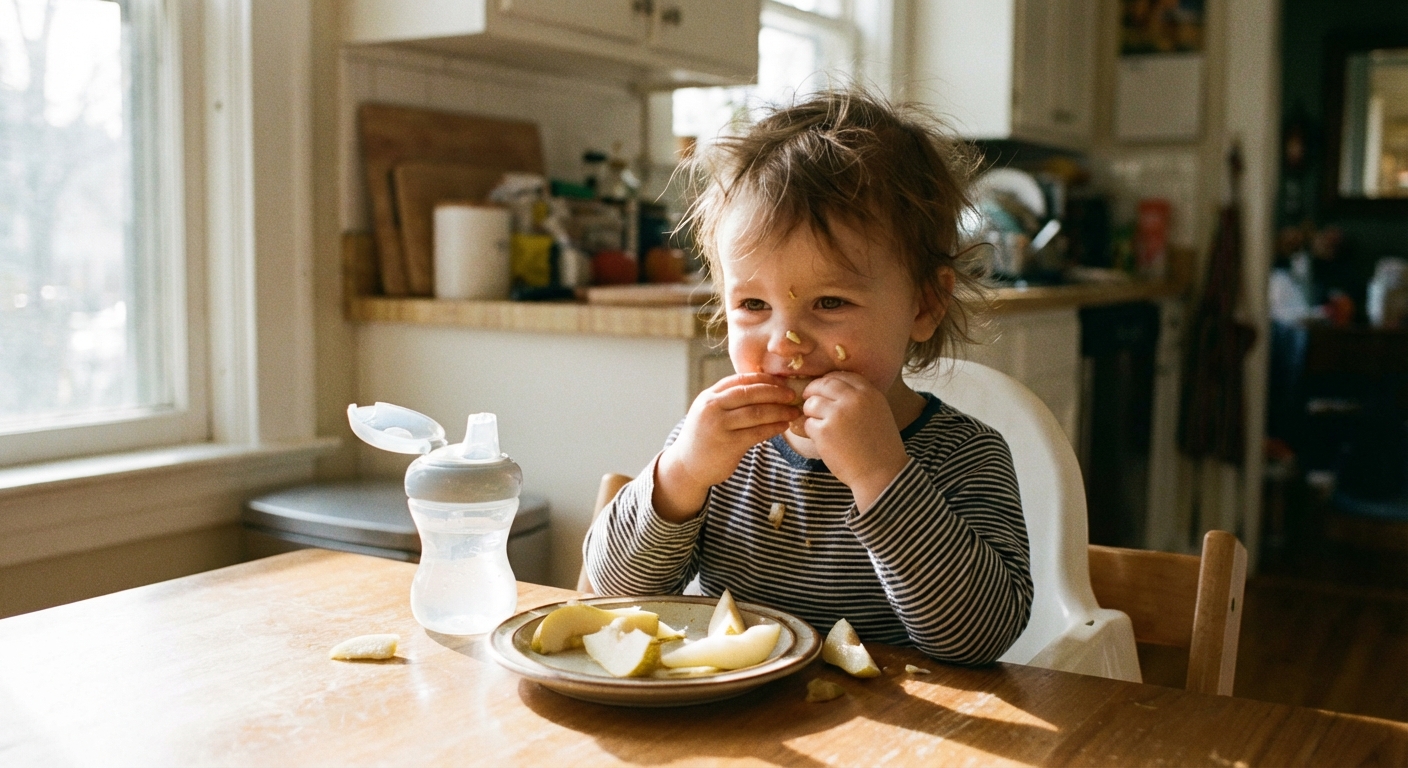
- Pears (fresh, canned in water, or pear puree)
- Prunes or prune puree (a few prunes chopped into oatmeal can work surprisingly well)
- Peaches and plums
- Kiwi
- Beans and lentils (try them in quesadillas, soups, or blended into sauces)
- Oatmeal, whole grain bread, brown rice, quinoa
- Chia or ground flax mixed into yogurt, applesauce, or oatmeal
- Vegetables your toddler will tolerate, especially peas, sweet potato, broccoli, and carrots
Quick parent note: “More fiber” works best when your child is also drinking enough. Adding fiber without fluids can backfire and make stools bulkier and harder to pass.
2) Hydration: make it easier to drink
Water helps, but toddlers do not always care about your hydration goals. Try:
- Offering a small cup frequently rather than one big cup
- Using a fun straw cup or water bottle reserved for “bathroom buddy water”
- Serving water-rich foods like watermelon, cucumber, oranges, soups, and smoothies
Milk tip: If your toddler drinks a lot of milk, consider whether it is crowding out water and fiber foods. Many toddlers do well with moderate milk intake paired with fiber.
3) Juice: a tool, not a lifestyle
Pear, prune, or apple juice can help some toddlers because of sorbitol. If you use juice, keep portions small and consider it a short-term helper, not an all-day drink. If you are unsure what is appropriate for your child, ask your pediatrician.
4) Try a “toilet time” routine (without pressure)
The body’s natural urge to poop is often strongest after meals, especially breakfast. You can use this to your advantage.
- Have your toddler sit on the potty or toilet 5 to 10 minutes after meals.
- Keep it calm and boring in a good way. A short book or a simple song is fine.
- Praise the sitting, not the pooping. You are building a habit, not a performance.
5) Fix the posture
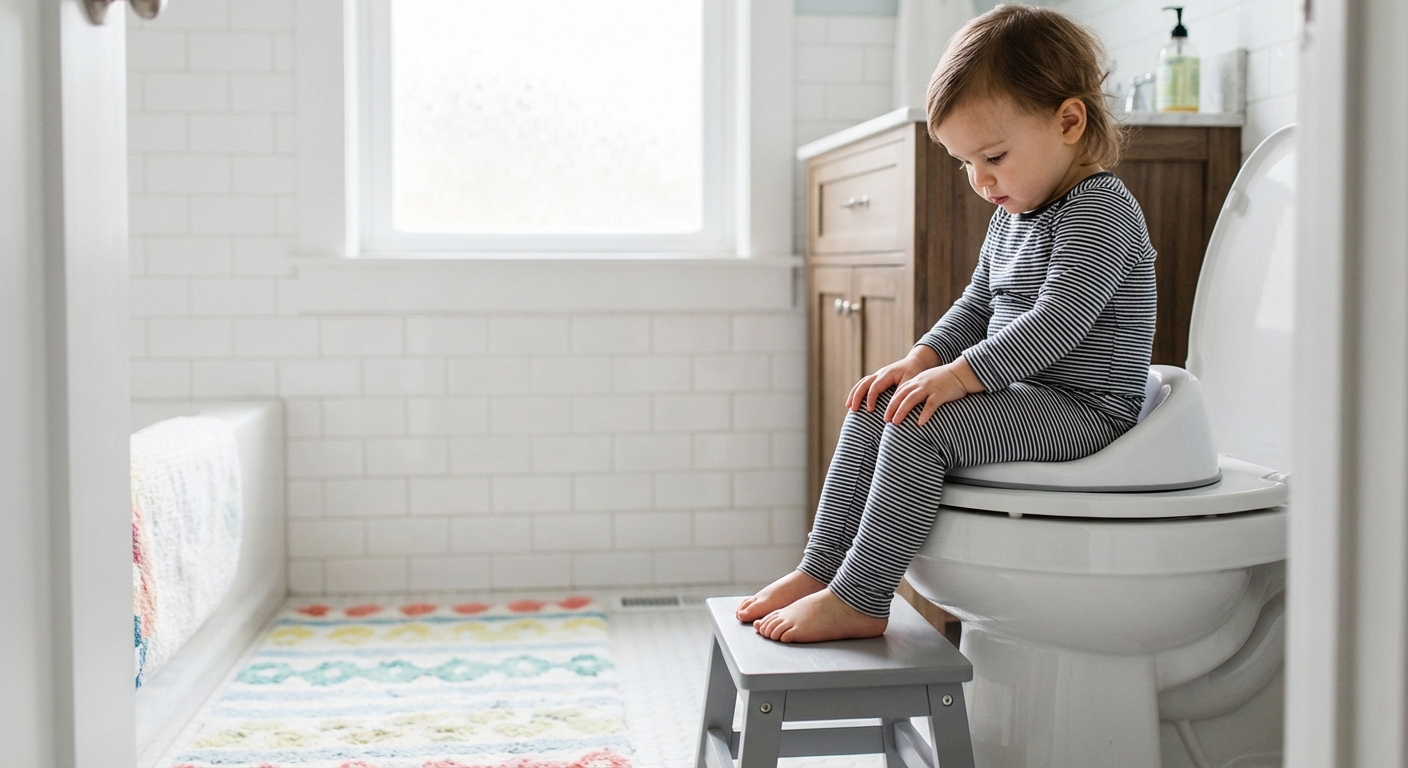
For many toddlers, constipation improves when we help them get into a better pooping position. On an adult toilet, little legs dangle, and that makes it harder to relax the pelvic floor.
- Use a sturdy step stool so knees are bent and feet are supported.
- Encourage “knees up” and a gentle forward lean.
- If using a potty chair, make sure it is stable and comfortable.
Withholding: what it looks like and how to stop the cycle
Withholding is often mistaken for “my toddler is trying to poop but can’t.” In reality, many toddlers are actively holding it in because they remember that it hurt. The priority is to make poop feel safe again by keeping stools consistently soft.
Common withholding signs
- Standing stiffly on tiptoes
- Crossing legs, clenching butt cheeks
- Hiding behind furniture
- Rocking, pacing, or suddenly getting very cranky
- Saying “no potty!” while clearly needing to go
How to respond
- Stay neutral: Big reactions can increase anxiety.
- Name what you see: “Your body is telling you it needs to poop. We can help it be less scary.”
- Prioritize soft stools: If stool is soft, it hurts less, and the fear decreases.
- Pause potty training if needed: If constipation started during potty training and your child is stressed, it is okay to take a break. This is not failure. This is strategy.
What to avoid
- Forcing potty sits or punishing accidents: this often increases withholding.
- Too much binding food during a flare: big amounts of cheese, white rice, white bread, and processed snacks can worsen constipation in some kids. (Bananas vary by child too, especially less-ripe bananas.)
- Just waiting it out for weeks: chronic constipation can stretch the rectum and make it harder for your toddler to sense the urge to go. Earlier support is easier than late-stage crisis management.
- Using enemas or stimulant laxatives without medical guidance: talk to your pediatrician first for toddler-safe options and dosing.
When home steps are not enough
Sometimes food, fluids, and routines do not fully break the hard-stool cycle, especially if withholding is strong. In those cases, pediatricians often recommend an osmotic stool softener (a medicine that pulls water into the stool) for a period of time to keep stools consistently soft while your child’s body and bathroom confidence reset. Do not start or dose medication without guidance from your child’s clinician, but know that needing a medical plan is common and not a parenting fail.
When constipation needs medical attention
Most toddler constipation improves with home changes, but there are times you should call your child’s pediatrician or seek urgent care.
Call your pediatrician if
- Constipation lasts more than 1 to 2 weeks despite home changes
- Your toddler has recurrent painful stools or is regularly withholding
- You see blood more than a small streak on the wipe, bleeding keeps happening, or blood appears mixed in the stool
- You notice new stool accidents after potty training (possible overflow soiling)
- Your child has poor growth, persistent low appetite, or ongoing belly pain
Seek urgent care now if
- Your toddler has severe belly pain, a hard distended abdomen, or inconsolable crying
- Vomiting accompanies constipation, especially green (bilious) vomiting
- Your child is very lethargic, weak, or showing signs of dehydration (very dry mouth, no tears, significantly fewer wet diapers or urination)
- They cannot pass stool or gas and appear very uncomfortable
Red flags to mention right away
These do not automatically mean something serious, but they are important clues for your clinician:
- Constipation starting in the first month of life or a history of delayed first stool as a newborn
- Ribbon-like stools repeatedly
- Fever with constipation
- Weight loss or poor weight gain
- Weakness in the legs or changes in walking
Fissures: quick comfort tips
If hard stool caused a small tear (fissure), the area can be sore, and that pain can fuel more withholding. Along with softening the stool, many parents find these basics helpful:
- A warm bath to relax and soothe the area
- A thin barrier of petroleum jelly or zinc oxide on the outside skin to reduce stinging (ask your clinician if you are not sure what to use)
- Gentle wiping, or rinsing with water when possible
A simple 3-day reset plan
If your toddler is mildly constipated and otherwise well, here’s a gentle plan many families find helpful.
Day 1: soften and support
- Offer pears or prunes once or twice
- Add oatmeal or a whole grain option
- Extra water with meals and snacks
- Potty sit 5 to 10 minutes after meals with feet supported
Day 2: repeat and reduce pressure
- Keep fruit and fiber going
- Cut back constipating foods during the flare (especially heavy cheese and lots of refined carbs)
- Short, calm post-meal potty sits
Day 3: watch the pattern
- If stools are softer and easier, keep the routine for a couple of weeks so your toddler’s body relearns regular pooping.
- If there is no improvement, your child is in pain, or withholding is escalating, call your pediatrician. Many toddlers need a clinician-guided plan to break the hard-stool cycle safely.
Frequently asked questions
Is it constipation if my toddler poops every day?
Yes, if the stool is hard, dry, very large, or painful to pass. Frequency can look “normal” while the stool quality is not.
What about probiotics?
Some families find probiotics helpful, others see no difference. Evidence is mixed. If you want to try one, choose a reputable brand and check with your pediatrician, especially if your child is immunocompromised or has complex medical issues.
Can constipation cause pee accidents?
It can. A stool-filled rectum can put pressure on the bladder, leading to urinary urgency, daytime accidents, or bedwetting. If this is happening, address constipation and discuss with your pediatrician.
Bottom line
Toddler constipation is common, fixable, and rarely a sign of something dangerous. Focus on softening stool with fiber and fluids, remove pressure from the potty process, and support good toilet posture. If constipation is persistent, painful, or paired with red flags like vomiting, severe belly pain, poor growth, or dehydration, loop your pediatrician in sooner rather than later.
You are not failing because your toddler is constipated. You are parenting a small human with an underdeveloped digestive system and a very developed will. Both can be true.