Toddler Fell and Hit Head: When to Worry

Sarah Mitchell
Sarah Mitchell is a Registered Pediatric Nurse and a mother of three who has spent over a decade helping families navigate the beautiful, chaotic early years of childhood. She combines evidence-based medical knowledge with real-world parenting experience to offer practical, compassionate advice. At Awesome Parent, Sarah's mission is to help exhausted parents find solutions, trust their instincts, and finally get some sleep.
If you are reading this with one hand on your child and the other hand on your phone, take a breath. Head bumps are one of the most panic-searched parenting moments for a reason. They are loud, dramatic, and they make us imagine the worst.
Here is the good news: most toddler falls cause a scary-looking bruise and a big cry, not a dangerous brain injury. But some symptoms do mean “go now.” This guide will help you decide what to do next and what to watch over the next 24 to 48 hours.
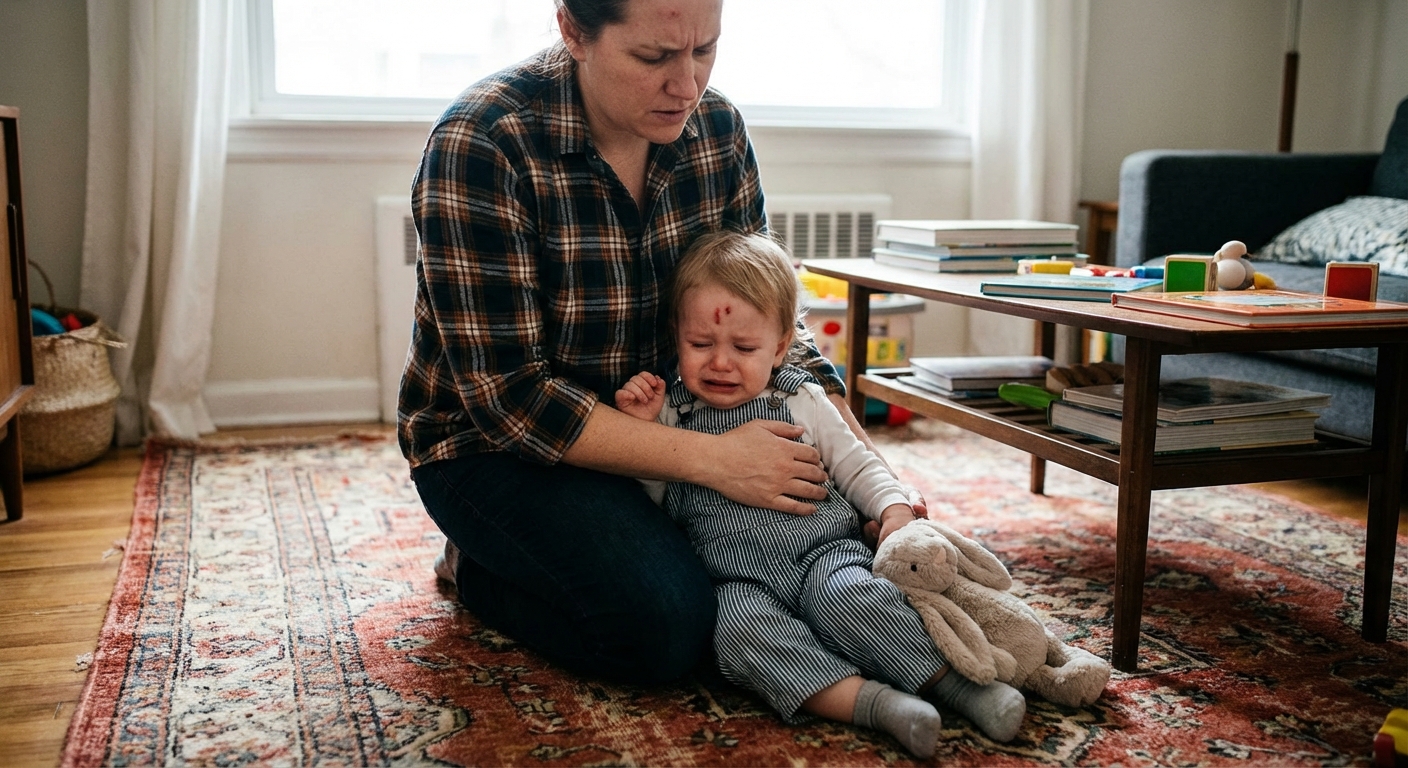
First: quick action steps (60-second checklist)
Right after the fall
- Check breathing and responsiveness. If your child is not waking up normally, is having trouble breathing, or is having a seizure, call 911.
- Look for bleeding or a cut. Apply continuous gentle pressure with a clean cloth or gauze. Try not to keep lifting the cloth to “check,” since that can restart bleeding. If it will not stop after about 10 minutes, the cut is gaping, or you can see deeper tissue, seek urgent care.
- Check the neck. If there is severe neck pain, stiffness, or they are not moving their neck normally, keep them still and call 911.
- Calm them first, then assess. A hard cry can look like “confusion.” Once they settle, you can judge behavior more accurately.
- Use an ice pack wrapped in cloth for 10 to 15 minutes for swelling.
If your child seems basically like themselves after calming down, you can often monitor at home, but keep reading for the warning signs that change that plan.
When to call 911
Call 911 (or your local emergency number) right away if any of the following happen after a head injury:
- Ongoing unresponsiveness or they are very hard to wake
- Seizure or abnormal repetitive jerking movements
- Trouble breathing or bluish lips
- Severe neck pain, inability to move the neck, or concern for spinal injury
- Uncontrollable bleeding or a wound that clearly needs urgent repair
- Repeated vomiting with worsening sleepiness or a child who cannot stay awake
- They are getting worse quickly, not better
Transport matters too. If your child is unstable (seizing, struggling to breathe, very hard to wake), or you cannot safely transport them, call 911. If they are stable and you can safely get to care quickly, your pediatrician or local nurse line can help you choose the right place to go.
If your gut says “something is really off,” it is okay to call. Dispatch and triage nurses do this all day: help families decide the safest next step.
When to go to the ER today
This is the “urgent evaluation” category. Your child may be stable enough to ride in a car, but they still need to be seen today. Go to the emergency room (or urgent care only if your pediatrician specifically directs you there and your child is stable) if you notice any of these warning signs:
- Any loss of consciousness (even brief)
- Repeated vomiting (often 2 or more times), vomiting that continues, or vomiting paired with unusual sleepiness
- Severe or worsening headache (for toddlers: persistent head holding, intense crying that does not settle, or refusing to play)
- Unequal pupils (one pupil clearly larger than the other) or new vision problems
- Confusion, disorientation, or behavior that is not your child
- Difficulty walking, new clumsiness, weakness, or poor coordination that is clearly worse than baseline toddler chaos
- Slurred speech or trouble speaking
- Blood or clear fluid coming from the nose or ears
- Large scalp swelling, especially in babies, or swelling that is rapidly enlarging
- Deep cut that may need stitches or the edges will not stay together
- High-risk mechanism:
- Fall from a significant height (as a rough guide, more than 3 to 5 feet, or higher than the child’s height)
- High-speed crash (car, bike, ATV)
- Being struck by a fast-moving object
- Any injury that was not a simple trip-and-fall
- Bleeding disorder or blood thinners (or you are not sure)
One vomiting episode can happen from crying hard, gagging, or swallowing blood from a mouth injury. But repeated vomiting, or vomiting paired with worsening sleepiness, is when we worry more about brain injury.

When it is usually okay to monitor at home
Many toddlers can be safely watched at home if:
- They cried right away and calmed within a reasonable time
- They are alert, making eye contact, and responding normally
- They are walking and using their arms and legs normally for them
- They have no warning signs (repeated vomiting, unequal pupils, worsening sleepiness, seizure, severe headache, etc.)
- The fall was low height and typical, like tripping while running or tumbling off the couch
“Monitor at home” does not mean “ignore it.” It means you are actively watching for changes and you know what would make you seek care.
Concussion signs in toddlers
A concussion is a mild traumatic brain injury. It does not always involve loss of consciousness. In toddlers, the signs can be subtle and can look like typical toddler behavior, which is… not ideal for our stress levels.
Common concussion signs
- More cranky than usual, hard to console, or “not themselves”
- Sleep changes: more tired, naps are longer, or trouble falling asleep
- Balance issues: more stumbling than normal, seems wobbly
- Sensitivity to light or noise (squinting, covering ears, wanting a dark room)
- Headache (may show as head holding, saying “owie,” or increased irritability)
- Appetite changes or nausea
- Less interest in play or “zoned out” moments
More concerning symptoms
- Symptoms that are worsening instead of improving
- New neurologic signs: weakness, slurred speech, unequal pupils, seizure
If you suspect a concussion, call your pediatrician for guidance the same day. Most concussions are treated with close observation and a gradual return to normal activity, but your child may need an exam.
Babies vs. toddlers
Head injuries are assessed differently depending on age, mainly because babies cannot tell us what hurts and because their skulls and brains have different risk patterns.
Babies (under 12 months)
- Lower threshold to seek care. If a baby under 3 months hits their head, many clinicians recommend evaluation even if they seem okay, depending on the details.
- Watch feeding and alertness. Poor feeding, unusual sleepiness, persistent crying, or a “different” cry can matter.
- Scalp swelling matters more. A large bump, especially on the side or back of the head, can signal a higher-risk injury in infants.
- Soft spot changes. A bulging soft spot when calm can be a red flag.
Toddlers (1 to 3 years)
- Behavior clues are key. A toddler who will not play, cannot be consoled, or is acting “drunk” needs evaluation.
- They fall a lot. Most simple falls from standing height are low risk, but you still watch closely for changes.
- Speech and walking changes are important in this age group because you know their baseline.
If you are unsure, call your pediatrician’s nurse line. This is exactly what we did all day in triage: figure out who needs immediate care, who can wait for an appointment, and who can safely watch at home.
What to watch for (24 to 48 hours)
Most serious symptoms show up in the first 24 hours, but problems can occasionally appear later. Keep an eye on your child for a full 48 hours, especially if they seem “off.”
In the first 4 to 6 hours
- Alertness: Are they easy to wake? Are they interacting normally when awake?
- Walking and coordination: Is their movement typical for them?
- Vomiting: Note how many times, when it started, and whether it is worsening.
- Headache or pain: Are they settling with comfort, fluids, and rest, or escalating?
Overnight
You do not need to keep your child awake all night if they are acting normal and have no warning signs. Sleep is healing. But you do want to be sure they are rousable.
- Check on them before you go to bed.
- If advised by your clinician, you can do one gentle wake check overnight: make sure they stir, recognize you, and settle back down normally.
- If they are hard to wake or seem confused when roused, seek care.
Day 2
- Watch for increasing irritability, sleep changes, new vomiting, or reduced interest in play.
- If concussion symptoms are present, keep the day simple: quiet play, no climbing, no roughhousing, and limit screens if they worsen symptoms.
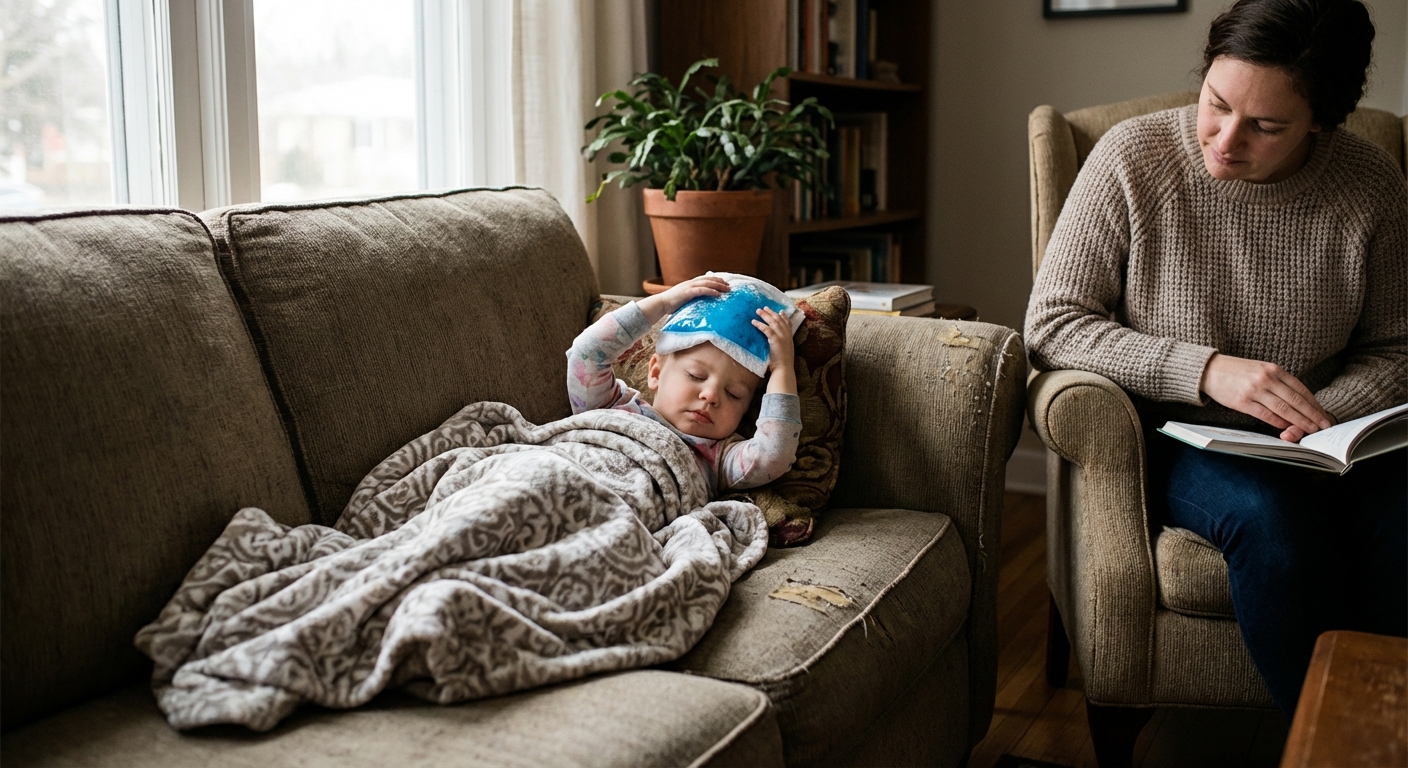
Do they need a CT scan?
Most kids with a minor head bump do not need a CT scan. Clinicians use validated pediatric decision tools (and the story of what happened plus the exam) to decide who needs imaging and who is safer to observe. If your child does not get a CT, it is often because their risk looks low, not because anyone is dismissing your concerns.
Common parent questions
My toddler has a huge bump. Is that bad?
Scalp bumps can look dramatic because the scalp has lots of blood flow. A big “goose egg” on the forehead is often less concerning than a bump on the side or back, but location alone does not decide everything. What matters most is your child’s symptoms and how the injury happened. If the swelling is rapidly growing, very tender, or paired with any warning signs, get checked.
Can I give pain medicine?
For many kids, acetaminophen is a common first choice for discomfort after a bump. Ibuprofen is usually fine for typical minor injuries too, but if there is concern for significant bleeding, a bleeding disorder, your child takes blood thinners, or you are worried this is more than a minor bump, ask your pediatrician first. Avoid aspirin unless a clinician specifically told you to use it.
Do I need to wake them up every hour?
Not usually. If your child was evaluated and you were told to monitor at home, or they have no warning signs and are acting normally, it is typically okay to let them sleep. Do a reasonable check for normal breathing and easy rousability based on your pediatrician’s guidance.
What if they fell off the bed or couch?
These are very common toddler injuries. Many are low risk, especially if the child is acting normal afterward. Still, falls from furniture can be higher risk for babies and for any child who has repeated vomiting, worsening sleepiness, loss of consciousness, or behavior changes afterward.
When should I call the pediatrician?
Call the same day if you suspect concussion, if symptoms persist beyond 24 hours, or if you just cannot shake the feeling that your child is not okay. Trust that instinct.
Return to normal activity
If symptoms suggest a concussion, think “gentle and gradual” for a few days:
- Rest, then light activity: quiet play, short walks, and normal routines as tolerated.
- Avoid re-injury: no climbing, bikes, scooters, rough play, or playgrounds until cleared or clearly symptom-free.
- Daycare and preschool: let caregivers know what happened and what to watch for. Ask for calmer activities if needed.
If symptoms return or worsen with activity, step back and call your pediatrician for a plan.
If the story does not fit
This is hard to say, but important. If an injury does not match what you were told happened, or you are worried a child may have been hurt on purpose, seek help right away. You can start with the ER, your pediatrician, or local emergency services.
What to tell the doctor
If you do seek care, these details make the visit faster and more accurate:
- When the injury happened
- How it happened and approximate height (standing height, couch height, stairs, etc.)
- Whether there was any loss of consciousness and for how long
- Number of vomiting episodes
- Changes in behavior, walking, speech, or alertness
- Any bleeding from nose or ears, or unusual bruising around eyes or behind ears
- Medical history and medications (especially blood thinners) and any bleeding disorder
Warning signs recap (save this)
Seek emergency care now if your child has:
- Loss of consciousness
- Seizure
- Unequal pupils
- Repeated vomiting or vomiting with worsening sleepiness
- Worsening headache or inconsolable crying
- Confusion, abnormal behavior, or trouble walking that is new or clearly worse than baseline
- Blood or clear fluid from the nose or ears
- Neck pain or concern for spinal injury
- Symptoms that are getting worse
- Bleeding disorder or blood thinners
Parenting truth from a pediatric nurse and mom: you will never regret getting a head injury checked when something feels off. If you are unsure, call. That is what triage is for.
Important: This article is for general education and does not replace medical advice. If you are concerned, contact your pediatrician, local nurse line, or emergency services.