Toddler Limping or Refusing to Walk: Causes and When to Worry

Sarah Mitchell
Sarah Mitchell is a Registered Pediatric Nurse and a mother of three who has spent over a decade helping families navigate the beautiful, chaotic early years of childhood. She combines evidence-based medical knowledge with real-world parenting experience to offer practical, compassionate advice. At Awesome Parent, Sarah's mission is to help exhausted parents find solutions, trust their instincts, and finally get some sleep.
If your toddler is suddenly limping or flat-out refusing to walk, your brain goes straight to worst-case scenarios. I get it. I worked pediatric triage for years, and limping was one of those symptoms that made even calm parents sound shaky on the phone. The good news is that many toddler limps are caused by something minor and fixable, and you can often gather helpful clues at home in a few minutes.
That said, a limp is also one of those symptoms we take seriously because a small number of causes need urgent care. This guide will walk you through the most common reasons toddlers limp, the serious problems we want to rule out, and clear “go now” vs “watch and wait” guidance.
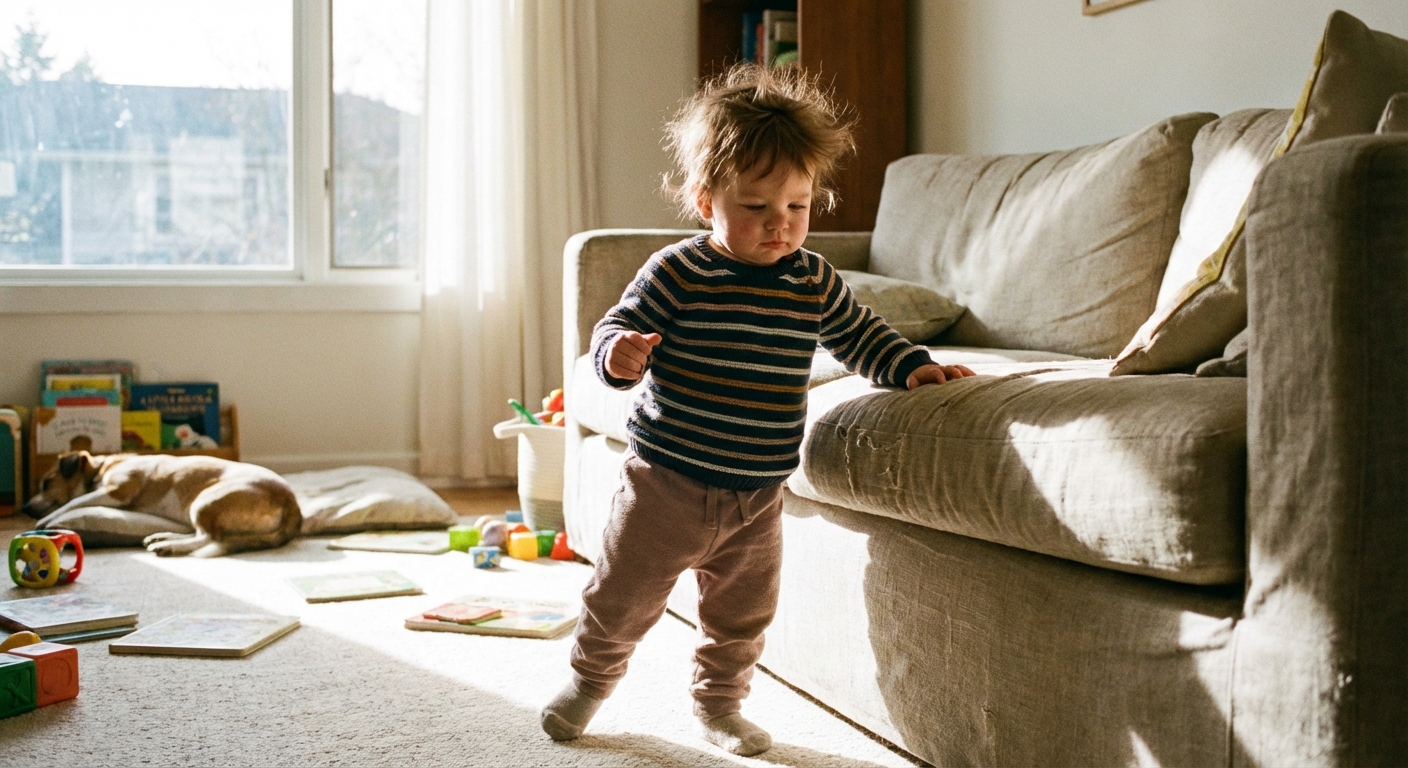
First: a quick safety check
Use this as a fast gut-check before you do anything else:
- Did they fall from height (bed, counter, playground equipment), get hit by a car/bike, or have a high-impact accident? If yes, treat this as urgent.
- Are they sick-looking (very sleepy, hard to console, breathing fast, not drinking, unusually pale)? Urgent.
- Fever plus refusal to bear weight or severe joint pain (especially hip or knee)? Go now. This is one of the scenarios where we worry about a joint infection.
- Is there obvious deformity, rapidly increasing swelling, or severe pain? Urgent.
If none of those are true, it is reasonable to slow down and do a mini assessment.
What you can check at home (in 5 minutes)
You do not need medical equipment for this. You just need a calm moment and maybe a snack bribe.
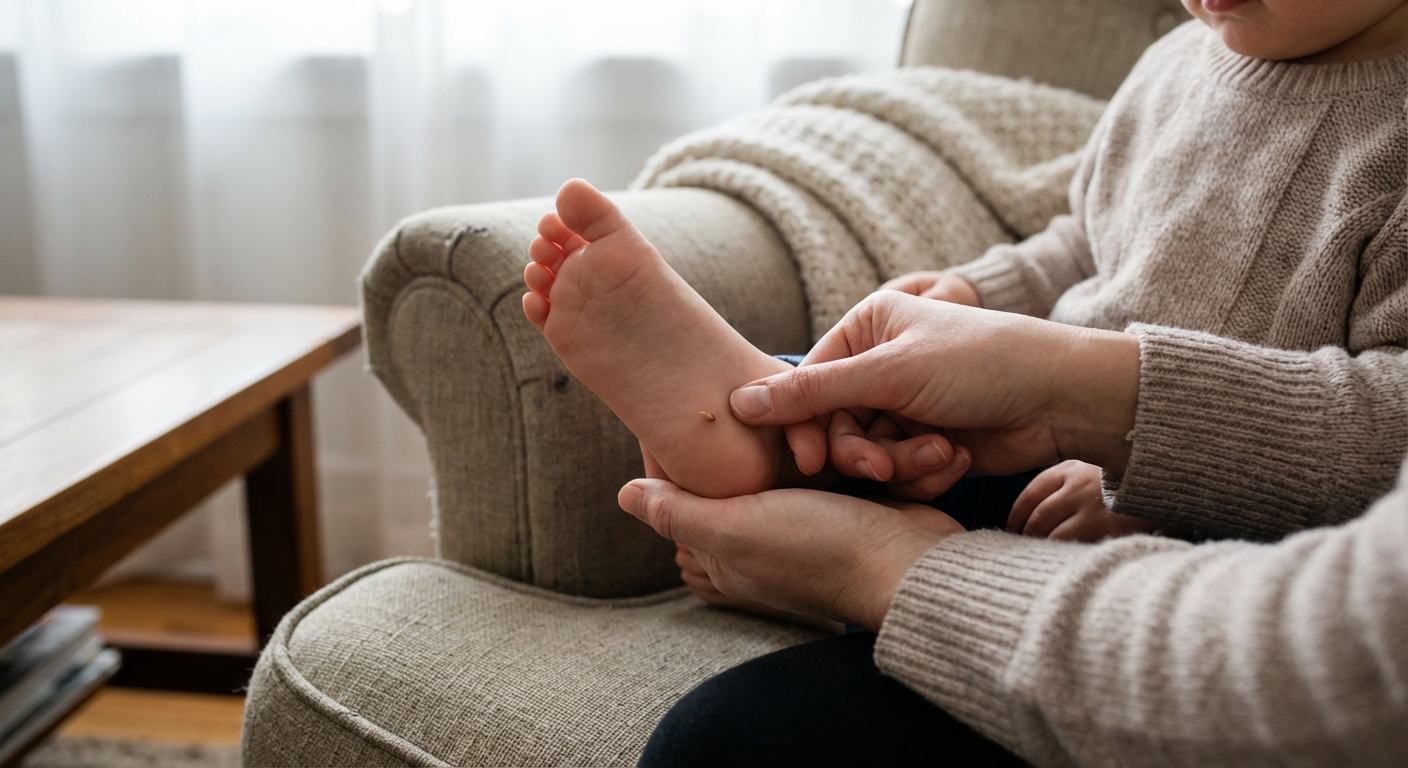
1) Look at the foot first
In toddlers, the problem is often in the foot even when the limp looks like “the leg.” Take off shoes and socks on both feet and compare.
- Check for a splinter, thorn, tiny cut, blister, or something stuck to the sole.
- Look between toes and around the toenails.
- Press gently along the heel pad and ball of the foot. Watch their face for a wince.
2) Check shoes
This sounds too simple, but I have seen it more times than I can count: a pebble in the shoe, a rough seam, or shoes that suddenly got too tight.
- Inspect inside the shoe with your finger for a rock or rough edge.
- Try a few steps barefoot on a safe surface.
3) Scan for swelling or bruising
Compare both legs from hip to toes. Toddlers bruise easily, but a new bruise plus pinpoint tenderness can point to a sprain or fracture.
4) Gently move joints (no forcing)
If your child lets you, gently bend and straighten the ankle and knee. For the hip, you can do a very gentle outward movement of the leg (like opening a book). Do not try to “test” range of motion. Stop if they resist strongly or cry in pain. Pain with gentle hip movement is one reason clinicians take a limp seriously.
5) Think about timing
- Sudden onset during play often suggests a sprain, twist, or a minor fracture.
- Morning limp that improves during the day can happen with mild inflammation or after a recent viral illness.
- Progressively worsening limp needs a call.
Quick note: Sometimes it is not the leg. If a toddler suddenly refuses to crawl, pull to stand, or use one side, an arm problem (like nursemaid’s elbow) can be the real issue.
If you find a clear minor cause (like a pebble, blister, or small splinter), fixing that may resolve the limp quickly. If not, keep reading.
Common causes (usually not dangerous)
Minor sprain or strain
Toddlers are basically tiny stunt performers with poor risk assessment. A quick twist off a step or an awkward landing can cause a sprain, even if you did not see a big fall.
- Typical clues: Limping but still willing to take some steps, mild swelling, tenderness in one spot.
- Home care: Rest, limit high-energy play for 24 to 48 hours, cool compresses (wrapped, 10 minutes at a time), and supportive shoes.
Splinter, thorn, blister, or small cut
These are common and easy to miss, especially on the heel.
- Typical clues: Refuses to put weight on the front or heel of the foot, walks on tiptoes on one side, suddenly stops and cries when stepping.
- Home care: Remove the splinter only if it is superficial and easily grasped. Clean with soap and water. Avoid digging deep in the sole. If it is deep, near the heel pad, or your child cannot tolerate removal, have it checked.
Ill-fitting shoes
Toddler feet grow fast. Shoes that fit last month can be tight now, and tight shoes can make kids walk oddly or refuse them entirely.
- Typical clues: Red marks, blisters, or toe curling; limp improves barefoot.
- Home care: Switch to roomy shoes or barefoot time indoors.
Transient synovitis (irritable hip)
This is a common cause of limping in young children, often in preschool and early school-age kids, but toddlers can get it too. It often happens after a viral illness (colds, stomach bugs). Fluid and inflammation in the hip joint cause pain, and toddlers may refuse to walk because the hip does a lot of work even for “foot pain.”
- Typical clues: Limp or refusal to bear weight, hip or groin pain (or vague thigh/knee pain), recent cold, usually no fever or only a low-grade one.
- What usually happens: It often improves over a few days with rest and anti-inflammatory medication if your clinician approves.
- Important: Transient synovitis can look like a more serious infection early on. If there is fever, worsening pain, or your child looks ill, they need same-day evaluation.
Nursemaid’s elbow (radial head subluxation)
This is technically an arm issue, but it commonly shows up in the same “suddenly won’t use a limb” category. It happens when a toddler’s arm is pulled and a small part of the elbow joint shifts slightly out of place. You might see it after lifting a child by the hands, swinging by the arms, or a quick tug when they try to bolt in a parking lot.
- Typical clues: Child holds the arm still at their side, refuses to use it, minimal swelling, sudden crying then guarding.
- What to do: This is a quick fix in a clinic when done by a trained professional. Do not force it at home.
More serious causes to rule out
These are the reasons we do not ignore a limp that comes with certain red flags.
Fracture (including a toddler’s fracture)
Toddlers can get a small hairline fracture of the shin bone (tibia) from a minor twist or fall. Sometimes there is no dramatic swelling, and the story sounds like “nothing even happened,” which is maddening and also very common.
- Typical clues: Refuses to bear weight or suddenly cannot, pain when you press along the shin or ankle, may have minimal bruising.
- Why it matters: Needs proper evaluation and usually immobilization.
Septic arthritis (joint infection)
This is the big one we never want to miss. A bacterial infection in a joint (often the hip or knee) can damage the joint quickly. This is an emergency.
- Typical clues: Fever with severe pain, child looks ill, refuses to move the joint, refuses to bear weight, pain with gentle movement.
- What happens next: Urgent imaging and labs, and often hospital treatment with antibiotics.
Osteomyelitis (bone infection)
Less common, but also serious. It can start with limp and localized bone pain and may or may not begin with a high fever.
- Typical clues: Focal tenderness over a bone, fever, worsening symptoms, child looks unwell.
Skin infection (cellulitis or abscess)
An infected blister, bug bite, or small cut can make walking painful.
- Typical clues: Spreading redness, warmth, swelling, tenderness, drainage, or fever.
Inflammatory or reactive joint pain
If your child has recurring morning stiffness, swollen joints, or a limp that keeps coming back, your clinician may consider causes like reactive arthritis (after infections) or juvenile idiopathic arthritis.
Hip conditions that need prompt evaluation
Conditions like Perthes disease (reduced blood flow to part of the hip joint) are uncommon in toddlers but can show up with persistent limp and limited hip motion. This is not typically a middle-of-the-night emergency, but it does deserve timely medical evaluation if the limp persists.
When to go in
If you remember nothing else, remember this: a toddler who will not bear weight without a clear minor reason should be evaluated the same day.
Go now (ER) if your toddler has:
- Fever and refusal to bear weight, or fever with severe hip/knee pain
- Refusal to bear weight and they cannot take a few steps at all, especially if pain is significant
- Severe pain, especially pain with gentle movement of the hip or knee
- Obvious deformity, bone “looks wrong,” or the leg/foot is turned abnormally after an injury
- Rapid swelling of a joint
- Cool, pale, or blue toes, or toes that are numb/tingly
- High-impact injury (car accident, big fall, trampoline accident with immediate inability to walk)
- Open wound over a joint or bone, or a deep puncture (especially if dirty)
- Your child looks very ill (hard to wake, weak, very irritable, not drinking, signs of dehydration)
Same-day call to your pediatrician (or urgent care) if:
- There is any fever with a limp, even if your child is still walking
- Limping persists more than 24 hours with no clear cause, or it is getting worse
- There is swelling, significant bruising, or point tenderness over a bone
- Your child had a recent viral illness and now has a limp (possible transient synovitis), especially if they are guarding the hip
- You suspect a splinter or foreign body that you cannot easily remove
- There is a puncture wound on the sole (retained foreign body is common). Your clinician may also ask about tetanus vaccine status.
Watch and wait for 24 to 48 hours if:
- Your child is otherwise acting well (eating, drinking, playing)
- No fever
- They can still bear weight (even if limping)
- You found a likely minor reason (new shoes, small blister, mild twist) and symptoms are steadily improving with rest
Do not: force them to walk “to test it,” do deep digging for splinters in the sole, or apply vigorous massage if you suspect a fracture.
Trust your instincts. If you are seeing pain that feels out of proportion, or something just feels off, it is always okay to be seen.
What to expect at the doctor’s office
A lot of parents worry that they will be judged for not knowing what happened. Please hear me: toddlers are masters at injuring themselves silently. Clinicians see “no idea how it happened” all the time.
Depending on symptoms, your child’s clinician may:
- Do a focused exam from hip to toes (yes, even if the complaint is “the foot”)
- Check temperature and observe your child walking if possible
- Order an X-ray if fracture is suspected (sometimes the first X-ray is normal in toddler’s fractures and a repeat is needed)
- Consider ultrasound of the hip if transient synovitis or septic arthritis is a concern
- Order blood work if infection is on the table
If your child has nursemaid’s elbow, a trained clinician can often reduce it in seconds, and kids frequently start using the arm again quickly.
If the injury story does not fit the developmental stage (for example, a non-walking child with a suspected injury) or there are multiple unexplained injuries, clinicians also consider non-accidental trauma. This is a standard safety check meant to protect kids.
Safe pain relief at home
If your child is uncomfortable and you are in the watch-and-wait window or heading to be seen, pain control can help. Use medication only if your child can take it safely and you can dose accurately by weight.
- Acetaminophen or ibuprofen are commonly used for toddler pain. Follow your pediatrician’s guidance or the product label for weight-based dosing.
- Avoid aspirin in children.
- Rest and a cool compress can help for minor sprains.
If pain is severe enough that your child cannot be consoled or will not allow you to touch the limb, that is a reason to be evaluated urgently.
FAQ
My toddler is limping but says nothing hurts. Is that possible?
Yes. Toddlers often cannot localize pain well, and some will avoid walking long before they can explain what they feel. Also, some limps are more about stiffness (like transient synovitis) than sharp pain.
Why does hip pain show up as knee pain?
Nerves can refer pain, meaning the brain reads irritation in the hip as pain in the thigh or knee. That is why clinicians check the hip in a limping child even when the knee seems to be the problem.
Can growing pains cause limping?
Classic growing pains usually happen in the evening or at night, affect both legs, and do not typically cause a true limp during the day. A persistent daytime limp deserves evaluation.
My toddler limps after sitting or first thing in the morning. Should I worry?
If it resolves quickly and your child otherwise seems well, it can be something mild. But if it is happening repeatedly, lasting longer, or getting worse, call your pediatrician. Morning stiffness plus swelling or persistent joint pain should be checked.
Should I mention tick bites or travel?
Yes, if relevant. In some regions, tick-borne illnesses (like Lyme disease) can cause joint swelling and limping. Tell the clinician about recent tick bites, rashes, travel, and new joint swelling.
A calm plan for tonight
- Check the foot and shoes carefully, barefoot walking if safe.
- Look for swelling or bruising and note one spot that seems tender.
- Take a short video of your child walking from the front and side. This helps your clinician a lot.
- Write down the basics: highest temperature (if any), recent illness, any falls, where they point (or what they protect), and whether they can bear weight.
- Decide on timing using the go now and same-day lists above.
You are not overreacting by paying attention to a limp. You are doing exactly what a good parent does: noticing a change and getting your child the right level of care.
Medical note: This article is for general education and cannot diagnose your child. If you are unsure, call your pediatrician or local nurse line. If your child has fever with severe pain, cannot bear weight, has severe pain with gentle joint movement, or looks unwell, seek urgent in-person care.