Toddler Not Talking at 2: When to Worry About Speech Delay

Sarah Mitchell
Sarah Mitchell is a Registered Pediatric Nurse and a mother of three who has spent over a decade helping families navigate the beautiful, chaotic early years of childhood. She combines evidence-based medical knowledge with real-world parenting experience to offer practical, compassionate advice. At Awesome Parent, Sarah's mission is to help exhausted parents find solutions, trust their instincts, and finally get some sleep.
If you are staring at your 2-year-old thinking, Why aren’t you talking yet? you are not alone. I’ve taken more anxious phone calls about speech than I can count, and I’ve also been the parent doing the late-night spiral: “My toddler only says a few words… is that normal?”
Here’s the reassuring truth: some toddlers truly are late talkers and catch up beautifully. Others need a little extra support, and the earlier they get it, the smoother it often goes. This page will help you sort out what is typical, what is a red flag, and what to do next.
Quick note: This is general information, not medical advice. If you are worried, bring it to your pediatrician or an SLP. You are not overreacting by asking.
Speech milestones at 18 to 24 months
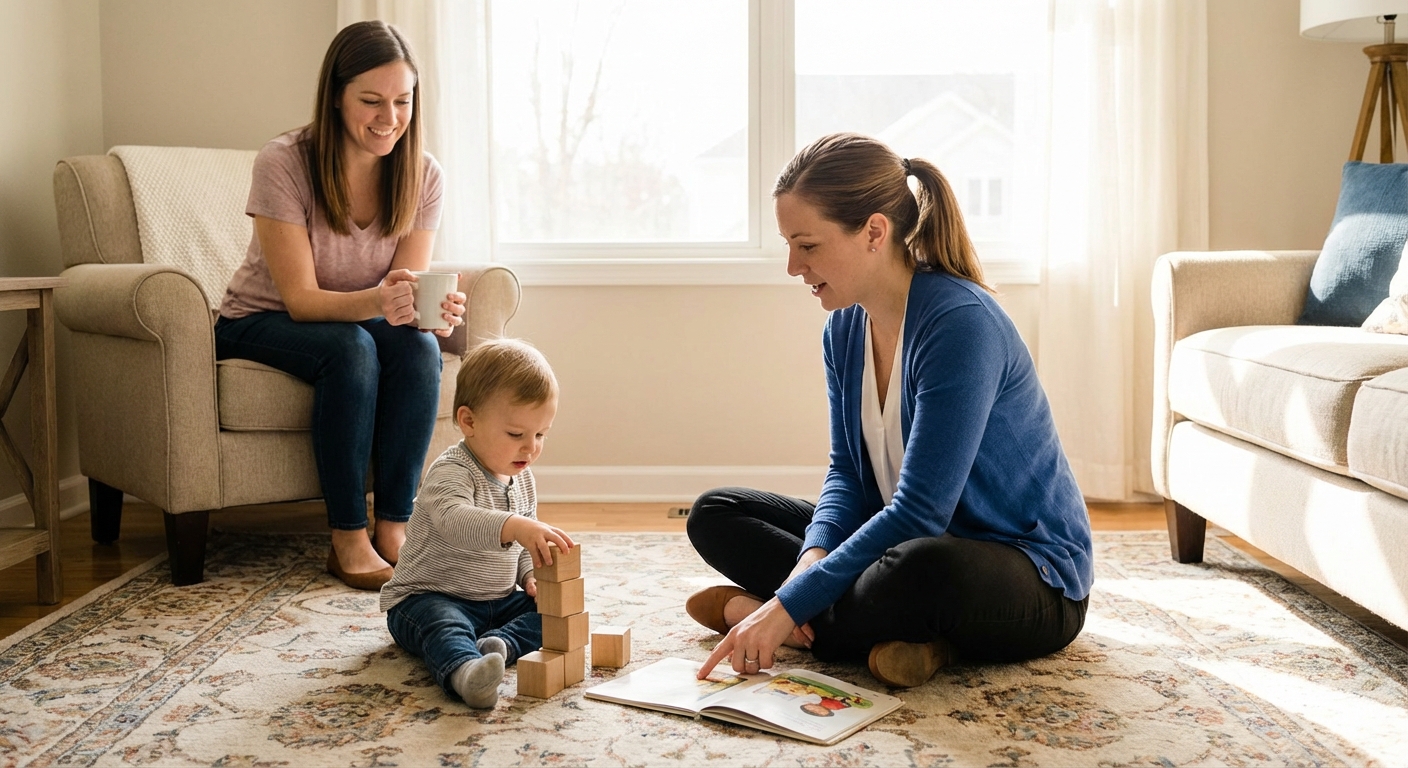
Development is a range, not a race. Still, many guidelines (including CDC and major pediatric references) share similar milestone patterns. Think of these as general guideposts, not pass or fail tests.
What counts as a “word”? For many milestone checklists, a word can be a consistent sound your child uses for the same meaning (even if it is an approximation), like “ba” for ball every time. Animal sounds (like “moo”) and some signs may count in some frameworks too, especially if they are used consistently and intentionally.
By about 18 months
- Uses about 10 to 20 words (sometimes more, sometimes fewer)
- Understands more than they can say (follows simple directions like “Get your shoes”)
- Uses gestures to communicate (points, shows, pulls you over, hands things to you)
- Tries to imitate words you say, even if it is not crystal clear
By about 24 months (2 years)
- Uses about 50 words or more (many toddlers are well past this)
- Combines two words, like “more milk,” “mommy up,” or “go car”
- Follows simple two-step directions (for example, “Get the book and bring it to me”)
- Communicates intentionally: requesting, protesting, showing, labeling, and calling you
Clarity varies a lot at this age. A helpful rule of thumb (not a strict rule) is that by age 2, familiar adults often understand about half of what a toddler says. Some kids are clearer, some are harder to understand, and what matters most is overall progress.
Fast skim: At 2 years, many families start asking for help if they are not seeing around 50 words and two-word phrases, or if communication feels limited.
Late talker vs delay
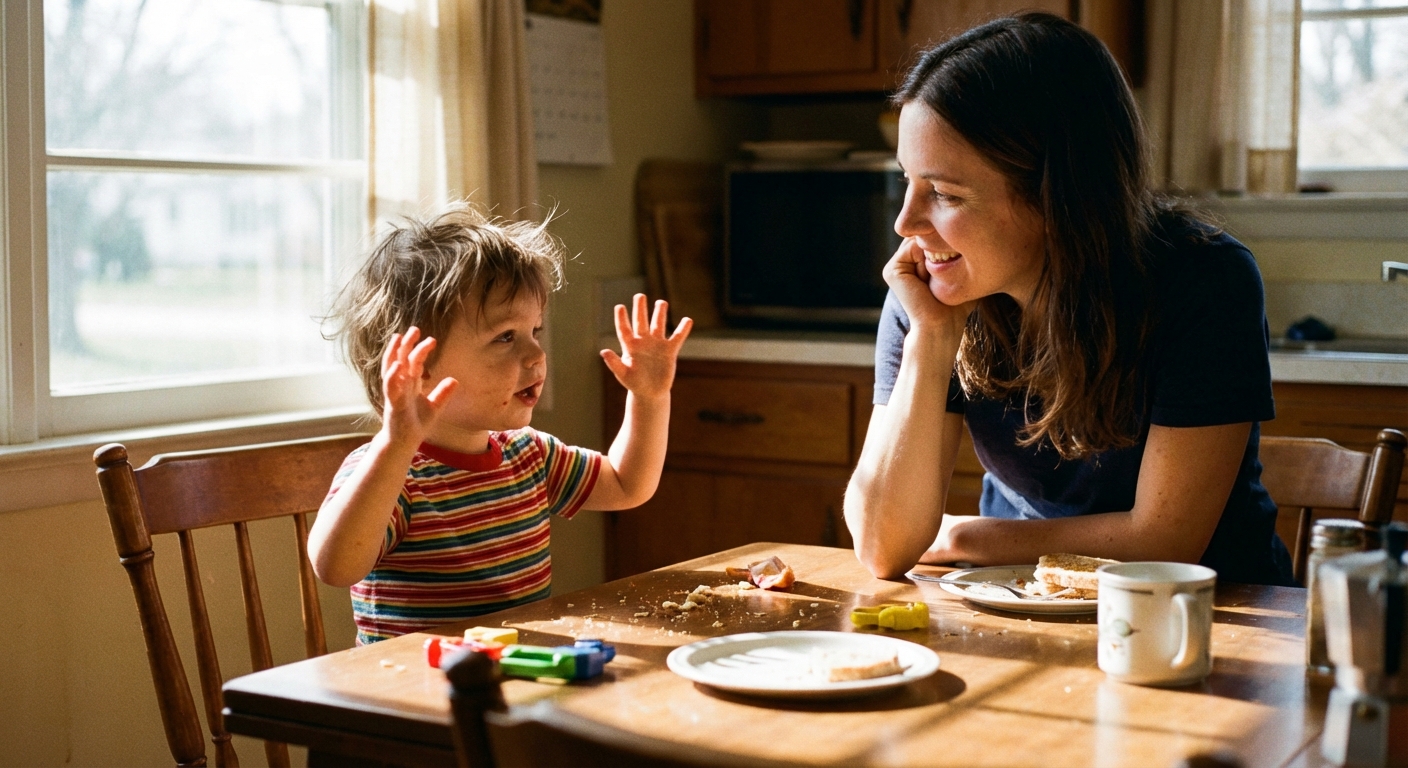
Parents are often told, “Don’t worry, they’ll talk when they’re ready.” Sometimes that is true. But we also do not want reassurance to turn into waiting too long for support.
What “late talker” can look like
A late talker often has:
- Good understanding (receptive language) for their age
- Strong nonverbal communication: pointing, showing, joint attention (looking where you look)
- Social interest: likes interacting, responds to their name, engages in back-and-forth play
- Steady progress, even if slow (new sounds, more attempts, more words over time)
What a delay can look like
A delay is more likely when you see:
- Very few words and not much change month to month
- Difficulty understanding simple directions for age
- Limited gestures or limited attempts to communicate
- Big frustration tied to not being understood (common and not your child’s “attitude”)
Also important: “speech” and “language” are related but not identical. Speech is the physical production of sounds and words. Language is the understanding and use of words to communicate ideas. A child can have one without the other, or both together.
Red flags at 18 to 24 months
If you notice any of the following, it is a good idea to request an evaluation and get more information.
Communication red flags
- Not using at least a handful of words by 18 months
- Fewer than about 50 words by 24 months
- No two-word phrases by 24 months (like “more juice”)
- Not pointing to show interest (not just pointing to request) by around 18 months
- Not responding to their name consistently
- Limited eye contact or limited back-and-forth interaction
- Loss of skills: they used to say words and stopped, or used to gesture and stopped
Hearing and health red flags
- Frequent ear infections, fluid behind the ears, or concerns your child does not hear well
- History of prematurity or certain medical conditions that raise risk for delays (your pediatrician can guide you)
- Mouth breathing, heavy snoring, or sleep issues that might impact hearing or overall development
- Feeding or oral-motor concerns (choking, coughing with meals, very restricted textures, or persistent drooling), especially if paired with speech concerns
A common, sometimes overlooked contributor is hearing trouble, including persistent middle-ear fluid. Even mild, fluctuating hearing loss can make speech harder to pick up.
If you are deciding between “wait and see” and “get checked,” I’m firmly on Team Check. An evaluation does not force therapy. It just gives you information.
When to request an evaluation
In general, consider requesting an evaluation if:
- Your child is 24 months and not using about 50 words or not combining words
- You are seeing any red flags above at 18 to 24 months
- You have a strong gut feeling something is off, even if others say “they’re fine”
Start here
- Your pediatrician: ask for a developmental screening and referrals (in the U.S., autism screening is commonly done at 18 and 24 months too)
- Early Intervention (EI): in the U.S., this is a state-run program for children under 3. Parents can often self-refer without waiting for a doctor.
- Speech-Language Pathologist (SLP): you can also pursue a private evaluation depending on insurance and availability
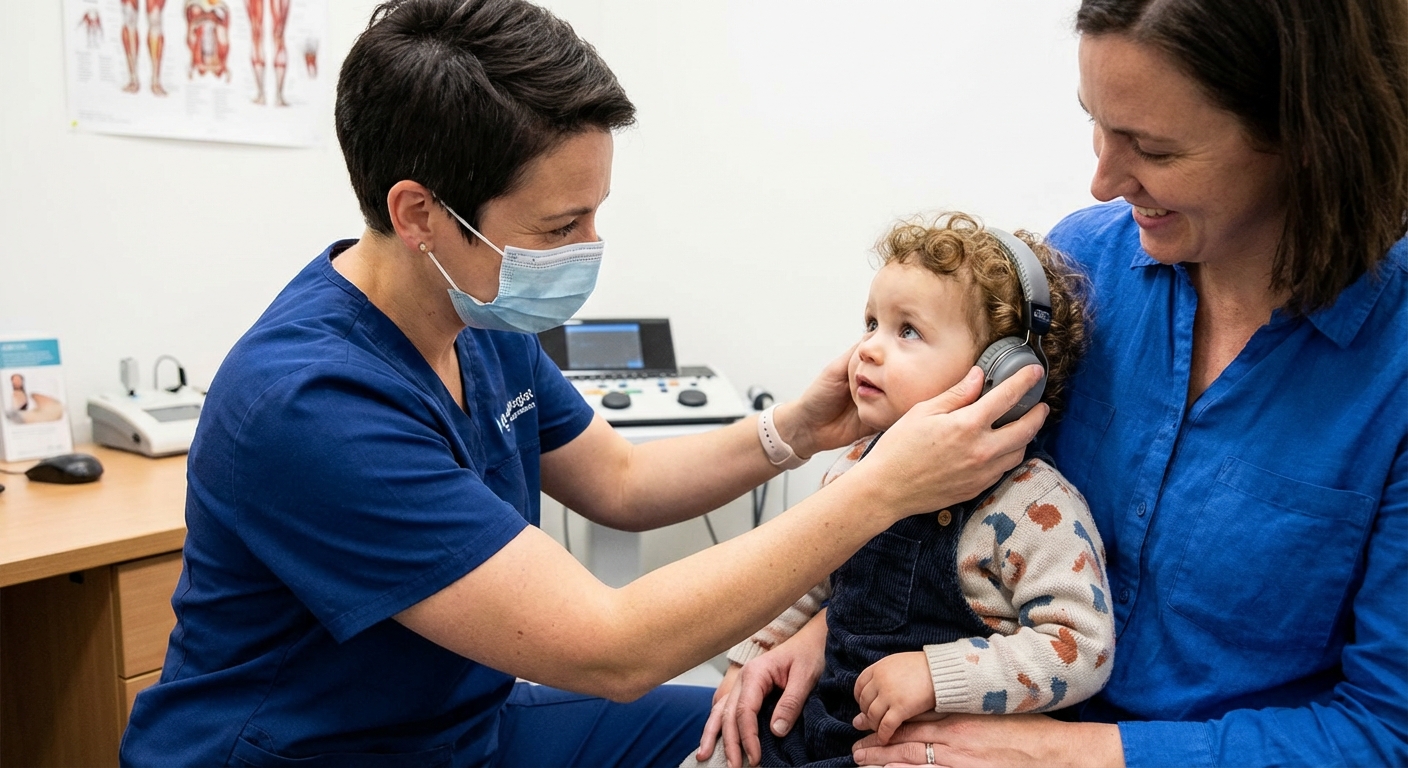
- Audiology: ask for a formal hearing test if there is any doubt, even if your child “passed” the newborn screen
If your toddler is not talking at 2, a strong next-step combo is: speech evaluation + hearing test. They work together.
What an evaluation looks like
Parents often picture a tiny kid being quizzed at a desk. That is not how toddler speech evaluations typically work.
During a speech evaluation
- The SLP will play with your child and watch how they communicate
- They will ask about words used, understanding, gestures, feeding history, and play skills
- They may use a questionnaire and structured play activities to assess receptive language (understanding) and expressive language (speaking)
If your child qualifies for Early Intervention
- Services are often provided at home or daycare
- Therapy is usually play-based
- A big part of therapy is coaching you on what to do during everyday routines
What therapy often focuses on
- Increasing intentional communication (requests, comments, protests)
- Teaching simple, functional words that matter to your child
- Building turn-taking and back-and-forth interaction
- Supporting sound development if needed (many toddlers start with language goals first)
Most importantly, early intervention is not about labeling your child. It is about giving them a bridge to communicate so life gets easier for everyone.
At-home strategies while you wait
Waitlists are real. While you are waiting, you can start supporting speech development in ways that feel natural, not like homework.
1) Go one step above
If your child uses sounds or gestures, you model single words. If they use single words, you model two-word phrases.
- Child: points to bubbles
- You: “Bubbles.” “More bubbles.”
2) Use fewer words
Many of us talk a lot when we are anxious. Totally understandable. But toddlers learn best from short, repeated phrases.
- Instead of: “Do you want to put your shoes on so we can go to the park and see the swings?”
- Try: “Shoes on.” “Go park.” “Swing!”
3) Comment more, quiz less
If every interaction feels like a quiz, some kids shut down. Try commenting like a sportscaster.
- “You did it.”
- “Big truck.”
- “Uh-oh, fell down.”
4) Create reasons to communicate
You are not teasing your child. You are creating opportunities to practice.
- Put a favorite snack in a clear container they cannot open: “Help?” “Open?”
- Give small portions so they can request: “More?”
- Pause before you blow bubbles: wait for a look, point, sound, or word attempt
5) Offer visible choices
Hold up two items and say the words clearly.
- “Apple or banana?”
- “Cars or blocks?”
6) Use wait time
After you model a word, silently count to five in your head. Toddlers need processing time. It can feel awkward. It works.
7) Copy, then add
Imitate their sounds and actions to build connection, then add one small language step.
- Child: “ba!” while rolling a ball
- You: “Ba! Ball.”
8) Lean on routines
Repetition helps toddlers participate.
- Bath: “Wash, wash, wash.”
- Bedtime: “Night-night, teddy.”
- Cleanup: “All done.”
9) Read, but keep it interactive
Forget finishing the whole book. For a late talker, 3 pages with lots of back-and-forth beats 30 pages on autopilot.
- Point: “Dog.” Pause.
- Make a sound: “Woof!” Pause.
- Let your child turn pages, point, or bring you the same book 14 times in a row. That counts.

Common questions
“My toddler understands everything but won’t talk. Is that still a concern?”
Good understanding is a great sign. But if your child is 2 and not using many words or not combining words, it is still worth evaluating. Many late talkers do catch up, but we cannot reliably predict which ones will without looking more closely.
“Does bilingualism cause speech delay?”
Learning two languages does not cause a true language delay. Some bilingual toddlers may have fewer words in each language, but their total words across both languages can be right on track. A true underlying language difficulty typically affects both languages, though skills can look uneven depending on exposure. This is where a bilingual-informed evaluation is especially helpful.
“What about pacifiers?”
Pacifiers do not automatically cause speech delay, but if one is in your toddler’s mouth most of the day, it can reduce opportunities to practice sounds and words. If speech is a concern, consider limiting pacifier use to sleep and soothing times.
“Does screen time cause speech delays?”
Screens do not “cause” a delay in every child, but heavy screen use can reduce the most important ingredient for early language: back-and-forth interaction with a real person. If you use screens, aim for high-quality content, watch with your child when you can, and protect daily screen-free time for play, reading, meals, and conversation.
“Is it true that boys just talk later than girls?”
On average, some studies show girls may develop certain language skills slightly earlier, but the difference is not big enough to rely on for decision-making. If a child has red flags or is not meeting key communication milestones, “he’s a boy” should not be the reason to wait.
“Could it be autism?”
Speech delay alone does not equal autism. What raises concern is the combination of speech delay plus differences in social communication, like limited joint attention, limited gestures, reduced response to name, or less back-and-forth interaction. If you are worried, ask your pediatrician for a screening and a developmental evaluation. Getting checked is a support, not a verdict.
When it’s urgent
Most speech concerns are not emergencies. But call your pediatrician promptly if you notice:
- Loss of language or social skills at any age
- Sudden change in hearing or concerns your child cannot hear
- Very limited interaction with caregivers or extreme difficulty engaging
The bottom line
If your toddler is not talking at 2, you do not need to panic, and you also do not need to wait in silence. Check milestones, trust your gut, and ask for an evaluation if your child has fewer than about 50 words, no two-word phrases, or any red flags.
While you wait, focus on short models, playful opportunities to communicate, and lots of face-to-face connection. You are not behind. You are paying attention, and that is exactly what your child needs.