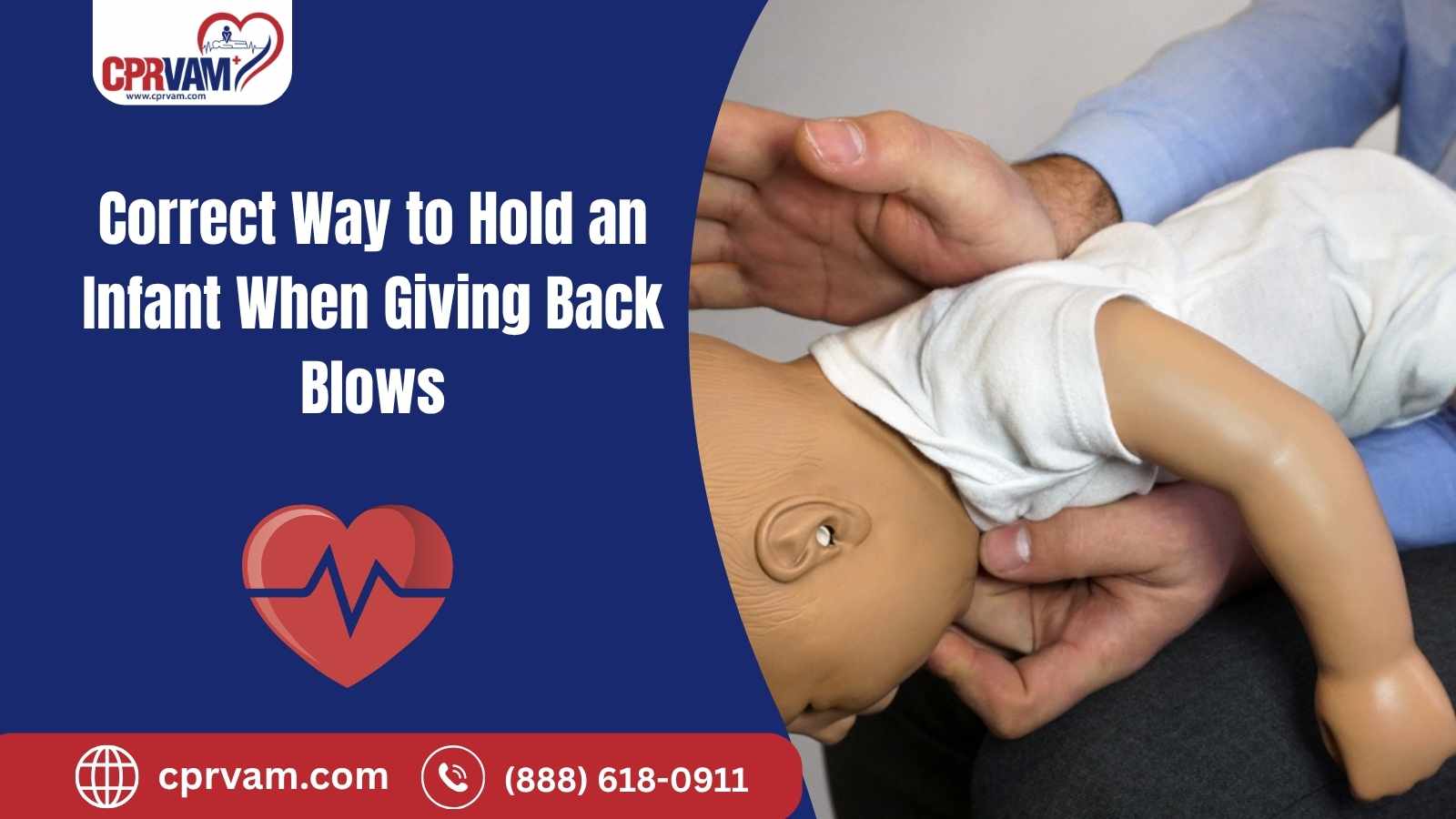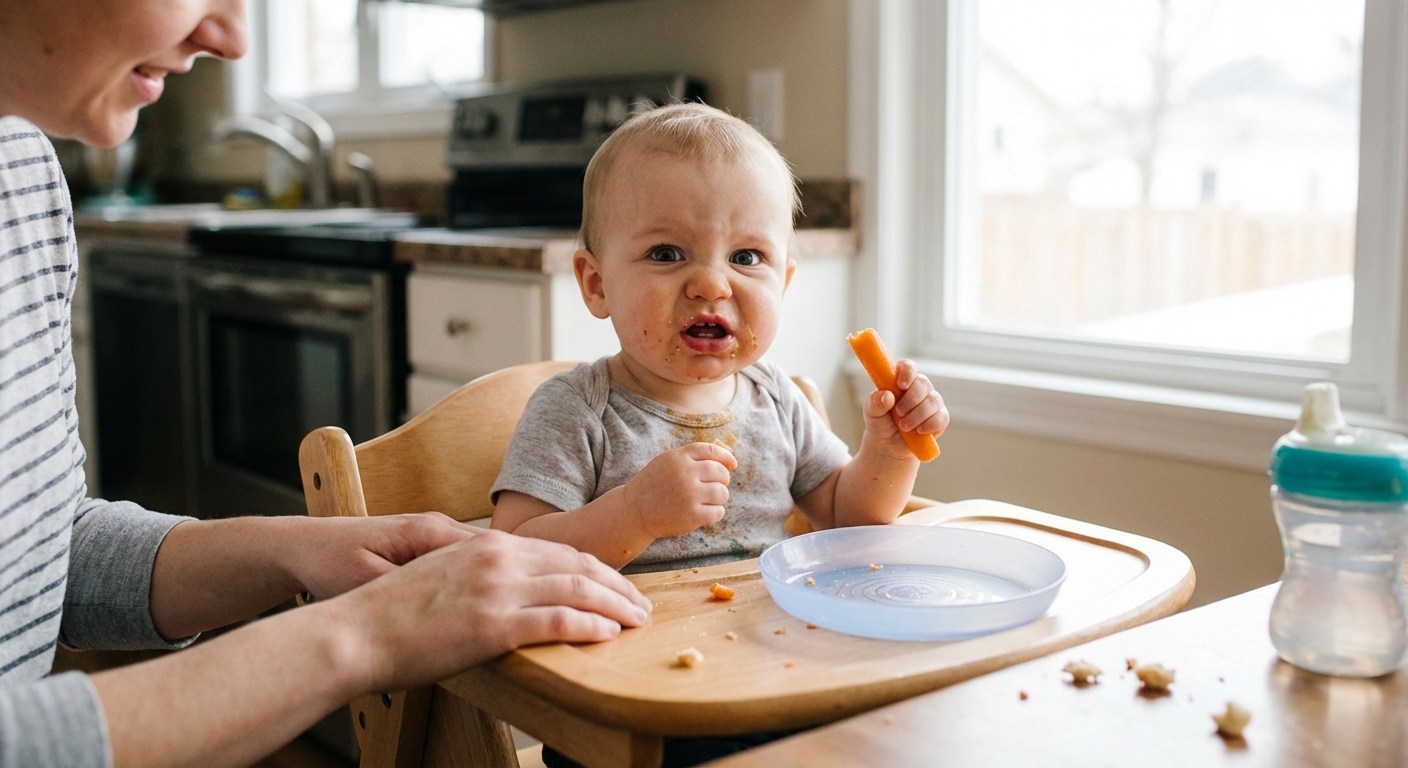
Know what to avoid under 1, ages 1 to 2, and ages 2 to 4. Includes common food and household choking hazards, safer prep tips, and what to do if a child is c...
Toddler Pocketing Food and Not Chewing

Sarah Mitchell
Sarah Mitchell is a Registered Pediatric Nurse and a mother of three who has spent over a decade helping families navigate the beautiful, chaotic early years of childhood. She combines evidence-based medical knowledge with real-world parenting experience to offer practical, compassionate advice. At Awesome Parent, Sarah's mission is to help exhausted parents find solutions, trust their instincts, and finally get some sleep.
If your toddler is stuffing food into their cheeks like a tiny chipmunk and then just… holding it there, you are not overreacting to feel uneasy. In pediatric triage, “pocketing food” was one of those phrases that made my ears perk up because it can be a choking risk, and it can also be a clue that something more than typical picky eating is going on.
The good news: many kids grow out of it with the right support and safer mealtime structure. The important part is knowing when it is a phase versus a skill gap that deserves professional help.
Quick note: This is general education, not individualized medical advice. If you are worried about your child’s safety, trust your gut and call your pediatrician.

What “pocketing” looks like
Pocketing means your child keeps food in their mouth without chewing and swallowing it. You might notice:
- Food stored in the cheeks or under the tongue
- Chewing a little, then pausing with a “full mouth” for a long time
- Spitting out a wad of food much later (occasionally)
- Drooling during meals or letting food fall out
- Taking new bites while there is still food tucked away
Sometimes pocketing happens only with certain textures, like meats, bread, leafy vegetables, or mixed foods (think casseroles, soups with chunks, or anything “lumpy”).
When it’s more concerning: Pocketing that continues well past the early “learning to chew” stage, happens most meals, or shows up alongside coughing, gagging, or long meals deserves a closer look. Pocketing that lasts into nap/bedtime or happens overnight should be evaluated.
Is it a choking risk?
It can be. Pocketed food can slip backward unexpectedly, especially if your toddler laughs, runs, cries, or lies down. It can also be inhaled (aspirated) in small amounts, which may not look like dramatic choking but can still cause coughing and respiratory irritation.
Call emergency services right now if your child
- Cannot breathe, cry, or cough
- Turns blue or has gray lips
- Makes high-pitched noises or has silent breathing attempts
- Becomes unresponsive, very weak, collapses, or is hard to wake
If your child is coughing forcefully, making noise, and moving air, stay close and let them keep coughing. Do not do blind finger sweeps in the mouth. Keep monitoring closely and call emergency services if the cough becomes weak, breathing worsens, or your child cannot move air.
Takeaway: Pocketing is not automatically an emergency, but it is a safety flag that deserves attention.
Why toddlers pocket food
Typical picky eating is about preference, control, or appetite. Pocketing is often about skill, sensation, or coordination. Some kids are picky and also pocket, but pocketing itself often points to one of the following:
1) Chewing and tongue control
Chewing is a learned pattern. Some toddlers have trouble moving food side-to-side to grind with the molars, breaking it down, and then gathering it into a manageable swallow.
Clues this may be oral-motor related:
- They swallow soft foods fine (yogurt, applesauce) but stall on chewables (meat, bread, raw produce)
- They mash food with their tongue instead of chewing
- They tire out during meals or take a very long time to finish
- They gag when trying to manage chunks
2) Texture and sensory stress
Some toddlers pocket because certain textures feel unpredictable or unpleasant. Holding food in the cheeks can be a way to avoid the sensation of chewing or swallowing it.
Clues this may be sensory related:
- Strong reactions to certain textures (wet, slimy, crunchy, mixed)
- They tolerate a food if it is served one way but not another (for example, roasted carrots are fine, steamed are not)
- They smell foods, inspect them intensely, or avoid messy hands and faces
- They do better with consistent “safe” foods but freeze on new ones
3) Overstuffing and too-big bites
Some kids pocket because they take large bites or keep adding food before finishing what is already in their mouth. That can overload their chewing skills.
4) Congestion, tonsils, and mouth breathing
Breathing and eating share real estate. If a child is chronically congested or has large tonsils/adenoids, they may default to mouth breathing. That can make it harder to coordinate chewing and swallowing comfortably, especially with tougher textures.
5) Pain or dental issues
Teething, mouth sores, cavities, or gum pain can make chewing uncomfortable. Some toddlers “park” food to avoid chewing on a sore area.
6) Developmental or medical factors
Pocketing can show up more often in kids with speech delays, low muscle tone, prematurity history, reflux, or neurodevelopmental differences. That does not mean something is “wrong,” but it can mean they need targeted support.
Bottom line: If meals feel unsafe or your child cannot reliably chew and swallow age-appropriate foods, this is not “just picky.” It is worth evaluating.
Safer mealtime structure
You do not need fancy equipment. You need predictability, pacing, and close supervision.
Set up for success
- Seated and supported: Feet on a solid surface (footrest or sturdy box), hips and knees bent about 90 degrees.
- No walking around with food: Food stays at the table. This one change reduces choking risk immediately.
- Calm pace: Minimize distractions. Save high-energy play and screens for after meals.
- Smaller portions: Offer a few pieces at a time so overstuffing is harder.
Offer manageable chewables
If pocketing is frequent, temporarily lean into textures that help your toddler practice chewing safely while you work on the underlying issue.
- Easier starters: soft cooked vegetables, ripe banana, well-cooked pasta, flaky fish, shredded chicken in sauce, soft meatballs, omelet strips, avocado
- Use moisture: dips and sauces can help dry foods move more easily, like hummus, yogurt-based dips, or applesauce alongside bites
- Go slow with: dense meats, gummy breads, chewy candy, big chunks of apple, raw carrots, popcorn, nuts, whole grapes, and globs of nut butter
Match bite size to skills
- Cut foods into thin strips or small, easy-to-chew pieces.
- Avoid packing the spoon or offering huge bites.
- Model “one bite, chew, swallow, then next bite.”
Mouth checks before leaving the table
If your toddler tends to pocket, build a gentle routine before they get down:
- Ask them to open their mouth and lift their tongue like they are roaring like a lion.
- If you see food stored, give them time to chew and swallow.
- Offer a sip of water only if your child can take sips without coughing and does not struggle more with liquids.
- Avoid digging food out with your fingers unless a clinician has instructed you to for a specific situation.
Important: Do not let your child lie down, play hard, or go to bed with food still pocketed. If you discover pocketing after the meal, keep them upright, stay calm, and use the same mouth-check routine to help them clear it.

Choking precautions
High-risk foods to avoid or modify
- Whole grapes and cherry tomatoes (quarter lengthwise)
- Hot dogs (slice lengthwise then into small pieces)
- Popcorn
- Nuts and large spoonfuls of nut butter
- Hard candies, gummies, marshmallows
- Raw carrots, apple chunks (cook/soften or slice very thin)
Mealtime rules that matter
- Sit to eat. No playing, running, climbing, or car-seat snacking unless an adult can watch closely.
- Stay within arm’s reach if your child pockets or overfills.
- Learn choking first aid. A class through the Red Cross or your local hospital is worth it.
If your toddler pockets, I also recommend a quick check with your pediatrician about chronic congestion, tonsil size concerns, reflux symptoms, constipation, and oral pain (including dental issues). These can affect appetite and overall mealtime tolerance.
When to get help
You do not have to wait until it is “really bad.” Pocketing is one of those issues where early support can prevent scary moments and make meals less stressful.
Contact your pediatrician soon if
- Pocketing happens most days or at most meals
- Your child regularly coughs, chokes, gags, or vomits with eating
- Meals take longer than about 30 minutes consistently
- Your child avoids whole categories of textures (only purees, only crunchy snacks, only liquids)
- You are cutting foods smaller and smaller to keep things safe
- You notice weight loss, poor growth, dehydration, or frequent illness
Seek urgent evaluation for possible aspiration or breathing problems
- Wet, gurgly voice after drinking or eating
- Persistent coughing with liquids
- Recurrent pneumonia, wheezing, or frequent chest infections
- Labored breathing during meals
Who helps with what?
- SLP (speech-language pathologist) feeding therapist: evaluates chewing, tongue movement, swallow safety, pacing, and oral-motor skill development
- OT (occupational therapist): helps with sensory processing, textures, mealtime routines, and sometimes oral-sensory work
- ENT: evaluates tonsils/adenoids, airway issues, and chronic nasal obstruction
- GI specialist: evaluates reflux, constipation, pain with eating, or suspected esophageal issues
- Dentist: checks for cavities, oral pain, and chewing discomfort
How feeding therapy helps
Feeding therapy with an SLP is not about forcing bites or “winning” meals. A good feeding therapist is looking for the why behind the pocketing and building skills safely and gradually.
What an SLP may assess
- How your toddler chews (rotary chewing vs mashing)
- Where food goes in the mouth (can they move it to molars?)
- How they handle different textures and mixed consistencies
- Pacing, bite size, and fatigue
- Signs that swallowing might not be fully safe
What therapy often includes
- Structured practice with developmentally appropriate foods
- Strategies to reduce overstuffing and improve pacing
- Exercises and play-based activities that support tongue and jaw control
- Graduated exposure to textures for sensory-sensitive kids
- Caregiver coaching so you can repeat the “wins” at home
In some cases, the SLP may recommend an instrumental swallow study (like a modified barium swallow) if there are red flags for aspiration. Not every child needs this, but it is an important tool when safety is uncertain.
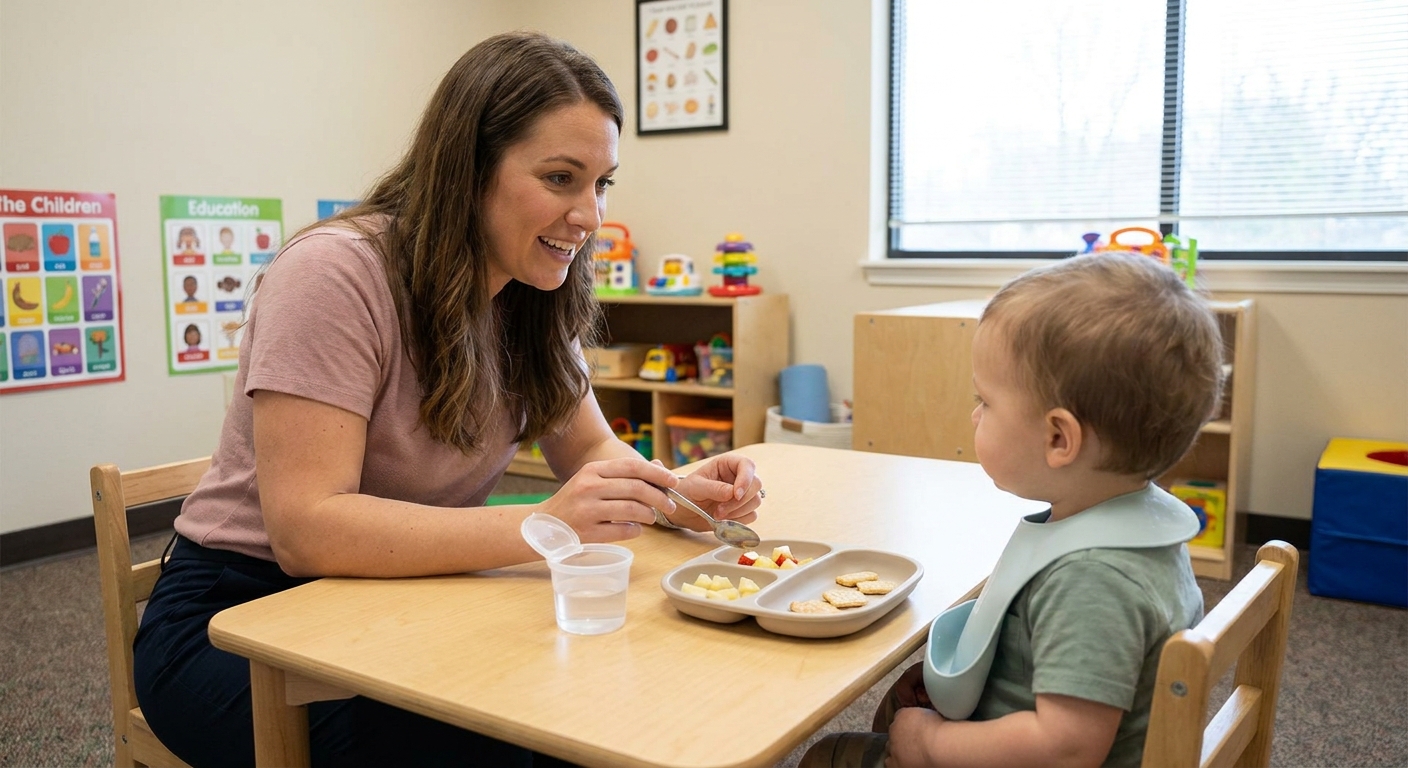
In the moment
This is the part that feels the most stressful, especially if you are watching cheek bulges get bigger and bigger.
- Pause the meal. Remove the plate so more food cannot go in.
- Keep them seated and calm. No bouncing or walking.
- Encourage chewing. Use simple cues like “chew, chew, chew” and model slow chewing.
- Do a gentle mouth check. Ask them to open wide and lift their tongue.
- Consider a sip of water only if your child can sip without coughing and does not have trouble managing liquids. If water seems to make pocketing worse, stop and ask your pediatrician or SLP.
- If your child starts coughing hard, gagging repeatedly, or looks distressed, treat it as a choking event and follow first aid guidance.
What not to do
- Do not do blind finger sweeps.
- Do not force-feed, threaten, or rush bites.
- Do not offer extra food to “push it down.”
- Do not let them run, climb, or lie down with food in their mouth.
If pocketing happens frequently, jot down patterns for one week: which foods, what time of day, fatigue level, distractions, and any coughing. That little log is incredibly helpful for clinicians.
Common questions
“My toddler pockets only meat. Is that normal?”
It is common. Meat is one of the hardest textures to chew and break down. Pocketing meat often points to chewing skill gaps, fatigue, or bite size issues. Try shredded, saucy meats or softer proteins while you seek guidance if it is persistent.
“Should I switch back to purees?”
Sometimes a temporary step back to safer textures reduces risk, but long-term puree-only diets can make it harder to build chewing skills. This is a great place to loop in your pediatrician or an SLP so you are not guessing.
“Is this ARFID?”
ARFID is a clinician-made diagnosis involving significant restriction with nutritional, growth, or psychosocial impact. Pocketing can happen alongside feeding disorders, but pocketing alone does not equal ARFID. If your child has major restriction, weight concerns, or intense distress around food, ask your pediatrician for a feeding evaluation.
“Will they grow out of it?”
Some do. But if it is happening regularly, feels unsafe, lasts into nap/bedtime, or limits what your child can eat, getting support sooner is usually faster and less stressful than waiting it out.
Quick checklist
- Pocketing is frequent (most meals or most days)
- Regular gagging, coughing, choking, or vomiting with meals
- Meals routinely exceed 30 minutes
- Only accepts a narrow texture range
- Signs of pain with chewing (teething, dental pain) or chronic congestion
- History of prematurity, low tone, neurodevelopmental differences, or speech delay
- Concern for growth, hydration, or iron intake
- Recurring respiratory symptoms, wet voice, or suspected aspiration
If you are reading this because meals feel scary, trust that instinct. You are not being “extra.” You are being attentive. Start with safer structure today, and reach out to your pediatrician for a feeding referral if the pattern persists. You deserve calmer meals, and your toddler deserves to eat safely and confidently.