Toddler Refusing to Eat? 7 Low-Pressure Ways to Help a Picky Eater with Veggies

Sarah Mitchell
Sarah Mitchell is a Registered Pediatric Nurse and a mother of three who has spent over a decade helping families navigate the beautiful, chaotic early years of childhood. She combines evidence-based medical knowledge with real-world parenting experience to offer practical, compassionate advice. At Awesome Parent, Sarah's mission is to help exhausted parents find solutions, trust their instincts, and finally get some sleep.
If your toddler acts like a single pea is a personal insult, you are in extremely good company. I’ve talked thousands of families through picky eating as a pediatric triage nurse, and then went home and negotiated with my own tiny food critic who survived on air, crackers, and spite.
Here is the good news. Picky eating is often a normal toddler phase, not a sign you are failing. And you do not need to become a short-order cook or start hiding vegetables like contraband. You just need a few low-pressure strategies that help kids feel safe around new foods and give you a way out of the nightly power struggle.
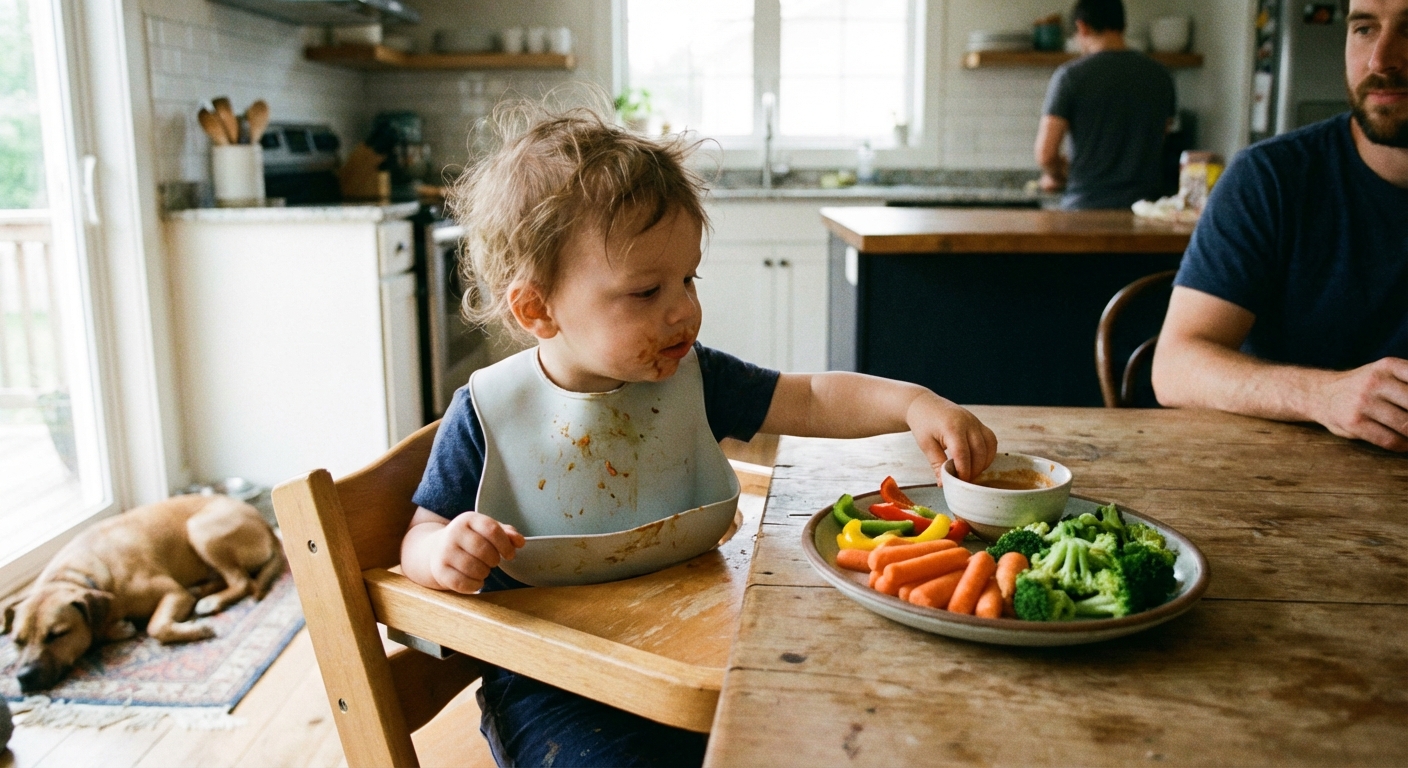
Below are seven low-pressure, parent-approved ways to get veggies in, plus what to do if your toddler refuses dinner altogether.
First, a quick reality check
Toddlers are wired to be suspicious of new foods. It is a real developmental thing called food neophobia, and it often ramps up in toddlerhood right around the same time they discover the word “no.” Fun.
Also, appetite changes dramatically between ages 1 and 5. Growth slows compared to babyhood, so many toddlers simply do not need as much food as we expect. Some days they eat three bites and run on pure toddler energy. Other days they ask for seconds and thirds. Both can be normal.
What “normal picky” often looks like
- Eating a small variety of foods, then suddenly rejecting a previous favorite
- Refusing mixed textures like casseroles and stir-fries
- Wanting the same meal on repeat
- Being more willing to eat fruit than vegetables
If your child is growing well, has energy, and is peeing regularly, you can usually take a big breath and focus on gentle, consistent exposure rather than forcing bites.
7 low-pressure ways to serve more veggies
1) Keep the veggie, change the shape
Many toddlers reject a vegetable because of how it feels, not because of the taste. A floppy zucchini slice can be a hard no, while crunchy zucchini sticks are suddenly acceptable.
- Try raw, steamed, roasted, and air-fried versions of the same veggie.
- Cut into fun “safe” shapes: sticks, coins, tiny cubes, or big spears they can hold.
- Offer one veggie at a time on the plate. “Mixed together” reads as suspicious to lots of toddlers.
My nurse-mom tip: Roasting brings out natural sweetness. If you have only enough energy for one cooking method, roast.
2) Use dips like they are magic
Dips can turn vegetables from “yucky” to “I can handle this.” They also give your toddler a sense of control, which is basically toddler currency.
- Hummus
- Ranch or yogurt ranch
- Guacamole
- Nut or seed butter for celery (thinly spread or thinned, and allergy-safe)
- Warm cheese sauce for broccoli or cauliflower
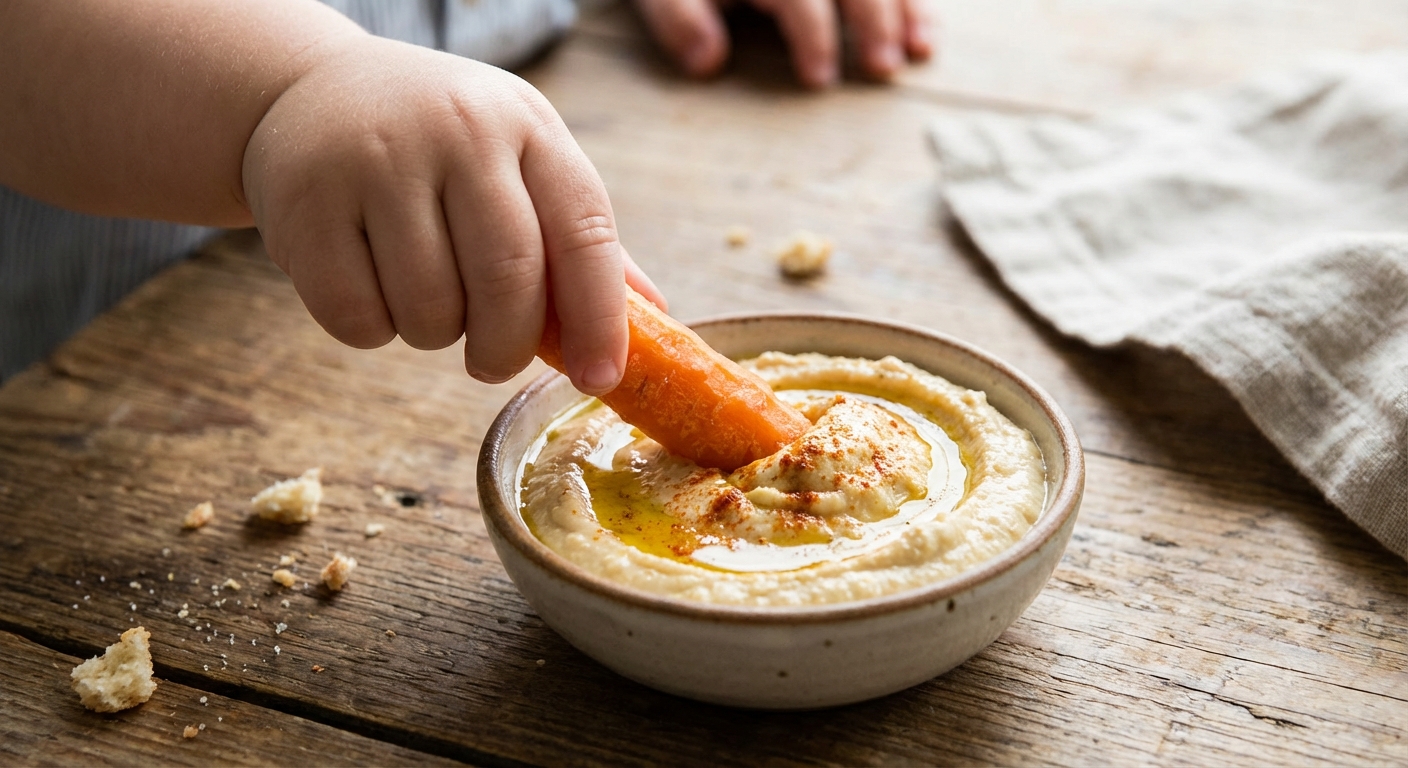
Start with a tiny amount of dip. Some kids get overwhelmed by “too much” on the food.
3) Blend and boost, but stay honest
I am not anti-sneaking veggies. I am pro honesty. There is a difference.
If we constantly hide vegetables and act like they are a terrible truth, kids learn veggies are something to fear. Instead, you can “blend and boost” meals and be matter-of-fact about it.
- Blend spinach into pasta sauce: “This sauce has spinach. It makes it green.”
- Grate zucchini or carrots into meatballs, muffins, or pancakes: “These have carrots for sweetness.”
- Puree cauliflower into mac and cheese: “This is cheesy pasta with cauliflower mixed in.”
It is still strategic in the sense that the texture is toddler-friendly, but you are not turning it into a gotcha moment.
4) Try a “learning bite” that is optional
Pressure is the fastest way to make a picky eater pickier. Instead of “You have to take three bites,” try a no-drama exposure routine.
- Put one tiny piece of a veggie on the plate.
- Invite your toddler to do a “look, touch, lick, or bite” experiment.
- Any step counts as success.
In clinic I used to remind parents that it can take many exposures for a child to accept a new food. For some kids, it is often 10 to 20 plus tries. Not 2. Not 3. Many.
5) Aim for the hungriest time of day
For a lot of toddlers, dinner is the toughest meal. They are tired, wired, and one missed nap away from meltdown territory.
If dinner is always a no, shift your veggie goal earlier.
- Offer veggies with breakfast: spinach scrambled eggs, shredded zucchini in muffins, avocado on toast.
- Do a mid-morning “snack plate” with cucumbers, quartered cherry tomatoes (or sliced lengthwise into quarters for safety), and a dip.
- Serve a veggie before the main meal: a few steamed peas while you finish cooking.
This is not cheating. It is strategy.
6) Let your toddler be the boss of one small thing
When toddlers get to choose, they are more likely to try. The key is “parent sets the options, child chooses within them.”
- “Do you want broccoli or green beans?”
- “Do you want carrots with hummus or ranch?”
- “Should we roast the cauliflower or steam it?”
Even better, let them help. Washing produce, stirring, sprinkling cheese, or putting veggies on a tray counts.
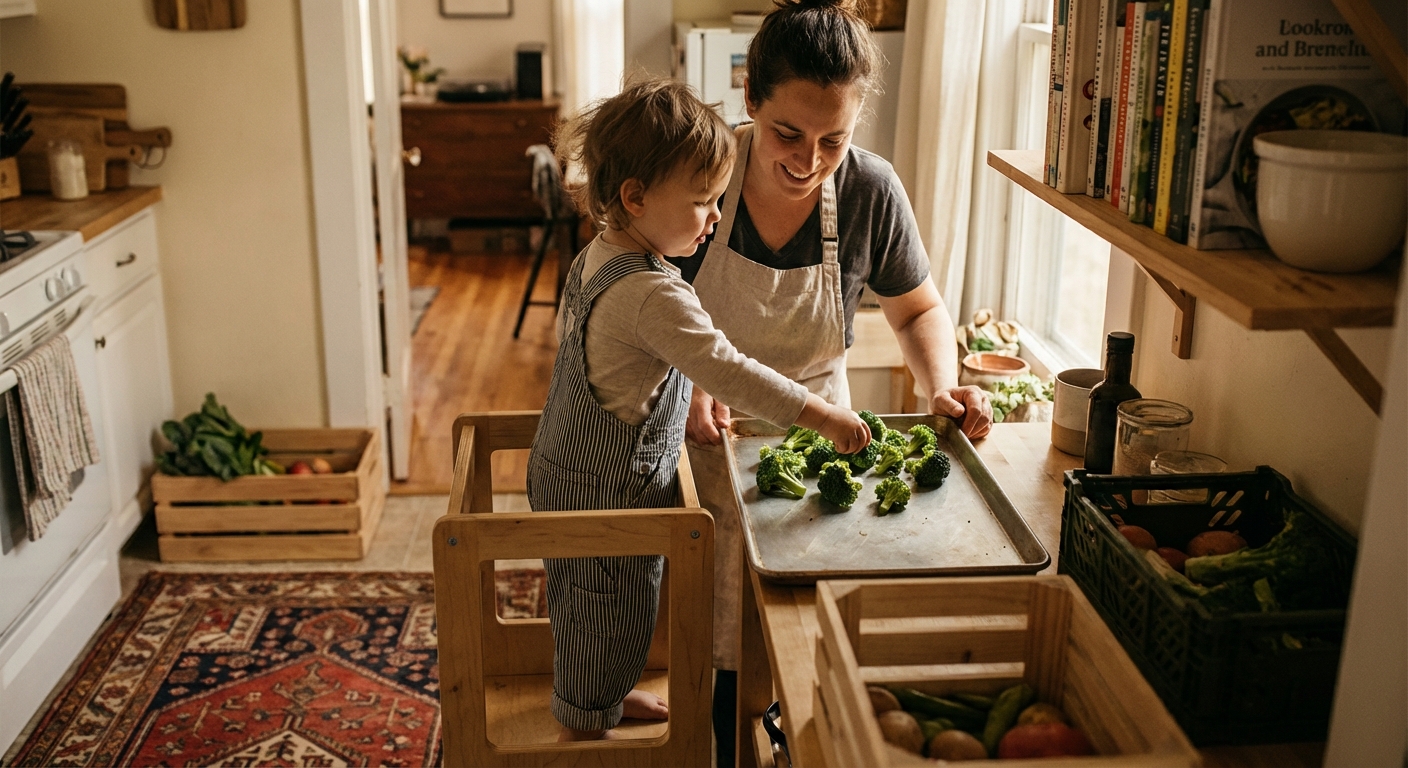
Kids do not always eat what they help make, but it moves vegetables from “mystery threat” to “familiar thing.”
7) Pair the veggie with a safe food every time
This is the biggest battle-ender I know. Always include at least one food your child reliably eats. It reduces anxiety and keeps them from feeling trapped.
Examples:
- Chicken nuggets (safe) + roasted sweet potato wedges (new-ish) + fruit (safe)
- Pasta (safe) + peas on the side (learning food) + yogurt (safe)
- Grilled cheese (safe) + tomato soup with blended carrots (gentle exposure) + berries (safe)
Your toddler can eat the safe food and ignore the veggie. That is okay. You are playing the long game.
Safety notes (worth a quick skim)
- Round foods: For toddlers, quarter small round foods like cherry tomatoes, grapes, and olives. Many families find slicing lengthwise into quarters feels safest.
- Nut and seed butters: Offer thin layers or thin with yogurt, applesauce, or warm water to reduce choking risk. Whole nuts are a choking hazard for young kids.
- Hard raw veggies: Raw carrots can be tough for some toddlers. Try thin sticks, grated, lightly steamed, or roasted if chewing is a challenge.
How to stop the mealtime power struggle
If you are currently negotiating “just one bite” like it is an international peace treaty, try this calmer setup. It works for many families because it gives everyone a clear job.
The division of responsibility, toddler edition
- Your job: Decide what is served, when it is served, and where it is served.
- Your toddler’s job: Decide whether to eat and how much.
This approach reduces pressure, which often increases willingness to try foods over time. It also protects your sanity, which is not a small thing.
Helpful boundaries that still feel kind
- Eat together when you can, even if it is just 10 minutes.
- Keep meals and snacks on a predictable schedule so your toddler shows up hungry.
- Start with small portions. Kids can always ask for more, and small servings feel less intimidating.
- Avoid making a separate replacement meal. For many healthy toddlers on a schedule, this helps prevent a pattern of refusing dinner to “order” something else. If your child is losing weight, has medical needs, or you suspect a feeding disorder, get personalized guidance from your pediatrician or feeding therapist.
- Keep dessert neutral. Do not use it as a bribe. Bribes make veggies the “bad thing” and sweets the trophy.
Also, you do not have to cheerlead every bite. Calm, neutral exposure tends to work better than big reactions, even happy ones.
Veggie vehicles kids often accept
If your child rejects vegetables on sight, try offering them inside foods that are already familiar. You are not tricking them. You are making the texture and presentation feel safer.
- Smoothies: spinach or steamed zucchini blended with banana and yogurt (or dairy-free yogurt)
- Sauces: marinara with blended carrots, pumpkin, or red pepper
- Fritters: shredded zucchini or sweet potato pan-fried into small patties
- Soups: blended veggie soups with grilled cheese on the side
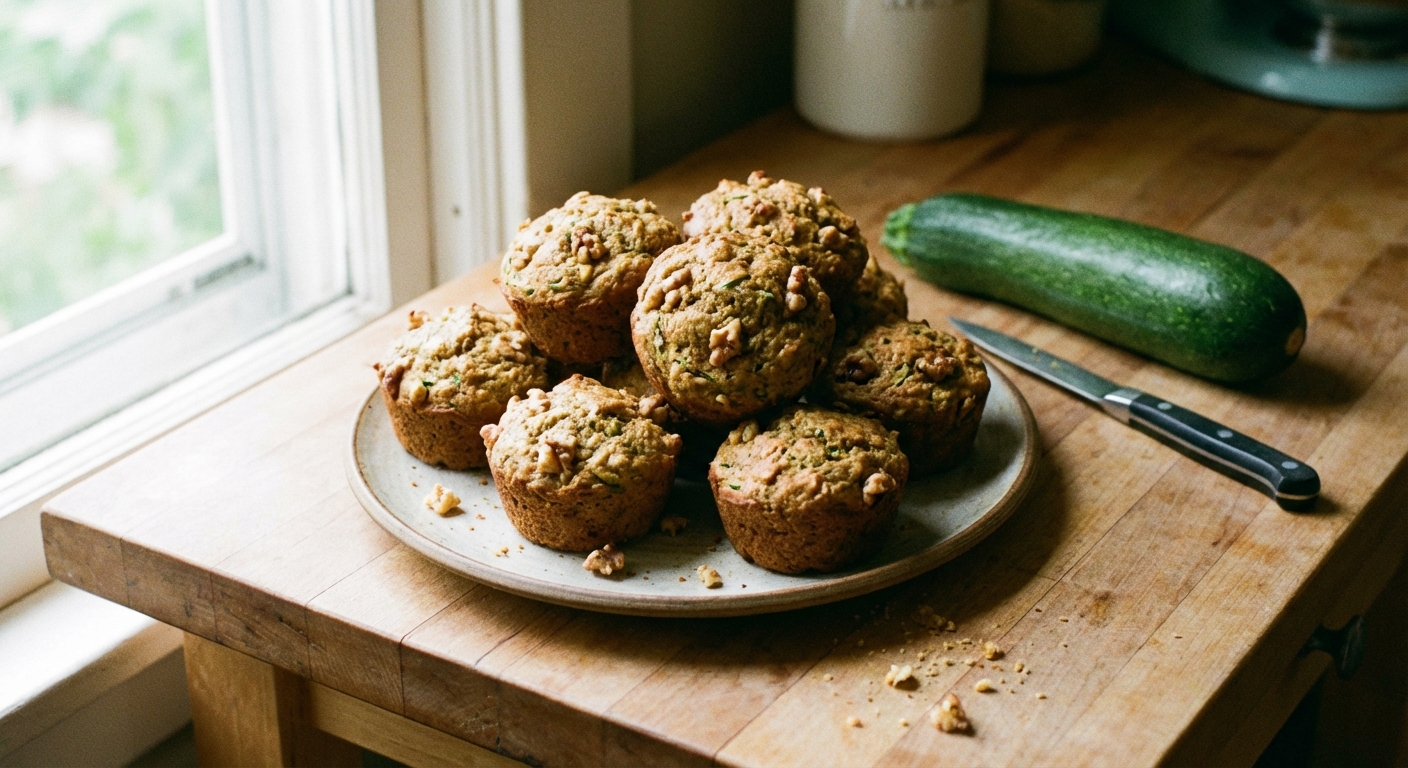
- Muffins: carrot, pumpkin, or zucchini muffins with less sugar than cupcakes
- Eggs: omelet or egg muffins with finely chopped veggies
- Dairy-free ideas: hummus, bean dips, tahini-lemon sauce, or mashed avocado as dip options
When to call your pediatrician
Most picky eating is normal. But a few red flags deserve a check-in, especially if things feel like more than “typical toddler stubbornness.”
- Weight loss, poor weight gain, or falling off their growth curve
- Frequent vomiting, choking, gagging, or coughing during meals
- Ongoing constipation or significant belly pain
- Extreme restriction of foods, like roughly fewer than 10 to 15 foods total
- Refusing entire textures (only purees, or only crunchy foods) for months
- Signs of dehydration, like very dark pee or not peeing much
- Concerns about oral motor skills, chewing, or speech delays
If you are worried, trust that instinct. A quick visit can rule out issues like reflux, constipation, iron deficiency, or sensory feeding challenges. And if you need extra support, pediatric feeding therapists can be absolute superheroes.
A quick script for tonight
If you want words you can borrow when your toddler refuses the veggies, here you go:
“You do not have to eat it. It is on your plate so you can learn about it. You can eat the foods you want from dinner. We will have another snack later.”
Calm, boring, repetitive. Like the world’s least exciting bedtime story. That is exactly what makes it work.
Bottom line
Your toddler is not giving you a hard time. They are having a hard time with new foods, big feelings, and a growing need for control.
Pick one or two strategies from this list, stick with them for a couple of weeks, and focus on exposure over perfection. Veggies do not need to be a battleground. They can just be… food. Eventually.