Toddler Separation Anxiety at Drop-Off

Sarah Mitchell
Sarah Mitchell is a Registered Pediatric Nurse and a mother of three who has spent over a decade helping families navigate the beautiful, chaotic early years of childhood. She combines evidence-based medical knowledge with real-world parenting experience to offer practical, compassionate advice. At Awesome Parent, Sarah's mission is to help exhausted parents find solutions, trust their instincts, and finally get some sleep.
If daycare drop-off feels like a daily heartbreak, you are not alone. Separation anxiety is incredibly common in toddlers, and it can show up even in kids who seem fearless the rest of the day. I’ve supported families through this as a pediatric triage nurse and lived it myself as a parent, and I promise: your child is not “being dramatic,” and you are not “creating a clingy kid.”
Separation anxiety is your toddler’s brain doing exactly what it was designed to do: stay close to their safe person. The goal is not to eliminate feelings. The goal is to help your child trust the routine, trust the adults, and eventually trust themselves.
What it looks like (and when it peaks)
Most toddlers hit a separation-anxiety wave sometime between about 6 to 36 months, often peaking around the end of the first year and into the second. It can also pop back up later, especially during transitions.
It often spikes during big changes like starting daycare, moving classrooms, a new sibling, travel, illness, or even a long weekend that disrupts the rhythm.
Common signs
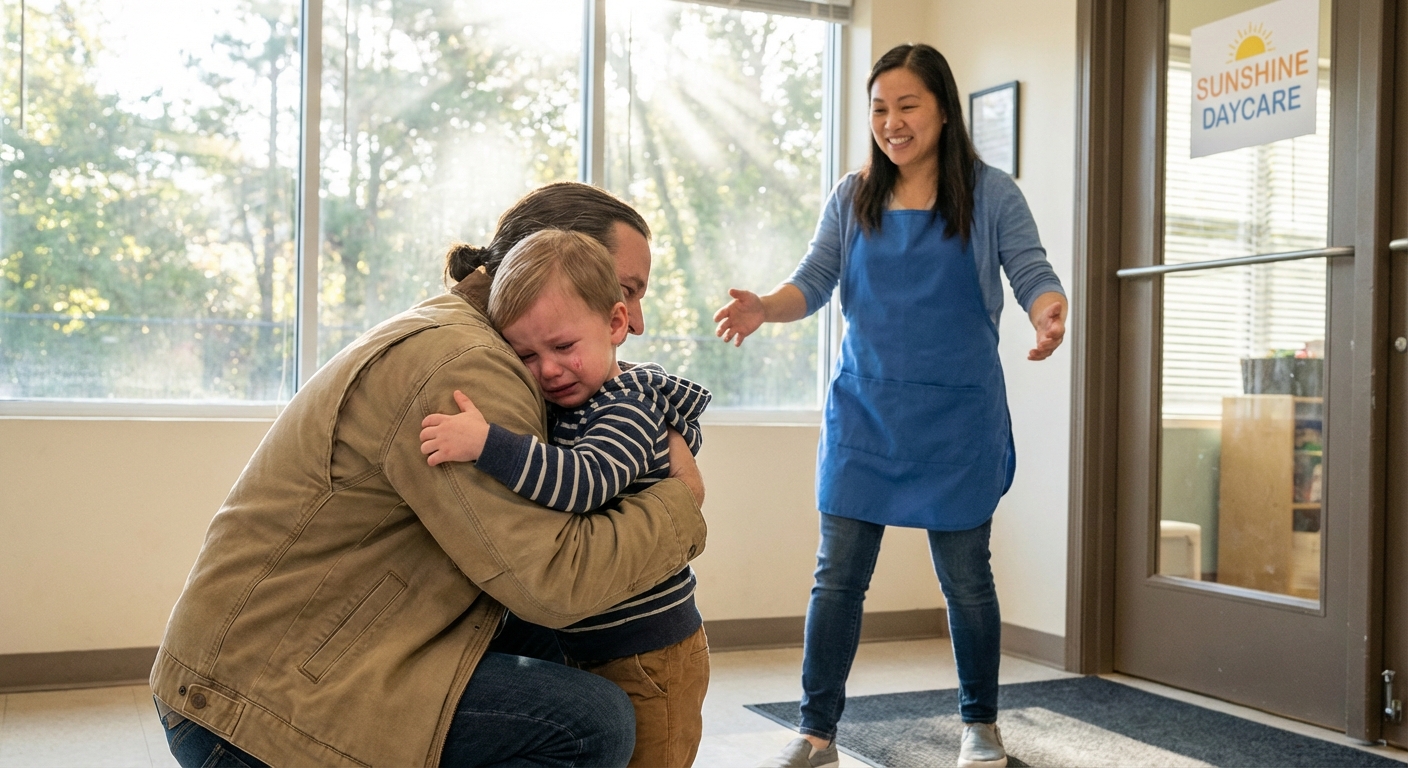
- Crying, clinging, or begging you not to leave
- Refusing to go into the classroom or pushing away the teacher
- Big feelings the night before or the morning of daycare
- Regression like more night waking, more tantrums, or bathroom accidents
- Complaints like tummyaches right at drop-off (very real, stress can do that)
Good news: Separation anxiety is usually a sign of a strong attachment. Your child is bonded to you. Now we help them expand that circle of safety. If the anxiety is intense, persistent, or paired with other concerns, it can also reflect temperament, stressors, or a need for extra support, and that is something you can absolutely talk through with your pediatrician and daycare team.
The mindset that helps
Here’s the reframe that helps most parents: your toddler is not asking you to stay home forever. They are asking, “Can you handle my big feelings, and will you still come back?”
Your calm, consistent response is one of the most helpful tools. Not perfection. Not a magical phrase. Consistency.
Confidence is contagious. If you look unsure, your toddler’s brain hears, “This place might not be safe.” If you look steady, their brain gets the message, “Hard, but safe.”
Build a routine they can memorize
Toddlers love predictability. A simple routine gives their nervous system a script to follow when emotions are loud.
Keep it brief
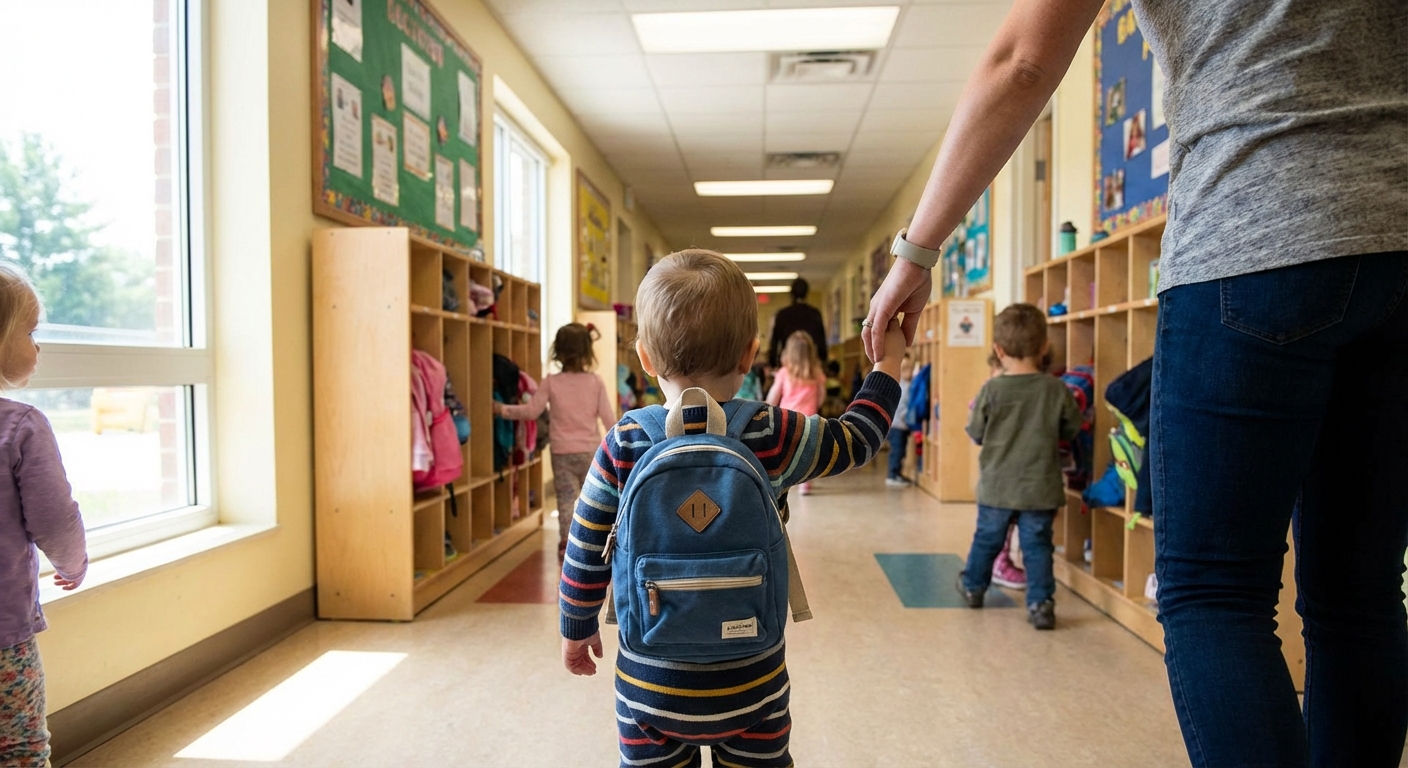
Aim for a loving goodbye that is usually around a minute or so. Brief does not mean cold. It means clear, warm, and not drawn out.
- Arrive and walk in calmly
- Connect at eye level: one hug, one kiss, or one cuddle
- Handoff to the caregiver (more on this below)
- Say the same goodbye phrase
- Leave without looping back
A sample goodbye script
Try something like: “You’re safe. Ms. Ana will help you. I will come back after snack. I love you. Bye-bye.”
Short. Clear. Confident. Notice there is no bargaining, no long explanations, and no “Are you going to be okay?” (Because that can sound like you think they might not be.)
Do quick goodbyes help?
In clinic, I used to hear: “But if I leave quickly, it feels mean.” You’re not being mean. You are making the hardest part shorter.
Long goodbyes can create a painful pattern: your toddler escalates, you stay longer, and they may learn, very logically, “If I cry harder, the goodbye pauses.” Then the next day they may escalate faster because they are hoping it works again.
A brief, loving goodbye supports the learning we want: “Mom or Dad leaves, and then the day begins.”
The handoff
One of the most effective strategies is a clear, gentle transfer from you to the caregiver. Toddlers often do better when the “who am I safe with right now” question is answered quickly.
How to do it
- Make sure the caregiver is ready and present before you start the handoff
- Tell your child what’s happening: “Now it’s Ms. Ana’s turn to help you.”
- If your child will tolerate it, place them into the caregiver’s arms or guide them to hold the caregiver’s hand
- If your child is stiff, arching, or fighting the transfer, try a side-by-side handoff: stand next to the caregiver while the caregiver offers a hand, a hug, or a “hello job” (like putting the backpack away together)
- Turn your body toward the exit after the goodbye phrase
- Leave even if your child cries (as long as they are safe with the caregiver)
This is where your daycare team matters. If possible, ask for a consistent greeter at the door for a couple of weeks. Familiarity reduces stress.
Prep at home
Drop-off success starts the night before. Toddlers handle separation better when they feel some control and know what to expect.
The night-before plan
- Show them the plan in simple steps: “Breakfast, car, daycare, snack, play, then I come back.”
- Let them choose between two outfits or two breakfast options (tiny control, big payoff)
- Pack one comfort item if allowed, like a small blanket or family photo
Play it out
Role-play daycare with stuffed animals. Have the teddy “feel sad,” then practice: “Grown-ups come back.” Toddlers learn through repetition and play, not lectures.

What to say (and not say)
Say this
- “It’s okay to feel sad. I’ll be back after lunch.”
- “You can cry and Ms. Ana will help you.”
- “First daycare, then home.”
- “I always come back.”
Avoid this
- “Don’t cry.” (Crying is a normal way to release stress.)
- “You’re fine.” (They do not feel fine.)
- “If you stop crying, I’ll stay longer.” (Accidentally teaches bargaining.)
- Sneaking out. (It can increase anxiety because they stop trusting the goodbye.)
Transition objects
Comfort items are not “babyish.” They’re tools. If daycare allows it, consider:
- A small lovey or blanket
- A family photo laminated or tucked into a backpack pocket
- A simple “kissing hand” routine: kiss their palm, remind them it’s there when they miss you
Keep the item consistent and boring. The goal is soothing, not a new toy that becomes a power struggle.
If Mondays are harder
Lots of toddlers struggle after time at home. It’s not a sign daycare is failing. It’s a sign your child is human and transitions are hard.
Try a Monday buffer
- Extra time in the morning so you are not rushing
- Extra connection before you leave: 5 minutes of floor play, no phone
- Remind them of the routine Sunday night and Monday morning
Coordinate with daycare
If drop-off is rough for you too (it is for many of us), ask your daycare about a simple communication plan. For example: a quick message after 10 to 15 minutes once your child has settled, or a photo later in the morning.
Try to avoid repeated check-ins throughout the morning, because it can keep your own nervous system on high alert. One planned update is often the sweet spot.
When to adjust the plan
Sometimes separation anxiety improves quickly with consistency. Other times, the plan needs tweaking.
Talk to your caregiver if:
- Your child cries hard for more than 20 to 30 minutes most days
- They are not engaging in play at all after you leave
- They seem withdrawn, not just upset
- There has been a recent classroom change or staffing change
Helpful daycare supports
- A consistent “hello job” (watering a plant, feeding the fish, putting backpack away)
- A designated cozy corner for calming with a teacher nearby
- A predictable first activity your child enjoys (sensory bin, books, play dough)
Troubleshooting
“My toddler clings to me and won’t let go.”
Use a firm, gentle handoff with the caregiver ready and close. Keep your words minimal. If your child is safe with the caregiver, your job is to leave so they can settle.
“They scream like it’s the end of the world.”
This is the hardest. It helps to remember: the crying is communication, not danger. Ask the teacher what they typically see after you go. Some toddlers calm within minutes once the goodbye is complete, and others need more time and support.
“They only do this with me, not my partner.”
Very normal. Toddlers often save their biggest feelings for their safest person. If schedules allow, consider having the other caregiver do drop-off for a week or two to reset the pattern.
“They’re fine at drop-off, but melt down at pickup.”
Also normal. Holding it together all day is hard work. Build in a low-demand pickup routine: snack, water, and quiet time before questions.
How long does it last?
With a consistent routine, many families notice improvement within a few weeks. Some kids take longer, especially with frequent disruptions (vacations, illnesses, changing caregivers) or individual differences.
Progress often looks like:
- They still cry, but for a shorter time
- They accept comfort from the teacher faster
- They start walking in with less resistance
- They begin talking positively about friends or activities
Look for the trend, not the perfect day.
Kids who may need extra support
Some children need a longer runway with separation, and that is not a parenting failure. Kids with sensory sensitivities, anxiety-prone temperaments, speech and language delays, or neurodivergence (including autism or ADHD) may do best with extra predictability, a slower transition plan, and more individualized supports at daycare.
If you suspect any of this fits your child, you can still use all the strategies above. Just plan for a longer adjustment period and loop in your pediatrician and teachers early so you are all using the same approach.
When to call your pediatrician
Separation anxiety is usually a normal developmental phase. Reach out to your pediatrician if you notice:
- Persistent physical symptoms (vomiting, frequent diarrhea, weight loss, refusing to eat) linked to anxiety
- Panic-like symptoms that feel extreme for your child’s usual temperament
- Sleep disruption that is severe and not improving
- Regression that is intense or prolonged
- Concerns about the daycare environment or a specific incident
If something in your gut feels off, it is always okay to ask. You do not need “proof” to request support.
A final note
Drop-off tears can make you feel like you’re doing something wrong. You’re not. You’re doing a brave thing: helping your child practice separation in a safe, supported way.
Stay steady, keep the goodbye brief, and let the caregivers do what they are trained to do. And if you cry in the car sometimes, welcome to the club. Please hydrate and do not text while driving. I’m a nurse, I have to say it.