Toddler Speech at 18 Months: What’s Typical and When to Screen

Sarah Mitchell
Sarah Mitchell is a Registered Pediatric Nurse and a mother of three who has spent over a decade helping families navigate the beautiful, chaotic early years of childhood. She combines evidence-based medical knowledge with real-world parenting experience to offer practical, compassionate advice. At Awesome Parent, Sarah's mission is to help exhausted parents find solutions, trust their instincts, and finally get some sleep.
At 18 months, toddler speech can feel like a magic trick. One day your child says “ball,” and the next day they communicate entirely through pointing, grunts, and the world’s most powerful stare. If you’re wondering, “Should my 18-month-old be talking more?” you’re not alone. This age sits right in the messy middle where a huge range can still be typical, but there are a few signs that mean it’s worth requesting a screening sooner rather than later.
Let’s walk through what speech often looks like around 18 months, how understanding (receptive language) differs from talking (expressive language), what changes the picture in bilingual homes, and when to call Early Intervention (EI). I’ll also add a quick note on alternative communication and a few helpful caveats (like prematurity), so you can interpret milestones without spiraling.

Speech at 18 months: a reality check
There is no single “perfect” word count for an 18-month-old. Some toddlers are chatty early, while others focus on movement, problem-solving, and soaking in language quietly before they talk more.
That said, milestones give us helpful guideposts. Around 18 months, many toddlers have:
- A handful to a few dozen words (often you’ll see ranges like 10 to 50, depending on the source and the child)
- Consistent use of gestures such as pointing, waving, shaking head “no,” reaching up, or handing you items to request help
- Growing understanding of everyday words and routines (they may understand far more than they can say)
A quick nuance that helps a lot: the CDC’s 2022 milestones list a more “bare minimum” skill at 18 months, such as saying 3 or more words (not including “mama” or “dada”). Many speech-language references describe what is more typical on average around this age, which is why you will often hear higher ranges like 10 to 50. Both can be true: one is a minimum milestone, and the other is a common range.
If your toddler has just a few words at 18 months but communicates well with gestures and seems to understand you, that can still fall within the “watch and support” zone. If spoken words are limited and understanding or social communication seems off, that’s when it’s worth thinking about screening earlier.
Receptive vs expressive language
One of the biggest sources of panic for parents is counting words without noticing the bigger communication picture.
Receptive language: what your toddler understands
Receptive language is the “input” side. At 18 months, many toddlers can do several of these:
- Follow simple, familiar directions like “come here,” “give me the cup,” or “sit down”
- Recognize names of common objects (shoes, snack, dog, ball)
- Respond to their name most of the time
- Point to a few body parts when asked (not every child does this right at 18 months, but it often emerges around this window)
Expressive language: what your toddler says or shows
Expressive language is the “output” side: spoken words, signs, gestures, sounds used consistently, and later, phrases.
- Words might be approximations ("ba" for ball, “nana” for banana)
- Sound effects count as meaningful words if they’re used consistently ("vroom" for cars, “woof” for dog)
- Signs count too, especially if your child uses them intentionally (more, milk, all done)
Why this matters: A toddler with strong receptive language and good social engagement (eye contact, joint attention, pointing to share) is often on a different track than a toddler who struggles to understand language or connect socially. Both deserve support, but the urgency and evaluation focus can differ.
What “counts” as a word?
Parents often undercount because they assume only crisp, adult-like words count. At 18 months, it’s normal for pronunciation to be adorably creative.
In general, you can count it as a word if it is:
- Consistent (your child uses the same sound for the same thing)
- Meaningful (it clearly refers to something: a person, object, action, or request)
- Intentional (not just babbling without purpose)
Examples that often count:
- “Wawa” for water, used when thirsty
- “Up!” when they want to be picked up
- “Uh-oh” when something drops
- “Woof” meaning dog
- A consistent sign for “more”
Things that usually do not count as words:
- Random babble that changes constantly
- Sounds repeated without a clear meaning
- Repeating words or phrases without using them to communicate (immediate or delayed echolalia) does not count the same as functional vocabulary, even though it can still be part of development
Gestures plus words
If there’s one “green flag” I love at 18 months, it’s gesture + intention. Toddlers are supposed to use their whole body to communicate right now.
Helpful signs your toddler is building language, even if words are limited:
- Pointing to request (pointing at a snack on the counter)
- Pointing to share (pointing at an airplane to make sure you look too)
- Bringing you items to help or show
- Back-and-forth interaction (they look at the toy, then at you, then back at the toy)
- Using a mix of sounds, facial expressions, and gestures to get a point across
This matters because language isn’t just words. It’s social communication. A toddler who is motivated to communicate typically has a strong foundation for speech growth.
Bilingual households
Bilingualism does not cause speech delay. Kids can absolutely learn two languages from the start. What changes is how vocabulary is counted.
How to count words in two languages
Use a “total vocabulary” approach: count words across both languages. For example, if your child says “agua” and “water,” that’s communication success. Some professionals count concept words (counting “water/agua” as one concept), but in real life, either way is reassuring because your child is mapping meaning to words.
What’s typical at 18 months
- They may have more words in one language depending on exposure
- They may mix languages later on, which is normal
- They may be quiet in one setting (for example, less verbal at daycare if that language is newer)
The same red flags apply in bilingual homes: concerns are more about understanding, social connection, and functional communication than about having a specific number of words in each language.
Red flags before age 2
There’s a popular online milestone of “not talking at 2.” But at 18 months, we can sometimes spot signs that benefit from earlier support. Early support does not label your child for life. It gives them tools.
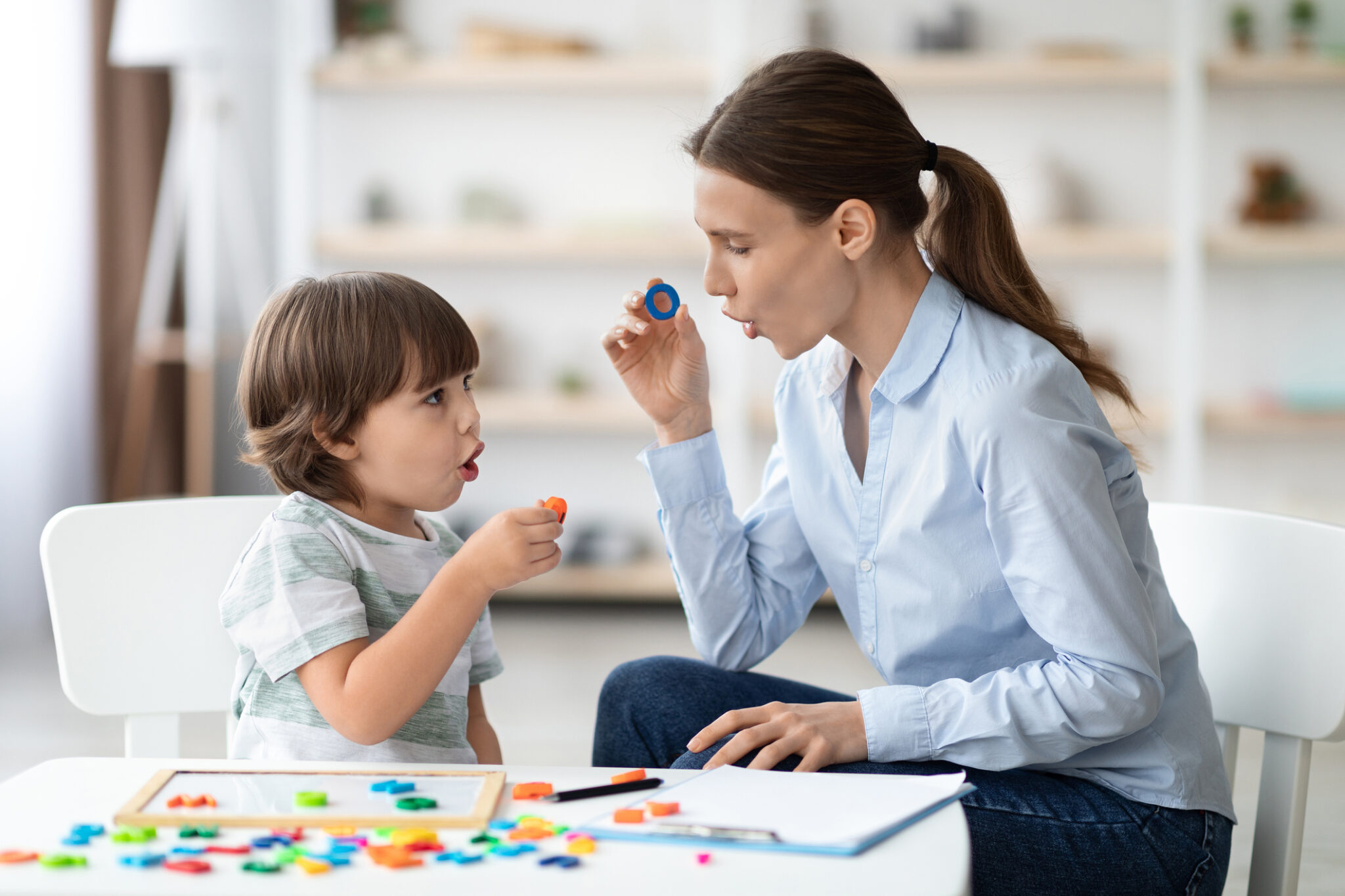
Consider screening now if you notice:
- No single words (spoken or signed) by 16 months, or very few words by 18 months
- Loss of words or social skills at any age (regression is always worth prompt evaluation)
- Does not point to share interest by around 18 months (some kids point later, but concern goes up if this is part of a bigger pattern with limited eye contact, limited back-and-forth, or not showing you things)
- Does not respond to their name consistently, especially with other social concerns
- Limited eye contact or limited back-and-forth interaction
- Does not follow simple one-step directions in familiar routines (when you’re confident they’re hearing and paying attention)
- Very limited gestures (rarely waves, reaches up, shakes head, points, or brings you things)
- You suspect hearing issues (frequent ear infections, not reacting to everyday sounds, often turning one ear toward sound, inconsistent responses)
If your gut is saying, “Something feels off,” that’s a reason to act. You do not need to prove a delay to ask for help.
How this differs from age 2
At age 2, we expect a bigger language leap. Many 2-year-olds:
- Use two-word combinations (more milk, mama up, go outside)
- Have a larger spoken vocabulary (often around 50+ words, with wide normal variation)
- Are understood by familiar adults more often
At 18 months, we’re often looking for foundation skills:
- Intent to communicate
- Gestures and joint attention
- Growing understanding of language
- At least a small set of functional words or signs
So if your 18-month-old isn’t talking much, the question is less “Will they be behind at 2?” and more “Are they building the building blocks that lead to speech?” If the building blocks are shaky, earlier screening can be very helpful.
When to call Early Intervention
In the U.S., Early Intervention provides evaluation and services for children under 3, and you can usually self-refer. You do not have to wait for your pediatrician to “approve” your concern, although it’s great to loop them in too.
Outside the U.S., the pathway has different names (health visitor, child development service, community pediatric team). The idea is the same: if you’re worried, ask what the local referral route is for a developmental or speech-language evaluation.
Call EI if:
- Your child has no words (spoken or signed) by 18 months
- Your child has very few words and limited gestures
- Your child has receptive language concerns (does not seem to understand)
- You see regression in communication or social skills
- You are worried and want clarity
Also ask for a hearing check
Any speech concern deserves a hearing conversation. Even mild or fluctuating hearing loss from ear fluid can make speech harder. Ask your pediatrician whether a formal hearing evaluation is appropriate, especially with a history of frequent ear infections or if your child doesn’t respond to sound reliably.
What you can do at home
You do not need flashcards at 3 AM. What helps most is responsive, repeatable, low-pressure language.
- Narrate the moment: short phrases like “Shoes on,” “More banana,” “Doggie running.”
- Pause expectantly: offer a chance to communicate before you swoop in. Look at your child, then the item, then back at your child.
- Give choices: “Milk or water?” and hold up both.
- Repeat and expand: if your child says “ball,” you say “Big ball!”
- Follow their lead: talk about what they care about, not what you wish they cared about.
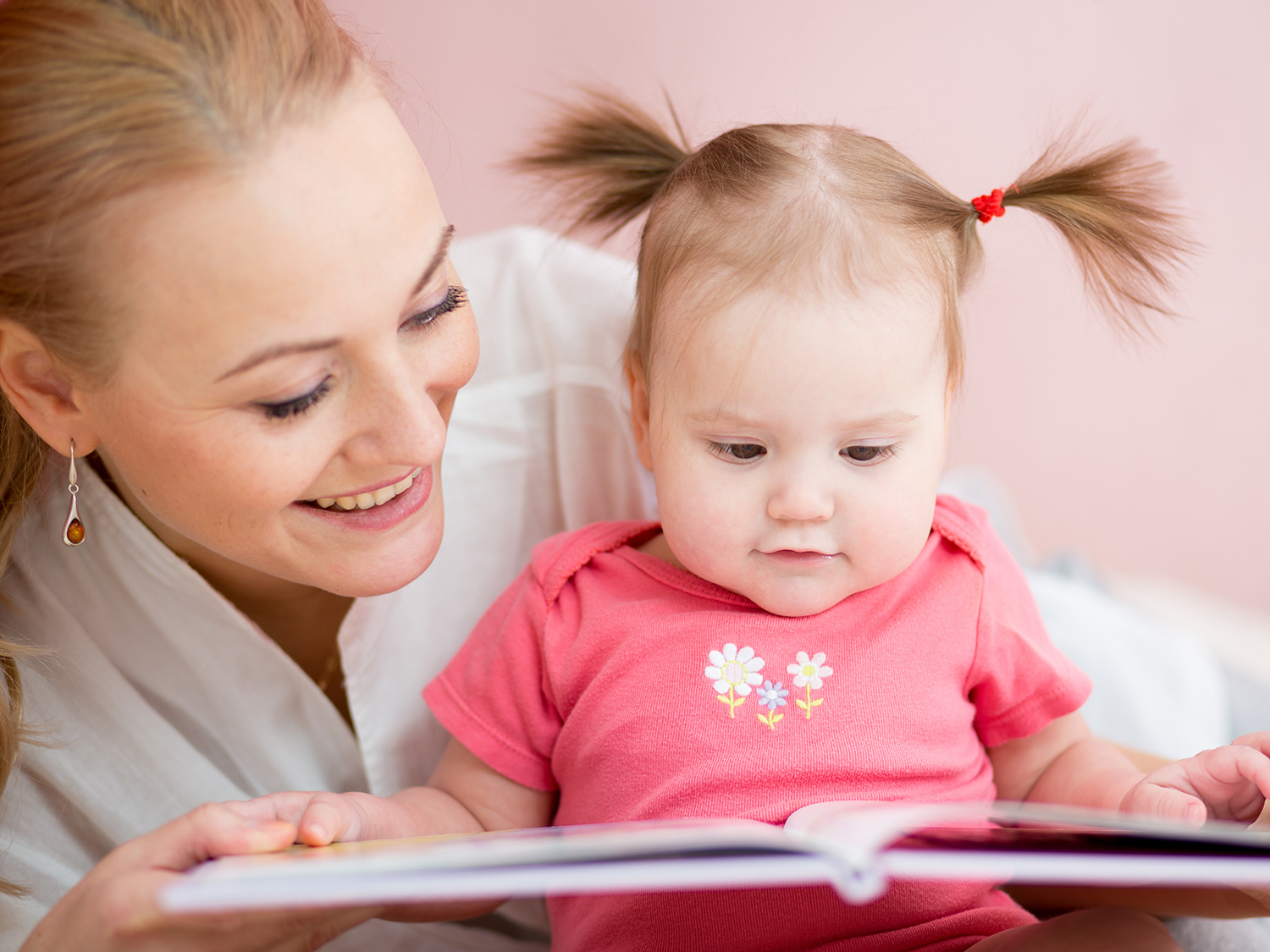
- Read simply: point, label, and let your toddler flip pages. Two minutes counts.
If your toddler is frustrated, lean on gestures and signs. Communication is communication.
Quick reassurance about AAC: using signs, picture pointing, or a simple AAC system does not prevent speech. For many kids, it lowers frustration and increases communication, which can support speech development.
If there are feeding or swallowing concerns, very limited sounds, or you feel like your child is struggling to coordinate their mouth for speech, mention that to your pediatrician or SLP too. It can be an important clue for the evaluation.
When it’s urgent
Most speech concerns are not emergencies, but a few situations deserve prompt medical attention:
- Sudden loss of speech or social engagement
- Concerns for hearing paired with pain, fever, or sudden change after illness
- Any major developmental concern where your child seems significantly different from peers in multiple areas and is hard to engage
If you’re unsure, start with your pediatrician. If you’re in the U.S. and worried about development, you can also call your state’s EI program and ask for an evaluation. The earlier the support, the easier it is to help.
A calm bottom line
At 18 months, a “typical” word count can vary widely, and many toddlers understand far more than they can say. Look at the whole communication picture: receptive language, gestures, pointing to share, and back-and-forth interaction.
If your toddler has few or no words, limited gestures, doesn’t seem to understand, or has lost skills, request a screening now. You are not overreacting. You’re being the kind of parent who listens to their instincts and gets support early, which is exactly what we want.
One more helpful caveat: milestones are guideposts, not grades. If your child was born premature or has a known medical history, ask your pediatrician how to interpret milestones for your specific situation.
Sources parents often hear cited: CDC developmental milestones (updated 2022), the American Speech-Language-Hearing Association (ASHA) communication milestones, and American Academy of Pediatrics (AAP) guidance on developmental screening and referral.