Button batteries can cause severe internal burns within 2 hours. Here’s how to spot it, what to do immediately (including honey dosing), what not to do, an...
Toddler Swallowed a Coin? Timelines, Symptoms, and When to Go to the ER

Sarah Mitchell
Sarah Mitchell is a Registered Pediatric Nurse and a mother of three who has spent over a decade helping families navigate the beautiful, chaotic early years of childhood. She combines evidence-based medical knowledge with real-world parenting experience to offer practical, compassionate advice. At Awesome Parent, Sarah's mission is to help exhausted parents find solutions, trust their instincts, and finally get some sleep.
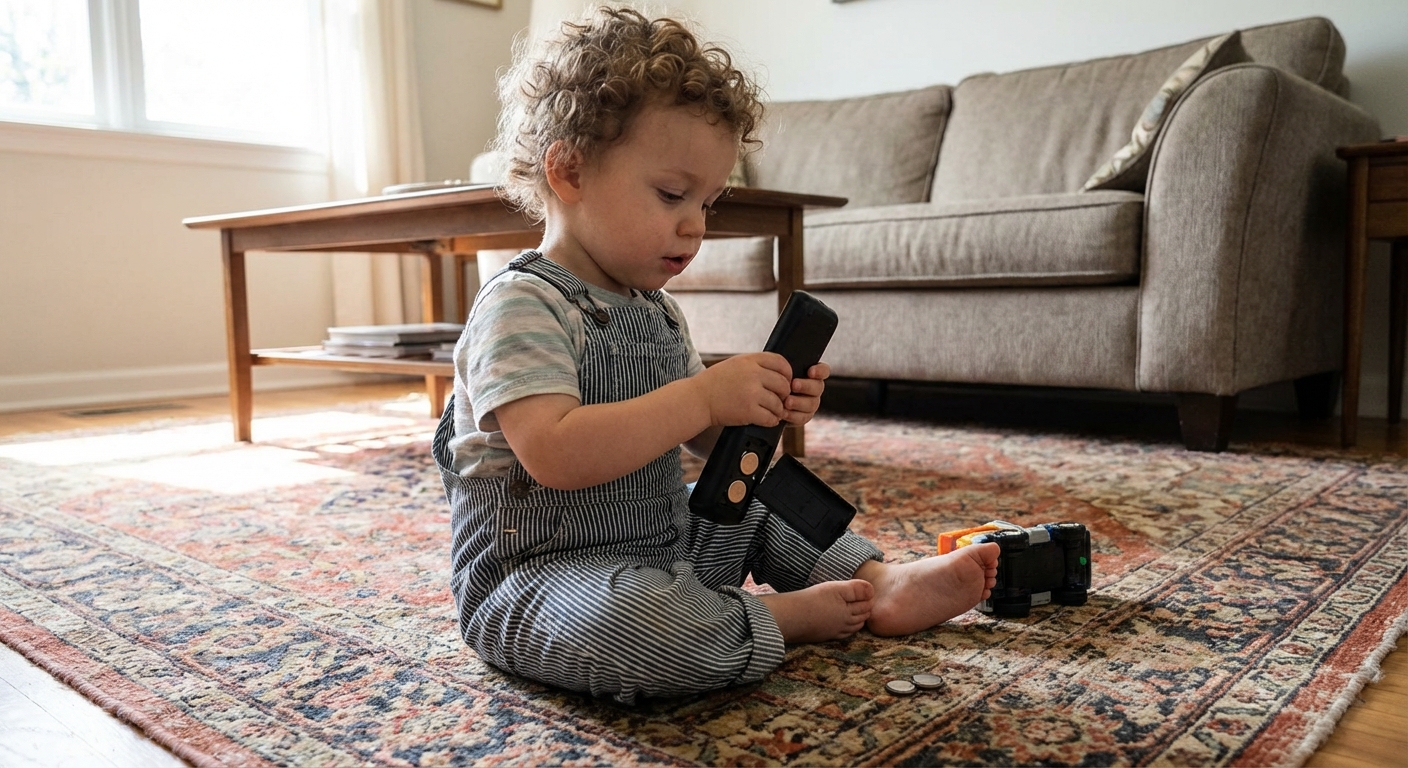
If you are reading this with your heart racing and your toddler acting totally fine, take a breath. Coin swallowing is one of the most common “how did you even manage that?” toddler moments I saw as a pediatric triage nurse. The good news is that many coins that make it into the stomach pass on their own. The important part is figuring out whether the coin is stuck in the esophagus (the tube from mouth to stomach), was inhaled into the airway, or has made it into the stomach, and knowing the red flags that mean you should skip Google and get urgent medical care.
If you think it was a button battery or a magnet, treat it as an emergency and go in now. Coins follow different rules than those items.
Quick safety note: This is general information, not a substitute for medical care. If you are unsure what was swallowed or what to do next, call your pediatrician or Poison Control (US: 1-800-222-1222). If there is trouble breathing, call your local emergency number.

What to do right now
- Check breathing first. If your child is coughing hard, wheezing, drooling, gagging, turning blue, or cannot speak or cry normally, call emergency services.
- If there are signs of choking or inhalation, treat it as an emergency. Sudden severe coughing, ongoing wheeze, or noisy breathing can mean the object went into the airway, not the swallowing tube.
- Do not try to make them vomit. No gagging with fingers, no syrup of ipecac (not recommended), no “push it down” tricks.
- Keep them upright and calm. Do not give food or drinks for now unless a clinician tells you it is okay. If the coin is in the esophagus and needs removal under sedation, an empty stomach matters.
- Try to identify what was swallowed. Penny, dime, nickel, quarter, or a small toy? Note the approximate size and the time it happened.
- If you have any doubt it was a battery or magnet, go to the ER now. Those can injure the esophagus or intestines quickly.
Coin vs. look-alikes
Parents often tell me, “It looked like a penny.” Totally fair. In real life, things are small and shiny and toddlers are fast. Here is the key distinction:
- Coins are usually smooth and inert. They can get stuck, but they do not typically cause rapid chemical burns.
- Button batteries can begin causing severe burns in the esophagus in as little as 2 hours.
- Magnets (especially more than one, or a magnet plus a metal object) can pinch bowel tissue between them and cause perforations.
For those, use our dedicated guides: Button Battery Swallowed: What to Do Now and Toddler Swallowed a Magnet: When It’s an Emergency.
Symptoms to watch for
Many kids have no symptoms. That said, symptoms give big clues about where the coin is and whether it is causing trouble.
Signs it may be stuck in the esophagus
- Drooling or refusing to swallow
- Gagging, retching, or vomiting
- Chest or throat pain (toddlers may just cry and point)
- Difficulty eating or drinking
- Coughing, wheezing, noisy breathing
- Feeling like something is “stuck” (older toddlers may describe it)
Signs of stomach or intestinal trouble
- Belly pain
- Ongoing vomiting
- Blood in vomit or stool (red or black, tarry stool)
- Fever or unusual lethargy
Trust your gut. If your child looks unwell, has persistent pain, or you cannot get them comfortable, it is appropriate to be seen even if you are not sure what happened.

When to get urgent care
Go to the ER now if:
- Your child has trouble breathing, persistent coughing, wheezing, choking, or noisy breathing
- They are drooling or cannot swallow saliva
- They have repeated vomiting or cannot keep liquids down
- You suspect the coin is stuck (pain, gagging, refusing food or drink)
- You suspect it could be a button battery or magnet
- Your child swallowed a large coin (for example, a quarter) and is under about 2 years old, or has symptoms
- Your child has a history of esophageal problems (stricture, surgery, known swallowing disorders)
Call your pediatrician or nurse line (or consider urgent care) if:
- Your child seems well, is breathing comfortably, and you are fairly confident it was a single coin
- They can swallow normally and are not drooling
- You want guidance on whether to do imaging, and where to go based on local resources
Important note: Many urgent cares cannot do pediatric imaging or may send you to the ER anyway if a foreign body is suspected. If your child has symptoms, the ER is usually the faster path.
Where the coin is matters
Here is the simple version I used in triage:
- Esophagus: More likely to cause symptoms and more likely to need removal. Coins can get stuck at natural narrow spots.
- Stomach: Most coins that reach the stomach pass through the intestines and out in stool without intervention.
The catch is you cannot reliably tell location at home based on “they seem fine.” Some kids with an esophageal coin look okay at first, especially if it is sitting in a way that does not completely block swallowing.
Also important: Even a coin in the esophagus with mild or no symptoms often needs prompt medical evaluation. Many clinical guidelines aim for removal within about 24 hours if it is confirmed in the esophagus, and sooner if symptoms are present.
What happens at the hospital
If a clinician thinks a coin was swallowed, the most common first step is a plain X-ray. Most coins show up clearly on X-ray. What you can expect:
- Usually one or two views of the neck and chest, sometimes abdomen, depending on the story and symptoms.
- The goal is to see where the object is and confirm it looks like a coin.
- If the coin is in the esophagus, the team will decide on timing and method of removal, often with endoscopy.
- If the coin is in the stomach and your child is well, you will often be sent home with watch-and-wait instructions.
Button battery note: On X-ray, a button battery can sometimes look similar to a coin, but clinicians look for specific features. This is one reason it is so important to say, “I am not sure it was a coin,” if you are not sure.
How long to pass a coin
Once a coin is in the stomach, many pass within a few days. Some take longer, especially with constipation or larger coins.
Typical timelines
- First 24 to 72 hours: Very common window for passing
- Up to 7 days: Still common, especially if constipation is in the mix
- Beyond 7 to 14 days: Call your pediatrician for next steps. Many clinicians will recommend a repeat X-ray to confirm the coin is moving and not stuck.
If your child develops symptoms at any point, do not wait out the timeline. Symptoms beat the calendar every time.
Should you check poop
Yes, if you were advised to watch for it, and you can do it without losing your mind. My “real life parent” tip is to keep it simple.
Practical ways to look
- If your child is in diapers, you can gently break apart the stool inside the diaper using a disposable utensil or tongue depressor.
- If they use the toilet, consider having them poop into a clean potty chair or place plastic wrap loosely under the toilet seat to catch stool (only if this is safe and doable in your house).
- Wash hands well after, and do not stress if you miss it. Many families do.
If you never find the coin, that does not automatically mean it is still inside.

Red flags after going home
Whether you were seen and discharged or you are monitoring at home, seek urgent care right away (often the ER) if your child develops:
- Drooling, trouble swallowing, or refusal to eat and drink
- Persistent vomiting
- Worsening belly pain or a hard, swollen abdomen
- Blood in vomit or stool (red or black stools)
- Fever with abdominal symptoms
- Breathing symptoms like wheeze, stridor, or ongoing coughing
Common questions
Can my toddler sleep after swallowing a coin?
If your child is breathing comfortably, not drooling, and acting well, sleep is usually okay while you arrange next steps. If symptoms are present, you are unsure what was swallowed, or there was a choking episode, get medical guidance first.
Should I give bread or a banana to “push it down”?
In the clinic, we do not recommend home “push it down” strategies. If a coin is stuck in the esophagus, adding food can increase choking risk or make removal harder.
Should I use a laxative if my child is constipated?
Do not give laxatives or other “make it pass faster” remedies unless your clinician tells you to. If constipation is an issue, ask your pediatrician what they want you to do while you are waiting for the coin to pass.
What if I did not see it happen?
This is very common. If you have a missing coin and a toddler who had a coughing spell, sudden drooling, vomiting, or refusal to eat, treat it as possible ingestion and get evaluated. If they are completely well and it is just a suspicion, call your pediatrician for guidance.
Are pennies dangerous because of zinc?
Modern US pennies (mostly post-1982) contain a lot of zinc. The bigger concern with a penny is that if it is retained in the stomach, it can corrode and irritate or injure the stomach lining. Systemic zinc toxicity from a single penny is uncommon, but prolonged retention or multiple coins should be medically followed.
Prevention
- Do a quick “floor sweep” under couches and car seats weekly. Coins love those places.
- Store loose change in a container with a lid, up high.
- Teach siblings to keep “tiny treasures” out of toddler reach.
- Learn the highest-risk items: button batteries and magnets.
And for the record, if your child swallowed a coin, you did not fail parenting. Toddlers are basically tiny scientists with no safety committee.
Quick recap
- Many swallowed coins pass without problems once they are in the stomach.
- Coins in the esophagus are more likely to need removal, sometimes even if symptoms are mild.
- Symptoms like drooling, trouble swallowing, vomiting, or breathing issues mean get seen urgently.
- X-rays are commonly used to locate the coin and confirm what it is.
- Button batteries and magnets are different emergencies with different timelines and risks.