Toddler Swollen Lymph Nodes: Causes and When to See a Doctor

Sarah Mitchell
Sarah Mitchell is a Registered Pediatric Nurse and a mother of three who has spent over a decade helping families navigate the beautiful, chaotic early years of childhood. She combines evidence-based medical knowledge with real-world parenting experience to offer practical, compassionate advice. At Awesome Parent, Sarah's mission is to help exhausted parents find solutions, trust their instincts, and finally get some sleep.
You’re giving your toddler a bath, you run your hand along their neck, and suddenly your brain goes: What is that lump? If you are here after a late-night Google spiral, take a breath with me. In triage, I saw this all the time. In toddlers, swollen lymph nodes are often a sign that the immune system is doing its job, usually during or after a cold or other everyday infection.
That said, there are a few “call the doctor” clues to watch for. This article will walk you through what’s normal, what’s not, and how to keep an eye on things without poking the poor kid every hour.
Quick note: This article is for general education, not a diagnosis. If you are worried, your pediatrician is the right next step.
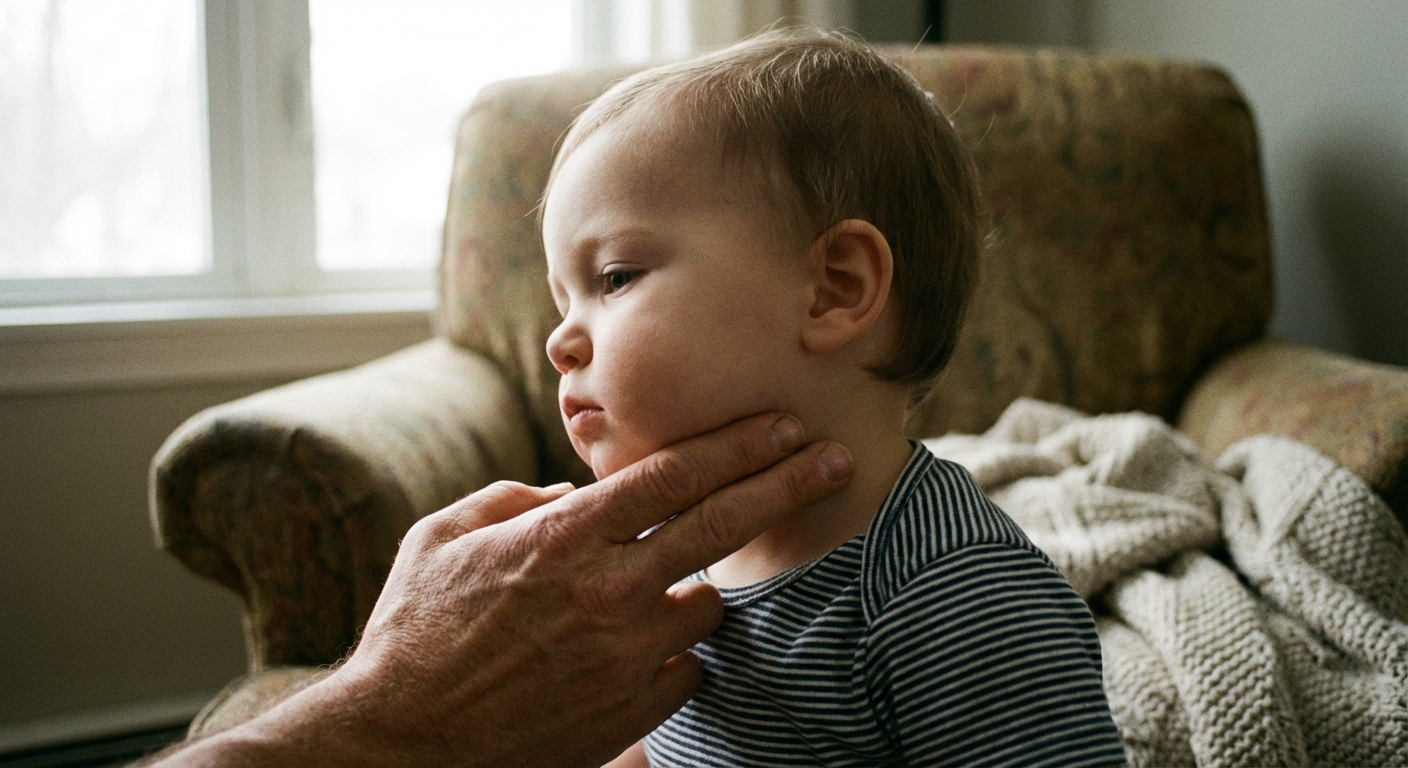
What lymph nodes do
Lymph nodes are small, bean-shaped filters that help your child’s body fight germs. They sit along the “highways” of the lymph system and help trap viruses and bacteria while immune cells ramp up a response.
When your toddler catches something, those nodes can swell because they are working harder. That swelling is often most noticeable in areas that drain the head and neck because toddlers get so many colds.
Key reassurance: Feeling a small, movable lump under the skin in a toddler is usually normal, especially if they recently had a runny nose, cough, sore throat, or ear infection.
Where you may feel them
Most toddlers have lymph nodes you can feel at some point. The most common spots are:
- Neck (especially along the sides and under the jaw)
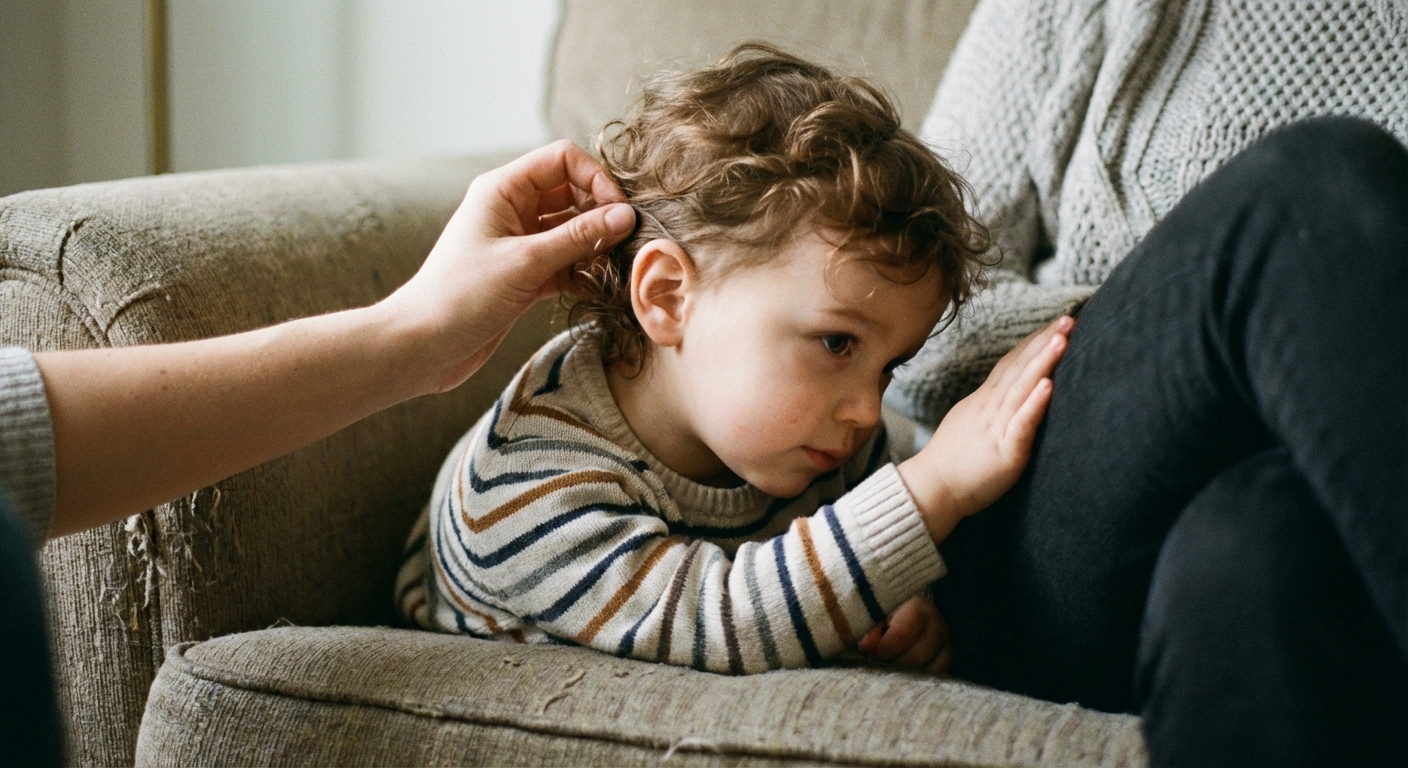
- Behind the ears (post-auricular area)
- Back of the head (occipital area, often after scalp irritation or viral illness)
- Under the chin
- Armpits (less common, but can happen)
- Groin (common, especially with diaper-area irritation, skin infections, or viral illnesses)
Common causes in toddlers
Here are the usual reasons lymph nodes swell in the toddler years:
1) Viral infections (most common)
Colds, RSV, flu, COVID-19, and other everyday viruses can cause lymph nodes to enlarge, particularly in the neck. These nodes can stay a bit enlarged for a while after your child is otherwise feeling better.
2) Ear, throat, and sinus infections
Ear infections and strep throat can make neck nodes more noticeable and sometimes tender.
3) Skin irritation or infection
Bug bites, eczema flares, scrapes, or a mild skin infection on the scalp, face, or diaper area can cause nearby nodes to swell. The node is basically reacting to local “drama” on the skin.
4) Mouth and dental issues
Mouth sores, gum inflammation, or a dental infection can lead to swollen nodes under the jaw or chin.
5) Allergies and chronic congestion
Allergies do not usually cause big, scary nodes by themselves, but constant nasal drip and irritated tissues can make small neck nodes easier to notice, especially during allergy season.
6) Cats and cat scratch disease
If you have a cat and your child has a scratch (even a small one), a nearby node can swell as the body reacts. This is one reason clinicians often ask about pets.
7) Recent vaccines
Some vaccines can temporarily enlarge nearby nodes. This depends on the vaccine and the injection site. For example, after a shot in the arm, some kids get swelling in the armpit on that side. Timing is often within days to a few weeks. If you notice swelling shortly after immunizations, it is reasonable to call your pediatrician for guidance, but it is often expected and short-lived.
Is it really a lymph node?
Parents are good at noticing changes, but not every neck lump is a lymph node. A couple clues that it might be something else (and worth a check):
- Midline lump (right in the center of the neck)
- Moves when swallowing or when your child sticks their tongue out
- Does not match the “sick kid” timeline (it shows up out of nowhere with no recent infection)
None of this means “worst case.” It just means it deserves an exam so you get the right answer.
What size is concerning?
This is the part everyone wants a straight answer on, and I get it. Here’s a practical way to think about it.
- Often normal: small nodes that feel like a pea or small bean, especially in the neck. They are usually mobile (they slide a bit under your fingers) and may be mildly tender during an active infection.
- Worth a call: nodes that are around 2 cm or more (and especially if they keep enlarging), feel unusual, or are not improving over time. Location matters too. Some groin nodes can feel a bit larger and still be reactive, especially with diaper-area irritation, but they should still follow the overall “improving over time” pattern.
Size alone is not the only factor. Doctors also care about texture and behavior:
- Reassuring: soft or rubbery, movable, associated with a recent illness
- Less reassuring: very hard, fixed in place, rapidly growing, or paired with other red-flag symptoms
If object comparisons help, use them loosely (grapes vary, and so do toddlers). Think: pea or bean is often reassuring. A grape, large marble, or anything that looks obviously prominent is worth a call.
One important tip from the triage desk: try not to measure it 20 times a day. Frequent pressing can make the area feel more tender and inflamed and it will drive you both nuts. Checking every couple of days is plenty.
How long can it last?
With typical viral illnesses, nodes can swell quickly and then gradually shrink. Many toddlers have a small node you can still feel for weeks, and sometimes a few months, after a cold even when they are completely fine. That slow fade can be normal.
What I want you to watch for is the trend:
- Expected: swelling appears with illness, then slowly improves
- Worth a call: swelling persists without improvement, grows over time, or shows up with no other signs of infection
One side vs both sides
One-sided swelling can happen with an ear infection, throat infection, a dental issue, or a skin infection on that side. It is often tender and goes down as the infection improves.
Both sides (or multiple areas like neck plus groin) can happen with viral illnesses. What matters most is how your child looks overall and whether the nodes are improving over time.
A firm, persistent, one-sided neck mass that is not following the usual “sick then better” pattern should be evaluated.
Emergency now vs call soon
Go now (ER or urgent evaluation)
Seek urgent care now if your toddler has swollen lymph nodes plus:
- Trouble breathing, noisy breathing, or you can see they are working hard to breathe
- Drooling with distress or trouble swallowing
- Stiff neck with severe headache, confusion, or a very ill appearance
- Rapidly spreading redness, significant swelling, or severe pain (especially if your child looks toxic or very unwell)
Call your pediatrician
Call your pediatrician (same day if you are worried) if you notice:
- High fever or fever lasting more than a few days, or a child who looks very ill
- Rapidly enlarging swelling, significant redness, warmth, or the area is very painful (could suggest an infected node or abscess)
- A node that is hard and fixed (does not move under the skin)
- Swelling above the collarbone (a less common location that should be evaluated promptly)
- Unexplained weight loss, persistent night sweats, extreme fatigue, or widespread bruising
- Generalized swelling (nodes enlarged in multiple areas like neck plus armpits plus groin)
- Your child is immunocompromised or has a complex medical history, and you notice new swelling
If your baby is under 3 months old and you notice new lumps plus fever or illness symptoms, that is always a same-day call.

What you can do at home
At-home care
- Treat the underlying illness: fluids, rest, and comfort care for colds. Use fever reducers only as directed by your child’s clinician.
- Warm compress: a warm, damp washcloth on a tender node for 10 to 15 minutes can help comfort.
- Watch and wait: take a mental note of size and tenderness, then re-check in a couple of days rather than repeatedly in one day.
What to avoid
- Do not squeeze or “massage” hard trying to make it go down.
- Do not start leftover antibiotics. If a bacterial infection is suspected, your child needs the right medication and dose.
- Do not panic-scroll symptoms at 2 AM. I say this lovingly, as someone who has done it as a mom.
What the doctor may do
If you bring your toddler in, the visit usually focuses on context and a good exam:
- Checking ears, throat, and nose for infection
- Feeling the node for size, mobility, warmth, and tenderness
- Looking for rashes, scalp irritation, or skin infections
- Asking about fevers, recent illnesses, travel, pets (especially cats), and weight or appetite changes
Often, no testing is needed when the story and exam fit a recent infection and there are no red flags. If the node is unusually large, persistent, or paired with concerning symptoms, your pediatrician may consider blood work, imaging (like an ultrasound), or referral to a specialist.
Quick checklist
If most of these are true, it is often reassuring:
- Your toddler recently had a cold, ear infection, sore throat, or a skin irritation
- The lump is small (pea to bean sized)
- It moves a little under your fingers
- Your child is acting mostly like themselves
- The size is stable or slowly shrinking over 1 to 3 weeks (and may take longer to fully fade)
If you are on the fence, call your pediatrician. That is not overreacting. That is exactly what they are there for.
Final word
Swollen lymph nodes in toddlers are one of those parenting surprises no one warns you about. They feel scary because they are new and they are tangible. But most of the time, they are simply evidence of a hardworking immune system doing toddler life: sharing germs, swapping sippy cups, and licking playground equipment when you turn your head for half a second.
If something feels off, trust that instinct and get your child checked. If everything else seems normal, you can often watch it calmly and let time do its thing.