Toddler Throwing Things: Why It Happens and What to Do

Sarah Mitchell
Sarah Mitchell is a Registered Pediatric Nurse and a mother of three who has spent over a decade helping families navigate the beautiful, chaotic early years of childhood. She combines evidence-based medical knowledge with real-world parenting experience to offer practical, compassionate advice. At Awesome Parent, Sarah's mission is to help exhausted parents find solutions, trust their instincts, and finally get some sleep.
If your toddler is throwing toys, food, or whatever happens to be in their hand, you are not alone. In my years as a pediatric nurse and now as a mom of three, I have seen a lot of tiny arms launch a lot of surprising objects. It can feel chaotic, embarrassing in public, and honestly a little personal when the sippy cup hits the floor for the tenth time.
The good news: toddler throwing is often part of normal development. The better news: you can respond in a way that keeps everyone safe, teaches the skill they are missing, and does not turn it into a power struggle.
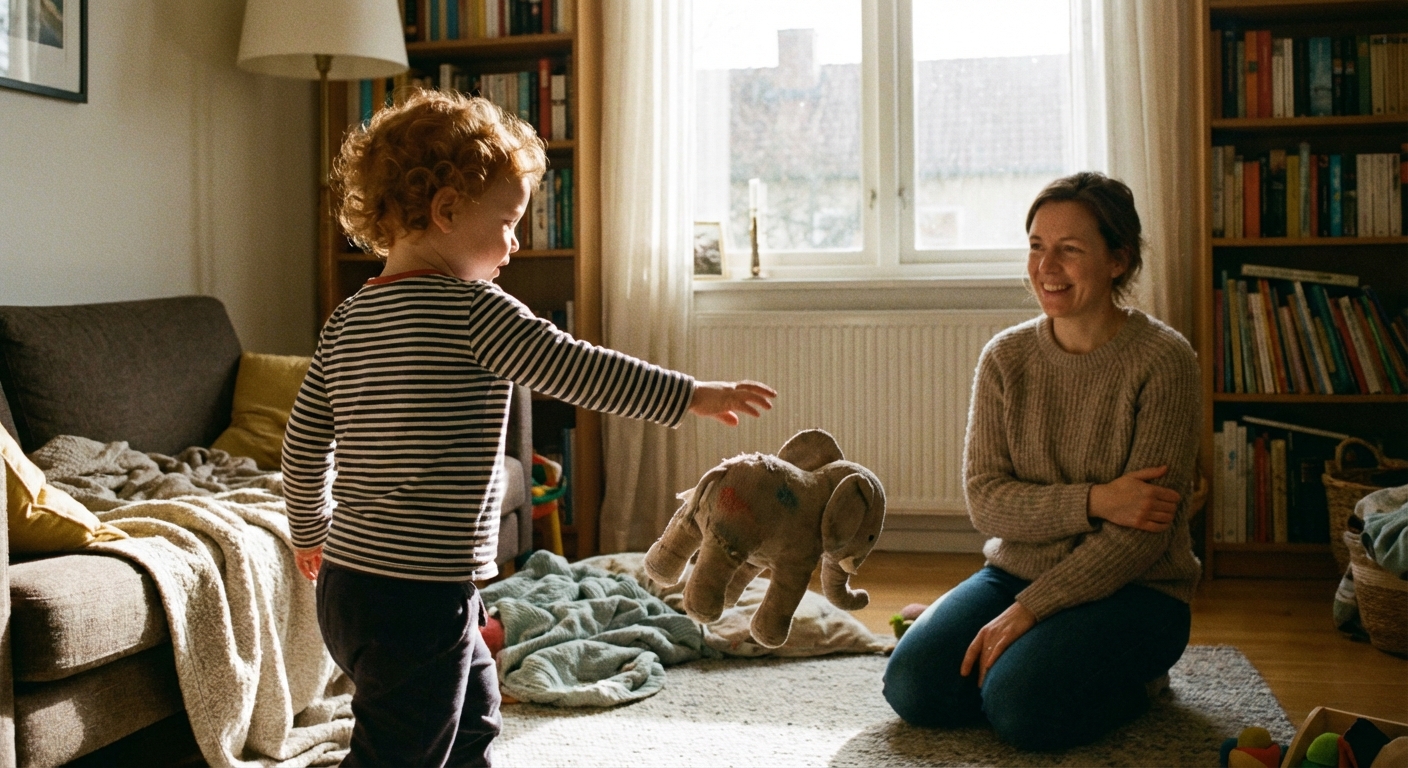
Why toddlers throw things
Toddlers are not mini adults. They are brand-new humans learning physics, communication, and emotional control at the same time. Throwing usually falls into one of these buckets.
1) Cause-and-effect learning
This is the classic: I drop it, you pick it up. Or: I throw it, it makes a loud sound. Toddlers are scientists. They run experiments all day long, and gravity is very exciting.
2) Attention seeking
Not “bad attention” or “manipulation.” Just toddler logic. If throwing reliably makes a parent react quickly, talk loudly, or run over, your child learns it works. Even negative attention can be rewarding when a child is feeling disconnected or bored.
3) Frustration and big feelings
When toddlers do not have the words or the self-control to handle disappointment, they use their body. Throwing can show up when:
- you say no
- they cannot make a toy work
- they are hungry, tired, or overstimulated
- they want something you do not understand
4) Sensory exploration
Some kids crave the sensation of impact, sound, movement, or the visual of something flying. This is especially common during toddlerhood and can be stronger in kids who are sensory seeking.
5) Impulse control is still developing
Toddlers can know a rule and still break it because impulse control skills are still under construction. This is why consistency matters more than lectures.
What to do in the moment
Your goal is simple: keep people safe, keep it boring, teach the alternative. Here is a response plan that works at home and in public.
Step 1: Safety first
If something hard is being thrown, get between your toddler and others, move siblings, or remove dangerous objects. Use a short phrase in a steady voice:
- “I won’t let you throw that. It can hurt.”
- “Throwing is not safe.”
If the throwing is aimed at people, treat it as a safety boundary, not a game. Stay close, block if needed, and remove the object.
Try not to add a long explanation while your child is dysregulated. Save the teaching for after the storm.
Step 2: Remove the item if needed
This is not punishment. This is prevention. If they throw it again, calmly take it:
- “You threw the truck. Trucks are for driving. I’m putting it away for now.”
Then actually put it away. Often a short break of a few minutes is enough, followed by a fresh chance to try again with you close by. You are sending the message: unsafe use = item unavailable.
In public: “I’m going to hold that in the cart/bag until you are ready to use it safely.”
Step 3: Offer a safe alternative
This is where you win the long game. Give them a “yes” option:
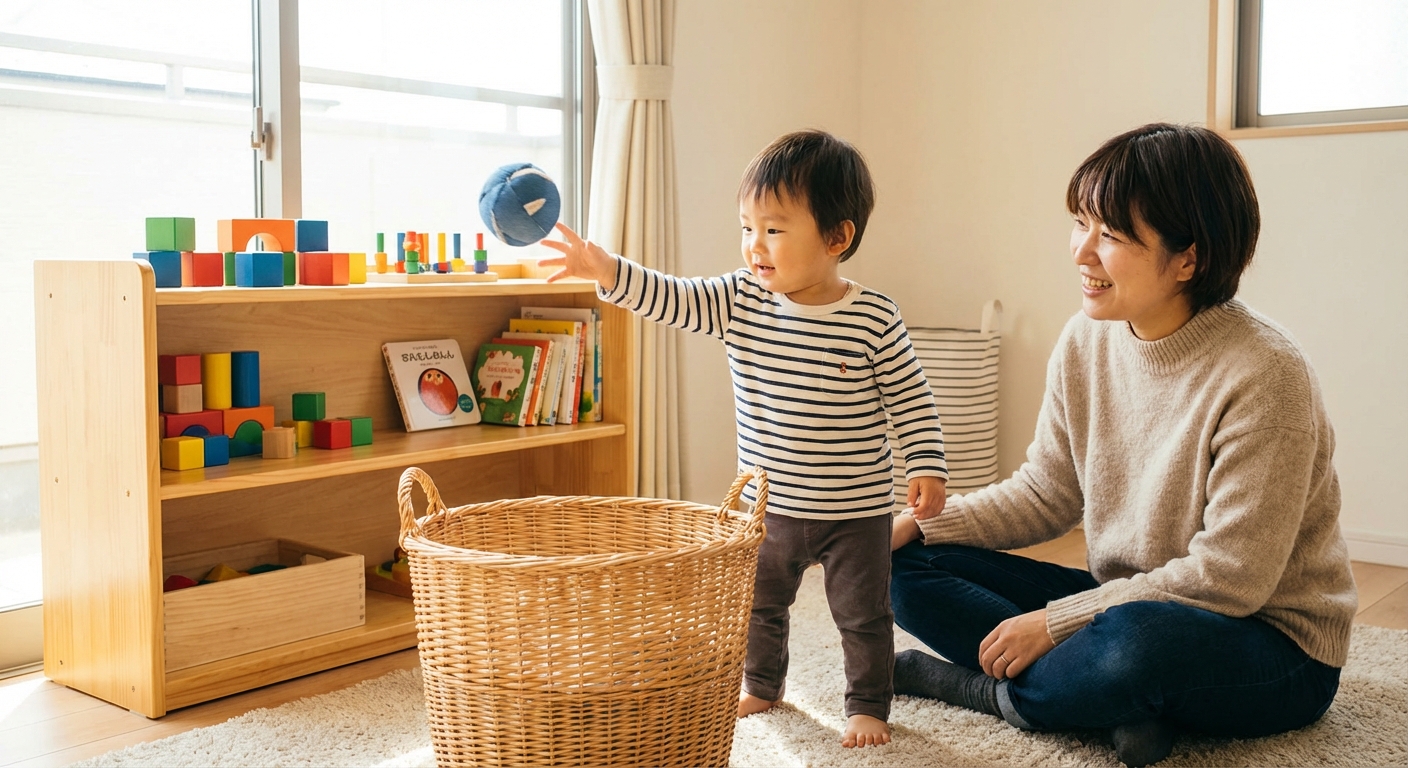
- “Throw this soft ball into the basket.”
- “Stomp your feet.”
- “Tap my arm for help.”
If your child is frustrated, name it briefly:
- “You’re mad. You wanted it to work.”
Naming feelings does not spoil children. It builds the language they need so their hands do not have to do the talking.
Step 4: Keep your reaction low drama
I know this is hard when the third cup of milk hits the floor. But big reactions often equal repeat behavior. Aim for calm, consistent, and boring. Save your big energy for catching them being safe.
And if you feel yourself getting escalated, take one slow breath and lower your voice before you respond. It helps you, and it helps them.
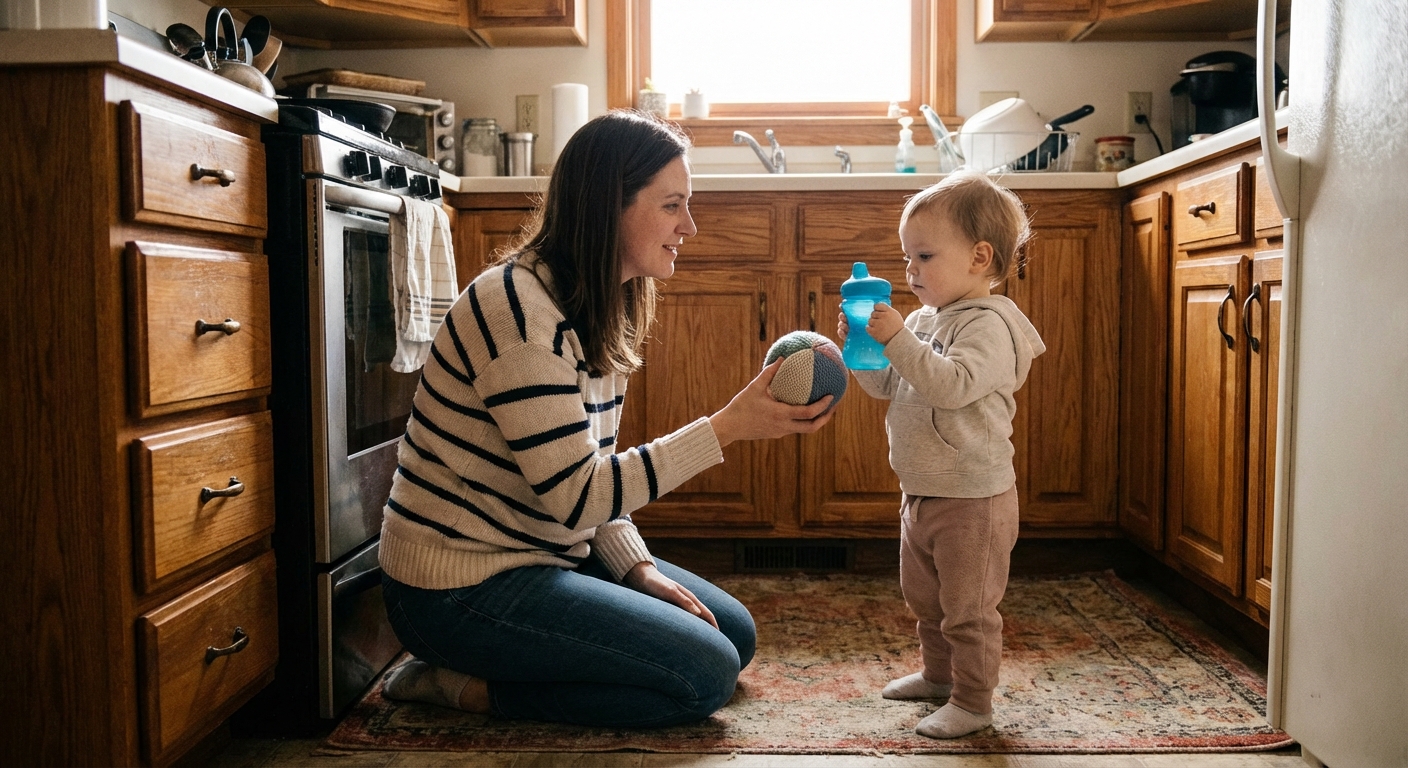
Age-based strategies
12 to 18 months
At this age, throwing is mostly exploration and impulse. Think: fewer words, more prevention.
- Use the environment: Put tempting throwables out of reach when possible.
- Offer “throwing allowed” objects: soft balls, beanbags, soft blocks.
- Quick redirect: “Balls are for throwing. Blocks are for building.”
18 to 24 months
You can start teaching simple rules and routines, but many kids at the younger end will not be able to use words when upset. That is normal.
- One clear limit: “Not for throwing.”
- Immediate follow-through: If thrown again, remove the item.
- Teach a replacement: “Stomp” or use a simple sign like “all done” or “help.” You can also model the word for them: “Mad. Mad.”
2 to 3 years
Throwing may show up more during power struggles and big emotions.
- Give controlled choices: “Do you want to throw the ball outside or into the laundry basket?”
- Practice calm-down tools when they are calm: deep breaths, squeezing a pillow, asking for help.
- Repair after: “The cup hit the floor. Let’s clean it up together.”
3 to 4 years
At this stage, many kids can understand rules and consequences more clearly, but they still need coaching.
- Talk before the risky moment: “At the store, hands keep items in the cart.”
- Natural consequences: “If you throw the crayons, we put them away.”
- Praise the skill: “You were frustrated and you put it down gently. That was great control.”
Redirection ideas
If you only say “no throwing,” your toddler hears “throwing is a fascinating topic.” The trick is to swap the behavior.
Make a throwing zone
Choose a safe space and a few safe items. Keep it simple.
- Laundry basket toss: rolled socks or soft balls
- Stuffed animal toss: into a big box
- Outdoor beanbag toss: at a fence or target on the ground
Then use a consistent phrase:
- “If you want to throw, we throw in the basket.”
Try heavy work
For kids who seem to throw when they are revved up, “heavy work” can help. This is an occupational therapy informed strategy that gives the body the input it is seeking.
- carry books to another room
- push a laundry basket (supervised)
- wipe the table with a damp cloth
- wall pushes
Teach “gentle hands”
Model it, do it with them, then praise it:
- “Watch. We set the cup down.”
- “Your turn. Set it down.”
Food throwing
Food throwing is common in late infancy and through the toddler years. It can mean “I’m done,” “I don’t like this,” or “I wonder what spaghetti does when it hits the floor.”
How to respond
- Smaller portions: Serve a little at a time so there is less to launch.
- Teach “all done”: Sign language or a simple phrase. When they throw, say: “Food stays on the tray. If you’re done, say ‘all done.’”
- Use a “no thank you” bowl: Put a small bowl on the tray (or a sectioned plate) and teach: “If you don’t want it, put it here.” This gives them an immediate, safe alternative to throwing.
- End the meal calmly if it continues: “Looks like you’re done eating. We’ll try again later.”
- Do not turn it into a game: Avoid big reactions and repeated retrieval if possible.
If your child is hungry but keeps throwing, check the basics: are they overtired, teething, or overwhelmed by too much food at once?
What not to do
- Do not throw it back. Even “playfully.” It teaches the exact skill you are trying to stop.
- Do not give a long lecture. Toddlers cannot process it mid-meltdown.
- Do not ask a question you cannot enforce. “Are you going to stop?” sets you up for a power struggle.
- Do not label your child. Avoid “You’re naughty” or “You’re aggressive.” Focus on the behavior: “Throwing is not safe.”
When to look closer
Most throwing is normal. Still, frequency, intensity, and context matter. There are times I recommend taking a closer look, especially if the throwing is frequent, intense, and not improving with consistent limits.
Consider talking with your pediatrician if:
- throwing is causing injuries or serious damage regularly
- your child seems unable to stop even with immediate, consistent responses
- throwing is paired with other concerning behaviors like frequent aggression toward people, extreme impulsivity, or prolonged daily meltdowns
- you notice speech delays and your child often seems frustrated because they cannot communicate
- you notice sensory differences that may be affecting daily life (constant crashing, chewing, extreme seeking or avoiding textures and noise)
- the behavior started suddenly along with other changes like sleep disruption, loss of skills, or a major stressor
Support might look like a simple parenting plan, a speech evaluation, or an occupational therapy consult for sensory needs. This is not a diagnosis. It is just a smart next step if you need more support or appropriate screening and referrals.
Urgent safety note: If your child throws objects at a baby, toward stairs, near windows, or in a way that could cause serious harm, treat it as a safety issue first. Separate, remove objects, and supervise closely while you work on the skill.
Simple scripts
When you are tired, scripts save sanity. Here are a few that are short and effective:
- For toys: “I won’t let you throw. Toys are for playing. If you throw again, it goes away.”
- For frustration: “You’re mad. You can stomp or tap me for help. Not throw.”
- For attention: “I’m here. If you want me, tap my arm.”
- For food: “Food stays on the tray. If you don’t want it, put it in the no thank you bowl.”
Bottom line
Toddler throwing is usually a mix of learning, big feelings, and developing impulse control. Your job is not to stop every throw forever by tomorrow. Your job is to respond the same calm way each time: keep it safe, remove the item if needed, and teach a safer alternative.
And if you needed permission to feel annoyed about it while still being a loving parent, consider it officially granted. Parenting a toddler is a full-contact sport, even when the “contact” is a banana.