Toddler Vomiting Without Fever: Causes and When to Worry

Sarah Mitchell
Sarah Mitchell is a Registered Pediatric Nurse and a mother of three who has spent over a decade helping families navigate the beautiful, chaotic early years of childhood. She combines evidence-based medical knowledge with real-world parenting experience to offer practical, compassionate advice. At Awesome Parent, Sarah's mission is to help exhausted parents find solutions, trust their instincts, and finally get some sleep.
Few things wake a parent up faster than the sound of gagging through a baby monitor. If your toddler is vomiting but has no fever, it can feel extra confusing. Is it a stomach bug starting? Something they ate? Something scarier?
As a pediatric nurse and a mom who has cleaned up more surprise puddles than I ever wanted to, here’s the calm truth: vomiting without fever can be caused by many things. Viruses are still a common reason (many kids with viral gastroenteritis never run a fever), but so are non-viral triggers like motion, overeating, reflux, mucus, or big emotions. Many causes are short-lived and manageable at home, as long as your child stays hydrated and doesn’t show red-flag symptoms.

Quick note: This article is general education, not a diagnosis. If your gut says your child looks “off,” trust that instinct and call your pediatrician.
What it can look like
Toddlers can vomit one time and bounce right back, or they can have several episodes over a few hours. The details matter.
- One-and-done vomit after a big meal, car ride, coughing spell, or intense crying is often situational.
- Repeated vomiting (especially if they cannot keep even small sips down) raises the stakes, mainly because of dehydration.
- Vomiting plus diarrhea can be viral gastroenteritis, even with no fever.
- Vomiting at night can be from reflux, coughing, post-nasal drip, or sometimes something that needs urgent evaluation.
If you can, jot down a quick “vomit log” for the next 12 to 24 hours: time, triggers (car ride, meal, coughing, crying), what it looked like, and whether they peed afterward. This is incredibly helpful if you end up calling your nurse line.
Common non-viral triggers
These are some of the most frequent reasons I saw in clinic when a child was throwing up, had no fever, and seemed mostly okay between episodes.
Overeating, eating too fast, or lots of air swallowing
Toddlers have tiny stomachs and big ambition. A fast-paced meal, chugging milk, gulping water after running around, or “snack stacking” can overwhelm their stomach.
- Typical clues: Vomiting shortly after eating, no other symptoms, child feels better quickly.
- What helps: Smaller portions, slower pace, avoid vigorous play right after meals, offer water in small sips instead of big gulps.
Motion sickness
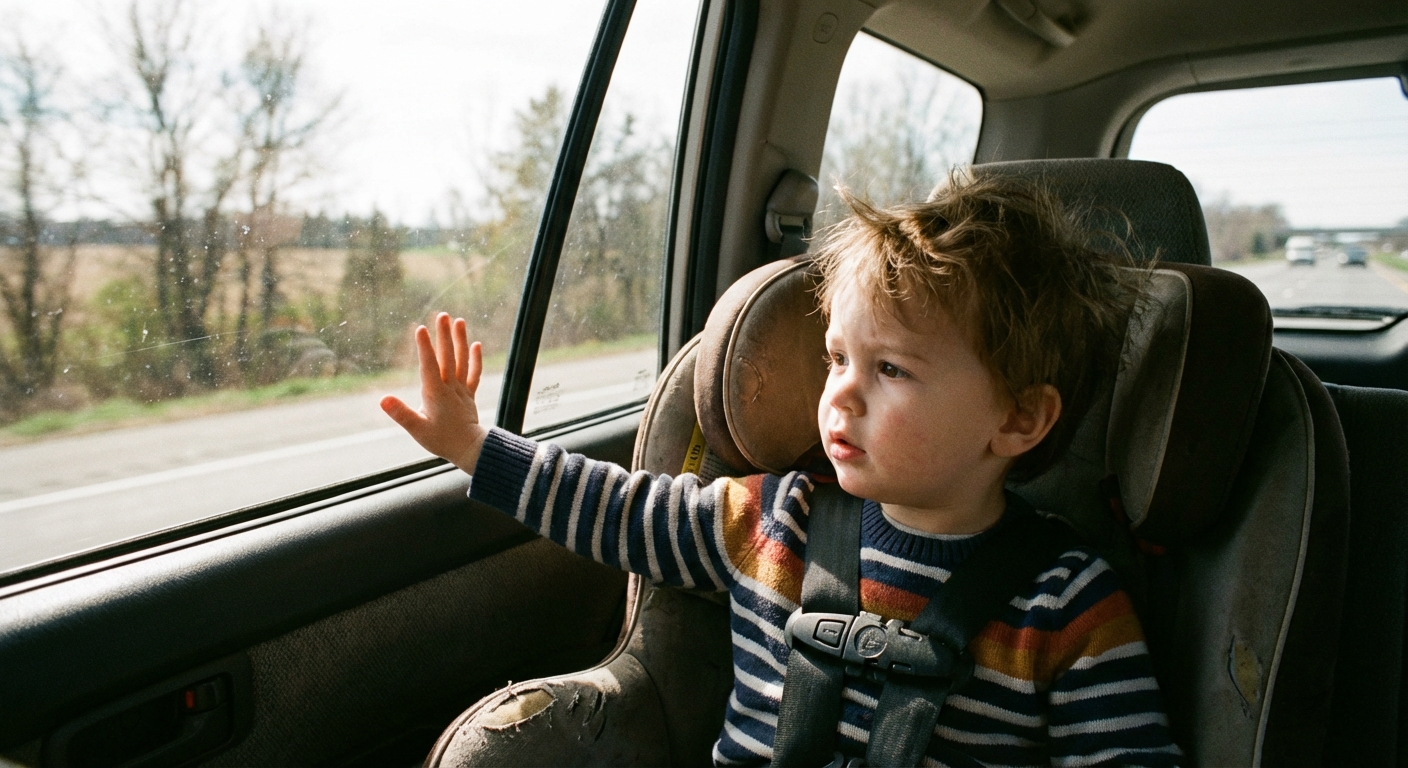
Motion sickness can start in toddlerhood, especially on winding roads or when kids look down at books or screens in the car.
- Typical clues: Vomiting during or soon after car rides, pale or clammy skin, yawning, fussiness, improved once the ride ends.
- What helps: Keep your child in the safest car-seat setup for their age and size (rear-facing as long as your seat allows). Then focus on comfort: cool air, light snacks (dry crackers), avoid heavy meals before travel, and encourage looking out the window. Ask your pediatrician before using any motion sickness medication in young children.
Food intolerance or sensitivity
This is different from food poisoning and different from a classic allergy with hives and swelling. Some toddlers vomit after certain foods because their bodies struggle to digest them or because the food is too rich.
- Common triggers: Very greasy foods, heavy cream sauces, large amounts of juice, and sometimes dairy in kids who are lactose intolerant.
- Typical clues: Vomiting tends to happen after the same type of food, sometimes with belly pain, bloating, gassiness, or loose stools.
- What helps: Simplify the diet for a day or two, then consider a gentle food diary to see patterns. If dairy seems to trigger symptoms, talk with your pediatrician before making big long-term changes.
Big emotions, stress, or anxiety
Toddlers experience stress in very physical ways. New daycare, travel, a new sibling, sleep disruption, or even an overstimulating day can trigger gagging and vomiting in some kids.
- Typical clues: Vomiting happens around transitions (bedtime, separation), intense crying, or after a stressful event. Child otherwise seems well.
- What helps: Predictable routines, extra connection time, calm bedtime, and avoiding power struggles around eating. If vomiting is frequent or paired with weight loss, bring it up with your pediatrician.
Gag reflex triggers (coughing, post-nasal drip, or toothbrushing)
Some toddlers vomit when mucus drips down the back of the throat or during coughing fits. Toothbrushing can also trigger a sensitive gag reflex. And yes, a cold can be viral and still come with no fever.
- Typical clues: Vomiting follows a coughing episode, happens in the morning, or there is lots of congestion.
- What helps: Steam or a cool-mist humidifier, saline spray (age-appropriate), encouraging fluids, and brushing more gently with a smaller toothbrush head.
Reflux (GERD)
Some toddlers still deal with reflux, especially when sick, overtired, or constipated.
- Typical clues: More vomiting when lying down, sour breath, frequent spit-up or “wet burps,” chronic cough or throat clearing, picky eating around certain textures.
- What helps: Smaller meals, keeping them upright after eating, avoiding late-night heavy snacks, and checking in with your pediatrician if it is frequent or affecting growth.
Cyclic vomiting syndrome (CVS)
Cyclic vomiting syndrome is a real condition where a child has repeated, stereotyped episodes of intense vomiting with symptom-free periods in between. It is often linked with migraine biology and can run in families.
- Typical clues: Episodes that look very similar each time, often starting at the same time of day (commonly early morning), repeated vomiting for hours to days, then complete recovery. No fever is common.
- What to do: CVS needs evaluation by a pediatrician and sometimes a pediatric gastroenterologist. If you notice a pattern, bring a written log of episodes, triggers (illness, stress, lack of sleep), and hydration status.
When it is a stomach bug
Viral gastroenteritis (the typical “stomach bug”) can happen without fever, but it usually has a few familiar features.
- More contagious clues: Other family members sick, daycare outbreak, sudden onset.
- Typical symptom pattern: Vomiting plus diarrhea, belly cramps, low appetite, tiredness. Fever may or may not show up.
- Time course: Vomiting often improves in 12 to 24 hours, while diarrhea can linger several days.
If vomiting is the only symptom and your child is otherwise playful between episodes, I start thinking about triggers like overeating, motion sickness, reflux, mucus, constipation, or stress.
Other causes to keep on the radar
Most of the time, vomiting is a short-term issue. But if it keeps happening, your pediatrician may also consider:
- Ear infection: sometimes vomiting is the main symptom, especially with ear pain, tugging, or unusual irritability.
- UTI: can cause vomiting and belly discomfort, sometimes before fever shows up (or without a fever at all).
- Strep throat: some kids vomit with strep, even if they do not complain much about a sore throat.
- Constipation: backed-up stool can trigger nausea, low appetite, belly pain, and vomiting.
Also, quick age note: this article is written for toddlers (about 1 to 3 years). Vomiting in young infants needs a lower threshold for medical advice, especially if it is forceful, frequent, or paired with poor feeding.
Hydration: what to do at home
Your main job after vomiting is not to “stop the vomit” at all costs. Your job is to keep fluids going in tiny, steady amounts and watch for dehydration.
The sip schedule that works
- Wait about 15 to 30 minutes after vomiting (if your child will tolerate it).
- Offer 1 to 2 teaspoons (5 to 10 mL) of fluid every 2 to 5 minutes.
- If that stays down for 30 to 60 minutes, slowly increase the amount.
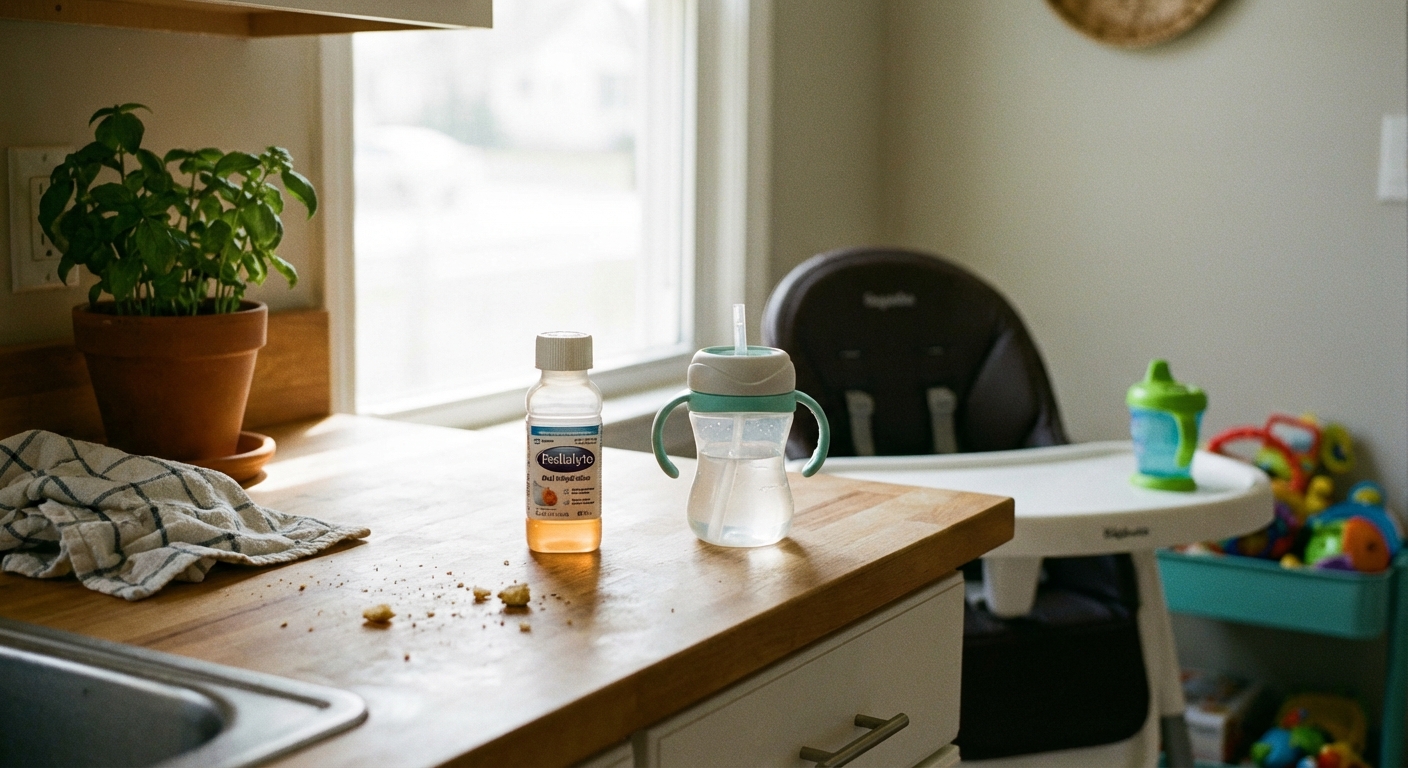
For many toddlers, this looks like a few sips from a straw cup every couple minutes while they sit on the couch watching something calming. Not glamorous. Very effective.
Best fluids
- Oral rehydration solution (ORS) is ideal if vomiting is repeated. (Examples: Pedialyte or store-brand ORS.)
- Water is okay for mild, brief vomiting, especially if your child is also eating some foods.
- Breastmilk or formula can usually continue for younger toddlers, in smaller, more frequent amounts.
- ORS popsicles or ice chips can count as fluid if your child will tolerate them.
Be cautious with juice, soda, sports drinks, and very sugary drinks. They can pull water into the gut and worsen vomiting or diarrhea.
When to try food again
Once your toddler has kept fluids down for a few hours and asks for food, start simple.
- Good options: toast, crackers, rice, noodles, applesauce, bananas, soup, yogurt if tolerated.
- Avoid right away: greasy foods, heavy dairy, and large meals.
Medicines parents ask about
If vomiting is persistent, some kids benefit from an anti-nausea medicine like ondansetron, but this is doctor-directed. Do not use leftover prescriptions or someone else’s medication. And avoid over-the-counter anti-nausea products unless your pediatrician specifically recommends them for your child’s age and situation.
When to get medical help
Most vomiting without fever can be watched closely at home. But there are times you should get medical help quickly.
Go to the ER now (or call emergency services) if your toddler has:
- Signs of severe dehydration: very sleepy or hard to wake, no tears when crying, dry mouth, sunken eyes, no pee for about 8 to 12 hours (or markedly decreased urination), or your child is too weak to drink
- Green vomit that looks truly bilious (dark, emerald green). Parents often see yellow stomach acid and call it green, but dark green is the one that can signal a blockage.
- Blood in vomit (more than a small streak from irritation)
- Severe or worsening belly pain, a hard or distended abdomen, or your child cannot stand up straight due to pain
- Vomiting after a significant head injury or any concerning behavior changes after a fall
- Breathing trouble or choking concerns
- Possible poisoning or medication ingestion
- Testicular or groin pain (torsion can present with vomiting and is an emergency)
- Severe headache, neck stiffness, or a new widespread rash along with vomiting
Call your pediatrician urgently (same day) if:
- Vomiting is repeated and your child cannot keep fluids down
- Your toddler has moderate dehydration: fewer wet diapers or pees, dry lips, decreased energy, dizziness, or unusually sleepy
- Vomiting lasts more than 24 hours (even without fever)
- Your child has vomiting with diarrhea and is starting to look worn down
- You suspect a food allergy (vomiting plus hives, swelling, wheezing, or repeated vomiting after a specific food)
- You see a pattern of episodes that could fit cyclic vomiting syndrome
- You suspect appendicitis (pain that is worsening, especially on the lower right side, with poor appetite and decreased activity)
If you are not sure where you land, use the nurse line. That is exactly what we are there for.
What to track before you call
If you call your pediatrician or an after-hours nurse line, these details help get you the right advice faster:
- How many times your child vomited and over what time period
- Whether they can keep down small sips
- Last time they peed
- Any diarrhea, cough, congestion, sore throat symptoms, ear pain, or belly pain
- What the vomit looked like (food, clear, yellow, dark green, blood)
- Possible triggers: car ride, new food, overeating, stress, constipation, head bump
- Exposure: sick contacts, daycare outbreaks
Make the next 12 hours easier
Vomiting is messy and exhausting. These simple steps reduce repeat episodes and help you feel more in control.
- Rest the stomach gently: small sips, not big drinks.
- Keep them upright for 30 minutes after fluids or food.
- Skip heavy meals and focus on hydration first.
- Protect sleep: a towel and a clean bowl nearby can reduce panic if they wake up gagging.
- Clean safely: wash hands well, especially if you are not sure whether this is viral.
Bottom line
Toddler vomiting without fever is common, and it can come from everyday things like motion sickness, overeating, mucus, reflux, constipation, food sensitivity, or big emotions. Viruses are also still very much on the list. Your priorities are simple: watch hydration, offer tiny frequent fluids, and look for red flags.
And if you needed permission to worry a little less: one isolated vomit in an otherwise happy toddler is usually not an emergency. It is just parenting being parenting at 3 AM.