Toddler Won’t Nap: Why It Happens and What to Do

Sarah Mitchell
Sarah Mitchell is a Registered Pediatric Nurse and a mother of three who has spent over a decade helping families navigate the beautiful, chaotic early years of childhood. She combines evidence-based medical knowledge with real-world parenting experience to offer practical, compassionate advice. At Awesome Parent, Sarah's mission is to help exhausted parents find solutions, trust their instincts, and finally get some sleep.
If your toddler is suddenly treating nap time like an extreme sport, you are not alone. In pediatric triage and during well visits, I heard it all the time: “They used to nap fine, and now they act like the crib is lava.” And as a mom of three, I can confirm it is extra brutal because nap refusal does not just steal rest. It steals your ability to function like a person.
The good news: most nap fighting is explainable and fixable. The trick is figuring out which problem you are dealing with, then making one or two targeted changes instead of trying everything at once.
Quick note: This is general education, not medical advice. If something feels off or your child has medical symptoms, check in with your pediatrician.
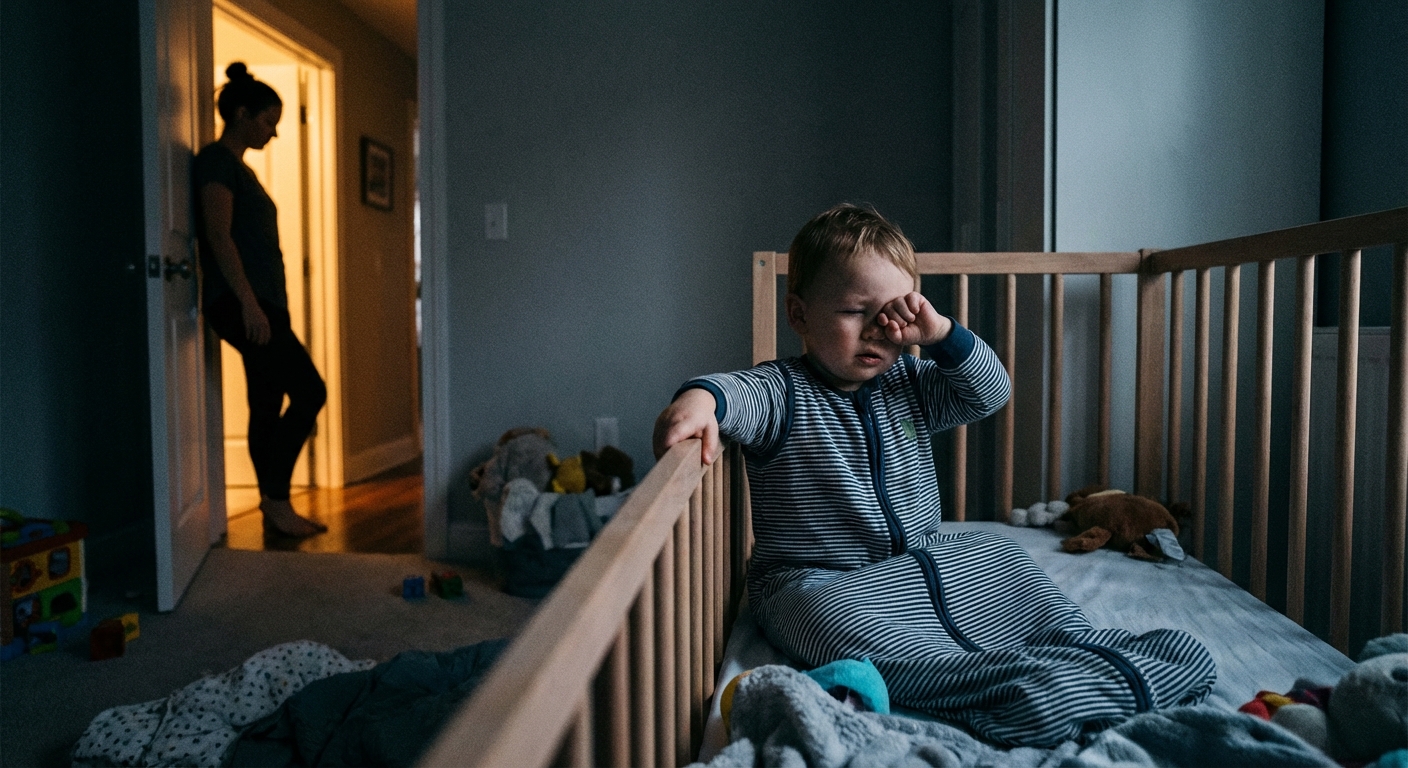
What “nap refusal” looks like
Most toddlers do not announce, “Mother, I have dropped my nap.” They show you through behavior, like:
- Taking 30 to 60 minutes to fall asleep
- Napping short once they finally do fall asleep
- Crying or yelling as soon as you start the nap routine
- Playing happily in the crib or bed and never falling asleep
- Napping fine some days, refusing other days
- Napping, but then bedtime becomes a circus
Those patterns help you decide whether your toddler is overtired, undertired, dealing with a schedule timing issue, or going through a developmental phase.
Common reasons toddlers fight naps
1) Overtired: the “second wind” problem
Overtired toddlers can look like they have unlimited energy, but it is often a stress response. When a child is up too long, their body can pump out stress hormones like cortisol (and other “stay awake” signals), making it harder to settle and stay asleep.
Clues it’s overtired:
- Nap battles plus crankiness, clumsiness, or meltdowns late morning
- Falling asleep in the car or at lunch
- Short naps with a miserable wake-up
- Bedtime is hard but still needs to be earlier
What to do:
- Move nap earlier by 15 to 30 minutes for 3 to 5 days before judging.
- Tighten the morning routine so lunch and wind-down do not creep later.
- Protect bedtime. An overtired toddler often needs an earlier bedtime while you repair the nap.
- Watch late-morning catnaps (stroller, car). They can be restorative, but they may take the edge off sleep pressure and make the real nap harder. If catnaps are happening, try shifting the schedule earlier or keeping mornings more active and upright.
2) Undertired: they are not sleepy yet
Sometimes nap refusal is the opposite problem. If your toddler is getting a lot of night sleep, or the nap is offered too soon, they may not have enough sleep pressure to actually doze off.
Clues it’s undertired:
- They are cheerful at nap time, chatting and playing in the dark
- They take a long time to fall asleep but seem fine afterward
- If they finally nap, bedtime becomes very late or very difficult
- Night sleep is long and solid, yet nap is a daily argument
What to do:
- Push nap later by 15 to 30 minutes for several days.
- Cap the nap if bedtime is being pushed later than you can live with. Many toddlers do better with 60 to 90 minutes rather than a long nap.
- Check your wake window. Many 2-year-olds do well with roughly 4.5 to 6 hours awake before nap and about 5 to 6.5 hours awake before bedtime, but there is a wide range. Use your child’s mood and how long it takes them to fall asleep as your guide.
3) Developmental leaps and “I can do things now” energy
Between 18 months and 3 years, toddlers go through huge growth spurts in language, imagination, mobility, and independence. They may fight nap because they hate missing out, they discovered they can say “no,” or they are practicing new skills in the crib like singing, jumping, or negotiating.
Clues it’s developmental:
- Nap refusal starts suddenly without other schedule changes
- New skill explosion: more words, climbing, potty training interest, big imagination
- Increased separation anxiety or bedtime stalling
- They seem tired but protest anyway
What to do:
- Hold the routine steady for 1 to 2 weeks. Constant changes can accidentally reinforce nap battles.
- Offer controlled choices: “Do you want the blue sleep sack or the green one?” Choices help independence without turning into a negotiation marathon.
- Do a quick connection ritual before you leave the room: a 20-second cuddle, two books, the same lullaby. Predictable and boring is the goal.
- Use a simple script: “It’s rest time. Your body can rest even if you don’t sleep.” Then minimize talking.
4) Nap timing is too late and bedtime falls apart
A very common nap trap: the nap drifts later and later, then it steals from bedtime. When bedtime becomes difficult, parents sometimes move bedtime later, which can lead to overtired chaos the next day. That chaos can push nap later again.
Clues nap is too late:
- Nap starts after 2:00 to 2:30 pm most days
- Your toddler will nap, but bedtime gets pushed late or turns into a long fight
- They wake from nap and seem wired until late evening
What to do:
- Set a latest nap start guideline based on your bedtime goal. Many families find that if the nap has not started by about 2:30 pm (sometimes closer to 3:00 pm for older toddlers), it is better to pivot to quiet time and plan an earlier bedtime. If your child can nap at 3:00 pm and still sleep well at night, you do not need to force a cutoff.
- Cap the nap so there is enough awake time before bed. Many families aim for at least 5 hours between nap wake-up and bedtime, but adjust based on your child.
- Use early bedtime as a tool, not a punishment. If nap fails, bedtime often needs to move earlier to prevent overtired night waking.
A quick troubleshooting plan
If I could sit with you at 3 AM with coffee, here’s the simple plan I would write on a sticky note.
Step 1: Track 3 days
- Wake-up time
- Nap attempt time and whether they slept
- Nap length (if any)
- Bedtime and night wake-ups
This is not to be obsessive. It is to spot patterns you can actually change.
Step 2: Make one adjustment for 3 to 5 days
- If cranky and melting down late morning: move nap earlier.
- If happy and wired at nap time: move nap later.
- If bedtime is chaos after a good nap: cap nap.
- If nap is drifting late: set a latest start guideline and protect bedtime.
Step 3: Keep the nap routine boring and consistent
Nap routines should be short, predictable, and not exciting:
- Snack or lunch
- Diaper or potty
- 2 books
- Sleep sack or pajamas
- Sound machine and dark room
- Same key phrase
Sleep setup check: If naps are falling apart, it is worth re-checking basics like room darkening (blackout curtains), a comfortable temperature, consistent white noise, and keeping screens off for at least 30 to 60 minutes before rest time. Screens are not the only factor, but they can make settling harder for some kids.
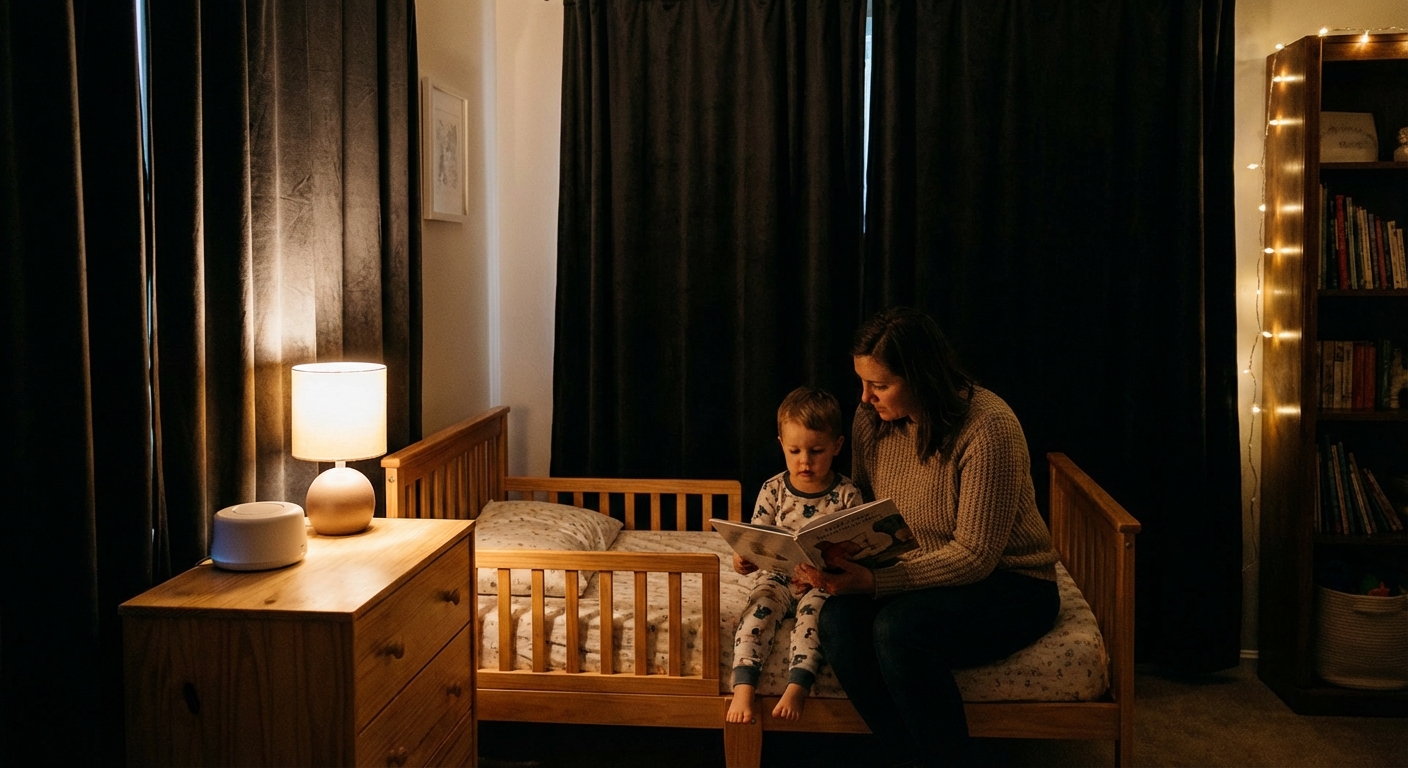
If they will not sleep: try quiet time
Quiet time is the nap’s very practical cousin. If your toddler is not sleeping reliably, a daily rest period still protects everyone’s nervous system.
How to do it:
- Pick a consistent time (usually when nap used to be).
- Child stays in their room or sleep space for 45 to 75 minutes.
- Offer a few quiet options: stuffed animals, a couple books, maybe soft toys.
- Use a toddler OK-to-wake clock if it helps, but keep your language simple: “When the light turns green, rest time is done.”
Safety note: If your child is having quiet time without you in the room, treat it like a mini child-proofing reset. Anchor furniture, cover outlets, secure cords, lock away hazards, and offer only safe, quiet items.
Quiet time works best when it is not presented as a punishment. It is simply a daily reset.
Is it time to drop the nap?
Many toddlers keep a nap until 3 to 4 years old, but some drop earlier. Nap refusal alone does not always mean the nap is gone. Look for a consistent pattern over at least 2 weeks.
Signs it may be time to drop the nap
- They skip the nap most days, even with a solid routine and appropriate timing
- On no-nap days, bedtime is easier and night sleep is better
- When they do nap, bedtime becomes very late or very difficult
- They can comfortably make it to bedtime without a late-afternoon meltdown (especially with an earlier bedtime)
Signs you should hold firm a bit longer
- They fall asleep in the car or at dinner when the nap fails
- No-nap days end in total late-afternoon chaos
- Night waking increases when nap is skipped
- They can nap well on some days if timing is right
What dropping the nap usually looks like in real life: it is rarely a clean break. Many toddlers go through a long “some days yes, some days no” phase. During that phase, early bedtime is your best friend.
Common nap-fighting traps
Trap: Making nap time longer and longer
If your toddler is not sleeping, extending the attempt can turn into a daily power struggle.
Try instead: Set a reasonable “nap opportunity,” often 60 to 90 minutes. If they do not sleep, end it calmly and shift to quiet time or move on with the day, then do an earlier bedtime.
Trap: Big reactions and lots of re-checks
Some toddlers interpret frequent check-ins as a game, or as proof that arguing works.
Try instead: Keep check-ins brief, boring, and spaced out. Or choose one loving check-in, then commit to giving them space to settle.
Trap: Late afternoon rescue naps
A 4:30 pm car nap can feel like a lifesaver. It also often blows up bedtime.
Try instead: If it is late in the day, skip the rescue nap and move bedtime earlier. It can feel unfair. It also tends to work.
Real-life complications
Daycare or travel schedules
If daycare nap timing is different than home, do not try to overhaul everything at once. Aim for consistency on what you can control: a predictable wind-down routine, an earlier bedtime on rough nap days, and a capped nap at home on weekends if bedtime keeps sliding.
Crib-to-bed transitions
If your toddler recently moved to a bed, nap refusal can spike because freedom is exciting. Keep the routine the same, reduce the “fun” in the room during rest time, and use a simple boundary like an OK-to-wake light. (And yes, some toddlers will practice their new escape skills at nap time first.)
Age-by-age nap expectations
Every child is different, but these ranges can help you sanity-check your schedule.
- 12 to 18 months: Many are transitioning to one nap. Most still need a nap daily.
- 18 months to 3 years: One nap is common. Nap refusal is often schedule or developmental, not true nap dropping.
- 3 to 5 years: Many drop naps during this window. Quiet time still helps.
If your toddler is under 3 and fighting naps, I usually recommend troubleshooting and holding steady for a couple weeks before declaring the nap officially dead.
When to talk to your pediatrician
Most nap refusal is normal. Still, reach out for medical guidance if you notice:
- Snoring loudly, pauses in breathing, or chronic mouth breathing during sleep
- Restless sleep with frequent waking that is new
- Concerns about growth, feeding, or frequent illness affecting sleep
- Behavior changes that feel extreme or out of character
- Signs of pain that worsen when lying down (reflux, ear infection, constipation discomfort)
From a triage nurse perspective, I will always tell parents this: you are not “overreacting” by asking. Sleep affects everything, including your child’s mood, development, and your ability to cope.
A simple script
“It’s rest time. You don’t have to sleep, but your body needs to rest. I’ll see you when rest time is done.”
Then do your best to keep the boundary calm and boring. Toddlers can sense when we are unsure, and nap time becomes the place they go to test it.

The bottom line
Toddler nap refusal is usually one of four things: overtiredness, undertiredness, a timing issue, or a developmental phase. You do not need a brand-new complicated plan. You need a small, specific tweak and a consistent routine for a few days.
And if today’s nap was a complete disaster: you can still save the day with an earlier bedtime, a calmer evening, and the reminder that you are not failing. You are parenting a tiny person with big feelings and suspiciously strong opinions about sleep.