Toddler Won’t Stay in Bed at Night: How to Respond

Sarah Mitchell
Sarah Mitchell is a Registered Pediatric Nurse and a mother of three who has spent over a decade helping families navigate the beautiful, chaotic early years of childhood. She combines evidence-based medical knowledge with real-world parenting experience to offer practical, compassionate advice. At Awesome Parent, Sarah's mission is to help exhausted parents find solutions, trust their instincts, and finally get some sleep.
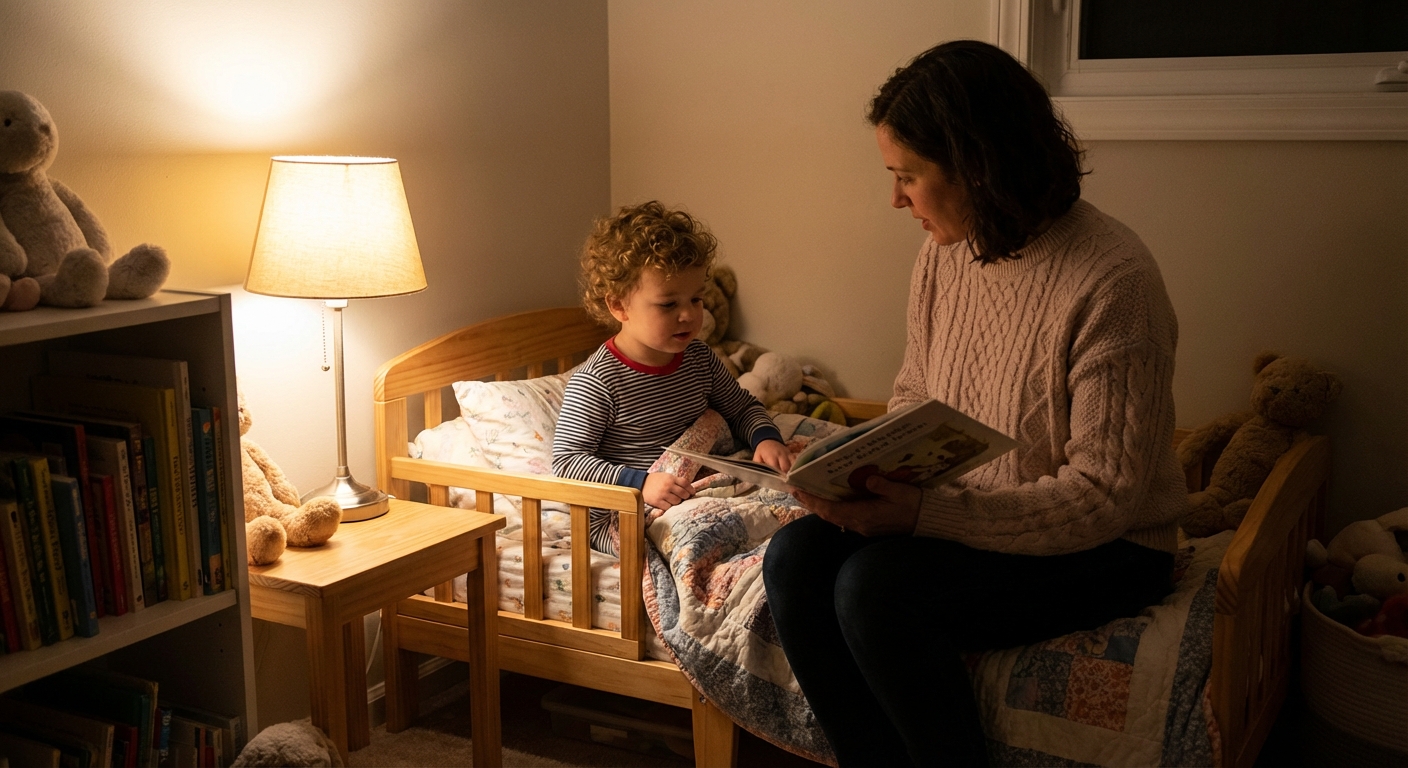
If your toddler has recently moved from a crib to a bed, you may have discovered a new reality: they can get up. Over and over. And over. If you're reading this at an unholy hour while listening for tiny footsteps, you're not alone, and you're not failing.
As a pediatric nurse and a mom of three, I promise there's a way through this that doesn't require yelling, locking doors, or negotiating with a tiny lawyer at 2 AM. The goal is simple: keep bedtime boring, predictable, and safe while you teach a new skill, staying in bed.
If this is a very early crib-to-bed switch (like before your child was truly ready), it's common for sleep to get wobbly for a while. That's not a sign you messed up. It just means you'll likely need extra consistency for a bit.
Why toddlers keep getting out of bed
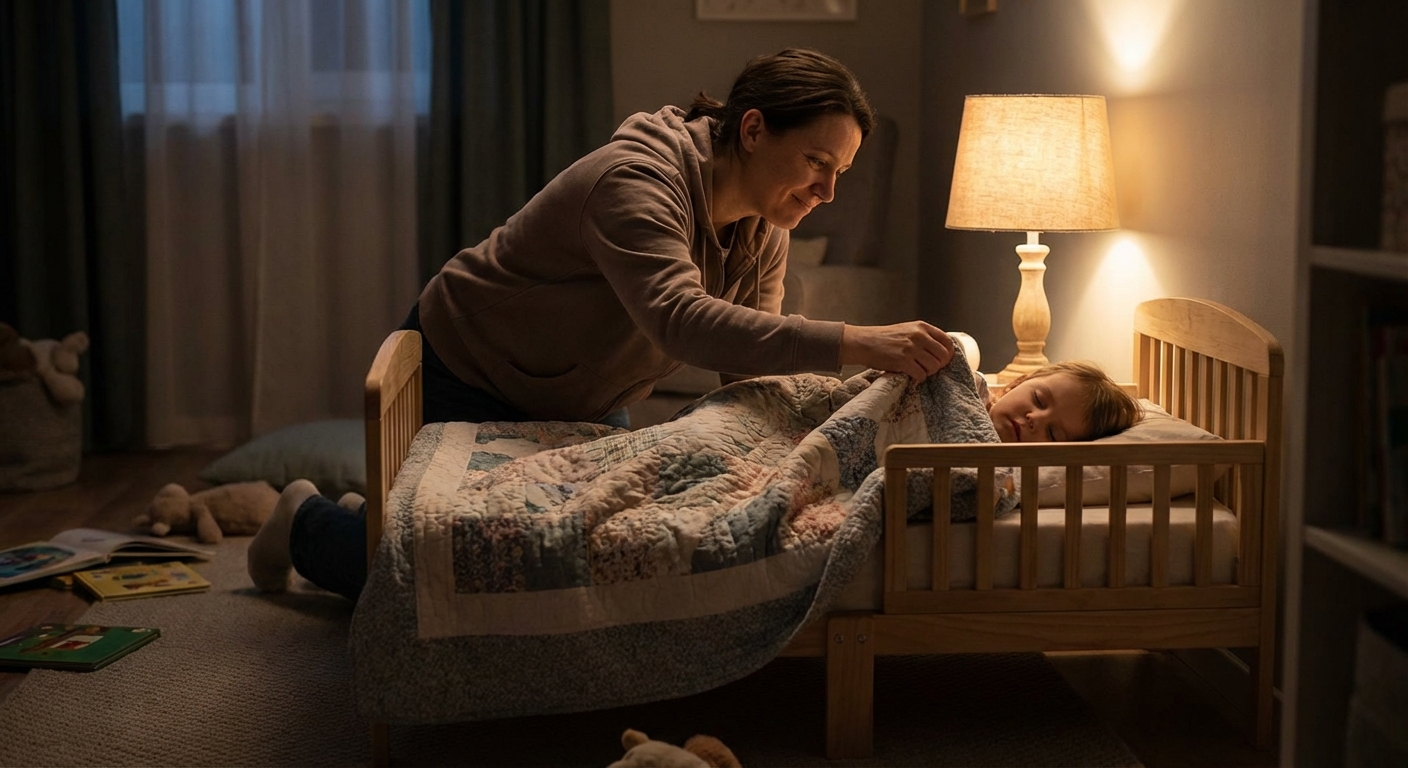
Most toddlers aren't trying to ruin your life. They're trying to understand a new set of rules, and they're testing whether those rules are real.
Common reasons
- Boundary testing: The crib used to be the boundary. Now the boundary is a rule, and rules are negotiable in toddler world.
- Separation anxiety: Some kids handle the physical freedom of a bed, then suddenly feel more distance from you at night.
- Overtiredness: An overtired toddler often sleeps worse, wakes more, and has less self-control to stay in bed.
- Fear of the dark or imagination spikes: This commonly ramps up in the toddler and preschool years. Shadows, noises, and “monsters” can feel very real.
- Bedtime is too engaging: If every escape leads to a long talk, extra snuggles, snacks, or a new story, escaping becomes a strategy.
- They need something: Thirst, a too-hot room, a scratchy pajama tag, constipation, eczema itching, or illness can all cause repeated get-ups.
The best plan depends on the “why.” The good news is you can address root causes while still responding in a consistent, low-drama way.
First: make the room safe
Before you work on behavior, set up the environment so your child can be in their room without getting hurt. In triage, I've seen plenty of nighttime falls and accidental ingestions that start with a newly mobile toddler and a not-yet-toddler-proofed room.
Quick safety checklist
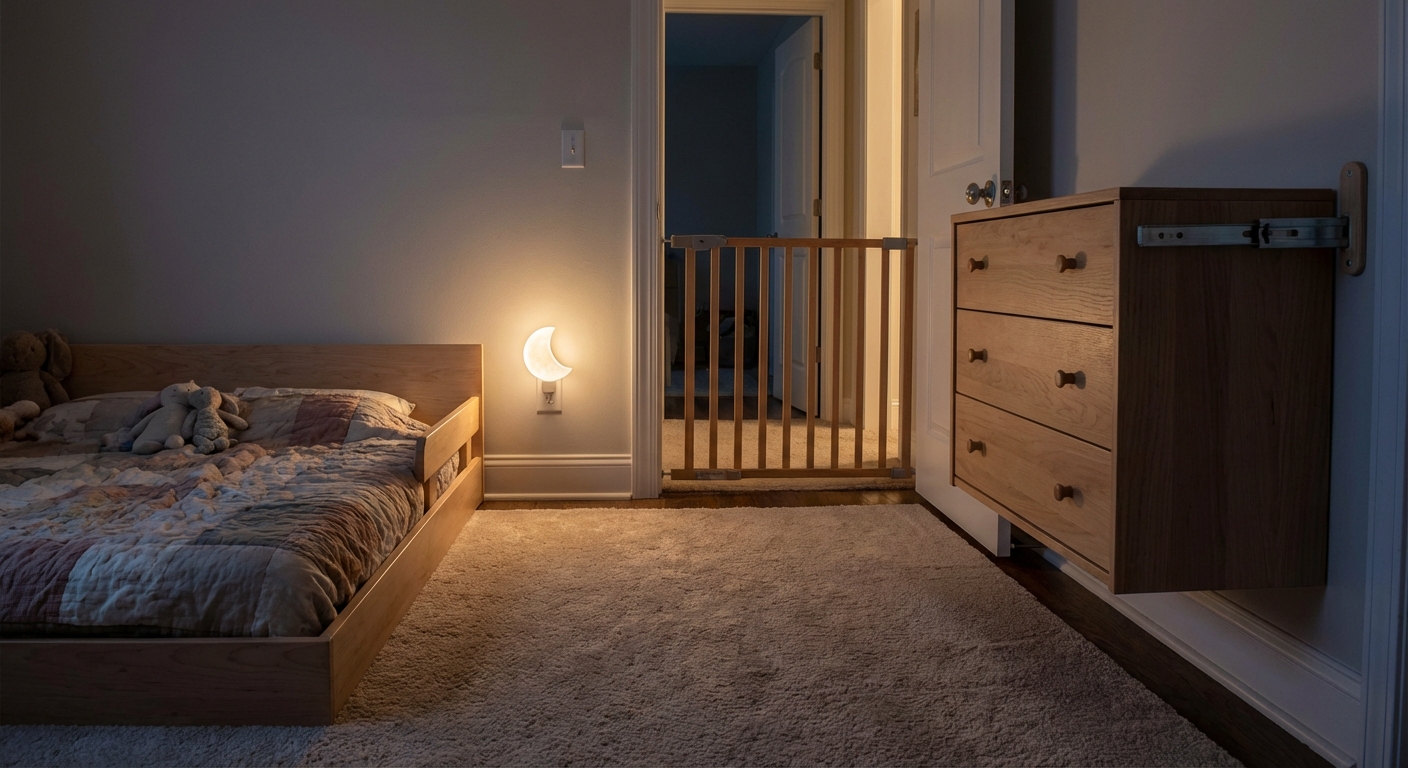
- Anchor dressers and bookshelves to the wall.
- Lock away medicines, vitamins, cords, coin batteries, small objects, and anything they could climb.
- Cover outlets and manage blind cords.
- Use a baby gate if your hallway or stairs are a hazard. Many families gate the bedroom door or the top of stairs so a toddler can't wander the house.
- Consider a doorknob cover or childproof handle if your toddler can't be safe outside their room. If you choose this, think of it as a safety tool, not a punishment. Make sure you can open the door immediately, can hear them, and have working smoke and CO alarms. Follow local fire-safety guidance and keep a clear emergency plan.
- Keep the bed low to the ground. Use guardrails if appropriate for your bed type.
- Keep the room boring at night. Toys that light up or make noise tend to turn bedtime into playtime.
- Window safety: secure cords (already on your list) and make sure windows are locked and furniture isn't positioned for climbing.
The golden rule
When toddlers pop out of bed, most parents do a very human thing: we talk, we plead, we explain, we bargain, we offer one more hug. Unfortunately, that attention can act like fuel.
What works best for many kids is a calm, boring, consistent response that makes getting out of bed unrewarding.
One more helpful heads-up: it's common to see an extinction burst, meaning the behavior gets louder or more persistent for a night or two right after you set a new limit. That doesn't mean it's not working. It often means your toddler noticed the rules changed.
Silent return method
This is a go-to strategy in many families because it's simple, consistent, and avoids power struggles.
In one line: every time your child gets out of bed, you quietly and immediately walk them back, with minimal words and minimal emotion.
How to do it
- Do your normal bedtime routine. Keep it predictable: pajamas, teeth, story, snuggle, lights out.
- Say one short bedtime phrase. Example: “It's bedtime. I love you. See you in the morning.”
- If they get up, return them right away. Walk them back with as little interaction as possible.
- No lectures, no negotiating. Use a neutral face and minimal words. If you need words, repeat one phrase: “Back to bed.”
- Repeat as many times as needed. Yes, this can be 30 times the first night. You're not doing it wrong.
- Keep your body calm. Slow movements, quiet steps, low light. Your nervous system sets the tone.
Why it works
Your toddler learns two things: getting out of bed doesn't lead to fun, and bedtime rules don't change based on persistence.
What usually goes wrong
- Talking too much: Even “Go to bed right now” can turn into attention.
- Adding new consequences in the moment: Toddlers do better with predictable rules, not escalating punishments at midnight.
- Inconsistency: If the 12th escape gets a snack or a sleepover in your bed, the lesson becomes “keep trying.”
If you share nighttime duties with a partner, agree on the plan ahead of time. Consistency across caregivers matters a lot.
Positive reinforcement
Toddlers respond beautifully to clear goals and immediate rewards. The key is to reward the behavior you want, not the drama you don't.
Option 1: Bedtime pass
A bedtime pass is a small card your child can “spend” for one approved request after lights out, like one extra hug, one sip of water, or one quick question. After they use it, any further get-ups are handled with the silent return method.
- Give 1 pass at bedtime (start with 2 if your child is highly anxious, then fade down).
- Define what it can buy. Keep it short and specific.
- Praise like crazy if they don't use it, and consider a small reward in the morning for an unused pass.
- Age note: This often works best around age 3 and up. Some younger 2-year-olds can do it, but many struggle with the “save it for later” part.
This works because it gives your toddler a sense of control without turning the night into an all-you-can-eat buffet of requests.
Option 2: Sticker chart
Sticker charts work best when the goal is achievable. For many toddlers, “stay in bed all night” is too big at first.
- Start with a smaller target: “Stayed in bed until you fell asleep” or “Only came out one time.”
- Reward quickly: Morning stickers, and a small prize after 3 to 5 stickers, not 30.
- Use specific praise: “You stayed in your bed after I said goodnight. That was strong and brave.”
Option 3: Routine picture cue
Some toddlers get up because they're not fully settled, or they keep asking what's next. A simple picture cue near the bed can reduce repeated questions and stalling.
- Make a simple visual: draw stick figures or take quick photos of your child doing each step (pajamas, teeth, story, hug, lights out). Tape it to the wall at their eye level.
- Use it consistently: point to the chart during bedtime and keep your words short. If they get up to ask again, you can quietly point and guide them back to bed.
Set up sleep success
Behavior strategies work faster when your toddler isn't battling discomfort or overtiredness.
Dial in the basics
- Keep bedtime early enough. Many toddlers do best with a bedtime between 7 and 8:30 PM, depending on age and nap.
- Protect the wind-down routine. Aim for 20 to 30 minutes, calm and predictable.
- Limit screen time before bed. Ideally no screens for 1 hour before bedtime. Bright, fast content can rev up little brains.
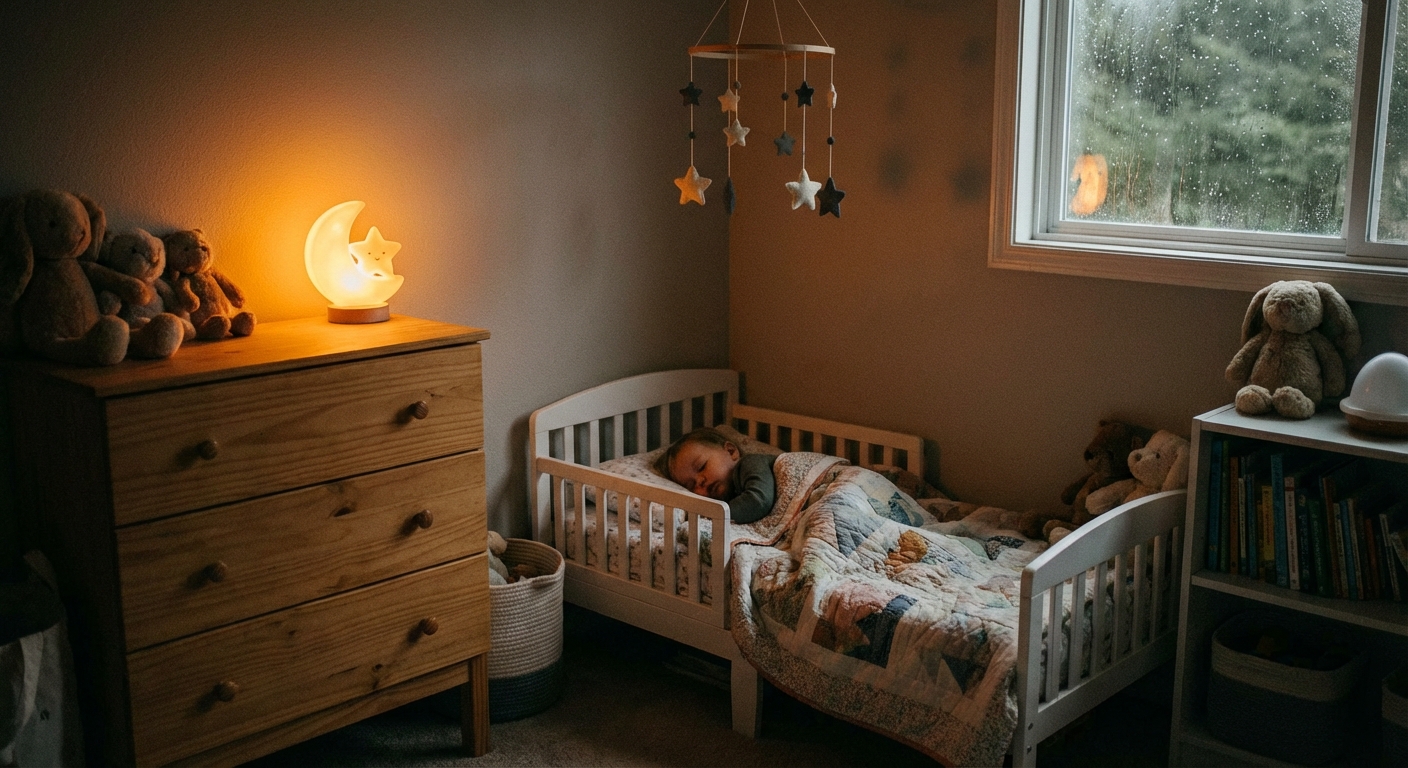
- Use a night light if fear of the dark is part of the picture. Warm, dim light is best.
- Check the room: many kids sleep best in a cool room (often around 68 to 72°F), plus comfortable pajamas and bedding for your home.
- Offer a comfort object if your child is over 12 months: a lovey or small blanket can help with separation anxiety.
If fears are driving the get-ups
- Validate first: “You feel scared. I'm here.”
- Keep reassurance brief: long conversations can accidentally reinforce fear.
- Try a bravery plan during the day: read a gentle book about nighttime, practice “monster spray” (water in a bottle) if that fits your family, and choose a bedtime phrase like “My room is safe.”
What to say
When you're tired, words get messy. Simple scripts keep you consistent.
- Neutral: “Back to bed.”
- Reassuring, but short: “You're safe. Back to bed.”
- Repeat boundary: “It's bedtime. I'll see you in the morning.”
- If they demand a new request: “That's a tomorrow question. Back to bed.”
Aim for calm, not cold. You can be loving and firm at the same time.
Common situations
They fall asleep on the floor
If your toddler refuses the bed and sleeps on the floor, you have options. If the room is safe and they're warm, you can let it be for the night and reset tomorrow. If you move them, do it once they're asleep, with minimal interaction. Avoid turning it into a midnight game.
They keep coming out to potty
If your child is potty trained or training, take them when they say they need to go, but keep it boring: lights dim, minimal talking, straight back to bed. If you suspect stalling, offer one “scheduled” potty right before lights out and then use a bedtime pass for one additional trip if needed.
If there's pain with peeing, new accidents, fever, or unusually frequent urges, check in with your pediatrician to rule out a UTI or constipation.
They run out laughing
Try not to react. I know. Your soul leaves your body a little. But laughter often means the escape is rewarding. Silent return, neutral face, repeat.
They get very upset
Some protest is normal with a new limit. If your child is panicking, pause and check for fear, pain, or illness. If they're simply mad, keep your response consistent and brief. You can also consider a gradual approach (below) if the silent return feels too intense for your child.
Gradual check-ins
For some toddlers, especially those with big separation anxiety, a gradual approach can work well.
How it works
- After goodnight, you do brief check-ins at increasing intervals (for example, 2 minutes, 5 minutes, 10 minutes).
- Check-ins are short (10 to 20 seconds): “You're safe. It's bedtime.”
- No picking up, no long snuggles, no new stories.
This is still a consistency plan, just with a different flavor.
When to ask your pediatrician
Most bedtime escape artists are doing normal toddler things. But sometimes frequent get-ups are a clue that something else is going on.
Check in if you notice
- Snoring, gasping, or pauses in breathing during sleep (possible sleep-disordered breathing).
- Restless sleep with frequent leg kicking that seems uncomfortable.
- Chronic pain symptoms like ear pulling, reflux discomfort, frequent nighttime coughing, or eczema itching.
- Night terrors (screaming, inconsolable, not fully awake) happening often. Night terrors are different from nightmares and usually aren't helped by discussion in the moment.
- Sudden, intense sleep disruption after a stressor or change, especially if paired with daytime anxiety, regression, or new fears that interfere with normal life.
- Constipation (hard stools, pain with pooping, belly pain). This is a sneaky but common sleep disruptor.
Trust your gut. If something feels off, it's always okay to ask.
Note: This article is general guidance and can't replace medical advice for your child.
A realistic timeline
With consistent responses, some families see improvement within a week, and many see big changes within 1 to 2 weeks. It can take longer if escaping has been rewarded for weeks or months, if there's separation anxiety, or if your toddler is in a big developmental leap.
The most important ingredient is boring consistency. You're not trying to win. You're trying to teach.
If you only remember one thing tonight: keep your words few, your energy calm, and your response the same every single time.
Quick plan for tonight
- Before bed: potty, water, comfort item, night light, white noise if you use it.
- Set the rule: “After I say goodnight, you stay in bed.”
- Choose one strategy: silent return or gradual check-ins.
- Add one reward: bedtime pass or a small sticker goal.
- Make it safe: toddler-proof the room so you can respond calmly.
You deserve sleep. And your toddler deserves the confidence that comes from clear, loving boundaries. You can do both.