Toe Walking in Toddlers: Causes and When to Worry

Sarah Mitchell
Sarah Mitchell is a Registered Pediatric Nurse and a mother of three who has spent over a decade helping families navigate the beautiful, chaotic early years of childhood. She combines evidence-based medical knowledge with real-world parenting experience to offer practical, compassionate advice. At Awesome Parent, Sarah's mission is to help exhausted parents find solutions, trust their instincts, and finally get some sleep.
If you have a toddler who suddenly looks like they are training for ballet class, you are not alone. Toe walking is one of those developmental quirks that can be totally normal, and also occasionally a sign that something needs a closer look. The goal is not to panic. The goal is to notice patterns and know when it is worth bringing in your pediatrician or a pediatric physical therapist.
What counts as toe walking?
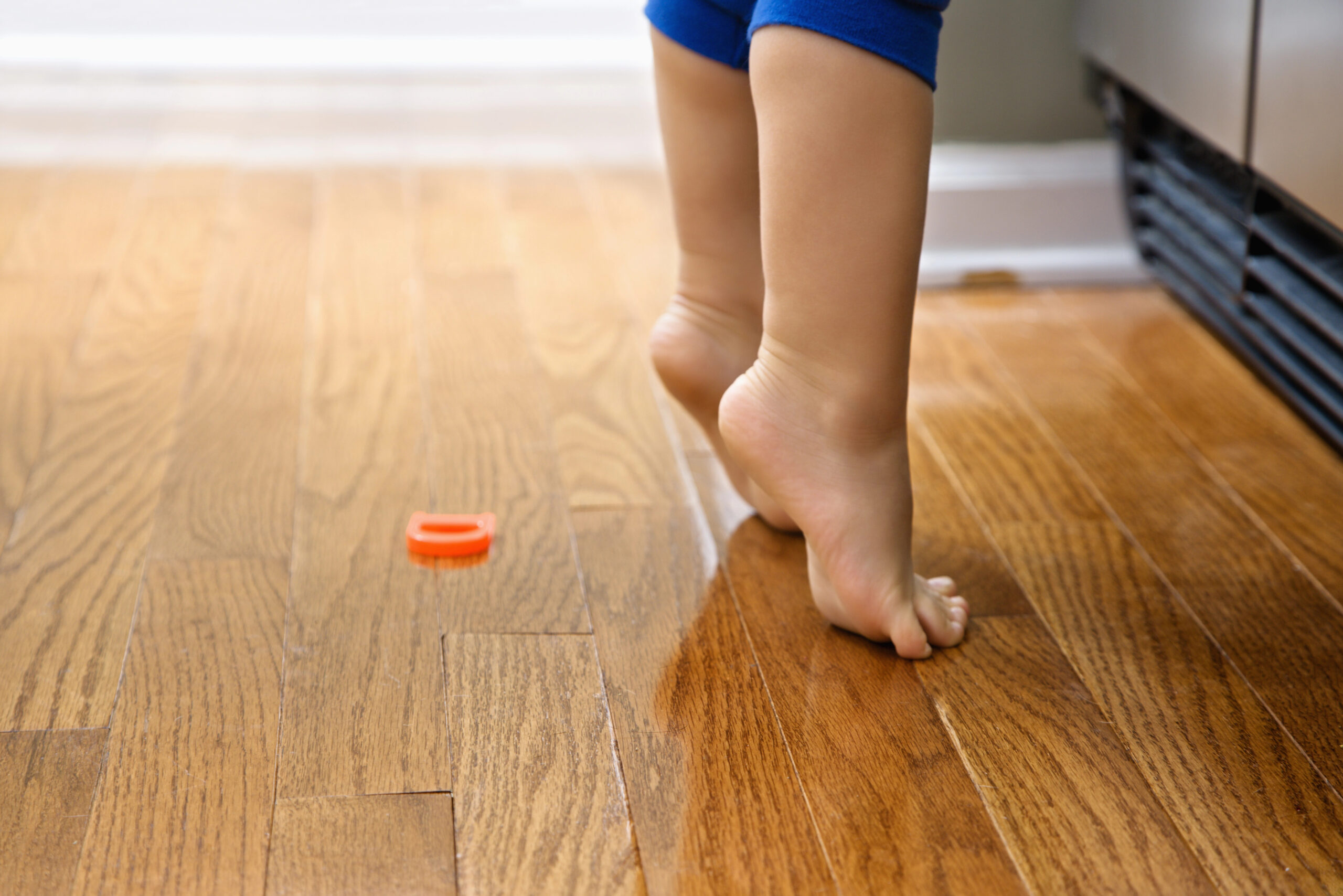
Toe walking means your child walks with their heels off the ground most of the time, landing on the balls of their feet or toes. Many toddlers pop up on their toes when they are excited, rushing, or playing pretend. That is different from persistent toe walking, where it is their main way of walking.
- Occasional toe walking: Comes and goes, especially during play or when barefoot.
- Persistent toe walking: Happens most of the time, across different settings and shoes.
- One-sided toe walking: One foot consistently on toes while the other is flat. This is more concerning.
Why toddlers walk on their toes
There are a few common reasons, and they range from totally harmless to worth-checking.
1) New walker phase (often normal)
In the first months after learning to walk, some kids experiment with different foot positions. Their balance, leg strength, and coordination are still developing. If your child can also walk with heels down and toe walking is occasional, this often resolves on its own.
2) Habitual or idiopathic toe walking
This is a common category once kids are past the brand-new walker stage. “Idiopathic” is just a fancy way of saying we do not find a medical cause. These kids typically have normal strength and development and can usually place their heels down when prompted, although they may pop right back up.
It also often runs in families. If you or a close relative were a toe walker as a kid, that can be a reassuring piece of context to share with your pediatrician.
Habitual toe walking can be more likely if:
- Your child toe walks more when excited or running.
- They can squat, climb, and get up from the floor normally.
- They can walk flat-footed at least some of the time.
3) Tight calf muscles or tight Achilles tendons (tight heel cords)
Sometimes toe walking starts as a habit, but over time the calf muscles and Achilles tendon can tighten. Other times, tightness is present early. When heel cords are tight, it becomes physically hard for a child to bring their heel down, especially with knees straight.
Clues that tightness may be part of the picture:
- Your child struggles to stand flat-footed without leaning forward.
- Heels do not come down even when you remind them.
- They complain of calf soreness or fatigue with walking.
- Shoes show unusual wear mainly on the front.
4) Sensory preferences
Some toddlers toe walk because they like the sensation. For some kids, it feels lighter or more stable. Toe walking can show up alongside other sensory behaviors like disliking certain socks, hating grass or sand, or seeking lots of jumping and crashing play.
This does not automatically mean something is wrong, but it can be a reason to ask about an occupational therapy screening if it is persistent.
5) Neurological or developmental causes (less common, important to catch)
In a smaller number of children, toe walking is related to an underlying condition affecting muscle tone, strength, or coordination. Examples include:
- Cerebral palsy (often with stiffness, asymmetry, early hand preference, or delayed milestones)
- Muscular dystrophy (may include weakness, frequent falls, difficulty rising from the floor)
- Spinal cord or nerve issues (can include changes in reflexes, weakness, or bowel and bladder concerns)
- Autism spectrum disorder (toe walking can occur, but it is not specific to autism and does not diagnose it)
The key point is not to diagnose from the internet. The key point is to know which patterns deserve a professional evaluation.
Habit vs tightness vs neuro

Habitual or idiopathic toe walking
- Often bilateral (both feet).
- Child can usually walk flat when reminded or when wearing certain shoes.
- Range of motion may be normal, especially early on.
- May be familial (runs in families).
- Development otherwise typical (though some kids may also have sensory differences).
Tight Achilles tendons (heel cord tightness)
- Heels cannot easily come down, especially with knees straight.
- Calves look tight or feel stiff, may tire quickly.
- Toe walking becomes more constant over time.
- May need stretching, PT, braces, or casting, depending on severity.
Neurological causes
- May be one-sided or clearly uneven.
- Other signs present: stiffness, weakness, poor coordination, delayed milestones, abnormal reflexes, frequent falls, or regression.
- Less likely to be switchable to a normal heel-to-toe pattern on request.
- Needs medical evaluation to identify the cause and guide treatment.
When it often resolves
Toe walking is more likely to be a phase when:
- Your toddler is a relatively new walker and toe walking is intermittent.
- They can put heels down easily when asked, or they do it naturally some of the time.
- Toe walking is symmetrical on both sides.
- There are no other motor concerns: they run, climb, and get up from the floor without struggle.
- There is no pain, no frequent tripping, and no worsening over time.
Even when it is likely a phase, it is still reasonable to mention it at the next well visit so it is documented and followed.
When to get it checked
If you remember nothing else, remember this: persistent toe walking beyond about age 2 to 3, or toe walking with other symptoms, is worth a closer look. Age cutoffs vary a bit, and “idiopathic toe walking” is usually a label clinicians use after other causes are ruled out, often closer to age 3 and up. When in doubt, ask.
Call your pediatrician (non-urgent appointment) if:
- Toe walking is present most of the time after age 2.
- Your child cannot walk flat-footed, even briefly.
- You notice tightness in calves or ankles, or your child struggles to stand with heels down.
- Toe walking is worsening rather than improving.
- There is pain, frequent tripping, or new shoe wear patterns that look extreme.
- Your child has other developmental concerns (speech, social, feeding, sensory).
Seek prompt evaluation sooner if:
- Toe walking is one-sided.
- Your child is losing skills they previously had.
- There is obvious weakness, significant stiffness, or unusual coordination issues.
- There are concerns with bowel or bladder control that are new or worsening.
- You notice back pain or unusual skin changes along the spine (like a deep dimple, lump, or patch of hair) along with gait changes.
Parent gut-check: If your child toe walks and you cannot talk them down onto flat feet even for a few steps, that is a good reason to ask for a physical therapy evaluation.
What an eval looks like
Most evaluations are straightforward and very kid-friendly. Expect a mix of questions and a movement check. Clinicians often distinguish habitual toe walking from other causes by looking at ankle range of motion, muscle tone, reflexes, symmetry, and overall motor skills.
- History: When it started, how often it happens, any pain, falls, or family history.
- Development review: Milestones, coordination, speech and social development.
- Physical exam: Foot and leg alignment, muscle tone, reflexes, strength, and ankle range of motion.
- Gait observation: Watching your child walk and run, sometimes in shoes and barefoot.
Depending on findings, you may be referred to pediatric physical therapy, orthopedics, neurology, or occupational therapy.
Treatment options
Treatment depends on the cause and how long it has been going on. Many kids need only simple support and time. Others benefit from targeted therapy.
Common recommendations
- Physical therapy: Stretching, strengthening, balance work, and gait training.
- Home exercises: PT-guided stretches and play-based activities (think heel walking games, squat-to-stand play).
- Footwear tweaks: Sometimes a sturdy shoe helps. Many clinicians recommend stiff-soled or high-top shoes because they can make it physically harder to push up onto the toes. Some kids toe walk more barefoot while others toe walk less, so treat this as individualized guidance, not a rule.
- Ankle-foot orthoses (braces): Used when a child needs help keeping heels down or preventing tightness.
- Serial casting: A series of casts to gradually improve ankle range of motion in more persistent tightness.
- Medical or surgical options: Rare, and usually only considered after other approaches, especially if there is significant contracture or an underlying condition.
The earlier tightness is addressed, the easier it is to treat. That is one reason persistent toe walking is worth checking, even if your child seems otherwise fine.
What you can do now

- Observe the pattern for 1 to 2 weeks: Is it occasional or most of the time? Only when excited? Only barefoot?
- Try a gentle cue: “Heels down.” If your child can correct it briefly, that is useful information to share with the pediatrician.
- Make it a game: Pretend you are marching like dinosaurs with heavy heels, or do short heel walks to the bathroom and back.
- Stretching caution: Skip aggressive stretching at home without guidance. Gentle calf stretches are usually fine, but forcing range of motion can backfire.
- Capture a quick video: A 10-second clip of walking barefoot and in shoes can be incredibly helpful at an appointment.
FAQ
Is toe walking a sign of autism?
Toe walking can be seen in some children with autism, but it is also common in typically developing toddlers. Toe walking alone does not diagnose autism. If you have broader concerns about communication, social interaction, play skills, or sensory behaviors, bring them up with your pediatrician.
Can toe walking cause long-term problems?
It can, especially if it leads to persistent calf tightness (equinus) over time. Persistent toe walking can also contribute to gait inefficiency and balance challenges in some kids, especially if tightness develops. That is why ongoing toe walking is worth addressing early, even if your child seems comfortable.
Should I stop my toddler from toe walking?
You do not need to police every step. Occasional reminders and play-based practice are fine. If it is frequent or your child cannot get heels down, focus on getting an evaluation rather than constant correcting.
Bottom line
Toe walking is common in toddlers and often fades with time. The main things I want you to watch are persistence, tightness, asymmetry, and other developmental or neurological signs. If toe walking is happening most of the time beyond about age 2 to 3, or if your child cannot comfortably walk flat-footed, it is smart to check in with your pediatrician or a pediatric physical therapist. Getting answers is almost always more calming than another midnight spiral.
Medical note
This article is for general education and does not replace medical advice. If you are concerned about your child’s walking, development, or pain, contact your pediatrician for personalized guidance.