A calm, step-by-step guide to umbilical cord stump care from hospital to healing: cleaning, diapering, bathing options, normal changes, when it falls off, an...
Umbilical Granuloma: Oozing Belly Button After the Cord Falls Off

Sarah Mitchell
Sarah Mitchell is a Registered Pediatric Nurse and a mother of three who has spent over a decade helping families navigate the beautiful, chaotic early years of childhood. She combines evidence-based medical knowledge with real-world parenting experience to offer practical, compassionate advice. At Awesome Parent, Sarah's mission is to help exhausted parents find solutions, trust their instincts, and finally get some sleep.
If you expected your baby’s belly button to be dry and boring once the cord stump fell off, and instead you’re looking at a little pink “blob” that keeps oozing, you are not alone. In pediatric triage, this is one of those calls that comes in with a lot of panic and, thankfully, a very fixable explanation.
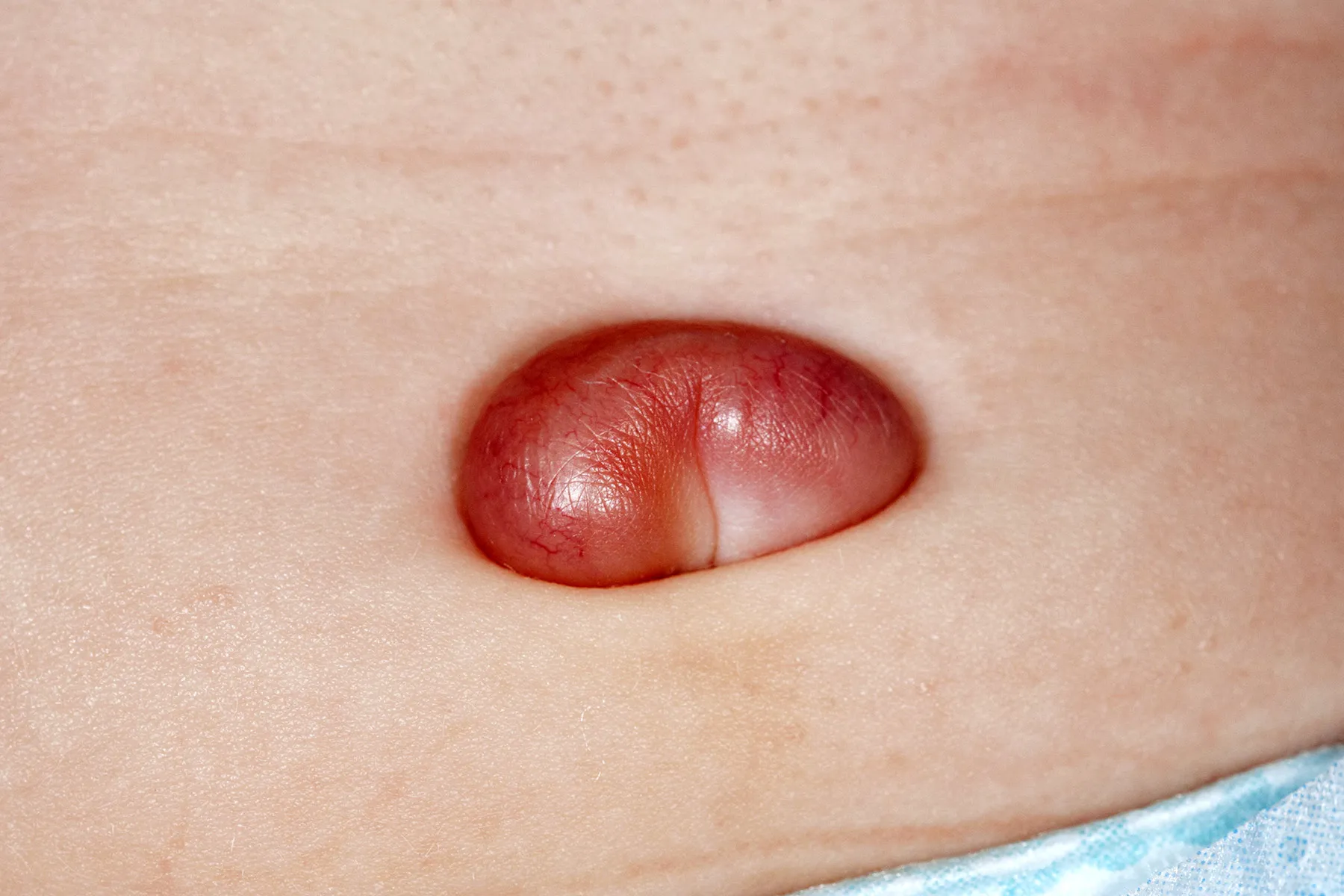
A common cause is an umbilical granuloma, which is a small overgrowth of healing tissue. It can look alarming, but it is usually harmless and easy for your pediatrician to treat.
What an umbilical granuloma is
After the cord stump falls off, the belly button has to finish sealing and healing. Sometimes, instead of drying down completely, a small piece of extra healing tissue remains in the center of the belly button. That extra tissue is the granuloma.
Think of it as the belly button’s version of “overachieving” at healing. It is not the same thing as infection, and it is not something you caused by bathing, diapering, or touching baby’s tummy.
When it shows up
Most parents notice it in the days to a week or two after the cord falls off. It may be present right away, or you might see a belly button that seemed fine at first and then becomes persistently damp.
How it looks
Typical granuloma signs
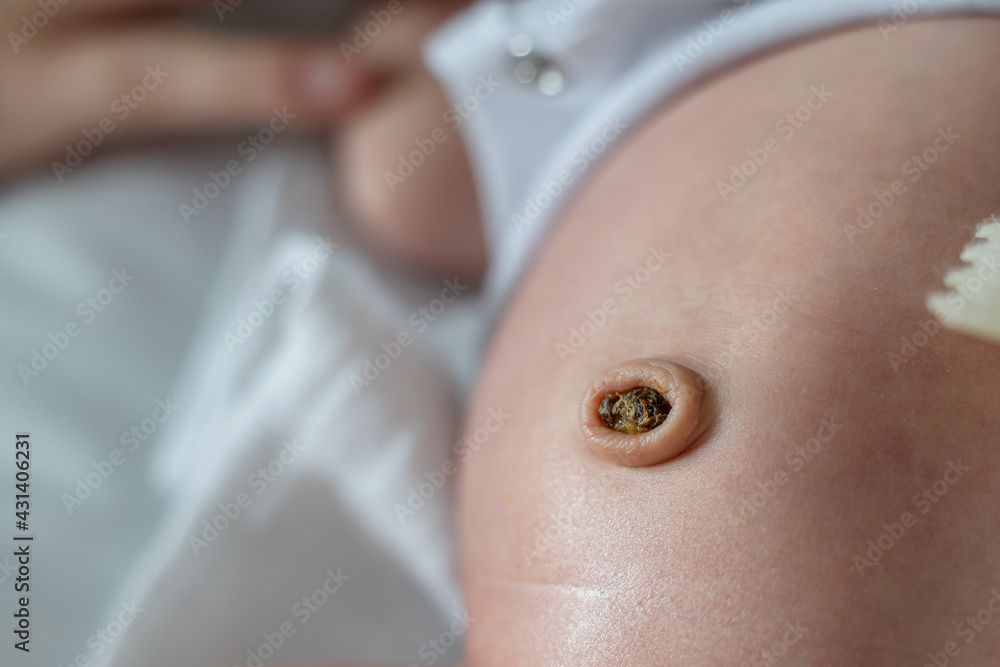
- Small pink or red “button” of tissue in the center of the belly button
- Moist, shiny, or wet-looking surface
- Clear or pale yellow drainage that keeps coming back after you blot it
- Sometimes a small amount of blood-tinged fluid, especially if it rubs on the diaper
- May have a mild smell from trapped moisture, but not a strong foul odor
- Usually not painful for baby when touched gently
Normal healing can include
- A small amount of dry crust
- Brief, minimal spotting of blood on the diaper or onesie
- Skin that looks a bit raw right after the stump falls off, then improves over several days
If the belly button is steadily getting drier each day, that is reassuring. A granuloma tends to stay stubbornly wet.
Why it oozes
Granulation tissue (the body’s healing tissue) is naturally rich in tiny blood vessels and stays moist. In a granuloma, that tissue persists, so you can see:
- Serous drainage (clear or pale yellow fluid)
- Minor bleeding if it rubs on the diaper or gets wiped a little too enthusiastically
The goal is to help that extra tissue shrink so the area can fully dry and close.
What you can do now
At-home care is mostly about keeping the area clean, dry, and not irritated until you can be seen. Most granulomas still need a quick visit for treatment, but you can absolutely make things calmer in the meantime.
Simple steps
- Keep it dry: If it’s damp, gently blot with clean gauze or a soft cloth. Avoid vigorous rubbing.
- Fold the diaper down: Keep the diaper edge from rubbing and trapping moisture against the belly button.
- Clean gently if there’s gunk: Use warm water on a cotton ball or soft cloth, then pat dry.
- Breathable clothing: A snug waistband can increase friction and moisture.
What to avoid
- Do not use alcohol, peroxide, or harsh antiseptics unless your pediatrician specifically told you to. Some clinicians still use alcohol in certain situations, but many now recommend simple dry care because harsh products can irritate healing skin.
- Do not pick off tissue or crust. It can bleed and prolong healing.
- Do not try DIY “cauterizing” remedies without medical guidance. Some clinics may recommend a specific, supervised home option (like a carefully instructed table salt method) for select cases, but you should not improvise based on social media.
If you want a refresher on normal cord care and what’s expected before and right after the stump falls off, see our full guide here: Newborn Cord Stump Care. This page stays focused on what to do when the belly button keeps oozing after the stump is already gone.
How it is treated
The most common in-office treatment is silver nitrate. Your clinician touches the granuloma with a small applicator that helps shrink and dry the extra tissue.
What parents ask
- Does it hurt? Many babies do not seem to have significant pain from the granuloma itself. However, silver nitrate can sting or irritate normal surrounding skin if it touches it. This is why clinicians typically protect the nearby skin with a barrier (often petroleum jelly) and apply it carefully. Your baby may also fuss simply because they are being held still and the area is being handled.
- How fast does it work? Many improve quickly, but some need more than one treatment.
- Why does it look darker after? Silver nitrate can leave a gray or black stain on the tissue or nearby skin. That staining is expected and temporary.
What to expect after treatment
- The bump often looks darker, drier, and smaller over the next few days.
- A small scab may form.
- Keep the diaper folded down and the area dry.
- Call for recheck if it is still wet after the timeframe your clinician gave you, or if it seems to worsen.
Occasionally, your pediatrician might use other approaches depending on your baby’s age and what the belly button looks like. The key is that this is usually a quick fix once it’s properly identified.
When it is not a granuloma
Most oozing belly buttons after the stump falls off are benign, but there are a few other possibilities your clinician will consider.
Umbilical polyp
An umbilical polyp can look similar but is typically a firmer, bright red mass and may not respond to silver nitrate. It can be associated with omphalomesenteric duct remnants (a deeper connection toward the intestine), so it needs medical evaluation.
Urachal anomalies
If you notice urine-like fluid coming from the belly button, your clinician will want to rule out a urachal anomaly such as a patent urachus (a connection to the bladder).
Drainage from the intestine (rare)
If you see stool-like material, mucus, or greenish fluid from the belly button, or drainage that seems persistent and continuous, especially if it increases when baby cries or strains, seek medical evaluation promptly. These can be clues to an omphalomesenteric duct issue.
This is one reason we take “oozing” seriously even when baby seems totally fine. It is usually a granuloma, but it is worth confirming.
Red flags
Granulomas themselves are usually not emergencies, but the belly button area can get infected. The serious infection we worry about is called omphalitis.
Call your pediatrician the same day, and seek urgent care sooner if your baby is ill-appearing, if you notice:
- Spreading redness around the belly button, especially if it’s expanding over hours
- Swelling, warmth, or increasing tenderness
- Thick pus (green or creamy yellow) or a strong foul odor
- Fever (for babies under 3 months, a rectal temperature of 100.4°F (38°C) or higher is urgent, and you should call right away)
- Poor feeding, sleepiness, or unusual irritability
- Red streaks on the skin near the belly button
- Bleeding that will not stop with gentle pressure
Trust your gut. If your baby seems “off,” I would rather you call and be reassured than sit with anxiety.
Granuloma vs hernia
These two get mixed up all the time because they both involve the belly button, but they are very different issues.
Umbilical granuloma
- Looks like a small pink/red moist bump in the center
- Often has oozing or wetness
- Treated by drying and shrinking the extra tissue (often silver nitrate)
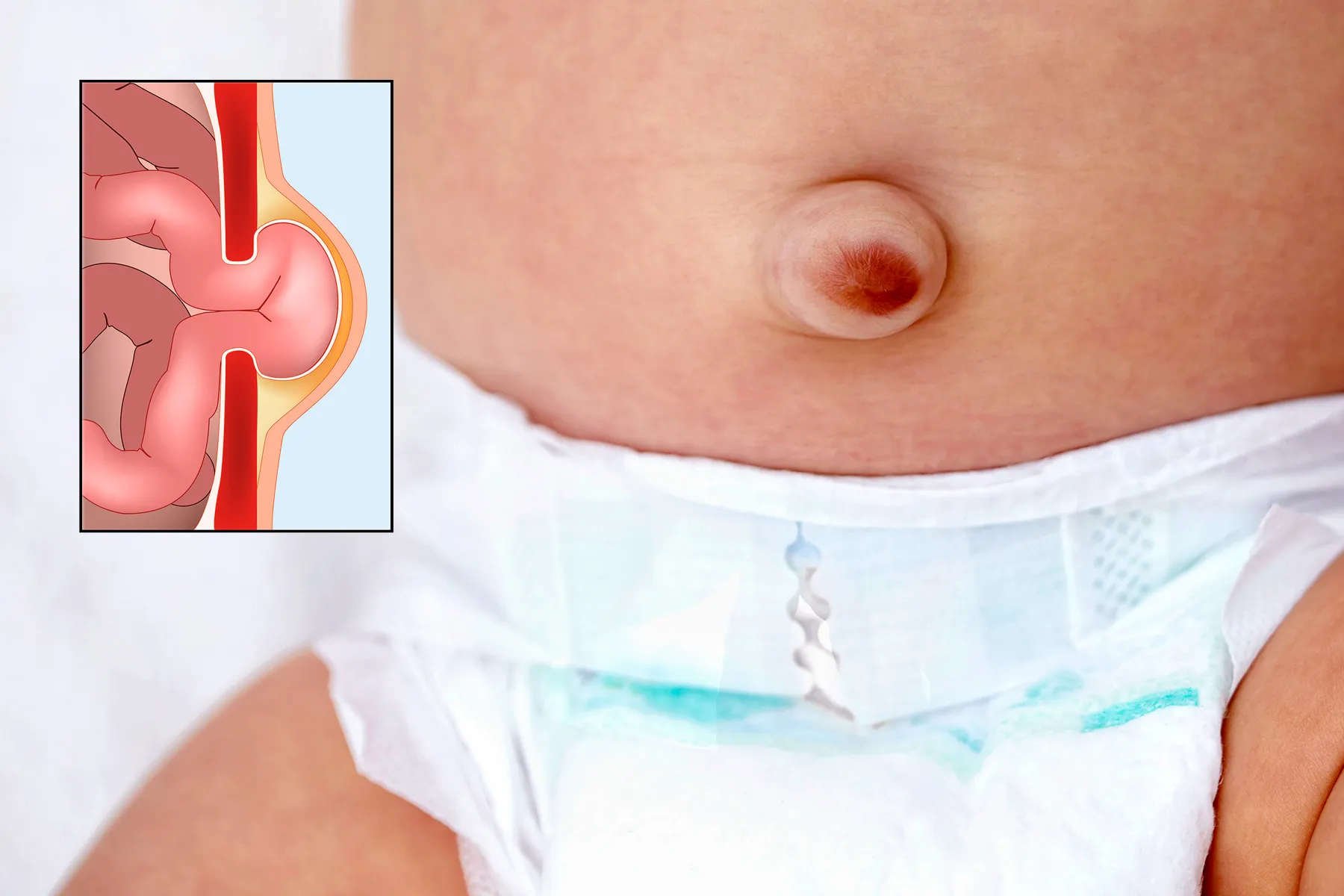
Umbilical hernia
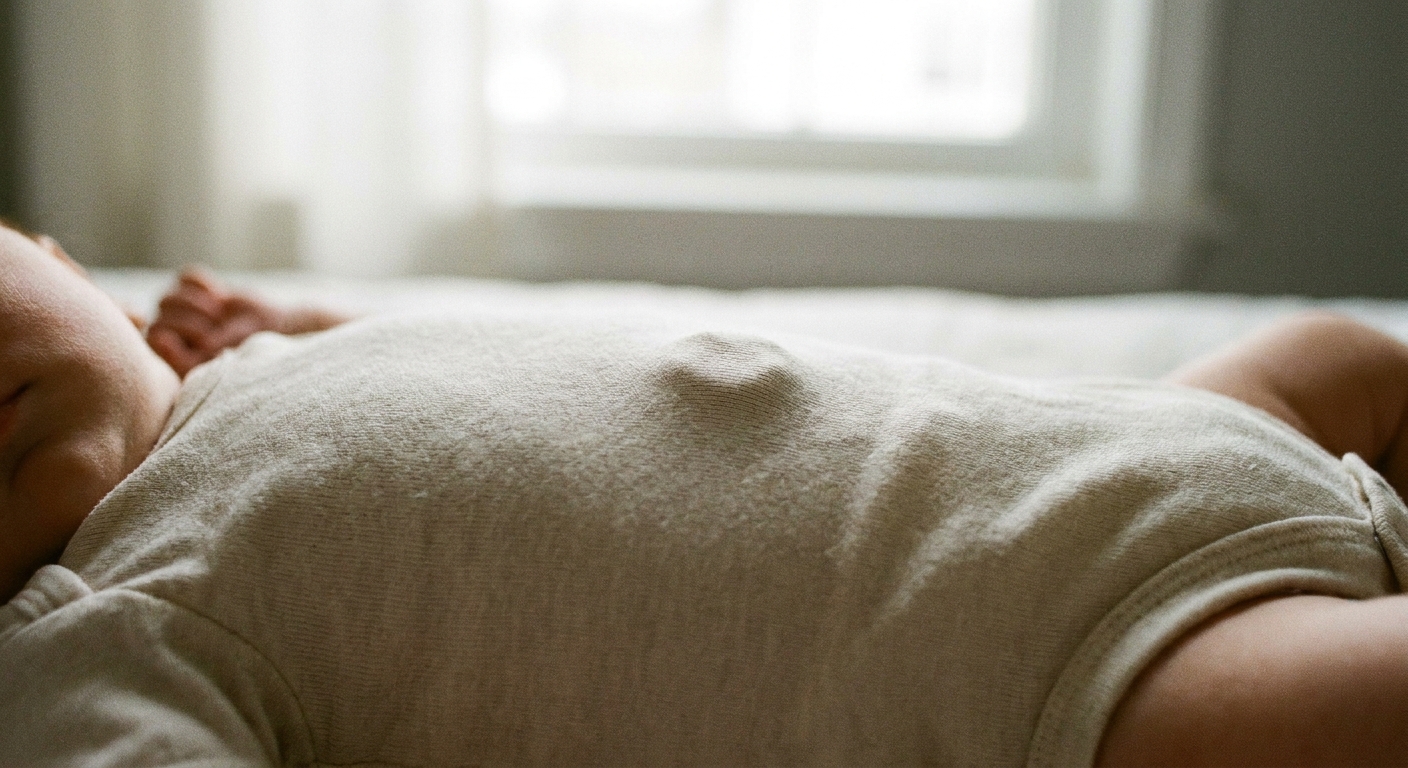
- Looks like a soft bulge under the skin at or near the belly button
- More noticeable when baby cries, coughs, or strains
- Usually not oozing
- Most close on their own as baby grows, with follow-up at well visits
If you see a bulge but the skin is dry and there is no drainage, you’re likely dealing with a hernia rather than a granuloma. If you see drainage, think granuloma or irritation and get it checked.
FAQ
Can I bathe my baby?
Most clinicians prefer keeping the area dry until it’s treated and healing well, which often means sponge baths for a short period. If you’ve been told baths are okay for your baby, dry the belly button gently and thoroughly afterward. When in doubt, call your pediatrician’s nurse line for guidance based on what they see.
How long should I wait before calling?
If the cord stump is already off and the belly button is still wet or oozing for more than a couple of days, it’s reasonable to message or call. Granulomas do not typically resolve instantly without help, and treatment is quick.
Is this my fault?
No. Granulomas happen even with perfect cord care, and there is no “perfect” anyway. This is a common healing variation in newborn skin.
Will it come back?
Sometimes it needs a second treatment, but once it fully dries and the tissue shrinks down, it usually does not return.
Bottom line
An oozing belly button after the cord stump falls off is most often an umbilical granuloma, a common and treatable bit of extra healing tissue. Keep the area clean and dry, avoid harsh products or DIY fixes, and schedule a quick check with your pediatrician, especially if the wetness persists.
If you see spreading redness, pus, fever, or your baby seems unwell, get medical care promptly.
Sarah Mitchell
Sarah Mitchell is a Registered Pediatric Nurse and a mother of three who has spent over a decade helping families navigate the beautiful, chaotic early years of childhood. She combines evidence-based medical knowledge with real-world parenting experience to offer practical, compassionate advice. At Awesome Parent, Sarah's mission is to help exhausted parents find solutions, trust their instincts, and finally get some sleep.