UTI in Babies: Signs, Fever, and When to Get a Urine Test

Sarah Mitchell
Sarah Mitchell is a Registered Pediatric Nurse and a mother of three who has spent over a decade helping families navigate the beautiful, chaotic early years of childhood. She combines evidence-based medical knowledge with real-world parenting experience to offer practical, compassionate advice. At Awesome Parent, Sarah's mission is to help exhausted parents find solutions, trust their instincts, and finally get some sleep.
If your baby has a fever and you cannot find a “good reason” like a runny nose or cough, a urinary tract infection (UTI) is one of the big things we want to rule out. And yes, I know it feels unfair. Babies cannot tell us it burns to pee, and diapers do a great job of hiding classic symptoms.
The good news is that UTIs are very treatable. The tricky part is recognizing when to test, getting a clean urine sample, and knowing when this is urgent.
Why UTIs look different in babies
In older toddlers, a UTI might show up as pain with peeing, frequent trips to the potty, or accidents after being potty trained. Babies usually cannot give us those clues.
Instead, infants often show more general “sick baby” signs, especially:
- Fever without an obvious source (no clear cold symptoms, no rash that explains it, no clear cause even after a good check)
- Irritability or being much harder to soothe than usual
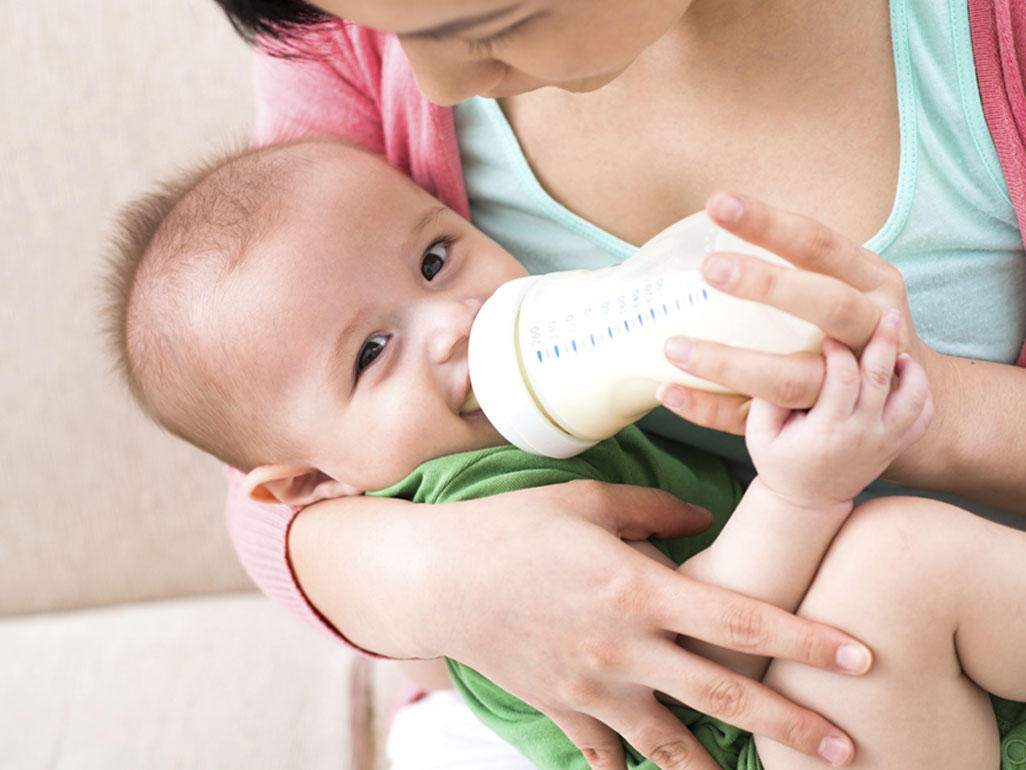
- Poor feeding (shorter feeds, refusing bottle or breast, falling asleep too quickly)
- Vomiting or more spit-up than normal
- Diarrhea (sometimes)
- Low energy or just seeming “off”
- Not peeing as much or fewer wet diapers
- Poor weight gain over time (less common, more of a slower-burn sign)
Some babies also have foul-smelling urine, but smell alone is not a reliable way to diagnose a UTI. I have seen plenty of normal diapers that could clear a room.
Most common signs by age
Newborns (0 to 28 days)
Newborns can get sick quickly, and symptoms are often vague. Signs can include fever, low temperature, poor feeding, sleepiness, irritability, vomiting, and fewer wet diapers. Because of their age, a rectal temperature of 100.4°F (38°C) or higher in a newborn needs immediate medical evaluation. Do not wait this out at home.
Young infants (1 to 3 months)
This age group often shows a UTI as fever with no source, fussiness, poor feeding, or vomiting. Your clinician will often recommend a urine test early in the workup, even if baby looks fairly well.
Older infants (3 to 12 months)
You may still see fever with minimal other symptoms. Some babies become cranky, eat less, vomit, or sleep more than usual. Sometimes the fever is the only standout sign.
What counts as a fever?
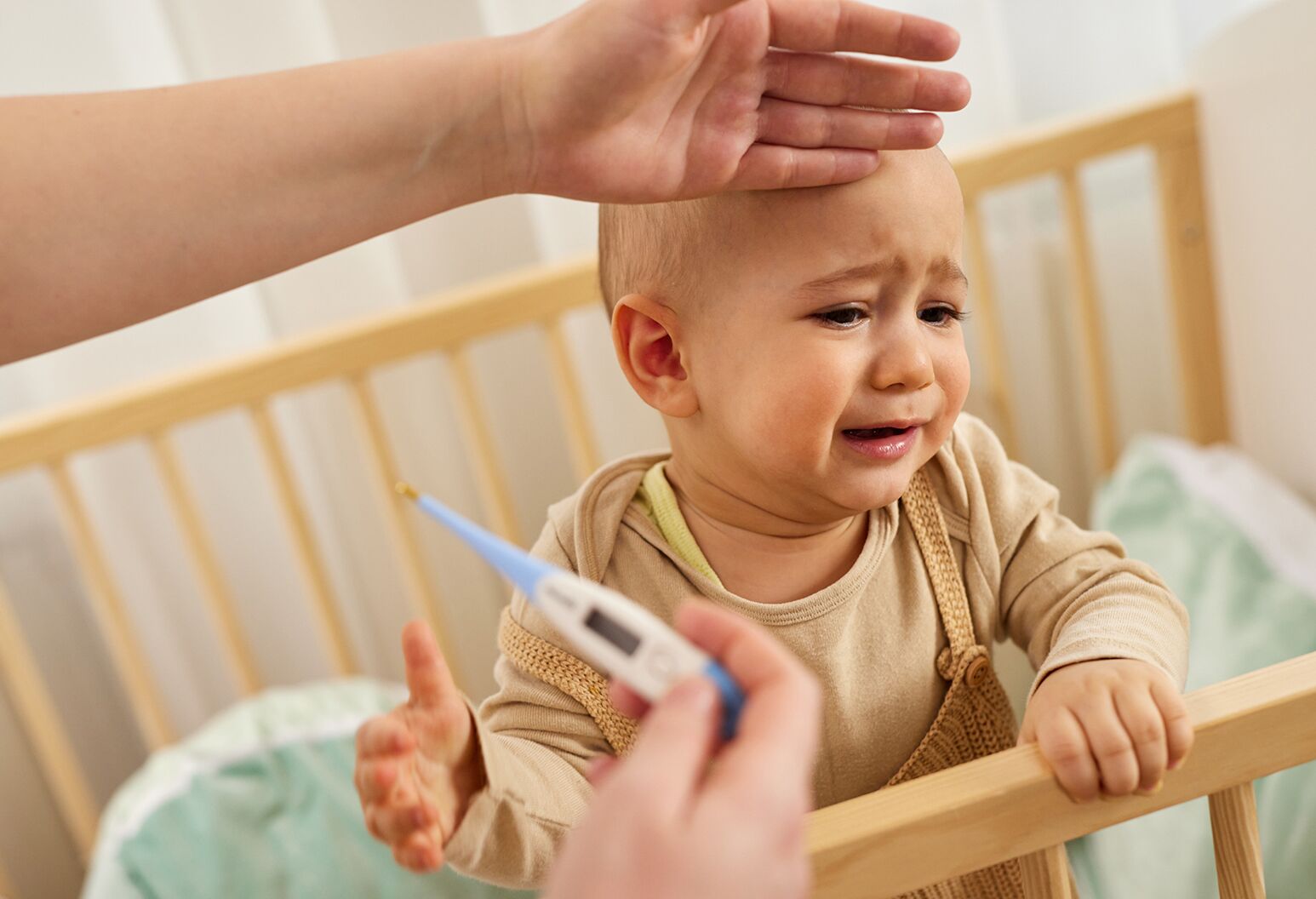
In most pediatric guidance, a fever is 100.4°F (38°C) or higher when measured rectally. Rectal temperature is the most accurate for infants.
- Under 3 months: A rectal temperature of 100.4°F (38°C) or higher needs urgent medical advice, and often urgent evaluation.
- 3 months and older: Fever still matters, but we look more at the whole picture: behavior, hydration, breathing, and how baby looks overall.
If you only have an armpit reading, it is helpful as a screening tool, but confirm with a more accurate method if you are worried or your clinician asks you to.
When to get a urine test
Because UTIs in babies can look like “just a fever,” clinicians often recommend urine testing when:
- Your baby has fever with no obvious cause, especially if it is persisting or your clinician cannot find a source on exam
- Your baby is under 3 months with a fever
- Your baby has fever plus vomiting, poor feeding, or unusual sleepiness
- Your baby has a history of UTIs or known urinary tract concerns
- Your baby is not improving as expected with typical viral illness care
Clinicians also factor in risk when deciding how quickly to test. For example, they may have a lower threshold to test in babies with prior UTIs, known kidney or urinary tract anomalies, and in some male infants (including uncircumcised infants) depending on age and the overall picture.
Testing is not about being dramatic. It is about catching a bacterial infection early so it does not climb up to the kidneys or spread into the bloodstream.
How urine is collected
A urine test is only as good as the sample. In a diapered baby, the main challenge is avoiding contamination from skin bacteria. Here are the common methods you may hear about.
Catheter sample
This involves placing a tiny, soft tube into the urethra to collect urine directly from the bladder. It is quick. It is not fun. It is also one of the cleanest ways to get an accurate sample in a baby.
What parents usually want to know:
- It may cause brief discomfort, and some babies cry hard, but it is usually over in a minute or two.
- Clinics do this all day long. It feels intense as a parent because it is your baby, but medically it is routine.
- A catheter sample helps avoid false positives that can happen with “bag” urine.
Clean-catch urine
This means catching urine mid-stream in a sterile cup after cleaning the skin well. With babies, this can be… an athletic event. Some clinics use specific techniques to encourage a baby to pee while a parent or nurse waits with the cup ready.
If your clinician offers clean-catch, ask how they want you to help and how they keep it as clean as possible.
Urine bag
A sticky plastic bag is placed over the genital area inside the diaper to catch urine. This is easy, but it is much more likely to pick up skin bacteria. That means it can look like a UTI even when there is not one.
Many practices use bag urine for a quick screening urinalysis. If that suggests infection, they usually confirm with a catheter or clean-catch sample for a culture.
Suprapubic aspiration
This is when a clinician uses a needle to collect urine directly from the bladder through the lower belly. It is typically reserved for special situations because it is more invasive, but it can provide a very clean sample.
One important note: avoid trying to collect urine by squeezing it out of a diaper. It is almost always contaminated and can lead to confusing results.

Urinalysis vs culture
Two tests often happen together:
- Urinalysis (UA): A faster test that looks for signs of infection. The dipstick portion often checks for leukocyte esterase (a marker of white blood cells) and nitrites (which some bacteria produce). Some labs also do microscopy, which can look for white blood cells and bacteria. Results can come back quickly.
- Urine culture: A lab grows any bacteria found in the urine and checks which antibiotics work best. A preliminary result is often available in 24 to 48 hours, but final results and sensitivities commonly take 48 to 72 hours.
If your baby looks well and the UA is not convincing, your clinician may wait for culture before starting antibiotics. If your baby is young or looks sick, they may start antibiotics first and adjust later based on culture results.
Home care while you wait
Waiting is stressful, especially when your baby is miserable. While you are waiting for results or the next steps, focus on the basics that keep babies safe.
Hydration and feeding
- Offer breast milk or formula frequently.
- Track wet diapers. As a rough guide, many infants should have several wet diapers a day, but ask your clinician what is appropriate for your baby’s age and situation.
- If your baby is vomiting, offer smaller feeds more often.
Fever comfort
- Dress baby in light layers.
- Keep the room comfortably cool.
- Use fever medication only if your clinician says it is appropriate for your baby’s age and weight. Dosing is weight-based and important to get right.
- In general, ibuprofen is not used under 6 months unless your clinician specifically tells you to use it.
Diaper care
- Change diapers promptly to reduce skin irritation.
- Use a barrier cream if the skin is getting red.
What not to do
- Do not start leftover antibiotics or someone else’s prescription.
- Do not rely on home urine dipsticks as a diagnosis in infants.
- Do not push extra water in young babies unless your clinician instructs you to. For many infants, breast milk or formula is the right fluid.
When to go to the ER now
Most baby UTIs are treatable and do not turn into emergencies. But infants can deteriorate faster than older kids, and UTIs can sometimes be associated with bloodstream infection, especially in the youngest babies.
Go to the ER or call emergency services if your baby has:
- Age under 28 days with a rectal temperature of 100.4°F (38°C) or higher (do not wait)
- Very hard to wake, unusually floppy, or not interacting the way they normally do
- Breathing trouble, grunting, or persistent fast breathing
- Blue, gray, or very pale color
- Signs of dehydration (very dry mouth, no tears when crying, significantly fewer wet diapers, sunken soft spot)
- Repeated vomiting and cannot keep feeds down
- Seizure
- A gut-level feeling that your baby is getting worse quickly
If you are reading this at 3 AM and your instincts are yelling at you, listen. I have never met a parent who regretted getting a truly unwell baby checked.
If it is a UTI
Treatment depends on age, how your baby looks clinically, and test results.
- Antibiotics: Many babies can take oral antibiotics at home. Younger infants or sicker babies may need IV antibiotics in the hospital.
- Follow-up: Your clinician may check that symptoms improve within 24 to 48 hours after starting antibiotics.
- Imaging: Some babies may be referred for a kidney and bladder ultrasound after a confirmed UTI, especially young infants or recurrent infections. Recommendations vary by age and local guidelines, and your clinician will tailor it to your child’s situation.
If your baby starts antibiotics and seems worse rather than better, contact your clinician right away.
Lowering future risk
You cannot prevent every UTI, and you did not cause this. But a few basics help:
- Frequent diaper changes to reduce irritation and bacterial spread
- Gentle wiping, front to back, especially for baby girls
- Avoid harsh soaps and bubble baths that can irritate the genital area
- Address constipation if it becomes an issue as your baby gets older, since constipation can contribute to UTIs
Quick FAQ
Can teething cause a fever that looks like a UTI?
Teething can make babies fussy and drooly, but it does not typically cause a true fever of 100.4°F (38°C) or higher. If your baby has a real fever with no source, it is worth discussing urine testing with your clinician.
My baby’s urine smells strong. Is that a UTI?
Not necessarily. Concentrated urine from mild dehydration, certain foods (in older babies), or just a very full diaper can smell strong. Smell can be one clue, but we rely on testing.
How fast should my baby improve on antibiotics?
Many babies start to look better within 24 to 48 hours. If fever persists beyond that window, or your baby seems worse, call your clinician.
Does a UTI mean something is wrong with my baby’s kidneys?
Usually no. Many babies have a one-time UTI with no underlying problem. Some will need an ultrasound based on age, fever, and recurrence to rule out structural issues.
The bottom line
In babies, a UTI often shows up as fever without a source, fussiness, poor feeding, or vomiting. Because the symptoms are nonspecific, urine testing matters, and the way the sample is collected matters too.
If your baby is very young, looks unwell, or is not staying hydrated, do not wait. Get checked. And if your baby seems “mostly okay” but the fever is hanging around with no clear explanation, ask your clinician whether a urine test makes sense. You are not overreacting. You are being appropriately baby-level cautious.