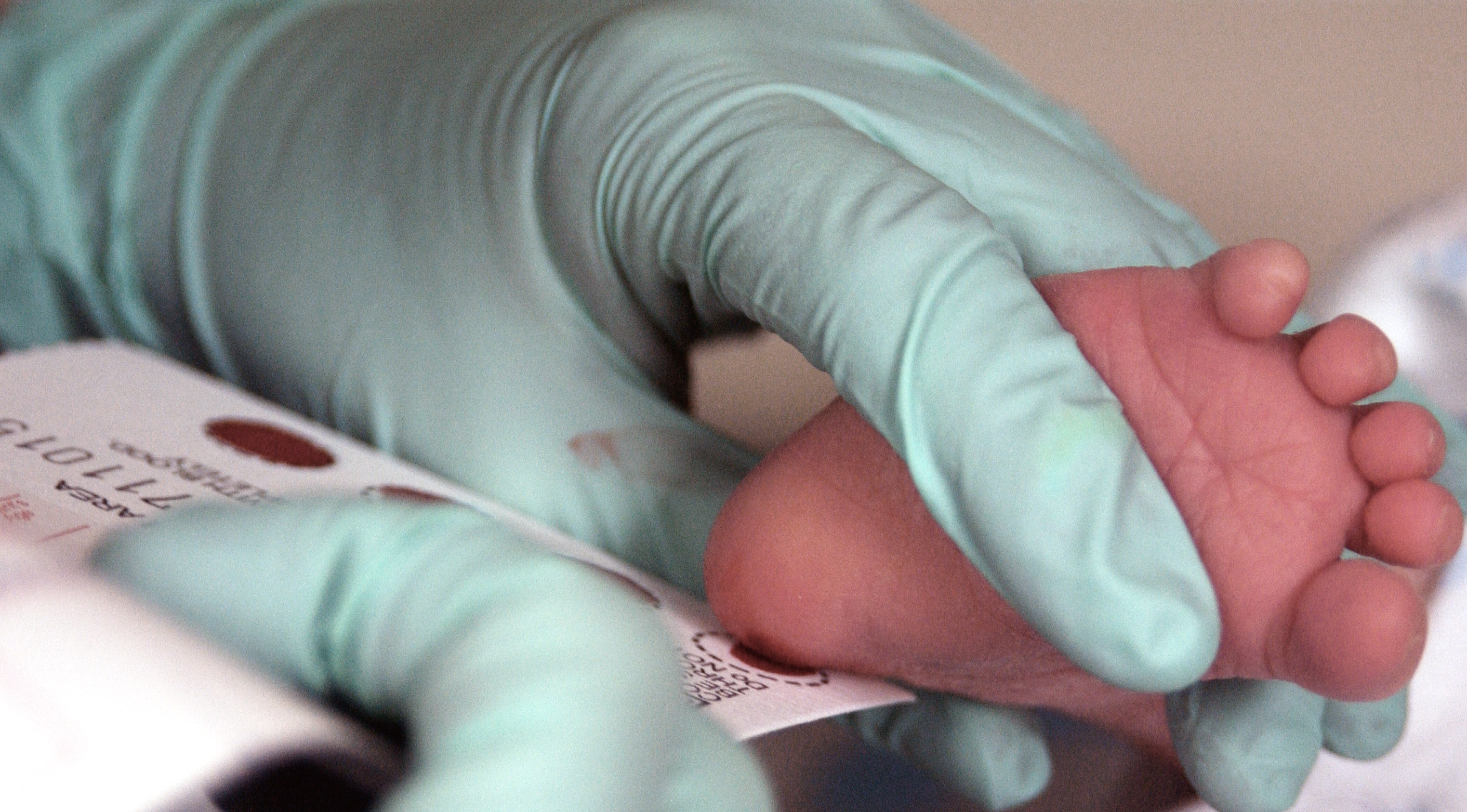
Learn what the newborn heel-prick test screens for, what “abnormal” really means (including QNS), why timing and location matter, and what happens next. ...
Vitamin K for Newborns

Sarah Mitchell
Sarah Mitchell is a Registered Pediatric Nurse and a mother of three who has spent over a decade helping families navigate the beautiful, chaotic early years of childhood. She combines evidence-based medical knowledge with real-world parenting experience to offer practical, compassionate advice. At Awesome Parent, Sarah's mission is to help exhausted parents find solutions, trust their instincts, and finally get some sleep.
If you are reading this in the post-birth haze, you are not alone. Vitamin K is one of those newborn “standard” items that can feel surprisingly emotional, especially when you are holding a brand-new baby and everything suddenly comes with a consent form.
As a pediatric nurse and a mom of three, here is the calm, evidence-framed version: vitamin K is offered because newborns are naturally low in it, and that puts them at risk for a rare but serious bleeding problem called vitamin K deficiency bleeding, or VKDB. A single dose of vitamin K after birth dramatically reduces that risk.

What vitamin K does
Vitamin K helps the body make clotting factors, which are proteins that stop bleeding. Adults get vitamin K from food and from gut bacteria. Newborns, however, start life with a few built-in disadvantages:
- Very little vitamin K crosses the placenta, so babies do not build big stores during pregnancy.
- Newborn intestines are not yet colonized with bacteria that help make vitamin K.
- Breast milk contains relatively low vitamin K compared with formula. Breastfeeding is wonderful, but it does not provide high vitamin K levels in those first weeks.
Because of these normal, predictable factors, healthy babies can still be at risk of bleeding unless they receive vitamin K after birth.
VKDB in plain language
Vitamin K deficiency bleeding (VKDB) is bleeding that happens when vitamin K levels are too low to support normal clotting. It is rare, but when it happens it can be sudden, severe, and hard to spot until it is dangerous.
Types of VKDB
- Early VKDB: within the first 24 hours. More likely if the birthing parent took certain medications that affect vitamin K.
- Classic VKDB: days 2 to 7 of life.
- Late VKDB: most often shows up in the first weeks to months of life (up to about 6 months), especially in exclusively breastfed babies who did not receive vitamin K.
The reason clinicians worry most about late VKDB is that it can involve bleeding in the brain, which may cause seizures, brain injury, or death. Many babies who develop late VKDB looked completely healthy beforehand.
Most newborn decisions are about balancing small risks. Vitamin K is offered because it prevents a rare outcome that can be catastrophic.
When it is given
In most hospitals and birth centers, vitamin K is offered soon after birth, once your baby is stable. Many protocols aim for within 6 hours of birth (often earlier), but exact timing varies by facility and by how your baby is doing medically.
What it typically looks like
- A nurse confirms your consent and answers questions.
- The dose is given as a single injection into the outer thigh muscle (intramuscular, or IM).
- It takes just a few seconds. Babies often cry because they are being held still and because it is a poke, then settle quickly.
If you want, ask for comfort measures during the injection, such as skin-to-skin, breastfeeding, a pacifier, or oral sucrose if your unit uses it. If skin-to-skin is important to you, you can also ask if the shot can be given while your baby is on your chest when it is medically and logistically feasible.

IM vs oral vitamin K
The most common and most studied option in many countries, including the United States, is the IM vitamin K shot. In some places, oral vitamin K is offered as an alternative, typically requiring multiple doses on a schedule.
Intramuscular (IM) vitamin K
- How many doses: one dose.
- Reliability: very high protection against classic and late VKDB.
- Practical reality: no follow-up dosing required, which matters because sleep deprivation is real and missed doses happen.
Oral vitamin K
- How many doses: depends on the specific product and protocol, but usually multiple doses over weeks (sometimes months).
- Reliability: can be very effective when the regimen is well-designed and followed exactly. In real life, protection against late VKDB is more vulnerable if any dose is missed, spit up, or vomited, or if follow-up falls apart.
- Availability: not always offered in every hospital or region, and formulations vary.
If you are considering oral vitamin K, ask your clinician very specifically:
- What exact dosing schedule do you use?
- What product do you use, and is it regulated and standardized?
- Who prescribes it, and who verifies follow-up?
- What is the plan if my baby spits up or vomits a dose?
Common questions
Is vitamin K a vaccine?
No. Vitamin K is a vitamin your baby needs to clot blood normally. It is not designed to trigger an immune response like a vaccine.
How much is given?
Dosing can vary by country and by hospital policy. In many protocols, term newborns receive 1 mg IM shortly after birth. Preterm dosing may differ based on weight and medical factors, and NICU teams tailor this carefully.
What are the side effects?
Most babies have no noticeable side effects beyond brief crying and possible mild soreness at the injection site. Serious reactions are very rare, including severe allergic reactions.
If your worries are about ingredients, it is okay to ask what formulation your hospital uses (some use preservative-free products). Your clinician or pharmacist can walk you through what is in the specific vial being offered.
Can we delay it?
Talk this through with your care team. The reason it is offered early is because early and classic VKDB can occur in the first days, and because hospital staff can confirm the dose is given correctly. If you are thinking about delaying, ask what risks increase with time and what the follow-up plan would be.
My baby is having a circumcision. Does vitamin K matter?
Yes. Vitamin K helps prevent excessive bleeding with any procedure. If circumcision is planned, many clinicians strongly prefer, or require, that vitamin K be given first.
If I breastfeed, do I still need it?
Yes. Breastfeeding does not cause VKDB, but breast milk is naturally low in vitamin K, which is one reason late VKDB is seen more often in exclusively breastfed babies who did not receive vitamin K.
What if my baby is premature or needs NICU care?
Preterm and medically fragile babies may have an even higher bleeding risk. NICU teams are very used to discussing vitamin K and will tailor timing and dosing to your baby’s situation.
Who is at higher risk
All newborns start with low vitamin K, but some situations raise concern even more. Your baby may be at higher risk for VKDB if there is:
- No vitamin K prophylaxis, especially with exclusive breastfeeding
- Liver or bile flow problems (cholestasis) or conditions that affect fat absorption
- Significant vomiting, prolonged diarrhea, or poor feeding that affects absorption and intake
- Parent medication exposures that interfere with vitamin K, such as certain anticonvulsants, warfarin, or some antibiotics
- Prematurity or medical fragility
If any of these apply, it is worth asking your clinician how they think about your baby’s specific risk.
If you are unsure
If you have concerns, you deserve a conversation that is respectful and not rushed. A good clinician will not shame you for asking questions.
Questions that usually help
- “What bleeding problems does vitamin K prevent, and how often do you see them?”
- “What is the difference in protection between IM and oral here?”
- “If we decline, what is the plan?” (This may include documentation, discussing oral options if available, and a clear list of warning signs and where to go urgently.)
- “Are there medical factors that make vitamin K more important for my baby?”
If something you read online raised a red flag, it is okay to say, “I saw a claim about vitamin K that scared me. Can we talk about it?” In triage, I learned that fear shrinks our ability to think clearly. Your job is to ask. Their job is to explain.
Signs to take seriously
VKDB can be subtle at first. Contact your pediatrician urgently or seek emergency care if your newborn has:
- Bleeding from the umbilical stump that does not stop
- Oozing or bleeding after a procedure (like circumcision) that seems more than expected
- Easy bruising, especially around the head or face
- Blood in stool (black or bright red) or vomit
- Pallor, unusual sleepiness, repeated vomiting, seizures, or a bulging soft spot
Those symptoms can have several causes, not just VKDB, but they are not “wait and see” issues in a newborn.

The bottom line
Vitamin K is offered because newborns start life with low vitamin K, and without supplementation a small number of babies can develop serious bleeding. A single IM dose shortly after birth (often within 6 hours) is the most reliable way to prevent VKDB. Oral regimens may be an option in some settings, and can work well when the schedule is clear and doses are reliably given, but they typically require multiple doses and careful follow-through.
If you are feeling conflicted, bring your questions to your pediatrician, midwife, or delivering clinician. You do not need to make decisions in the dark. You are allowed to ask for the evidence and for a plan that feels safe and realistic for your family.
Sources
- American Academy of Pediatrics (AAP): Vitamin K and the newborn
- Centers for Disease Control and Prevention (CDC): Vitamin K deficiency bleeding
- World Health Organization (WHO): Newborn care guidance including vitamin K prophylaxis
Sarah Mitchell
Sarah Mitchell is a Registered Pediatric Nurse and a mother of three who has spent over a decade helping families navigate the beautiful, chaotic early years of childhood. She combines evidence-based medical knowledge with real-world parenting experience to offer practical, compassionate advice. At Awesome Parent, Sarah's mission is to help exhausted parents find solutions, trust their instincts, and finally get some sleep.