Weaning Off the Bottle at 12 Months

Sarah Mitchell
Sarah Mitchell is a Registered Pediatric Nurse and a mother of three who has spent over a decade helping families navigate the beautiful, chaotic early years of childhood. She combines evidence-based medical knowledge with real-world parenting experience to offer practical, compassionate advice. At Awesome Parent, Sarah's mission is to help exhausted parents find solutions, trust their instincts, and finally get some sleep.
If you're staring at your one-year-old like, “You're basically a toddler now, why are we still so emotionally attached to this bottle?” you're in excellent company. Bottle weaning is one of those transitions that sounds simple on paper and feels deeply personal at 6:30 p.m. when your child is tired and you're just trying to get everyone fed.
As a pediatric nurse and a mom of three, here’s my calm, realistic take: most kids can transition off bottles around 12 months, and it doesn't have to be dramatic. You just need a plan, the right cup, and a little patience for a week or two of “wait, what is happening?”
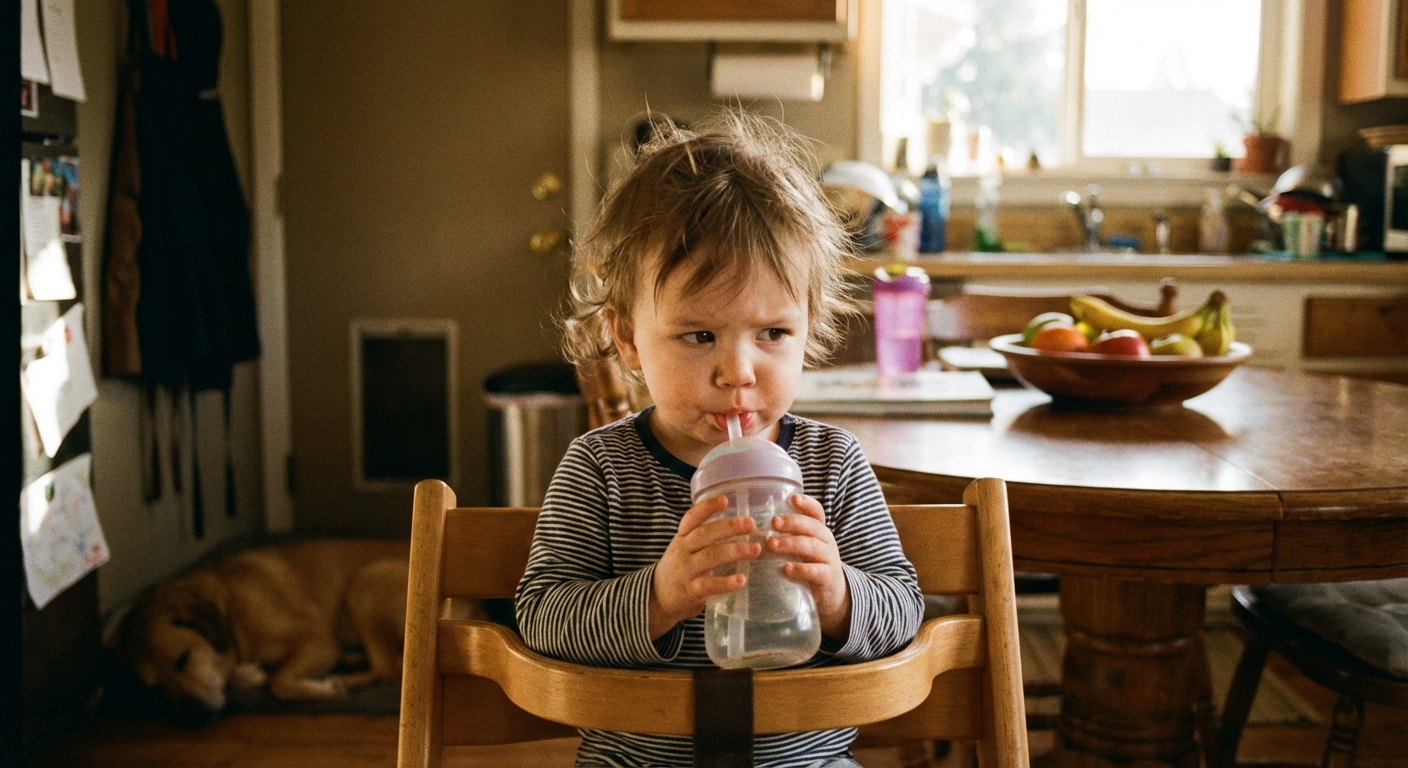
Why experts recommend stopping bottles around 12 months
Most pediatric and dental organizations recommend starting the transition from bottles around the first birthday and finishing in the months that follow (often by about 15 to 18 months). For example, the American Academy of Pediatrics (AAP) encourages moving from bottles to cups around 12 months, and pediatric dental guidance strongly discourages bedtime bottles and prolonged bottle use. The “why” isn't to make your life harder. It's about protecting teeth and supporting healthy eating routines.
- Teeth: Frequent sipping of milk from a bottle, especially at night, can increase the risk of early childhood cavities.
- Iron and appetite: Toddlers who drink a lot of milk from bottles can fill up on calories that crowd out iron-rich foods, which can contribute to iron deficiency.
- Oral motor development: Open cups and straw cups encourage more mature drinking patterns than prolonged bottle use.
- Independence: One-year-olds are built for “I do it!” energy. Cups match that developmental stage.
Quick reassurance: if your child is 13 or 14 months and still uses a bottle, you didn't “ruin” anything. We'll just start where you are.
Before you start: a simple checklist
Most 12-month-olds are ready even if they aren't thrilled about it. You're looking for “can do” more than “wants to.”
- Can sit up steadily and manage liquids safely
- Has tried water from a cup (even if it's messy)
- Eats solid foods at least a few times a day
- Gaining weight appropriately (check with your pediatrician if you're unsure)
Pause and ask your pediatrician first if your child has significant feeding issues, poor growth, certain medical conditions, or you were told to continue high-calorie bottle feeds.
Also consider timing: if you're in the middle of a big life stressor (new sibling, moving, travel, illness) or your toddler is really struggling with teething, it's okay to wait a week or two and start when life is calmer.
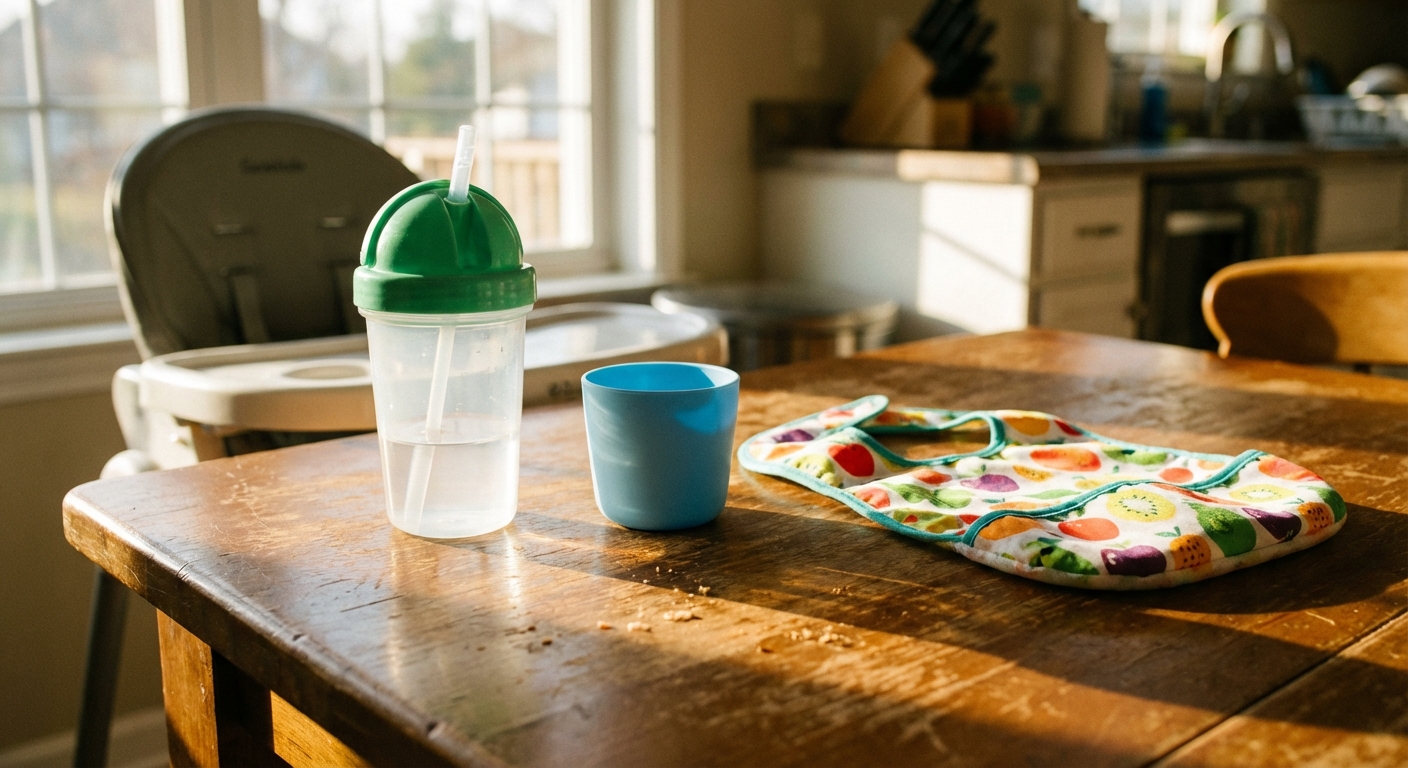
Choose your cup: what works at 12 months
The “best” cup is the one your child will actually use and that supports healthy oral habits.
Straw cups (my top pick for most toddlers)
- Encourages a more mature tongue and lip position
- Great for on-the-go
- Often an easier transition from bottle than an open cup
Tip: Start with a soft silicone straw and a cup that doesn't require much suction.
Open cups (messy but fantastic)
- Great skill builder
- Best for supervised practice at meals
Use a small training cup and expect spills. This is normal. Put a towel under it and pretend you're totally fine.
Sippy cups (fine short-term, choose wisely)
If you use a sippy, look for a spoutless or 360-style cup instead of a hard spout. Hard spouts can act a lot like bottles and aren't ideal long-term.
How much milk does a 12-month-old need?
This is where bottle weaning gets easier, because the goal isn't “replace bottles with endless cups of milk.” After age 1, milk becomes a complement to food, not the main event.
- Typical guideline: about 16 to 24 ounces of milk per day for many toddlers (this is often referring to cow’s milk or a fortified alternative like soy).
- More than 24 ounces daily can increase the risk of iron deficiency and picky eating in some kids.
Your pediatrician may recommend a different amount depending on growth, diet, and whether you're using cow’s milk, fortified soy milk, or continuing breastmilk.
One more helpful note: many kids can do fine on the lower end if they're getting calcium and vitamin D from foods like yogurt and cheese, and they're eating a varied diet.
Breastmilk and formula notes
If you're using formula, most babies transition off infant formula around 12 months (unless your pediatrician has you on a different plan). If you're breastfeeding and want to continue, that's absolutely fine too. You can keep breastmilk and still wean the bottle by offering breastmilk in a cup during the day (and nursing directly if you're still nursing).
A 2-week bottle weaning plan
If your child is strongly attached to bottles, a gradual plan usually works better than going cold turkey. Here's a timeline I've seen work beautifully for many families.
If you're already down to one bottle a day, feel free to skip ahead to Days 12 to 14.
Days 1 to 3: Set up the routine
- Pick your cups and offer them at every meal with water.
- Offer milk in a cup once per day when your child is happiest, often breakfast.
- Keep bottles for the usual times for now. We're building skills first.
Mini goal: “My child practices cups daily,” not “my child loves cups.”
Days 4 to 7: Drop the easiest bottle
- Most families start with the midday bottle because kids are less sleepy and more flexible.
- Replace it with a snack and milk in a cup (or water in a cup if milk is served at meals).
- If daycare is involved, coordinate so everyone's doing the same thing.
If they protest: Stay calm, offer the cup, and move on. You can validate feelings without making the bottle the solution.
Days 8 to 11: Drop another bottle
- Keep milk with meals and water between meals.
- Use a consistent script: “Bottles are all done. Milk is in your cup.”
- Don't keep re-offering the cup every 30 seconds. Offer, set it down, and let them decide.
Days 12 to 14: Tackle the bedtime bottle
The bedtime bottle is usually the final boss. It's part hunger, part habit, part comfort.
- Move milk earlier in the bedtime routine, ideally before brushing teeth.
- Replace “bottle in bed” with a new comfort cue: cuddles, song, rocking, lovey, white noise.
- If your child is used to falling asleep while drinking, shorten the bottle gradually for a few nights (less ounces), then switch to the cup.
Key dental note: After you brush teeth at night, only water. Milk after brushing is a common cavity setup.
Night weaning vs bottle weaning
Sometimes parents hear “drop the bedtime bottle” and worry they're supposed to drop all night calories instantly. For most healthy toddlers over 12 months, overnight milk isn't needed once your pediatrician says growth and daytime intake look good. But some children do have medical reasons to keep night calories longer, so if your child has growth concerns or a complex medical history, double-check the plan with your clinician.
When you're cleared to stop overnight milk, offering water and comfort overnight is a common approach.
Scripts that help
You don't need a perfect speech. You need a boring, loving repeat.
- At meals: “Here's your milk in your cup.”
- When they demand the bottle: “I know you want your bottle. Bottles are all done. You can have your cup.”
- At bedtime: “Milk is finished. Teeth are brushed. Now we cuddle and sleep.”
If you're thinking, “My child will scream anyway,” yes, maybe. You're not doing it wrong. You're doing something new.
Tips that make weaning easier
Keep bottles out of sight
If your child can see bottles in the cupboard, they'll ask for them. Put them away. Out of sight really is out of mind for many toddlers.
Offer milk at the table, not on the couch
We want milk to feel like “part of meals,” not a comfort object that follows them around.
Don't let them graze on milk all day
Small frequent milk sips can sabotage appetite and increase tooth exposure. Structured times work better.
Try the “teach the straw” trick
If your toddler doesn't understand straws yet:
- Put a little liquid in the straw.
- Hold your finger over the top to trap it.
- Let them put the straw in their mouth and release the liquid.
- Repeat a few times. Most kids catch on quickly.
Common problems and what to do
“My toddler refuses milk in a cup.”
- Start with water in the cup and keep milk in bottles temporarily, then switch one milk feed at a time.
- Try different cups. Some toddlers strongly prefer a certain straw texture or flow speed.
- Serve milk slightly warmer or colder and see if preference is the issue.
- Remember: many toddlers don't need to drink a lot of milk if they eat yogurt, cheese, and other calcium and vitamin D sources.
“They're drinking less overall and I'm worried.”
It's common for total milk intake to dip during the transition. Watch wet diapers and energy level. Offer water regularly and keep meals and snacks consistent. If you notice signs of dehydration (very few wet diapers, lethargy, dry mouth) or you're concerned, call your pediatrician.
“Bedtime is falling apart without the bottle.”
- Move milk earlier.
- Add a bigger bedtime snack if dinner was light.
- Increase comfort: extra story, longer cuddle, consistent routine.
- If they wake at night asking for milk, offer water and reassurance. Keep the response boring and consistent.
“My child only wants the bottle for comfort.”
That's real. Bottles can be soothing. Replace the comfort, not just the container. A lovey, rocking, a predictable phrase, or a special bedtime book can become the new anchor.
Cold turkey vs gradual
Both can work.
- Gradual is often easier for sensitive kids or families who want less drama day-to-day.
- Cold turkey can work well for toddlers who get more upset when something is “sometimes allowed.” If you go this route, remove all bottles, commit for a week, and offer lots of cup practice.
The best method is the one you can follow through on. Consistency beats intensity.
What about bottles for water?
At this age, I recommend keeping all drinks in cups. A water bottle can still reinforce the bottle habit and make the transition harder.
Safety notes
- No bottle in bed with milk or juice. It's a cavity risk and may be associated with more ear trouble for some kids.
- Avoid juice in bottles or sippy cups. If you offer juice at all, keep it limited and in an open cup at meals.
- Check cup valves and straws for mold buildup and clean thoroughly.
When to get help
Reach out to your pediatrician or a pediatric feeding specialist if:
- Your toddler isn't gaining weight well or is losing weight
- You see coughing, choking, or frequent gagging with cups
- Milk intake is extremely high and crowding out food
- Weaning is causing intense, ongoing distress that isn't improving after 1 to 2 weeks
A quick pep talk for the tired parent
This transition can feel bigger than it “should” because bottles are emotional. They're how we soothed our babies at 3 a.m. They're part of your family's survival story.
You're not taking comfort away. You're helping your child grow into a new kind of comfort. And yes, there may be a few loud opinions about it along the way.
If you want the simplest next step, start tomorrow: offer water in a straw cup at breakfast, put the bottles out of sight, and pick one bottle to drop this week. Small steps, done consistently, add up fast.